Marble Slab and the ice cream wars

marble_slab_creamery.jpgHouston-based Marble Slab Creamery, a premium ice-cream franchisor, is featured along with a couple of competitors in this NY Times article that describes their battle as the fight to become ice cream’s equivalent of Starbucks — “a ubiquitous chain offering a high-priced, high-quality version of a relatively mundane product.”
Marble Slab opened its first store in Houston in 1983 and now has 371 franchises in the United States, Canada and the United Arab Emirates, and another 220 under development. The company estimates this yearís sales will from $75 to $90 million, with sales at established stores increasing by 3 percent. Its main competitor is Phoenix-based Cold Stone Creamery, which has expanded to 1,400 units over the past five years, but which has suffered sales erosion both of the past two years.
By the way, Marble Slab’s ice cream is better than Cold Stone’s, too.

The Godfather of Microcredit

muhammad_yunus.jpgDon’t miss this Connie Bruck/New Yorker article on Muhammad Yunus, the Bangladesh banker and economist who was awarded this year’s Nobel Peace Prize for his development of microcredit, which is simply the extension of small loans to entrepreneurs too poor to qualify for traditional bank loans (a recent WSJ ($) op-ed by Yunus is here). Interestingly, an unexpected force is competing with microcredit:

[Microcredit promoters] say that the biggest obstacle to commercialization of the sector is philanthropic capital. They say that it distorts the marketónot only by filling channels that might otherwise draw commercial investors but also by keeping unsustainable programs alive.

On the other hand, philanthropy is also a key source of capital for microcredit:

The idea of reaching billions of the poor by achieving ìscaleîóa word invoked ceaselessly in the microfinance communityóhas enticed foundations, rich individuals, even investors into channelling millions into microfinance. The $1.2-billion Michael and Susan Dell Foundationóestablished by the founder of one of the worldís largest computer manufacturersóhas begun making grants to microfinance institutions in India, a country of 1.1 billion people, most of whom have no access to financial services. In October, 2005, Google established a philanthropic entity called Google.org, with seed money of about a billion dollars, to fight disease, global warming, and poverty; microfinance is expected to be a key component of its poverty portfolio. And last April the Bill and Melinda Gates Foundation announced that it would devote an undisclosed amount of money to expanding financial services for the poor in developing countries. Dr. Rajiv Shah, who oversees the new Gates program, said of microfinance, ìThis can reach hundreds of millions of people, and do so in a way that helps them move out of poverty and that sustains over time.î

Hat tip to Tyler Cowen for the link to the New Yorker article.

A Wonder of West Texas

balmorhea_hlarge_9a.hlarge.jpgThe New York Times discovers one of the many remarkable features of Texas — the oasis in the West Texas desert known as Balmorhea. 200 miles from El Paso near Pecos, Balmorhea has a remarkable 3.5 million gallon, spring-fed pool that supports a varied aquatic ecosystem, including tiny tetra fish, huge catfish and rare pupfish. Scuba divers say that the water clarity is unparalleled, but the remote location of the park means that the park is never crowded. Read the entire article and learn about one of Texas’ treasures that even many Texans know nothing about.

Now, this is pressure

jeanvande.gifCanadian Press golf writer Doug Ferguson sets up the Chrysler Championship that begins today at Innisbrook in Florida, a mostly forgettable affair except that it incongruously generates some of the most intense pressure of the entire PGA Tour season. It’s the final full-field PGA Tour event of the year and, thus, is the last chance for Tour players to earn enough money to achieve full exempt status for next year’s PGA Tour events:

This week is mostly about money. The Chrysler Championship is . . . a time for players to pay more attention to dollars and cents than birdies and bogeys. The bottom 120 spots on the money list will be determined, with significant stops down the ladder at No. 30 (Tour Championship), No. 40 (Masters invitation), No. 125 (full status next year) and No. 150 (conditional status).

The top 125 can participate in any PGA Tour event that they choose. Conditional status players — those Tour players who finish between No. 126 and No. 150 — comes in behind those players who earn their PGA Tour cards through the PGA Qualifying School Tournament or the Nationwide Tour. Although not as secure as fully exempt status, most conditional status players can at least get into enough events to have a shot at earning enough to get into the top 125. However, if a player finishes outside the top 150, then it’s either back to the second stage of Q-school, spend the following year playing in a lot of pro-ams and begging for sponsor exemptions into tournaments, or trying to eke out a living on the Nationwide Tour.
There is also competition this week to finish in the the top 40 (to qualify for The Masters) and the top 30 (to qualify for the season-ending Tour Championship tournament), but the competition for those spots is between successful players trying to become a bit more successful. On the other hand, the competition to land in either the top 125 or the top 150 is more compelling because it often involves players who are literally fighting for their livelihood. Ferguson passes along the experience of Tour veteran Paul Azinger from a couple of years ago:

In his 25 years on the PGA Tour, money and prestige are the only things that ever made Paul Azinger choke.[. . .]
Two years ago, he was No. 123 on the money list and seemingly in good shape until a bogey on his 17th hole and a three-putt bogey on his final hole that caused him to miss the cut by one shot. He screamed in disgust as he walked off the course, and the real agony set in two days later when he wound up at No. 126.

Zinger is on the brink again this season, just $22,000 ahead of the 125th player on the money list. Longtime Tour players John Cook and Mark Calcavecchia are two of the players just below the 125th place on the money list and will be among those grinding away at the tournament.

The media’s mistreatment of Jeff Skilling

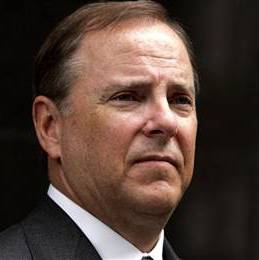
Skilling24.jpgAs noted here, here, here and several other times on this blog over the past couple of years, the mainstream media’s coverage of the Enron-related criminal trials has been spotty at best, shameful at its worst, particularly as it embraced and perpetrated the Enron Myth in reporting on the trial and sentencing of Jeff Skilling. Thus, this Ayn Rand Institute press release of yesterday caught my attention:

The Media’s Mistreatment of Jeff Skilling
Irvine, CA–Upon hearing the news that former Enron CEO Jeffrey Skilling was sentenced to 24 years, most Americans, trusting the newspaper articles and books they have read on Enron, think that justice has been served. But, said Alex Epstein, a junior fellow at the Ayn Rand Institute, “Jeff Skilling has not gotten justice, and the media bear a major portion of the blame.
“Few Americans know that during Skilling’s trial, the prosecution came nowhere near proving its central allegation that Jeff Skilling engineered a conspiracy to defraud investors. Few know that Skilling, upon leaving Enron five months before its collapse, destroyed no documents, nor did anything else resembling a criminal cover-up. Few know that the prosecution, unable to prove a conspiracy, spent huge swaths of the trial taking pot-shots at Skilling with issues not even mentioned in the indictment, such as the failure of Skilling, a multi-millionaire many times over, to disclose a failed $50,000 investment to Enron’s board.
“The media’s misportrayal of the case against Skilling long predates the trial. Ever since the fall of Enron, most of the media have treated as fact every conceivable smear against Skilling made by ax-grinding prosecutors or ex-Enron employees, while treating as absurd Skilling’s claim that he neither engineered a conspiracy nor lied to investors.
“There can be no doubt that the media’s treatment of Skilling contributed to his conviction for a phantom conspiracy–and to the outrageous 24-year sentence that he has now received. And the mistreatment of Skilling is part of a broader trend: the trend of treating businessmen as guilty until proven innocent. Our journalists and intellectuals, accepting the idea that the pursuit of profit is morally tainted, assume that whenever anything goes wrong in business, it is the result of crooked behavior by greedy, rich CEOs–and slant their coverage accordingly. This practice is putting numerous innocent men in jail, and instilling terror throughout corporate America.
“During Skilling’s appeal, let us call for the media to start treating Skilling–and all businessmen–fairly.”

The mainstream media’s slanted coverage of Enron in general and Skilling in particular is a subject that is ripe for examination. We have not heard the last of this issue.

A fascinating peek at the descent into Alzheimerís

William Utermohlen.jpgWhen he learned in 1995 that he had Alzheimerís disease, William Utermohlen, an American artist based in London, began his final project — drawing self-portraits during his descent into dementia and ultimately Alzheimer’s. This NY Times article reports that Utermohlen’s work is being exhibited this week by the Alzheimer’s Association at the New York Academy of Medicine in Manhattan:

The paintings starkly reveal the artistís descent into dementia, as his world began to tilt, perspectives flattened and details melted away. His wife and his doctors said he seemed aware at times that technical flaws had crept into his work, but he could not figure out how to correct them.
ìThe spatial sense kept slipping, and I think he knew,î Professor [Patricia] Utermohlen [William Utermohlen’s wife] said. A psychoanalyst wrote that the paintings depicted sadness, anxiety, resignation and feelings of feebleness and shame. [. . .]
Mr. Utermohlen, 73, is now in a nursing home. He no longer paints.
His work has been exhibited in several cities, and more shows are planned. The interest in his paintings as a chronicle of illness is bittersweet, his wife said, because it has outstripped the recognition he received even at the height of his career.

Colleen Carroll Campbell, who has written extensively about Alzheimer’s, observes that the disease “embodies everything we fear most about aging — weakness and dependence, humiliation and oblivion.” Nearly half of Americans over the age of 35 know someone personally who is at some stage of dementia, and as Americans are living longer, Alzheimer’s is claiming more victims. About 4.5 million Americans suffer from Alzheimer’s today, which is more than double the number who had the disease just 25 years ago. Utermohlen’s paintings provide us with an important perspective on this insidious disease as we confront the difficult issues that result from it.

Litmus test run amok

bush_exasperated.jpgEarlier in the week, it was the Democrats making silly. But today, this Washington Post editorial reports that a Republican senator from Kansas is one-upping the Democrats in the absurdity department:

IF YOU THOUGHT that fights over judicial nominations couldn’t get any worse, consider the case of Janet T. Neff, whom President Bush has nominated to a federal district judgeship in Michigan. Judge Neff, who serves on the Michigan Court of Appeals, is part of a multi-judge deal between the White House and Michigan’s two Democratic senators resolving a long-standing fight over federal court nominees from that state. Yet in reaching an accommodation with the home-state senators, Mr. Bush finds himself with another problem. For Judge Neff, it turns out, once attended a commitment ceremony for a lesbian couple — and that has Kansas Sen. Sam Brownback (R) reaching for the smelling salts and blocking the nomination.
Mr. Brownback has said he wants to satisfy himself that the judge was not presiding over an “illegal marriage ceremony” in Pittsfield, Mass., in 2002 — before the state legalized same-sex marriage. He has written to Judge Neff asking for an explanation, his spokesman says, and will hold up her nomination until he learns the nature of the ceremony and its legality. . . . An administration official says Judge Neff has told Mr. Brownback that she didn’t preside [over the ceremony].

Blocking a long-delayed judicial nomination by your party’s President because the nominee attended a commitment ceremony between a couple of gay friends? Even had the judge “presided” over the non-binding, symbolic ceremony, what difference does that make? What on earth is Brownback thinking?
President Bush has got to be thinking that his Crawford ranch is looking better every day.

What Skilling Was Really Sentenced For

Former Enron CEO Jeff Skilling was sentenced on Monday to spend most of the rest of his life in prison for causing Enron’s bankruptcy and resulting loss to investors.

However, Skilling was neither prosecuted nor convicted for that crime.

Skilling began working at Enron in 1990 as the sole employee and head of a wholesale division, was made president and chief operating officer of Enron in 1997, and was eventually elevated to CEO in February 2001.

During his tenure, Enron grew into an international, multi-billion dollar corporation with earnings that rose from a couple of hundred million dollars in 1990 to $1.6 billion in 1998, of which his trading division produced over half.

By 2000, Enron’s revenue had risen to $100 billion and, as of August 23, 2000, Enron’s stock price peaked at $90 per share.

Skilling resigned about a year later, by which point the stock had declined 51% in a troubled post-bubble market for energy and broadband companies. But from January 1999 until he resigned in August 2001, Skilling increased his stock holdings in Enron by over 250%.

After listening to Enron”s October 23, 2001 conference call with market analysts, Skilling called Enron chairman Ken Lay and asked to return to the company. On the heels of revelations about former CFO Andy Fastow’s embezzlement of millions from the company, Enron was caught in the beginning stages of losing the trust of the marketplace, and Skilling believed that his return would send a strong signal to the market of his confidence in the strength of the company.

The company declined Skilling’s offer, at which time Skilling attempted to arrange a liquidity infusion — including most of his net worth — to stem the company’s death spiral. The efforts failed and Enron filed a chapter 11 case on December 2, 2001.

So, if Skilling wasn’t convicted of causing Enron’s failure, then what is it that he is being thrown in jail for until he is in his mid-to-late 70’s?

For allegedly lying about Enron’s financial condition (and one throw-in count of insider trading). But even though Skilling’s alleged lies may have changed the identity of the investors who ended up holding the bag when Enron failed (a group that included himself, by the way), they did not cause Enron’s failure.

And it goes without saying that Skilling was given no credit whatsoever during his sentencing for contributing to the creation of enormous wealth for investors in many valuable markets.

So, make no mistake about it — Jeff Skilling was not sentenced yesterday in regard to the crime for which he was prosecuted and convicted. Rather, he was sentenced for causing Enron’s failure.

There is a big difference between those two crimes, and a quasi-life sentence for Skilling fails to distinguish between them.

The worst political ad of the year

DemU.gifI’ve been a tad hard on the Republican Party recently (here, here and here).
But it’s not as if the Democratic Party is distinguishing itself during this political season. Take a look at the political ad below, which is surely the worst political ad of the year, courtesy of the Democratic Party.

Justice Hecht cleared in Miers flap

Hecht and Miers2.jpgTexas Supreme Court Justice Nathan L. Hecht, who was the subject of a public admonition by the State Commission on Judicial Conduct for his public support of former US Supreme Court nominee Harriet Miers, was cleared by a three-judge Special Court of Review that heard Justice Hechtís appeal of the sanction, which carries no civil or criminal penalty. The ruling, which had been expected, noted that the ethics rules under which Justice Hecht was sanctioned were impermissably vague and did not apply to his public reply to questions regarding his relationship of Ms. Miers. One of the members of the special court concluded that Justice Hecht had violated the rules, but that the rules were unconstitutional because they limited his freedom of speech. This Chronicle article on the ruling includes pdfs of the special court’s opinions, but if you want them, move quickly — the Chronicle’s links do not always last long.