
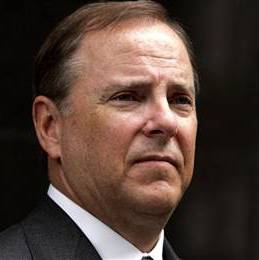
 Former Enron CEO Jeff Skilling was sentenced on Monday to spend most of the rest of his life in prison for causing Enron’s bankruptcy and resulting loss to investors.
However, Skilling was neither prosecuted nor convicted for that crime.
Skilling began working at Enron in 1990 as the sole employee and head of a wholesale division, was made president and chief operating officer of Enron in 1997, and was eventually elevated to CEO in February 2001.
During his tenure, Enron grew into an international, multi-billion dollar corporation with earnings that rose from a couple of hundred million dollars in 1990 to $1.6 billion in 1998, of which his trading division produced over half.
By 2000, Enron’s revenue had risen to $100 billion and, as of August 23, 2000, Enron’s stock price peaked at $90 per share.
Skilling resigned about a year later, by which point the stock had declined 51% in a troubled post-bubble market for energy and broadband companies. But from January 1999 until he resigned in August 2001, Skilling increased his stock holdings in Enron by over 250%.
After listening to Enron”s October 23, 2001 conference call with market analysts, Skilling called Enron chairman Ken Lay and asked to return to the company. On the heels of revelations about former CFO Andy Fastow’s embezzlement of millions from the company, Enron was caught in the beginning stages of losing the trust of the marketplace, and Skilling believed that his return would send a strong signal to the market of his confidence in the strength of the company.
The company declined Skilling’s offer, at which time Skilling attempted to arrange a liquidity infusion — including most of his net worth — to stem the company’s death spiral. The efforts failed and Enron filed a chapter 11 case on December 2, 2001.
So, if Skilling wasn’t convicted of causing Enron’s failure, then what is it that he is being thrown in jail for until he is in his mid-to-late 70’s?
For allegedly lying about Enron’s financial condition (and one throw-in count of insider trading). But even though Skilling’s alleged lies may have changed the identity of the investors who ended up holding the bag when Enron failed (a group that included himself, by the way), they did not cause Enron’s failure.
And it goes without saying that Skilling was given no credit whatsoever during his sentencing for contributing to the creation of enormous wealth for investors in many valuable markets.
So, make no mistake about it — Jeff Skilling was not sentenced yesterday in regard to the crime for which he was prosecuted and convicted. Rather, he was sentenced for causing Enron’s failure.
There is a big difference between those two crimes, and a quasi-life sentence for Skilling fails to distinguish between them.