Lerach goes for a piece of the Kinder Morgan action

Kinder Morgan7.gifPlaintiff’s lawyer William Lerach is already looking to make a handsome $1 billion fee as lead counsel in the main Enron class action securities fraud lawsuit. Now, he’s looking for a little more from an Enron spinoff.
Yesterday, Lerach’s firm filed a lawsuit (press release here) in state district court in Houston over the proposed management leveraged-buyout of Houston-based oil and gas pipeline operator, Kinder Morgan Inc. (previous posts here and here). A lawsuit filed last week in Kansas on similar grounds beat Lerach’s lawsuit to the courthouse door in the race to be the first lawsuit to challenge the proposed leveraged buyout.
As one would expect, Lerach’s lawsuit contends that KM’s officers and directors violated state law by proposing a price of $100 per share, which it said was “grossly inadequate and unfair.” Of course, that allegation is pure speculation at this point in that the proposed buyout is still subject to being outbid by a superior offer for the company. Expect the state court lawsuit to be removed by KM to federal court rather quickly, where it will likely rest fallow while either the proposed buyout or a superior proposal for the company is worked out.

Elk tells Lakeside and the USGA to shove it

Elkington3c.jpgHouston’s Steve Elkington failed to qualify for next week’s U.S. Open Golf Tournament at New York’s venerable Winged Foot Golf Club during yesterday’s sectional qualifying tournament at Houston’s Lakeside Country Club, but at least he went out with a splash.
As this Steve Campbell/Houston Chronicle article reports, Elk left Lakeside yesterday before even teeing it up when U.S. Golf Association officials informed him that he could not wear metal spikes on his golf shoes while playing the golf course at Lakeside, which has a local rule that players may only use soft spikes (which cause less wear and tear on the greens) on the course. Inasmuch as the PGA Tour allows its members to use either metal or soft spikes in its golf tournaments and many other golf courses that the USGA uses for its qualifying tournaments have the same rule, Elk — who is a notorious golf traditionalist — told the USGA officials at Lakeside that adoption of a different rule at the Lakeside qualifier was wrong and left in a huff before his 8:50 a.m. tee time, leaving the USGA officials blathering about “a rule is a rule.”
Quick tip to Lakeside — it’s not going to do any damage to your greens to allow players in one golf tournament to use metal spikes. Next time, waive the friggin’ local rule for the tournament.
By the way, two college players — Ryan Baca of Baylor and Ryan Posey of Oklahoma State — earned the two Open spots at Lakeside by shooting sturdy 6-under-par 136’s over the 36 hole qualifier.

The new Texans GM

Rick smith_ri-small.jpgHouston Texans’ owner Bob McNair completed his overhaul of the team’s management yesterday by naming former Denver Bronco’s assistant Rick Smith as the second general manager in the Texans’ five year history. Smith replaces Charley Casserly, who resigned last month amidst widespread criticism regarding the Texans’ player personnel choices and a disastrous previous season. McNair began the overhaul earlier this year by firing head coach Dom Capers and replacing him with former Broncos offensive coordinator and Houston native, Gary Kubiak.
The hiring of Smith also completes an interesting change in management philosophy for McNair, who originally went with the strong GM management approach in hiring Casserly as the Texans’ first employee. Casserly was the public face of the team’s management, much more so then former head coach Capers. Although that approach placed most authority in football operations in Casserly’s hands, it also sealed his fate as he became increasingly verbose with the media over the past season in attempting to deflect criticism over the team’s horrifying performance. My sense is that Casserly’s manipulation of the media during the team’s horrendous season did not sit well with McNair, a classy man who does not appreciate such public posturing.
With the hiring of Smith, McNair has completed the adoption of the Broncos’ management system in which the head coach has the decision-making authority on personnel matters and the GM serves in a support role. Under the Texans’ new regime, it’s clear that head coach Kubiak is calling the shots, just as Broncos coach Mike Shanahan does in Denver.
What’s particularly interesting about the shift in the Texans’ management philosophy is that Kubiak is getting far more power as an unproven coach than Capers ever received when he became the Texans first coach five years ago with a much more impressive resume than Kubiak. Capers took the expansion Carolina Panthers to the NFC title game in only their second season, and he was a successful NFL defensive coordinator before and after his tenure in Carolina. On the other hand, Kubiak’s sole NFL coaching experience prior to receiving extensive authority under the Texans’ new management approach is that of being the trusty sidekick to the Broncos’ Shanahan, who delegated limited authority to underlings in regard to running the Broncos’ offense.
In light of the foregoing, do you think the Miami Dolphins’ defense — which is now coached by Capers — might be hitting with a little more, might we say, “enthusiasm” when the Dolphins come to town on October 1 to play the Texans?

Update on Roy O

Roy Oswalt25.jpgAmidst the Stros’ free fall over the past month, the worst news to arise to date is All-Star pitcher Roy Oswalt‘s back injury that forced him to miss a start on Sunday afternoon against the Reds. Major League Baseball injury expert Will Carroll passes along the latest information on Oswalt’s back injury, which came on the heels of a pulled hamstring that Oswalt endured in his previous start:

There is no question in my mind that Roy Oswalt has a cascade injury. In the always-great Alyson Footerís article at MLB.com, Oswalt all but says so himself. ìI may have altered my mechanics,î he says, referring to what he did after straining his hamstring. Oswalt is now dealing with mid-back spasms, an unusual location. Elsewhere in the article, we get clues. Oswaltís back only acted up when he threw curves, meaning that his mechanics remained altered into this session. Mid-back spasms usually involve some muscles rather than structural problems, so this isnít as bad as it sounds. The Astros medical staff will have to stop the pain-spasm cycle, the Astros field staff will have to keep Oswalt from altering his mechanics, and Oswalt will have to listen. A decision on the DL wonít be made until mid-week and would follow an as-yet-unscheduled MRI.

The Stros have one of the best medical staffs in Major League Baseball, so Roy O’s injury will be handled conservatively. But make no doubt about it — this Stros club is barely a .500 team with Oswalt; the club is not close to being even a .500 club without him.

Remember those high prices for natural gas?

oreillyconfused4.jpgRemember those high natural gas prices of last year and the corresponding calls for more regulation of the oil and gas industry?
Well, after a hurricane season last year when prices skyrocketed to above $15 per British thermal unit and stored supplies were slashed as multiple storms played havoc with Gulf of Mexico production and storage facilities, U.S. supplies of natural gas are now so plentiful that the natural gas industry is running out of places to store it. Thus, despite the prospect of another active hurricane season, natural gas prices are down over 40% this year to $6.62 per BTU and likely will move even lower.
Rather than governmental intervention, the primary reason for the declining prices is the weather. As a result of a relatively mild winter, lower-than-expected demand for heating resulted in more plentiful supplies of natural gas this spring. Accordingly, over half of the estimated four trillion cubic feet of U.S. underground natural gas-storage capacity is already being used, which means that those facilities could be at near full capacity even before the first hurricane hits the U.S. mainland later this summer.
Meanwhile, Bill O’Reilly and attorneys general from several Midwestern states — who last year condemned the big oil and gas companies and gas traders for manipulating prices and pushing up home-heating bills for all U.S. citizens — have not yet explained how, with all their market power, those avaricious companies and traders could not prevent the current collapse of natural gas prices.

The Ken Lay Narratives

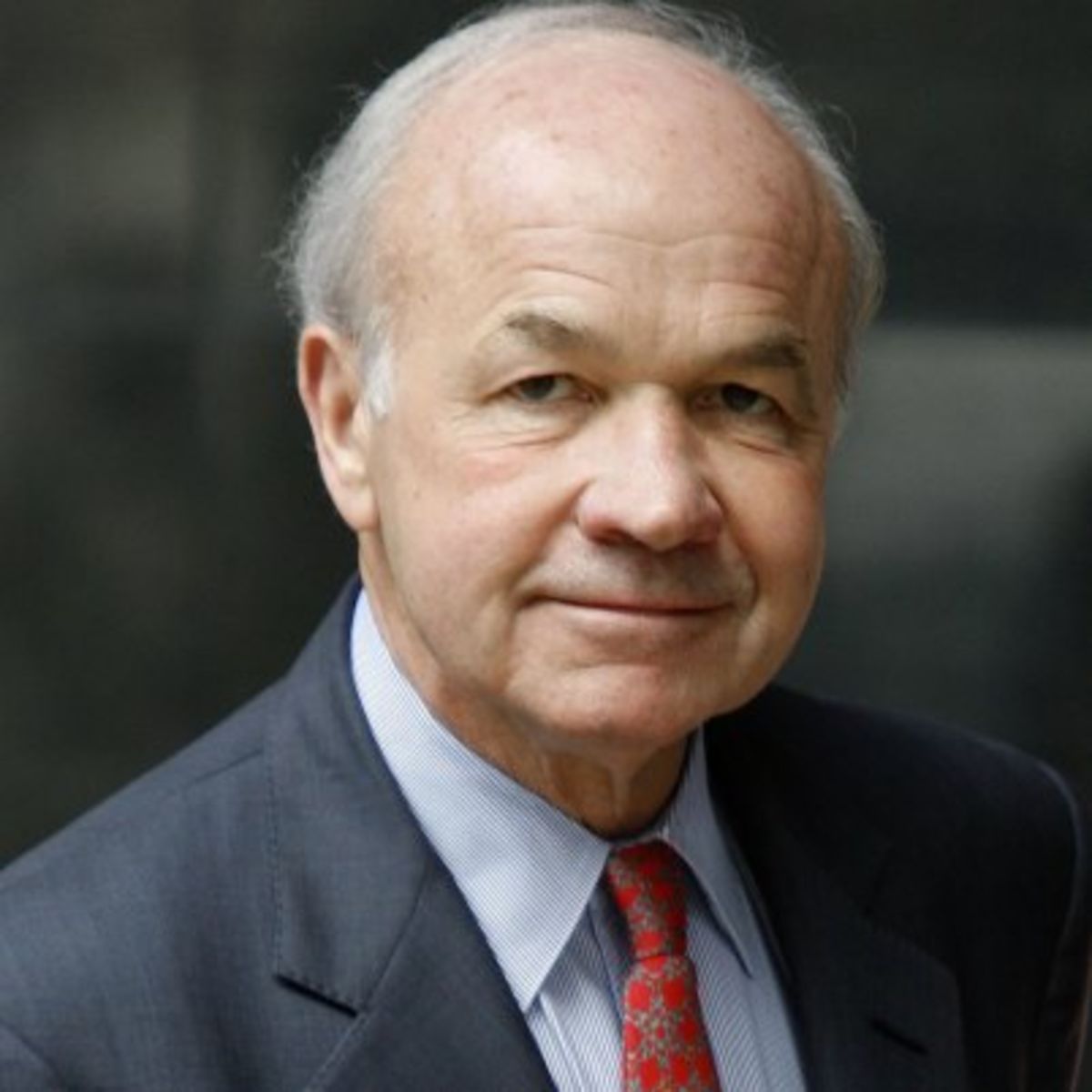
KenLayOn several occasions while covering the Lay-Skilling trial, I noted that the Enron Task Force prosecutors were presenting a fundamentally weak case in an effective manner. Quite a few commenters both here and on other blogs took me to task for that view, some of whom suggested that my defense bias rendered me incapable of appreciating the true strength of the Task Force’s case.

So, it was with a small dose of vindication on Sunday that I read Alexei Barrionuevo and Kurt Eichenwald’s NY Times article on the story behind the Enron Task Force’s preparation and prosecution of the case against former Enron chairman, Ken Lay. According to Barrionuevo and Eichenwald’s piece, Enron Task Force prosecutors such as John Hueston agree with me — their case against Lay was so weak they had serious doubts whether they could even make one.

Barrionuevo and Eichenwald’s article provides an interesting peek into the lengths that federal prosecutors will go to make a case against a person who the prosecutors have already concluded is a crook.

But leave it to Larry Ribstein in this post on the Barrionuevo/Eichenwald article to nail the serious implications of the Task Force’s motives and actions toward Lay:

Many people no doubt will get a warm feeling from the job our government servants have done in finally nailing the evil Lay. But as I said at the beginning, there is an alternative narrative.

The prosecutors were out to get Lay, who had already been convicted by public opinion just for being associated so closely with Enron, which of course journalists, filmmakers and other shapers of public opinion had already elevated into the symbol of whatever it was that went pop at the end of the big boom.

The prosecutors and journalists had a willing audience. Stupid and greedy investors, convinced they knew more than the market did and that gravity was suspended just for them, abetted by credulous analysts who didn’t think they had to ask questions, now needed somebody other than themselves to blame.

The prosecutors looked long and hard and finally found Ben Glisan, whom the jury was primed to believe despite his questionable provenance. There were other potential witnesses with other potential stories, but the government was willing neither to free them from the threat of indictment nor grant them immunity.

Read Professor Ribstein’s entire post.

As Barrionuevo and Eichenwald note in their article, the case against Lay boiled down to the testimony of Ben Glisan and Andy Fastow, both of whom testified that they were telling Lay as early as mid-August 2001 immediately after he replaced Skilling that Enron was in far worse financial shape than the company was letting on to investors.

The Task Force prosecutors molded this testimony into the securities fraud charges against Lay, contending that he continued to urge employees and investors to buy Enron stock even though he supposedly knew better.

Of course, Lay testified that neither Glisan nor Fastow said anything of the kind to him. Indeed, Lay contended that they were advising him of exactly the opposite — that the company’s liquidity was as strong as it ever had been — and he had substantial documentary evidence to back up his version of the events, such as Glisan’s October 8, 2001 presentation to the Enron board.

However, the Task Force iced other Enron executives who would have provided exculpatory testimony for Lay, so Lay was forced to go it alone in defending himself against Glisan and Fastow’s allegations.

Thus, the case against Lay came down to an old-fashioned swearing match — Glisan and Fastow, on one hand, and Lay on the other.

That’s why such a large part of the Task Force’s cross-examination of Lay focused on such things as PhotoFete and Lay’s clumsy but legal use of his line of credit with the company. With Glisan and Fastow’s testimony in hand, the Task Force simply had to cast Lay as a liar to the jury and they would win the swearing match.

Interestingly, Eichenwald’s important book on Enron — Conspiracy of Fools (Broadway 2005) — actually suggests that it is Glisan and Fastow who are lying.

On pp. 540-541 of his book, Eichenwald relates an amusing story about Enron’s chief operating officer, Greg Whalley, meeting with Fastow and Glisan around October 20, 2001 when it was becoming clear that the market was turning on Enron after a series of Wall Street Journal articles had exposed Fastow’s shenanigans with certain special purpose entities.

Whalley called the meeting with the two financial officers so that they could apprise him of Enron’s liquidity position in the face of the quickly-unfolding crisis.

Fastow began the meeting by assuring Whalley that the company was in very good liquidity position because it had $3.8 billion in available lines of credit.

But then, under questioning from Whalley, Fastow and Glisan conceded that the company actually had only $1.5 billion in available liquidity.

As Eichenwald relates, the meeting ended rather abruptly:

What the hell? Whalley stood up, disbelief etched on his face.

“You guys are out of your minds!” he said, turning to head out. “I walked in with $3.8 billion in liquidity, and I’m leaving with $1.5 billion.”

[Whalley] shook his head. “I don’t want to ask you another question. I don’t think we can afford it.”

So, how likely is it that Glisan and Fastow were telling Lay that Enron was a house of cards as early as mid-August when they began a meeting with Enron’s chief operating officer on October 20th by assuring him that the company’s liquidity position was in good shape?

A Quick Enron Reality Check?

As expected, the Conglomerate Enron online symposium last week generated over 15 interesting posts, including ones by the reliably insightful Larry Ribstein (see also here), Ellen Podgor, Don Langevoort, Lisa Fairfax, and Thomas Joo.

However, one of the final posts in the symposium particularly caught my attention. Moderator Gordon Smith passed it along from John Kroger, who served on the Task Force for a year or so in 2002-03, during which time he helped prosecute Arthur Andersen out of business and prepare the odious prosecution that placed four former Merrill Lynch executives in prison for arranging to have Merrill buy an asset from Enron that Enron may have improperly accounted for, although even that has never been proven.

Following his service on the Task Force, Kroger took a job as a law professor in Portland, from where he proceeded to publish a law review article, Enron, Fraud and Securities Reform: An Enron Prosecutor’s Perspective. Kroger’s resume reflects no apparent background in either structured finance or the private finance business sector, but that doesn’t stop him in the article from, among other things, characterizing Enron’s structured finance transactions as wholesale frauds and proposing that such risk-taking should be criminalized.

For a more balanced view from experts in the field of structured finance regarding the economic and financial benefits of such transactions and Enron’s use of them, see Christopher Culp and William Niskanen‘s Corporate Aftershock: The Policy Lessons from Enron and Other Major Corporate Corporations and Culp’s subsequent book, Risk Transfer: Derivatives in Theory and Practice.

With that backdrop, Kroger wrote the following post on the Conglomerate Enron symposium:

“Here’s a Quick Reality Check”

I am shocked at how skeptical most of these blog entries are. Of course, as a former prosecutor in the case, I am certainly biased. That said, here’s a quick reality check. In 2000, 96% of Enron’s reported net income and 105% of its reported funds flow came from accounting manipulation schemes, the vast majority of which clearly violated GAAP. At the same time, Enron managed to keep some $25 billion in company debt off its financial statements, hidden from investors. Lay told his employees to keep buying more Enron stock while he was secretly selling his own. Both men made millions spinning the socks off investors for a company that was, in the end, revealed as an empty shell. The jury heard months of testimony and concluded, quite reasonably, that the defendants knew precisely what was going on. In the United States, we don’t always treat poor criminals and rich criminals alike, but we should. When people commit fraud, they should go to prison.

Using Kroger’s post as a template, my reply is as follows:

I am shocked at how many of the blog entries presume that Lay and Skilling were involved in a massive fraud at Enron. Of course, as a defense attorney in various Enron-related civil actions, I am certainly biased.

That said, here’s a quick reality check.

In 2000, rather than allowing shareholders to suffer loss of value during a difficult post-stock market bubble period, Enron supplemented its net income and reported funds flow through innovative structured finance transactions that effectively hedged the risk of loss in many of its assets for the benefit of investors.

Moreover, when the Enron board induced Lay to return to the Enron CEO position after Skilling’s resignation in August 2001, he put his money where his mouth was — he used the entire board-approved $20 million bonus to invest in more Enron stock.

Indeed, Lay made that bold investment in Enron even though he had already lost an enormous amount of his personal net worth in the first seven months of 2001 due to the decline in Enron’s stock price, losses that he willingly incurred because he insisted that his personal portfolio remain disproportionately invested in Enron stock.

The jury heard months of testimony from primarily cooperating prosecution witnesses who had a substantial incentive to lie by implicating Lay and Skilling in crimes. After the prosecution effectively prevented witnesses with exculpatory testimony for Lay and Skilling from testifying, the jury concluded, quite reasonably, that Lay and Skilling were rich and the company they led went bust, so they must be guilty of some crime.

In the United States, we don’t always treat poor criminals and rich criminals alike, but we should. When business executives are accused of fraud, they should get a fair trial before they are sent to prison for life.

The Fifth Circuit’s latest skirmish with SCOTUS over death penalty cases

TexasDeathRow.JPGAlthough the conflict flies below the radar screen outside legal circles, the Fifth Circuit Court of Appeals and the U.S. Supreme Court have been engaged in a caustic war or words (see articles here and here) over the past several years in regard to death penalty cases emanating from Texas courts. Based on the recent decision in Jackson v. Dretke, 05-70031 (5th Cir., May 30, 2006), it looks as if the Fifth Circuit judges are now getting testy with each other over such cases.
Jackson involves what type of mitigation of punishment evidence is a defendant entitled to propound to the jury during the sentencing phase of a capital murder case. Jackson admitted murdering his wife and two children, but his defense attorney sought to have the jury hear from Jackson’s family and friends who did not want him to be executed. The trial judge denied the defense request and the Texas Court of Criminal Appeals upheld the decision. Jackson’s habeus corpus proceeding in federal court followed, seeking what in death penalty appeal jargon is called a “certificate of appealability” (“COA”) from the state courts’ rejection of Jackson’s request to have the jury hear the testimony of Jackson’s family and friends.

Continue reading

Why bother with being a public company?

Kinder Morgan5.gifFollowing up on thoughts expressed in this post on the Kinder Morgan leveraged buyout from earlier this week, this Opinion Journal editorial (and related WSJ ($) article) note that the trend toward private equity financing is a direct result of management realizing that public equity has become too pricey in the regulatory maze of the post-Enron era:

Behind much of this trend is basic economics. Hedge funds, pension funds and endowments are all looking for new places to invest their mountains of cash, and private equity has been offering some impressive returns. Corporate management, meanwhile, far from running from these new barbarians at their gates, often see a financial upside. With capital abundant, the cost of borrowing low and return on equity soaring, why not?
But that’s hardly the whole equation. At least part of the strength of private equity is a direct result of the problems besetting public markets. Public-to-private deals are in fact lengthy and costly and can lead to unpleasantness with shareholders–often via lawsuits. The fact that so many companies have nonetheless been willing to take the plunge speaks volumes about how eager they are to escape the increasing burdens of public-company regulation.

Continue reading

And you thought the Longhorn-Aggie rivalry was heated?

John Cleese germans.jpgTexans enjoy their intense sports rivalries as much as anyone, but this clever Sarah Lyall/NY Times article notes that preparations for the upcoming World Cup soccer match between England and Germany indicate a rivalry on an entirely higher level:

They have been warned, as always, not to rampage through the streets, destroying things and attacking people. But as England’s soccer fans prepare to visit Germany for the World Cup this month, another item has been added to their long “verboten” list: Don’t mention the war.
“It’s not a joke,” Charles Clarke, then the home secretary, warned at a pre-World Cup briefing earlier this spring. “It is not a comic thing to do. It is totally insulting and wrong.”
That means, basically, no getting drunk and goose-stepping in a would-be humorous manner. No Nazi salutes. No shouting “Sieg Heil!” at the referees. No impromptu finger-under-the-nose Hitler mustaches.
“Doing mock Nazi salutes or fake impersonations of Hitler ó that’s actually against the law in Germany,” Andrin Cooper, a spokesman for the Football Association, which administers English soccer, said in an interview.

Continue reading