Amidst a busy summer day, I pass along a rare and quick afternoon post on disparate results emanating earlier today from a couple of cases involving overreaching prosecutions of businesspeople.
First, Peter Lattman (here and here), Dave Hoffman and Ellen Podgor are doing standout instant analysis of U.S. District Judge Lewis Kaplan’s opinion issued earlier today rapping the knuckles of the Department of Justice for threatening KPMG with indictment in the KPMG tax shelter case unless the firm shirked its policy of paying the defense costs of partners who were indicted for work performed in the course of the firm’s tax shelter business (background posts here and here). As Professor Hoffman notes, Judge Kaplan is not ready to dismiss the indictment as the remedy for the prosecutorial abuse, so it appears that KPMG will be left holding the bag for the not insubstantial costs arising from the improper prosecutorial strongarming. That would not seem to be much of a deterrent for a prosecutor to engage in such tactics in the future, but maybe dismissal will be the remedy next time around when prosecutors engage in this sort of nonsense.
Meanwhile, following on this post from last week, the three former National Westminster Bank PLC bankers who Enron Task Force prosecutors are attempting to extradite to Houston to face criminal charges (previous posts here) lost their final appeal to halt or postpone the extradition as the European Court of Human Rights (ECHR) in Strasbourg rejected their request for a stay pending disposition of their appeal to that body. It is now likely that the NatWest Three will be extradited to Houston next month and detained in the Federal Detention Center in downtown Houston as they attempt to prepare for a trial in an unusually hostile environment.
You can bet that the Task Force’s reliance on a treaty of tenuous applicability to extradite the NatWest Three to a holding cell in downtown Houston is being followed closely by business interests in the UK. Is this really the way we want the US criminal justice system to be perceived internationally?
Daily Archives: June 27, 2006
Going nuclear
My sense is that Asheville Tourists manager Joe Mikulik suspects that Stros farmhand Koby Clemens is getting some favorable treatment from the umps that is normally reserved for his father:
Lexington’s Koby Clemens — whose famous father Roger made a tuneup start for the Legends this month after re-signing with the Houston Astros — was leading off second base after hitting an RBI double when Asheville pitcher Brandon Durden tried to pick him off.
Umpire Andy Russell called Clemens safe, sending Mikulik roaring out of the dugout and setting off a prolonged tirade that he carried all over the infield and into the dugout.
That led to this:
An unintended consequence of Hurricane Katrina
Of all the consequences of Hurricane Katrina on the state of Louisiana, this NY Times article reports on one that I never expected:
State officials assumed that Louisiana’s tax base had been battered by last year’s hurricanes, but the latest figures show that the opposite occurred: more tax dollars than ever are pouring into the state’s coffers as the budget year draws to an end.
The state predicted that tax collections would plunge by almost $900 million this year, and it slashed spending to match. Instead, a record $9.2 billion is on track to be collected by the time the budget year ends on June 30, and at least some of that tax flow looks as if it is likely to continue.
Part of the tax revenue boost has come from increased gambling at casinos and video poker machines located in the state, and higher energy prices has also helped increase tax and state royalty revenue. However, the biggest surge has come from sales taxes as hurricane victims have used federal aid and insurance proceeds to replace personal property. State officials estimate that the state will end up with almost a half-billion more in sales tax revenue than they expected before Katrina.
Meanwhile, the hulks of thousands of damaged cars remain under the highway overpasses of New Orleans as state and federal officials quibble over who will finance the cost of towing the scrap to landfills and scrapyards. And this NY Times article follows up on this earlier post regarding the “breathtaking fraud” that took place in regard to the federal aid that has flowed into the Gulf Coast after last summer’s storms. So it goes in Louisiana.
And you think the Shell Houston Open has problems?
Heavy rains on the East Coast are making it difficult for the PGA Tour to complete this past weekend’s Booz Allen Golf Tournament that is being played just outside Washington, D.C. on the Tournament Players Course at Avenel in Potomac, MD. But according to this Thomas Boswell/Washington Post article, the rain is the least of the tournament’s problems:
Golf is the game of sportsmanship and proper manners, the sport that exemplifies respect for others. We even use it to teach values to kids, to instill the idea that conscience defines character.
So this is a week for golf — at least the crass, ungrateful, traveling-circus PGA Tour version — to hang its head in shame.
It’s no accident that all of the world’s four major championships are run by organizations other than the PGA Tour. The tour keeps pumping its own Players Championship to join the elite. But it’ll never happen — not as long as the tour humiliates itself, shows its true colors and drives itself down the scale of social respectability with disasters such as the one it is perpetrating in Washington this week.
Even a golf tournament deserves a decent burial. The funeral for the summer pro golf stop in Washington is being held at TPC Avenel this week. The PGA Tour didn’t even have the decency to close the casket.
Geez, sort of makes the well-chronicled problems of the Shell Houston Open (see here, here and here) seem rather tame in comparison, eh?
By the way, given the fact that the problems with the Washington and Houston professional tournaments are not isolated, does anyone else have the feeling that the PGA Tour is heading for serious trouble?
Foreshadowing a key issue in the Lay-Skilling appeal
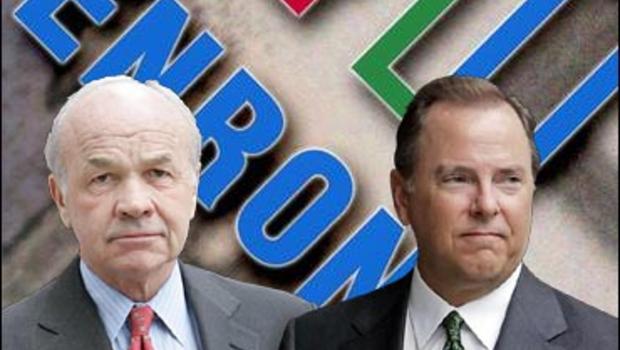
In a strong indication that he believes that the matter raises important appellate issues, U.S. District Judge Sim Lake issued a 22 page opinion late last week in the criminal case of former key Enron executives Ken Lay and Jeff Skilling expanding on the reasons for his ruling during the trial denying Lay and Skilling’s request that Judge Lake grant defense immunity to a half-dozen or so former Enron executives who Lay and Skilling believe would have provided exculpatory testimony for the defendants.
Lay and Skilling contend that the Enron Task Force used the threat of indictment against those former executives and dozens of other former Enron executives to induce the witnesses to assert the Fifth Amendment against self-incrimination rather than provide exculpatory testimony for Lay and Skilling.
The Task Force’s tactic of icing favorable witnesses for Lay and Skilling has been swirling around the case from the beginning. Lay and Skilling raised the issue prior to trial in regard to the Enron Task Force’s alleged intimidation of witnesses.
Then, Lay and Skilling raised the issue again during the trial as the defendants struggled to corroborate their testimony that key Task Force witnesses Ben Glisan and Andrew Fastow were lying when they testified that they had cautioned Lay and Skilling about Enron’s shaky financial condition at various times when Lay and Skilling were making positive statements to the market regarding the company’s finances.
In a key part of the ruling, Judge Lake explains his reasoning for denying Lay and Skilling’s request for the Court to grant defense immunity to the proposed witnesses:
The testimony that defendants expect the proposed witnesses would provide may be relevant and exculpatory, but it falls far short of being essential exculpatory evidence for the simple reason that defendants do not — and cannot — argue that these are the only witnesses capable of providing exculpatory evidence on these issues.
When defendants filed their motion to immunize the proposed witnesses both defendants had testified and their testimony contradicted the government’s evidence on these issues. At best, the anticipated testimony of [the witnesses] would be cumulative of the testimony of defendants and of other evidence presented by defendants. Accordingly, the court concludes that the defendants have failed to establish that the testimony that defendants seek to immunize would constitute essential exculpatory evidence.
This reasoning seems oddly superficial. Not only does it fail to address the fact that the Task Force’s witness-icing strategy allowed the prosecution to use hearsay statements from alleged co-conspirators against the defendants, the reasoning ignores the important impact that corroborating testimony has in a criminal trial.
Just as prosecution witnesses testifying under draconian plea deals have a powerful incentive to testify favorably for the prosecution, defendants asserting their innocence have a similar incentive to testify consistent with that position.
Juries intuitively understand this dynamic, and thus often discount such testimony while placing more weight on the testimony of corroborating witnesses who are not subject to those pressures. That Judge Lake’s opinion does not address that important impact of the Task Force’s witness-icing strategy will almost certainly be a key point on the appeal of this issue.
By the way, the same prosecution witness-icing strategy that was used in Lay-Skilling case is already an issue in the Nigerian Barge appeal. Inasmuch as a number of the convictions in the barge appeal already appear to be unraveling, the Fifth Circuit may even issue a ruling on the issue before the Lay-Skilling appeal arrives at the Fifth Circuit’s doorstep.