
Fifth Circuit orders the release of Bayly and Furst

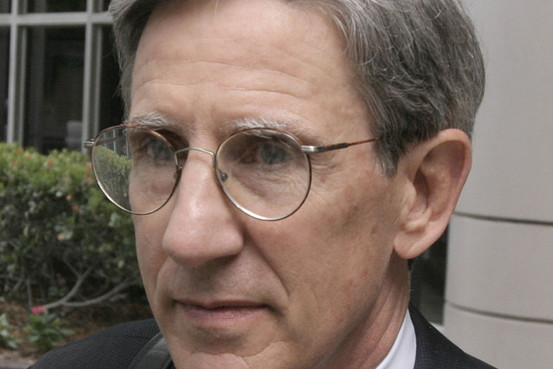
Dan BaylyAs I anticipated, the Fifth Circuit Court of Appeals this morning ordered the release of former Merrill Lynch executives Daniel Bayly and Robert Furst pending disposition of the appeal of their controversial convictions in the Enron-related Nigerian Barge case.

Another former Merrill executive convicted in the case — William Fuhs — was previously ordered released from prison by the Fifth Circuit on March 30.

The fourth Merrill executive convicted in the barge case — James Brown — had his renewed motion for release pending appeal curiously denied summarily by the Fifth Circuit.

Daniel Boyle, Enron’s former vice president of global finance, was also convicted in the case and is serving a 46 month sentence, which he is not appealing.

Former Enron in-house accountant, Sheila Kahanek, was the only defendant acquitted in the trial of the case.

As noted in many previous posts on this blog, the plight of Bayly and Furst in the Nigerian Barge case is a prime example of the appalling cost of the government’s criminalization of business in the post-Enron era.

In the Nigerian Barge case, the Enron Task Force took a relatively small transaction under which Merrill Lynch bought a stream of dividend payments from an Enron affiliate and criminalized it through a brazen web of distortion, suppression of key testimony, inadmissible hearsay, opposition to the defense’s jury instruction on the key issue in the case and prosecutorial misconduct.

The Task Force effectively prosecuted the Merrill Four for doing their jobs in connection with Enron’s sale of an asset for which Enron may have improperly accounted, although even that issue was never proven at trial.

In reality, the Merrill Four were convicted for having the misfortune of being involved in a legitimate transaction with the social pariah Enron. Kudos to the Fifth Circuit for beginning to correct this monstrous wrong.

Bayly is represented on his appeal by a team of lawyers, including his lead trial counsel, Tom Hagemann and Marla Thompson Poirot of Gardere Wynne and Sewell in Houston, appellate specialists Lawrence S. Robbins, Gregory L. Poe and Alice W. Yao of Robbins, Russell, Englert, Orseck & Untereiner LLP in Washington, D.C., and Richard J. Schaeffer, Peter J. Venaglia, and Brian Rafferty of Dornbush Schaeffer Strongin & Weinstein, LLP in New York City. Furst is represented on appeal by John W. Nields, Jr. William L. Webber, Kyle S. Cohen and Sowmia Nair of Howrey, LLP’s Washington, D.C. office.

The patriarch of Houston’s First Family of Golf

claude harmon.jpgIn preparation for the next weekend’s U.S. Open at venerable Winged Foot Golf Club in New York, Golf Digest’s Bill Fields weighs in with this entertaining article on former Winged Foot head pro and former Houstonian, the late Claude Harmon (pictured on the left with his old friend, Ben Hogan). Claude — who was a formidable PGA Tour player and teaching professional during his life — was the father of the famous quartet of Harmon brother teaching professionals, Butch, Craig, Dick (see here also) and Billy. In addition to Claude, both Butch and the late Dick Harmon lived in Houston for a substantial part of their lives, and each of the Harmon brothers has been regularly rated among the best golf instructors in the U.S.
For the final decade of his life, Claude was the pro emeritus at Houston’s Lochinvar Golf Club, where Claude’s green jacket from winning the 1948 Master’s Golf Tournament is still displayed prominently in the clubhouse’s trophy case. As noted in Fields’ article, Claude was an extraordinary golf talent who regularly beat Hogan in their daily games during the winter months in Florida and who tied for 3rd in the 1959 U.S. Open at Winged Foot, the best finish by a club pro in the U.S. Open other than Horace Rawlins’ victory in the first U.S. Open in 1895.

Carlene R. Lewis, R.I.P.

carlene lewis.jpgWell-known Houston plaintiff’s attorney, Carlene Rhodes Lewis, died on Monday at M.D. Anderson Hospital in Houston from the effects of ovarian cancer. The Houston Chronicle obituary on Ms. Lewis’ life is here.
Ms. Lewis specialized in products liability cases, and she was at the forefront of developing the Vioxx cases against Merck. Ms. Lewis began investigating the cases against Vioxx in 2000 and, in August 2005, she was part of a team of three lawyers that won a $253.5 million jury verdict against Merck in Brazoria County district court, just south of the Houston metro area. Over 20 million people took Vioxx before Merck took it off the market in September 2004, and the company is now facing around 11,500 lawsuits by about 23,000 plaintiffs. So far, the plaintiffs and Merck have split the six cases that have gone to trial, and about a dozen other cases are scheduled for trial before the end of this year.
Ms. Lewis moved to Houston after finishing law school in 1984 and joined Sewell & Riggs, where she specialized in the defending product liability lawsuits. About five years later, she and her former Sewell & Riggs colleague, Houston attorney Daniel Goforth, formed their own firm and began pursuing plaintiff’s cases. Over the past 17 years, Ms. Lewis was a respected and well-liked member of the formidable Houston plaintiff’s bar.
A memorial service for Ms. Lewis will be held Friday, June 9, at 3:00 pm at Chapelwood United Methodist Church in Houston. The eulogy will be given by her long-time friend and colleague in various plaintiff’s cases, Mark Lanier.

The Jason Grimsley Affair

Jason Grimsley1.jpgThis NY Times article reports on the criminal investigation into alleged illegal use of steroids and human growth hormone by journeyman Major League Baseball pitcher Jason Grimsley, who retired from the Arizona Diamondbacks yesterday after the media reported on the search of his home by federal authorities. Here is a pdf file of Special Agent Jeff Novitzky’s affidavit (redacted of names of other MLB players involved) in support of the search warrant on Grimsley’s home, and here is an NY Times profile on Grimsley. Novitzky has also been involved in the investigation of Barry Bonds’ use of steroids and other related performance-enhancing drugs.
Prior to this latest development, Grimsley was most well-known in MLB circles for slithering through a ceiling to retrieve his Cleveland Indians teammate Albert Belle’s corked bat from the umpires’ room at Chicago’s Comiskey Park after the umps had confiscated it during a 1994 game. However, Grimsley has apparently been the focus of the investigation for some time and, as noted in this earlier article of unverified allegations, the investigation could very well lead to the Stros clubhouse, as well as the clubhouses of most other MLB teams.
Grimsley has apparently made a statement to investigators in which he has named over 20 teams and team-related drug sources, and the contents of that statement will almost certainly be leaked in the upcoming days. Within MLB, the crossword puzzle of identifying the redacted names in Novitzky’s affidavit is already going full blast, not only because many of the names are easily connected to Grimsley, but also because some are big MLB stars. As a result, the Grimsley Affair — even more than the situation involving Bonds — has the potential to blow the lid off MLB’s ongoing public relations nightmare involving use of performance-enhancing drugs by its players.