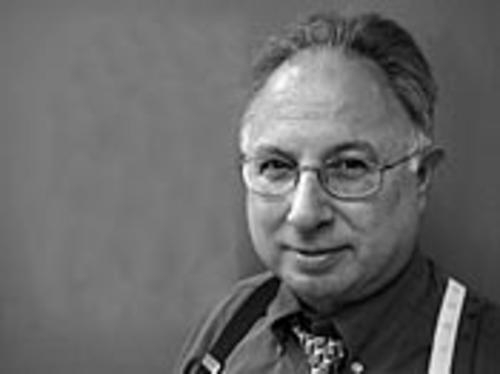
 The late Dr. Ross M. Lence of the University of Houston was a founding member of board of directors of the Abbeville Institute in Atlanta, which is an association of scholars devoted to the critical study of philosophical nature of the Southern tradition in the United States. Upon his death last week, the Abbeville Institute issued the following endearing tribute to Dr. Lence, which — as is always the case in discussing the indomitable Good Doctor — provides several amusing anecdotes, including this classic:
Once at a seminar with other academics, Ross was challenged by an especially obnoxious participant who, rather than confront his arguments, hoped to end the argument by saying that Ross had not read Locke carefully. Ross calmly replied (he was always calm) with that wry smile of his that if the gentlemen would tell us the paragraph number of the Second Treatise that interested him, he would quote it from memory and then attend to what the gentleman thought he had failed to understand in it.
The entire Abbeville Institute tribute is below.
Dear Colleagues, Students, and Friends,
It is with sadness that I inform you that Professor Ross M. Lence died on July 11th, 2006. Ross was a founder of the Abbeville Institute and a member of its Board of Directors. Much of what we stand for was exemplified by his teaching and character.
Ross studied at the University of Chicago, Georgetown University, and the British Museum before completing his Ph.D. at Indiana University under Professor Charles Hyneman. He greatly admired Hyneman who became his mentor and friend. Ross often quoted him and had a portrait of him prominently displayed in his office at the University of Houston over a table set with bottles of whiskey and sherry for the refreshment of his visitors.
Ross tells the story of how, as a raw graduate student, he first met Hyneman. Ross appeared in his office, confronting the abrupt question, what do you want? Ross replied, to study American political science. Hyneman asked, have you seen it? Ross answered, seen what? America, Hyneman replied. If you want to see it, meet me tomorrow morning. They spent the next few summers traveling around America observing its life in small and large towns, villages, and out of the way farming communities.
This story expresses a truth Ross learned from Hyneman and which he embodied in his own work; that theorizing about political things must be rooted in a connoisseur’s understanding of practice. Unhappily this essentially Aristotelian wisdom is missing from much of American political science which has not freed itself from an ideological style of theorizing.
Ross also thought one had to have a detailed knowledge of classical political texts. He could quote Locke’s Second Treatise and The Federalist from memory. Once at a seminar with other academics, Ross was challenged by an especially obnoxious participant who, rather than confront his arguments, hoped to end the argument by saying that Ross had not read Locke carefully. Ross calmly replied (he was always calm) with that wry smile of his that if the gentlemen would tell us the paragraph number of the Second Treatise that interested him, he would quote it from memory and then attend to what the gentleman thought he had failed to understand in it.
His knowledge of political theory and of political things was broad and deep. But he wore his learning lightly. It never intruded pedantically in conversation. It was there as a cultural inheritance which he had worked hard to make his own and from which flowed his disarming Socratic questions; his refusal to accept facile answers even when they favored his own position; his insistence on clarity; and all of this carried on with a wit that was both piercing and lovable.
These qualities made him a great teacher. It is no exaggeration to say that he must be included in a handful of the greatest teachers in the America of our time. He joined the Department of Political Science at the University of Houston in 1971. Over the years he won many teaching awards within and outside the University.
In the late 1990’s hundreds of students established an endowment for a chair in his honor. In 2001 Ross was appointed to the Ross M. Lence Distinguished University Teaching Chair. For over twenty years he regularly taught at the Women’s Institute of Houston. Ross was one of the earliest, and a frequent participant in Liberty Fund Colloquia, a private foundation devoted to exploring the ideal of a society of free and responsible individuals.
He was devoted to “Liberty,” the ideal of an older federative America which today has largely been replaced with talk of “democracy,” and “freedom” both of which typically reduce to “equality.” By liberty he meant the right of individuals and communities of human scale to govern themselves. He lectured at the first Abbeville Institute summer school, 2003, which was recorded on video. So we are fortunate to have a film of his lectures.
Ross was a leading scholar on the philosophy of John C. Calhoun whom he saw as embodying much of what he loved in the ideal of liberty. He edited the Liberty Fund collection of Calhoun’s writings Union and Liberty in 1992. He never published much. Learning for him was inseparable from character, and was a way of life best communicated through face to face knowledge. He not only gave of his time freely to students, he in time acquired an informal reputation at Houston as one to whom students could turn for counsel.
His last year was an ordeal of serious illness and suffering, made more bearable by the great numbers of current and former students and friends who gave their love, respect, and gratitude, and assistance. Few people will leave the world more loved than Ross. And so the Abbeville Institute salutes for the last time our never to be forgotten friend, mentor, and colleague with the words he always used in parting:
Gaudeamus!

 The 135th edition of the British Open begins today, and the venerable tournament has returned to Liverpool — the gritty hometown of the Beatles — for the first time in 40 years. As you might expect, 1995 British Open champ John Daly is having quite a time (see also here) this week. The overweight, chain-smoking, beer-guzzling and problem-laden Daly turned philosophical while visiting the Cavern Club, the Liverpool pub in which the Beatles legend began: