Houston’s most influential churches

megachurch.jpgThe Church Report has released its annual list of America’s 50 Most Influential (Protestant) Churches and, as with last year’s list, several Houston megachurches made the list.
Lakewood Church and the ubiquitous Joel Osteen come in again as the highest-rated local church at fifth, while Kerry Shook’s Fellowship of The Woodlands dropped from no. 17 last year to 41 this year, and KirbyJohn Caldwell’s Windsor Village United Methodist dropped from no. 43 to 49. Surprisingly, Ed Young’s Second Baptist Church — one of Houston’s original megachurches and arguably its most influential — dropped out of the top 50 list altogether after being listed at no. 33 last year.
The list is interesting in that it includes churches from both ends of the current political debate that is raging among Protestants regarding the core nature of megachurches. Osteen, Shook and a number of others on the list preach what traditionalists criticize as a feel-good gospel that views God as sort of a cosmic bellhop who exists to meet desires of humans and to make them feel comfortable with material wealth. Dallas’ T.D. Jakes (Potter’s House – 8) even denies the orthodox doctrine of the Holy Trinity, although the rest of his message has a harder edge than that of either Osteen or Shook. On the other hand, the list also includes a number of church leaders — including notably John MacArthur (Grace Community – 31), John Piper (Bethlehem Baptist – 42) and Dallas’ Tony Evans (Oak Cliff – 44) — who advocate the more traditional Christian theology that emphasizes Christ’s divinity, justification by faith, sacrifice and stewardship.
Meanwhile, the Catholics just shake their heads and go off to Mass. ;^)

Is KPMG’s tough stance helping its former partners in the tax shelter case?

kpmg logo50.jpgIn connection with negotiations over its non-prosecution agreement with the Justice Department in the KPMG tax shelter case, KPMG decided to give in to a DOJ “suggestion” and revoke in the tax shelter case its longstanding policy of paying defense costs of the firm’s partners who were accused of wrongdoing in the course of firm’s business. U.S. District Judge Lewis Kaplan issued a blistering decision condemning the DOJ’s tactic, but stopped short of dismissing the case. Rather, he directed the former KPMG partners to sue KPMG to reimburse them for the defense costs.
As noted in this earlier post, I’m skeptical that attempting to force KPMG to pay the defense costs through another legal action is a sufficient remedy for the prosecutorial misconduct and, according to this Lynne Browning/NY Times article, it’s looking as if my skepticism is warranted — KPMG is contesting any obligation to pay its former partners’ defense costs in the tax shelter case.
Frankly, despite Judge Kaplan’s belief that KPMG should pay the defense costs, KPMG’s position is a smart one. If the firm voluntarily paid the costs, then it faces the risk that the DOJ would view that action as a lack of cooperation, which could damage KPMG’s prospects of avoiding a criminal prosecution in a future case. On the other hand, if the firm continues to stiff its former partners, then it does not run the risk of being perceived as being uncooperative by the DOJ and besides — even if it loses the former partners’ civil action for reimbursement of the defense costs — the firm will only have to pay about the same amount that it would if it paid the defense costs voluntarily.
However, the more interesting question is whether KPMG’s continued refusal to pay the defense costs will ultimately persuade Judge Kaplan that dismissal of the criminal case is the only effective remedy to the Justice Department’s improper interference with the financing of the defendants’ legal defense. Judge Kaplan is already perturbed with the prosecution’s foot-dragging on other issues in the case, and the financial plight faced by the defendants as a result of KPMG’s refusal to pay their defense costs may be enough to push Judge Kaplan toward dismissal of the charges against the former KPMG partners. If so, then KPMG’s tough stance on refusing to pay its former partners’ defense costs could turn out to be better for its former partners than if the firm had simply paid the defense costs after issuance of Judge Kaplan’s earlier decision.

Can the NatWest Three receive a fair trial in Houston?

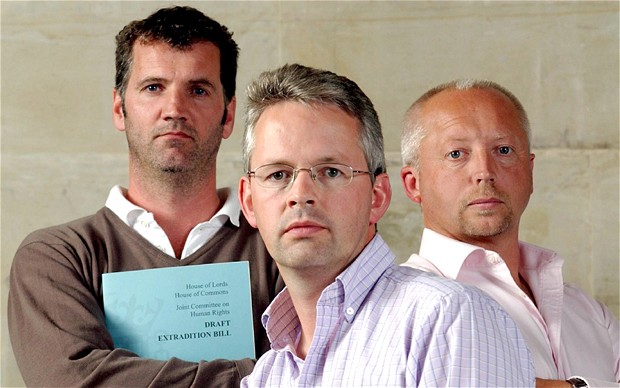
Barry Turner, lecturer in criminal law and criminal evidence at Leeds Law School, makes the following declaration in this Times Online blog post regarding the NatWest Three, who are presently awaiting a bond hearing in Houston in regard to the Enron-related criminal case against them:

“It is . . . absurd to suggest that the men will not get a fair trial in a country that uses exactly the same legal system as we do.”

H’mm. Better check the facts, Mr. Turner. Kevin Howard and Ken Lay are stark reminders that the suggestion is not absurd at all.

By the way, a friend who is prominent in the media business was vacationing in England when Ken Lay died. He passes along the following observation regarding the British media coverage of Mr. Lay’s death:

“The coverage [of Mr. Lay’s death] on the domestic BBC service was interesting.

Close to the top of the report, the journalist noted that Ken Lay continued to maintain that he had done nothing wrong. The report then went on to entertain the idea that this might actually be true.

The extensive coverage of the Natwest Three added to the sense that, in Britain at least, there is now as much questioning of the Department of Justice as there is of ex-Enron officers.”