
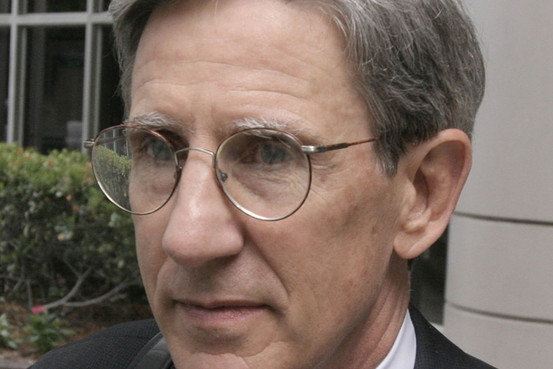
The sad case of Daniel Bayly

Daniel Bayly has had an impeccable professional career.

A 30-year veteran of the executive ranks of Merrill Lynch, Mr. Bayly joined Merrill in 1972 as an associate in New York and rose through the ranks to become a managing director of Merrill while working in Chicago.

After returning to New York, Mr. Bayly was named head of Merrill’s U.S. corporate banking group in 1993, and eventually was named head of Merrill’s global investment banking division.

During his three decades with Merrill, Mr. Bayly was one of the firm’s most popular and respected executives.

Despite this stellar career, Mr. Bayly has just finished serving the first week of a two and a half prison sentence handed down this past May in connection with the Enron-related Nigerian Barge case. Although Mr. Bayly has a strong case for having his conviction overturned, the Fifth Circuit Court of Appeals denied without so much as an explanation of its basis for doing so his motion to remain free pending disposition of his appeal.

As with the sad case of Jamie Olis, most of the mainstream media is ignoring Mr. Bayly’s plight, treating it as a bad dream that has now gone away. However, Mr. Bayly’s family and many friends are not going to allow this injustice to recede quietly from public view.

In that regard, two friends of the Bayly family — Susan Scherbel and Steven Jackson — prepared the following piece that makes as compelling a case as any legal brief that Mr. Bayly is a victim of the government’s misguided criminalization of ordinary business transactions in the post-Enron era and that, but for God’s grace, this nightmare could be happening to any of us:

Last week, Daniel Bayly left his home and family in Connecticut to report to a prison in Hopewell, Virginia. There, he will begin a two and a half year prison sentence for his role in the Nigerian Barge transaction – a legitimate and successful deal between Enron and Mr. Bayly’s former employer, Merrill Lynch. From the evidence presented at his trial, his only offense appears to be that he was at Merrill Lynch when the deal was done. This is a tragic time for the Bayly family as well as for us, the hundreds of friends, colleagues and well-wishers who know Mr. Bayly to be a good, decent and honorable man.

At Mr. Bayly’s sentencing in April, Judge Ewing Werlein, Jr. said: ” . . . it may be that I’ve never had a defendant stand before me, probably in my years as a judge and having sentenced hundreds of people, that has had a more glowing and extraordinary record of being a good citizen . . .”

However, when Mr. Bayly appealed his conviction, his motion to be released pending appeal was denied. It was irrelevant that he had no history of prior wrongdoing. It was similarly irrelevant that over one hundred of his close friends and supporters sent letters to the court pledging bonds of $10,000, guaranteeing Mr. Bayly’s bail. Neither the strength of his appeal, his stellar record nor the trust of his friends has prevented the worst: Mr. Bayly is in jail while his appeal proceeds – this is the way a hardened, serial offender is treated. And, yet, nothing about the case or this man merits this indignity.

At the time Merrill Lynch purchased an interest in unfinished energy-producing barges from Enron, Mr. Bayly was the head of global investment banking at Merrill Lynch. But, contrary to what has been described in press accounts, Mr. Bayly did not structure, champion, approve or benefit from the transaction. The job of analyzing the transaction was delegated to the Merrill Lynch Commitment Committee composed of eight lawyers, CPA’s and financial experts from outside of Mr. Bayly’s division, who unanimously blessed the deal and recommended approval. Mr. Bayly’s boss, one of the top five officials at Merrill Lynch, was responsible for approving the transaction.

Mr. Bayly’s sole involvement in the Nigerian Barge transaction consisted of determining that the investment banking division could afford the $7 million investment in the deal (this was not difficult – his division had revenues of $4 billion that year). Then, at the request of the Committee, Mr. Bayly’s boss directed him to participate in a conference call with Enron’s Chief Financial Officer, Andrew Fastow.

During Merrill’s review process, Enron had repeatedly promised that the barges would be completed and ready for resale within six months, but the Committee wanted Mr. Fastow’s personal assurance on this point.

Despite these benign facts, a Houston jury convicted Mr. Bayly of criminal conspiracy. Anyone with more than passing familiarity with the case was not surprised — Houston was devastated by the Enron bankruptcy and, unfortunately, the Nigerian Barge trial was the first Enron-related criminal trial to be held there. By this time, many of the key people involved in Enron’s fall had already entered plea bargains — they would never see a courtroom or experience a trial. With none of the “major players” in sight, Mr. Bayly and a few other innocent bystanders were poised to bear the public’s wrath.

To make matters worse, Justice Department prosecutors made it practically impossible for Mr. Bayly’s lawyers to mount an effective defense. Although there were over fifty other Merrill Lynch and former Enron employees with knowledge about the Nigerian Barge deal (including numerous lawyers and other experts), all of those witnesses declined to testify during the trial because the prosecutors had named them as “unindicted co-conspirators.”

Inasmuch as the only difference between an indicted and non-indicted co-conspirator is government favor, the prosecutors used this tactic to scare these Merrill Lynch and Enron employees from coming forward and providing valuable, corroborative testimony for Mr. Bayly about the way banking deals operate, the limited role played by Mr. Bayly and the other defendants, and the deal itself.

As a result, the true story of Mr. Bayly’s involvement in the transaction was never told during the trial. Testimony about the transaction came from prosecution witnesses with second-hand information who had cut deals with the government.

In the end, perhaps the most troubling aspect of this case is that it is about a successful deal common in investment banking circles. Not suited to conventional financing, the barge deal was precisely the kind of transaction companies regularly bring to their investment banks. Merrill’s decision to purchase the barges was completely legitimate.

Similarly, Merrill’s subsequent sale of the completed barges six months to a partnership (set up by Enron for an entirely different set of investors) was appropriate. This sale, too, was thoroughly reviewed by numerous attorneys (including those who had blessed the original sale) prior to being approved (again, not by Mr. Bayly). It is noteworthy that the barges were then combined with other barges held by Enron and sold to a third party buyer, global power company AES Corp., that actually paid more than Merrill had received (proving that the barges were valuable).

In short, Mr. Bayly is in prison because of a highly profitable transaction that occasioned no loss to Enron or to its shareholders. Enron made money, its shareholders made money, the people of Nigeria obtained low price energy and, according to its financial reports, AES is making money (the barges are currently producing roughly $50mm/year).

In fact, the sole issue of the case turns on when Enron and its auditors reported the gain (the Justice Department contends that the gain should have been reported at the time of the sale to AES rather than six months earlier at the time of the Merrill purchase). Not even the prosecutors alleged that Mr. Bayly and his co-defendants controlled or even knew of Enron’s accounting choice.

What kind of justice is this?

Those of us who know Mr. Bayly have tried to help him. However, we are reluctant. We are warned that a single voice raised in his defense could provoke the Department of Justice lawyers to mete out more cruelty. When will their bloodlust be satiated?

Isn’t it enough that this wonderful man who had a 30-year flawless record at Merrill Lynch was forced out of his job and had his reputation sullied? Isn’t it enough that he endured a Kafkaesque trial, when all who could help him were silenced by fear and intimidation? Isn’t it enough that he was subject to electronic monitoring and his assets frozen? Isn’t it enough that he and the others were plucked from their homes, families and children sent to prison despite their appeals (something virtually unthinkable for first time offenders in American jurisprudence)?

These men did nothing more than assist a respected client. They followed every conceivable rule and procedure. Furthermore, they pose no threat to anyone — why could not they be free pending their appeals? As we onlookers cower, afraid to help these people, lest our efforts unleash new waves of wanton harassment against them, it’s damned hard to refer to their tormentors as “justice.”

Update: The Fifth Circuit Court of Appeals overturned the conviction of Mr. Bayly after Mr. Bayly had spend a year in prison.

Dan Jenkins on America’s contributions to golf

dan jenkins2.jpgIn summertime, thoughts turn to golf, and the August issue of Golf Digest is called it’s All-American edition. That theme gives columnist Dan Jenkins an opportunity to provide his wit and wisdom on America’s contributions to golf in this hilarious article entitled What America gave Golf — We might have burned the edges, but the good outweighs the bad (previous posts on Mr. Jenkins’ work are here, here, here, and here). The entire article is a must read, but here are a few Jenkins pearls to peak your interest:

It’s easy enough to blame America for the six-hour round, . . . but ask yourself this: What would the game be like without the gimme, the mulligan, the shapely cart girl and a chili dog at the turn?

Continue reading

How to avoid an Enronesque experience

allied_capital2.jpgThis earlier post that compares American International Group, Inc.’s business model to that of Enron Corp. makes an important point about the true reason that Enron collapsed.
The general public’s perception — fueled by the Enron Task Force and most of the mainstream media — is that Enron collapsed under the weight of a massive fraud. However, as the Enron Task Force’s abysmal record in court against former Enron executives reflects, the vast majority of Enron’s business operations were entirely legitimate outside of former Enron CFO Andrew Fastow’s relatively few questionable transactions that he arranged to enrich himself and a few of his close associates. But how did the public disclosure of Mr. Fastow’s relatively small financial schemes cause a company with a $60 billion market capitalization to break apart?

Continue reading

Epstein on judicial activism

supreme_large_seal.gifRichard A. Epstein is the James Parker Hall Distinguished Service Professor of Law at the University of Chicago, and the Peter and Kirsten Bedford Senior Fellow at the Hoover Institution. In this Wall Street Journal ($) op-ed on the nomination of John G. Roberts to the U.S. Supreme Court, Professor Epstein makes a good point regarding the simplistic and often misleading criticism of “judicial activism”:

From the get-go, I would insist that we view with suspicion the oft-hurled epithet of “judicial activism.” Judicial review, which allows the Court to strike down federal and state legislation, is an indisputable part of the Constitution. The structural and substantive prohibitions the Constitution contains are large. One can be a “strict constructionist” and still believe that major legislative initiatives, executive orders, and administrative rules are unconstitutional. By the same token, the government should be accorded a wider degree of discretion in running its own affairs — the military, courts, schools, etc. — a view that is largely permissive of government affirmative action programs that parallel those which comparable private institutions adopt on a voluntary basis. In these cases, the private benchmark offers a useful measuring rod for state discretion.

Continue reading

A Crushing Defeat for the Enron Task Force in the Enron Broadband Case

In yet another stunning blow in a series of setbacks to the Enron Task Force, the jury in the Enron Broadband trial returned late this afternoon and advised U.S. District Judge Vanessa Gilmore that they had acquitted three of the five defendants on certain of the 164 counts and were hopelessly hung on the remainder of the counts against all five defendants. Here is Mary Flood’s Chronicle article on the outcome.

Scott Yeager, the former Enron Broadband strategic planning executive, was acquitted on the wire fraud and conspiracy charges, former Enron Broadband co-CEO Joe Hirko was acquitted on insider trading and money laundering charges, and former engineering executive Rex Shelby was also acquitted on the insider trading charges.

The jury could not reach an agreement on any of the counts against former Enron Broadband finance executives Kevin Howard and Michael Krautz. Judge Gilmore declared a mistrial on all of the counts — some of which related to each defendant — on which the jury could not reach a decision.

On one hand, it’s not surprising that the jury would be in disarray over their deliberations on the charges. To reach a decision, the jury had to leaf though 60 pages of jury instructions and answer more than 190 special issues about the guilt or innocence of five former Enron Broadband executives. Consequently, no wonder the poor jurors bailed out after three days of deliberations and three months of an often mind-numbing trial.

On the other hand, it’s hard to recall a white collar trial that turned out as badly as this one did for a prosecution team that thought getting convictions in this case would be a tap-in.

How did this trial veer so far out of control for the prosecution?

Well, to begin, the Task Force’s decision to throw 164 charges of mud at the five defendants to see what would stick turned out to be an unmitigated disaster. The jurors could not reconcile the voluminous allegations of wrongdoing with what they heard over three months of often idiosyncratic testimony.

Then, when the trial actually began, the over-confident Task Force prosecutors were placed on the defensive almost from the outset.

The first blunder of the Task Force during the trial occurred when prosecutors elicited false testimony from the government’s key witness, former Enron Broadband co-CEO Ken Rice.

Then, after Rice’s testimony was impeached dramatically during cross-examination, the prosecution compounded its error by calling a witness (Beth Stier) who testified that, based on discussions with the Task Force prosecutors before her testimony, she felt threatened by the Task Force prosecutors.

Later in the trial, another witness — Lawrence Ciscon — testified that he was threatened shortly before his testimony by prosecutors with a possible indictment if he proceeded to testify on behalf of the Broadband defendants. T

o make matters worse, toward the close of the trial, U.S. District Judge Vanessa Gilmore sharply rebuked an Enron Task Force prosecutor for asking a question on cross-examination of Broadband defendant Kevin Howard that at least violated the judge’s prior instructions to the Task Force prosecutors.

Finally, earlier this week, Task Force director Andrew Weissman took the unusual step of resigning as head of the Task Force while the Broadband jury was still deliberating amidst rumblings of prosecutorial misconduct within the Task Force.

Accordingly, at the end of the day, the case that the Enron Task Force thought was their strongest against former Enron executives turned into an absolute debacle. Although the Task Force’s mishanding of the trial certainly had something to do with that result, there are two more important dynamics that are actually more revealing of why the prosecution’s case went awry.

First, the Enron Task Force is facing what is often called among lawyers involved in high profile cases the “curse of the correct result.” The Task Force has always been better at demonizing Enron in the media and bludgeoning former Enron executives into highly-publicized plea bargains than actually proving its charges in court.

The scorecard after the Enron Broadband trial is that the Enron Task Force — in over three and a half years on the job — has prosecuted to trial seven former Enron executives and obtained precisely one conviction of a mid-level Enron manager.

Despite that rather unimpressive batting average, the Task Force’s far better public relations machine has effectively pounded into the public’s mind that the “correct” verdict should be a conviction in any Enron-related criminal case even before the case is tried. That was certainly the case in the Enron Broadband trial.

However, the public’s fixed opinions were not based on the testimony as it was presented in court. The general public did not see the witnesses testify, and the public had no way to assess the credibility of those witnesses. The public’s fixed opinions were based largely on propaganda about Enron, much of which the Task Force willingly facilitates.

We now know the story of the trial. The Task Force’s case was far less clear cut than the prosecutors suggested to the jury during opening arguments. The Task Force had to deal with the effect of its blunders described above, and the lawyers for the Broadband defendants put up a well-organized and effective defense. As is often the case, the prosecution was forced to rely on the testimony of witnesses who admitted committing crimes and benefiting from those crimes, and some had personal issues that reasonably called their credibility into question.

Thus, the jurors who actually heard the evidence in this case concluded that the Broadband defendants were not guilty or that the government had failed to carry its burden of persuading all the jurors that the crimes alleged had occurred.

This result is contrary to the “correct” verdict that the general public has about anything having to do with Enron, but blame that on the “curse of the correct result,” not the jurors. In my view, this jury that actually reviewed the evidence and heard the witnesses testify came back with a result that — although not perfect — is the correct one based on the evidence that was actually presented in court.

Finally, as has been noted many times on this blog, the result in the Enron Broadband trial stands for the dubious nature of the government’s policy of criminalizing merely questionable business practices.

As much as the government protests that true business crimes are deterred by vigorous prosecution of such transactions, the fact of the matter is that any reasonable interpretation of justice is strained in attempting to square the result in the Enron Broadband trial with the results in the Richard Scrushy case, the case of Arthur Andersen, the case of Martha Stewart, the sad case of Jamie Olis, the case of Dan Bayly, the case of William Fuhs, the DOJ’s handling of the Global Crossing case, the Tyco case, the Bernie Ebbers case and many others.

These highly disparate results are not the product of a rational deployment of our criminal justice system, and the carnage to the families of the businesspeople who are caught in this troubling cauldron simply cannot be reasonably dismissed as a “trade-off” of an imperfect system.

Meanwhile, respect for justice and the rule of law upon which the success of American society is largely based is continually eroded by the roulette nature of such prosecutions.

If we lose the public’s respect for justice and the rule of law, then, as Sir Thomas More asked Will Roper in A Man for All Seasons, “do you really think you could stand upright in the winds [of abusive state power] that would blow then?”

Words to ponder as the Task Force now turns to using admitted felon Andy Fastow as its key witness in the upcoming trial of Messrs. Lay, Skilling and Causey. That trial could well make the hard-fought Broadband trial look like a picnic.

The least surprising lawsuit of the year

morgan9.gifAfter this, you just knew this was coming.
The Lerach Coughlin Stoia Geller Rudman & Robbins LLP lawsuit against Morgan Stanley’s board of directors, former executives and lawyers alleges that directors breached their fiduciary duty and abused their control of Morgan Stanley by mismanaging the firm for several years, but particularly by handing out large severance payments to former Morgan CEO Philip Purcell and his former right hand man, Stephen Crawford. The lawsuit also asserts claims against the firm’s departing general counsel and outside law firm Kirkland & Ellis for legal malpractice and professional negligence in their handling of the Ron Perelman fraud case in Florida that recently resulted in a $1.57 billion judgment against Morgan.
Interestingly, the lawsuit even took a swipe at new Morgan CEO John Mack, who the lawsuit claims approved the payoffs to Messrs. Purcell and Crawford “to secure his return to power.” Mr. Mack has publicly stated that he did not know about the awards before he was hired, but that he is not going to “second-guess” Morgan board decisions that were made prior to his taking over as CEO. Mr. Mack did waive his own pay guarantee when the awards to Messrs. Purcell and Crawford became public.

New Fifth Circuit decision on family limited partnerships

family LP.jpgFollowing on its decision last year on the popular estate planning tool of family limited partnerships, the Fifth Circuit recently issued this decision in the case of deceased Texas millionaire Albert Strangi and, in so doing, provided a guide for what not to do in utilizing a family LP. Here is a NY Times article on the decision.
Family LP’s allow parents to transfer assets to their children at a lower tax rate than is assessed on estates and gifts. Under the typical family LP, the parents retain a few shares of ownership while their children hold most of the shares. Moreover, family LP’s are often set up in an effort to shield assets from the parent’s creditors, so decisions on the vehicle are closely followed by lawyers who specialize in either estate planning or creditors rights.

Continue reading

Is Baron & Budd a target?

asbestoslg.jpgThis NY Times article reports that Dallas-based personal injury plaintiffs firm Baron & Budd is among three law firms that may be targets of a criminal investigation by the U.S. Attorney’s office of the Southern District of New York.
Documents that have surfaced in the chapter 11 bankruptcy case of G-1 Holdings (formerly known as the GAF Corporation), a manufacturer of roofing material, reflect that the debtor’s counsel has met with the U.S. Attorney in Manhattan during recent months and turned over records of interviews with former employees of three plaintiffs’ firms — including Baron & Budd — in which the employees admitted that they had coached potential asbestos claimants and witnessed efforts to influence doctors’ diagnosis of the claimants’ ailments.
As the article notes, the investigation is potentially troublesome for the plaintiffs bar because asbestos litigation has become a huge industry. A Rand Corporation study notes that almost three quarters of a million people have filed claims for asbestos-related injuries over the past 20 years, resulting in damages of over $70 billion as of 2002. Moreover, the huge unliquiated nature of future asbestos claims has been one of the primary causes of more than 75 companies, including large companies such as Bethlehem Steel, Owens Corning and W. R. Grace.

More on the NYSE’s failed corporate governance

NYSE.gifIn what cannot be construed as an endorsment of the oversight abilities of some of the most prominent business executives in the country, this Wall Street Journal ($) article reports that nine of the 12 New York Stock Exchange directors who served on the board’s compensation committee in 2001-2002 admit in Eliot Spitzer’s lawsuit against former NYSE Chairman and Chief Executive Officer Dick Grasso that they did not understand until later the extent to which the big pay raises awarded to Mr. Grasso would cause his retirement benefits to increase to the extent that they did.
Which begs the question: Why is Mr. Grasso the one being sued here rather than the admittedly negligent NYSE board members?
This free Newsweek article addresses essentially the same subject matter, and here are the previous posts on Mr. Spitzer’s lawsuit against Mr. Grasso.
At any rate, Mr. Spitzer’s lawsuit against Mr. Grasso is really just a publicity vehicle for his gubernatorial campaign and not likely to lead to a solution for the real problem, which is the NYSE’s failed corporate governance. For competing views on what it will take to address that problem, see these earlier posts from Professor Bainbridge and Professor Ribstein.

Chevron trumps CNOOC on Unocal bidding

unocal8.gifChevron Corp. has increased its acquisition offer for Unocal to about $63 a share and Unocal’s board is supporting that offer over the competing bid of the China National Offshore Oil Corp. Here are the previous posts on the bidding for Unocal.
Inasmuch as Chevron’s initial offer was valued yesterday at about $60.51 a share, Chevron increased its offer before a Unocal board meeting yesterday by about $2.50 a share in cash, bringing its total offer for Unocal to about $17.5 billion. Chevron increased the cash portion of the bid to 40% from 25% and raised the per-share value of the cash to $69 from $65, besting Cnooc’s offer of $67 a share. The ratio of Chevron stock to Unocal stock in the bid has not changed. Chevron can afford to toss in the extra cash into the bid as it currently has about $11 billion in cash reserves and is adding to that amount by about $1 billion a quarter as a result of high energy prices.
Meanwhile, Cnooc’s board has already authorized an increased offer by as much as two dollars a share, but it remains unclear whether Cnooc will make that play. Given the Unocal board’s endorsement of the modified Chevron bid, and the political and regulatory obstacles confronting its bid, Cnooc may elect to fold at this point.
Interestingly, investors did not react all that well when Chevron announced that it had won the bidding for Unocal in April as the price of Chevron’s stock declined out of out of concern that Chevron was buying at a peak price was ignoring financial returns in favor of increasing oil and gas reserves. However, since that time, energy prices have continued to climb and there is now greater market consensus that such prices are likely to be sustained over the long term.