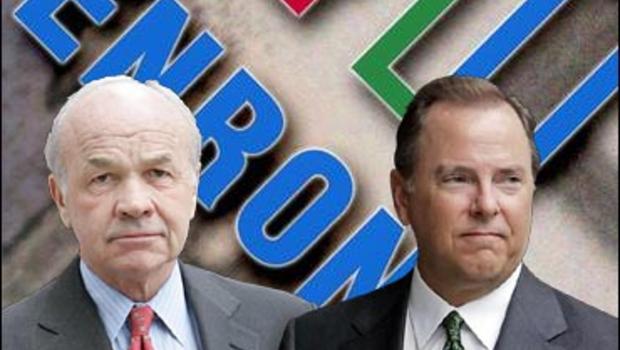
Disparate results from overreaching prosecutions

kpmg logo42.jpgAmidst a busy summer day, I pass along a rare and quick afternoon post on disparate results emanating earlier today from a couple of cases involving overreaching prosecutions of businesspeople.
First, Peter Lattman (here and here), Dave Hoffman and Ellen Podgor are doing standout instant analysis of U.S. District Judge Lewis Kaplan’s opinion issued earlier today rapping the knuckles of the Department of Justice for threatening KPMG with indictment in the KPMG tax shelter case unless the firm shirked its policy of paying the defense costs of partners who were indicted for work performed in the course of the firm’s tax shelter business (background posts here and here). As Professor Hoffman notes, Judge Kaplan is not ready to dismiss the indictment as the remedy for the prosecutorial abuse, so it appears that KPMG will be left holding the bag for the not insubstantial costs arising from the improper prosecutorial strongarming. That would not seem to be much of a deterrent for a prosecutor to engage in such tactics in the future, but maybe dismissal will be the remedy next time around when prosecutors engage in this sort of nonsense.
Natwest three14.jpgMeanwhile, following on this post from last week, the three former National Westminster Bank PLC bankers who Enron Task Force prosecutors are attempting to extradite to Houston to face criminal charges (previous posts here) lost their final appeal to halt or postpone the extradition as the European Court of Human Rights (ECHR) in Strasbourg rejected their request for a stay pending disposition of their appeal to that body. It is now likely that the NatWest Three will be extradited to Houston next month and detained in the Federal Detention Center in downtown Houston as they attempt to prepare for a trial in an unusually hostile environment.
You can bet that the Task Force’s reliance on a treaty of tenuous applicability to extradite the NatWest Three to a holding cell in downtown Houston is being followed closely by business interests in the UK. Is this really the way we want the US criminal justice system to be perceived internationally?

Going nuclear

My sense is that Asheville Tourists manager Joe Mikulik suspects that Stros farmhand Koby Clemens is getting some favorable treatment from the umps that is normally reserved for his father:

Lexington’s Koby Clemens — whose famous father Roger made a tuneup start for the Legends this month after re-signing with the Houston Astros — was leading off second base after hitting an RBI double when Asheville pitcher Brandon Durden tried to pick him off.
Umpire Andy Russell called Clemens safe, sending Mikulik roaring out of the dugout and setting off a prolonged tirade that he carried all over the infield and into the dugout.

That led to this:

An unintended consequence of Hurricane Katrina

Louisiana.gifOf all the consequences of Hurricane Katrina on the state of Louisiana, this NY Times article reports on one that I never expected:

State officials assumed that Louisiana’s tax base had been battered by last year’s hurricanes, but the latest figures show that the opposite occurred: more tax dollars than ever are pouring into the state’s coffers as the budget year draws to an end.
The state predicted that tax collections would plunge by almost $900 million this year, and it slashed spending to match. Instead, a record $9.2 billion is on track to be collected by the time the budget year ends on June 30, and at least some of that tax flow looks as if it is likely to continue.

Part of the tax revenue boost has come from increased gambling at casinos and video poker machines located in the state, and higher energy prices has also helped increase tax and state royalty revenue. However, the biggest surge has come from sales taxes as hurricane victims have used federal aid and insurance proceeds to replace personal property. State officials estimate that the state will end up with almost a half-billion more in sales tax revenue than they expected before Katrina.
Meanwhile, the hulks of thousands of damaged cars remain under the highway overpasses of New Orleans as state and federal officials quibble over who will finance the cost of towing the scrap to landfills and scrapyards. And this NY Times article follows up on this earlier post regarding the “breathtaking fraud” that took place in regard to the federal aid that has flowed into the Gulf Coast after last summer’s storms. So it goes in Louisiana.

And you think the Shell Houston Open has problems?

avenel.gifHeavy rains on the East Coast are making it difficult for the PGA Tour to complete this past weekend’s Booz Allen Golf Tournament that is being played just outside Washington, D.C. on the Tournament Players Course at Avenel in Potomac, MD. But according to this Thomas Boswell/Washington Post article, the rain is the least of the tournament’s problems:

Golf is the game of sportsmanship and proper manners, the sport that exemplifies respect for others. We even use it to teach values to kids, to instill the idea that conscience defines character.
So this is a week for golf — at least the crass, ungrateful, traveling-circus PGA Tour version — to hang its head in shame.
It’s no accident that all of the world’s four major championships are run by organizations other than the PGA Tour. The tour keeps pumping its own Players Championship to join the elite. But it’ll never happen — not as long as the tour humiliates itself, shows its true colors and drives itself down the scale of social respectability with disasters such as the one it is perpetrating in Washington this week.
Even a golf tournament deserves a decent burial. The funeral for the summer pro golf stop in Washington is being held at TPC Avenel this week. The PGA Tour didn’t even have the decency to close the casket.

Geez, sort of makes the well-chronicled problems of the Shell Houston Open (see here, here and here) seem rather tame in comparison, eh?
By the way, given the fact that the problems with the Washington and Houston professional tournaments are not isolated, does anyone else have the feeling that the PGA Tour is heading for serious trouble?

Foreshadowing a key issue in the Lay-Skilling appeal

In a strong indication that he believes that the matter raises important appellate issues, U.S. District Judge Sim Lake issued a 22 page opinion late last week in the criminal case of former key Enron executives Ken Lay and Jeff Skilling expanding on the reasons for his ruling during the trial denying Lay and Skilling’s request that Judge Lake grant defense immunity to a half-dozen or so former Enron executives who Lay and Skilling believe would have provided exculpatory testimony for the defendants.

Lay and Skilling contend that the Enron Task Force used the threat of indictment against those former executives and dozens of other former Enron executives to induce the witnesses to assert the Fifth Amendment against self-incrimination rather than provide exculpatory testimony for Lay and Skilling.

The Task Force’s tactic of icing favorable witnesses for Lay and Skilling has been swirling around the case from the beginning. Lay and Skilling raised the issue prior to trial in regard to the Enron Task Force’s alleged intimidation of witnesses.

Then, Lay and Skilling raised the issue again during the trial as the defendants struggled to corroborate their testimony that key Task Force witnesses Ben Glisan and Andrew Fastow were lying when they testified that they had cautioned Lay and Skilling about Enron’s shaky financial condition at various times when Lay and Skilling were making positive statements to the market regarding the company’s finances.

In a key part of the ruling, Judge Lake explains his reasoning for denying Lay and Skilling’s request for the Court to grant defense immunity to the proposed witnesses:

The testimony that defendants expect the proposed witnesses would provide may be relevant and exculpatory, but it falls far short of being essential exculpatory evidence for the simple reason that defendants do not — and cannot — argue that these are the only witnesses capable of providing exculpatory evidence on these issues.

When defendants filed their motion to immunize the proposed witnesses both defendants had testified and their testimony contradicted the government’s evidence on these issues. At best, the anticipated testimony of [the witnesses] would be cumulative of the testimony of defendants and of other evidence presented by defendants. Accordingly, the court concludes that the defendants have failed to establish that the testimony that defendants seek to immunize would constitute essential exculpatory evidence.

This reasoning seems oddly superficial. Not only does it fail to address the fact that the Task Force’s witness-icing strategy allowed the prosecution to use hearsay statements from alleged co-conspirators against the defendants, the reasoning ignores the important impact that corroborating testimony has in a criminal trial.

Just as prosecution witnesses testifying under draconian plea deals have a powerful incentive to testify favorably for the prosecution, defendants asserting their innocence have a similar incentive to testify consistent with that position.

Juries intuitively understand this dynamic, and thus often discount such testimony while placing more weight on the testimony of corroborating witnesses who are not subject to those pressures. That Judge Lake’s opinion does not address that important impact of the Task Force’s witness-icing strategy will almost certainly be a key point on the appeal of this issue.

By the way, the same prosecution witness-icing strategy that was used in Lay-Skilling case is already an issue in the Nigerian Barge appeal. Inasmuch as a number of the convictions in the barge appeal already appear to be unraveling, the Fifth Circuit may even issue a ruling on the issue before the Lay-Skilling appeal arrives at the Fifth Circuit’s doorstep.

Handling defeat

Mickelson.jpgMonty.jpgAlthough this NY Times article reports that Phil Mickelson is still having trouble getting over his 18th hole meltdown at last week’s U.S. Open, this earlier Alan Snipnuck article gives us a taste of why Mickelson is currently one of the most popular U.S. sporting figures:

On Saturday, . . . evening [after a grueling 3rd round of the US Open], cordoned off behind the Winged Foot clubhouse, a jolly group of fans had gathered to get a glimpse of their heroes. Player after grumpy player stomped past, looking like they were trying to find a puppy to kick. None stopped to sign autographs.

At 7:30 p.m. Mickelson emerged behind the clubhouse, having endured 45 minutes of media obligations. It had already been a long, draining day. His caddie, Jim MacKay, was nursing sore feet, and had peeled off his shoes and socks to reveal shocking tan lines on his ankles. Mickelson’s wife Amy was slumped against a clubhouse railing, occasionally checking her watch. The Mickelson escape car, a gray SUV, was idling nearby. But drawn by the chanting of his name, Phil jogged over to his adoring public. Not content to just scribble autographs, he began working the crowd with a giddy shtick.
A French cameraman got in Mickelson’s face to record the scene, and hearing his accent, Phil said,”I love Paris. Tour d’Argent is my favorite restaurant in the world.” When a fan asked Phil if he would be playing a tournament in France anytime soon, he stopped signing long enough to jiggle his ample midsection for effect. “I don’t go to Paris to play golf,” Mickelson said. “I go to eat. Obviously.” The crowd spooned it up.
By this time, a pretty blonde had wiggled her way to the front row and was trying to engage Phil with some flirty banter. Mickelson finally asked her for her phone number . . . and then passed on the digits to a sportswriter hovering nearby, giving him a showy introduction. The scribe and the toothsome fan wound up making dinner plans on the spot, a hookup that brought smiles from the burly state troopers doing crowd control. . . . Phil signed three more, and then with a wave he jumped into his car and sped off. On the drive home he made a call to the writer on his cell phone, referring to himself as “pimp daddy” and asking for an update on the date.

On the other side of the popularity coin, this John Huggan/Scotsman article reports on why Colin Montgomerie remains one of the least popular professional golfers in the US:

Continue reading

Houston’s gift to Botswana

bradshaw_lrg.jpgMajor W. Bradshaw has long been one of the talented physician-teachers that makes Houston Texas Medical Center such a fascinating place. Dr. Bradshaw came to Houston and the Baylor College of Medicine as an Assistant Professor of Medicine in 1972 to ramrod Baylor’s development of expertise in microbiology and immunology. An outstanding teacher, Dr. Bradshaw was promoted to Dean of Education in 1996 and to Senior Vice-President and Dean of Medical Education in 2004. Now, while most contemporaries are planning their retirement, the Chronicle’s Leigh Hopper reports that Dr. Bradshaw has other things in mind:

[After 30 years at Baylor], Bradshaw is making an unusual career move.
He’s heading to Botswana, a country in sub-Saharan Africa that is roughly the size of Texas.
Baylor is expected to announce this week that Bradshaw has accepted a job as interim founding dean at University of Botswana’s medical school, the first such school in a country with one of the world’s worst HIV rates. Next month, he and his wife move to Gaborone, Botswana’s capital, leaving their home, their children and grandchildren for at least a year.
“It’s pretty remarkable for (the University of Botswana) to have the sitting dean of education for the No. 10 medical school in the United States to all the sudden be their new founding dean,” said Baylor College of Medicine President Peter Traber. “That’s quite a recruitment.”

Dr. Bradshaw’s appointment is part of Baylor’s affiliation agreement with the University of Botswana, which is starting the country’s first medical school to address Botswana’s critical health needs, including a high percentage of the population that is infected with the HIV virus. Under the leadership of Baylor pediatric professor Mark Kline, Baylor has already opened a treatment center for HIV-infected children in Botswana in 2003 as a part of Baylor’s International Pediatric AIDS Initiative. What better legacy for a teacher such as Bradshaw — who has had a major influence on one of America’s finest medical schools — than to contribute his talents to the creation of a medical teaching institution in a part of the world that needs it the most. Just another example of the magnificent influence that the professionals of Houston’s remarkable Texas Medical Center are having throughout the world.

New York’s regulation premium

Grasso.jpgThis Landon Thomas/NY Sunday Times article is the definitive report to date on the status of New York aspiring governor Eliot Spitzer’s lawsuit against former New York Stock Exchange chairman and CEO Richard Grasso (prior posts here) over Grasso’s $140 million pension from the NYSE. In short, the NYSE board was quite involved in Grasso’s compensation arrangements, although there is some question over how well the details of those arrangements were disclosed to the entire board. However, at the end of the day, the board members knew what they were doing, debated the merits of the package extensively and approved it. If this case were to be determined in accordance with the corporate case of the decade, then it would not even appear to be a close call — Grasso and the NYSE board wins.
So, you ask, what’s driving the lawsuit? Well, apart from the propaganda for Spitzer’s political campaign, Thomas reports that the NYSE has already incurred in excess of $40 million in legal fees and costs in defending Grasso and the other board members in the lawsuit. Inasmuch as the cost of defending the lawsuit will likely increase substantially by the time the case is resolved through either trial or settlement, the defense cost will likely be at least half again as large as Grasso’s pension itself. That cost is really just the regulation premium that firms should expect to pay if its board decisions on big ticket items do not pass muster with the Lord of Regulation. Can you imagine how high those regulation premiums will go when the Lord of Regulation is elevated to governor?

Thinking About Performance-Enhancing Drugs

Mark Sisson is a Malibu-based former elite marathoner and triathlete who became well-known in athletic circles as an expert on drug testing for athletes while serving for 13 years as the anti-doping and drug-testing chairman of the International Triathlon Union and as the union’s liaison to the International Olympic Committee.

In a provocative letter to his friend Art DeVany, Sisson talks about drug-testing for athletes and makes some interesting observations:

At the risk of sounding a bit brazen, I would suggest to you and your audience that sport would be better off allowing athletes to make their own personal decisions regarding the use of so-called “banned substances” and leaving the federations and the IOC out of it entirely. (Even the term “banned substance” has a negative connotation, since most of these substances are actually drugs that were developed to enhance health in the general population). Bottom line: the whole notion of drug-testing in sports is far more complex than even the media make it out to be. [. . .]

The performance requirements set by the federations at the elite level of sport almost demand access to certain “banned substances” in order to assure the health and vitality of the athlete throughout his or her career and – more importantly – into his or her life after competition. . . . World class athletes tend to die significantly younger than you would predict from heart disease, cancer, diabetes and early-onset dementia. They also typically suffer premature joint deterioration from the years of pounding, and most endurance athletes look like hell from the years of oxidative damage that has overwhelmed their feeble antioxidant systems.

Most people don’t realize it, but training at the elite level is actually the antithesis of a healthy lifestyle. The definition of peak fitness means that you are constantly at or near a state of physical breakdown. As a peak performer on a world stage, you have done more work than anyone else, but you have paid a price.

It is again ironic that the professional leagues and the IOC — the ones who dangle that carrot of millions of dollars in salary or gold-medalist endorsements — are the same ones who actually created this overtrained, injured and beat-up army of young people. They don’t care. These organizations then deny the athletes the very same drugs and even some natural “health-enhancing” substances that the rest of society can easily receive whenever they feel the least bit uncomfortable. [. . .]

I believe that with proper supervision, athletes could be healthier and have longer careers (not to mention longer and more productive post-competition lives) using many of these “banned substances.” And perhaps the biggest assumption I will make here is that the public just doesn’t care. Professional sport has become theater. All the public wants is a good show and an occasional world record.

As I noted earlier with regard to Barry Bonds’ use of steroids, management of professional sports has not done a good job of drawing the line with regard to what should constitute illegal use of drugs, on one hand, and legal performance-enhancing substances that are beneficial to the health of the athletes, on the other.

As a result, the league rules (as well as our nation’s laws) governing which substances are legal and illegal are often arbitrary and hypocritical.

Indeed, professional sports teams (as well as their fans) often encourage their players to risk their health. Players who “play with pain” are the subject of adulation in all levels of sport, as are players who risk injury by running into walls, taking cortisone shots to be able to perform with reduced pain and undergoing risky surgeries to lessen pain in order to play in a big game (remember Curt Schilling in the 2004 World Series?).

The difference between a professional athlete taking pain-reducing drugs to get through a season and another athlete using performance-enhancing drugs in an attempt to be more productive during a season is not as wide as it may appear at first glance.

Regulating the regulation

nbr_logo.gifHouston-based — er, . . I mean Bermuda-based, or is that Barbados-based? . . . — Nabors Industries, Inc. is one of the world’s largest drilling contractors. The company has nearly 600 land drilling rigs and more than 900 land workover and well-servicing rigs, and operates across the U.S. and in Africa, Canada, Central and South America, and the Middle East. Nabors’ offshore equipment includes platform rigs, jack-ups, barge drilling rigs, and marine support vessels, and the company provides oil field hauling, maintenance, well logging, engineering and construction services. In short, Nabors is the type of oil field service company that exploration and production companies want to have competing for the business of drilling or providing other services for an oil or gas well at the lowest possible price.
One of the reasons that Nabors has been one of the most profitable oil field service companies over the past 20 years or so is that its management team is constantly searching for ways to make the company more profitable and valuable to its shareholders. So, in 2001, Nabors moved its tax headquarters to Bermuda and its legal headquarters to Barbados to lessen its American income taxes. The move has paid dividends for Nabors shareholders as the company paid only $6 million in U.S. income taxes last year on almost $430 million in profits, which would have generated over $80 million more in taxes if Nabors were based in the U.S. Several other big companies have done the same thing as Nabors.
So, given the competitive advantage that Nabors and other tax haven-based companies have over their American-based competitors, you would think that Congress might get the message and simply reduce the tax regulation that prompted such moves. But that would be too easy. Rather than addressing the cause, a fierce debate developed in Congress with demagogues from both parties promising voters to crack down on “Benedict Arnold companies” such as Nabors that move to tax havens to avoid paying U.S. income taxes.

Continue reading