LBJ on Ee-co-nomics

lbj.jpgThanks to Arnold Kling for pointing out this Robert Skidelsky review of Richard Parker’s new book, John Kenneth Galbraith: His Life, His Politics, His Economics (Farrar, Straus 2005), which contains the following earthy observation on economics from the late Lyndon B. Johnson, made to Galbraith while Johnson was throwing away a Galbraith-authored draft of a speech:

“Did yíever think, Ken, that making a speech on ee-co-nomics is a lot like pissing down your leg? It seems hot to you, but it never does to anyone else.”

Stros 2006 Review, Part One

Ensberg and Berkman.jpgThis is my first periodic review or the Stros’ season in my third straight year of blogging the club, and the first 10% of the season has has initially justified my generally rosy pre-season outlook. The club has burst out of the gate with a Major League-best 11-5 record and, with the exception of the relief pitching, every other part of the club has been performing at above-expected levels so far.
As regular readers know, I’m a stathead with regard to analyzing baseball, so here are the key stats of the Stros’ hitters (pdf of hitting stats here) and pitchers (pdf of pitching stats here) through the first 16 games, courtesy of Lee Sinins‘ sabermetric Baseball Encyclopedia:

Continue reading

Lookin’ good

shologo8.gifAs noted in this earlier post, the Shell Houston Open golf tournament is taking place this week at Redstone Golf Club. Yesterday afternoon, I was able to watch a few minutes of the USA Network telecast of the first round and was particularly impressed with the overhead shots of the new Tournament Course at Redstone from the “Bloomin’ Onion” — the Outback Steakhouse Blimp.
Unlike the other courses on which the tournament has been played recently, the new Tournament Course is not a “subdivision” course — i.e, there are no homes lining the fairways of the course. As a result, the tree-lined course with several small lakes looks much better from an aesthetic standpoint than either the other Redstone course or the TPC at The Woodlands, the two other recent venues of the tournament.
My previous post on this week’s tournament is here and my review of of the new Tournament Course is here.

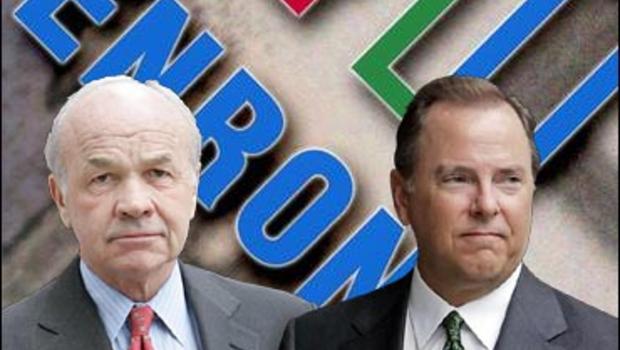
Lay-Skilling, Week Twelve

The Jeff Skilling segment of the corporate criminal trial of the decade concluded during Week Twelve as the former Enron CEO testified for a bit over three days on cross-examination from Enron Task Force director Sean Berkowitz and on re-direct from Skilling attorney, Daniel Petrocelli.

As has been my custom during the Lay-Skilling trial, I continue to read each day’s transcript of the trial and pop into the courtroom whenever I am in the federal courthouse on other matters and have an hour or two to spare.

This week, I was able to sit it on the final two hours of Berkowitz’s cross-examination of Skilling, and that experience reinforced my overall opinion of the trial to date — the Task Force is presenting a fundamentally flawed and weak case against Skilling and Lay.

Given the societal bias against anything having to do with Enron, it is helpful to review from time to time the case that the Task Force has actually presented in court to date. In short, the Task Force has presented a “pump and dump” case that, to a large extent, relies on a complex jumble of innuendo and opinion.

According to the Task Force, Enron was so successful in making money in its trading operations that it allowed Skilling and Lay to soft-pedal to the markets the losses that Enron was incurring in several of the company’s less successful units.

Mind you, the Task Force is careful not to contend that either Lay or Skilling was involved in fraudulent accounting. Rather, the Task Force asserts that mainly Skilling understated to the market the losses of a couple of poorly-performing Enron business units, including allegedly hiding one unit’s losses underneath the blanket of the trading unit’s high profits.

The Task Force contends that the alleged hiding of these losses — along with alleged over-reserving of excess profits in the trading unit — allowed Skilling and Lay to misrepresent Enron to the investing public as a stable logistics company rather than the more volatile trading company that prosecutors allege that Enron had become.

As noted in this earlier post at the beginning of the trial, the Task Force’s theory of the case relies on its unstated, but nevertheless key, presumption — i.e., that Lay and Skilling are rich and Enron collapsed, so they must be guilty of something as a result of Enron’s failure.

Berkowitz’s entire cross-examination of Skilling played heavily on that presumption. Given that dubious premise, it’s not particularly surprising that Berkowitz’s cross-examination was long on style but noticeably short on substance.

Relying on word games and satirical indignation, Berkowitz often gave Skilling little time to answer questions and frequently cut him off during his answers. Meanwhile, Berkowitz failed to pursue most substantive areas of inquiry related to the 28 charges against Skilling in favor of spending an inordinate amount time on relatively superficial matters that have little to do with the charges.

For example, early in the cross-examination, Berkowitz brought up that Skilling was using a jury consultant to assist him in preparing his defense and even showed the jurors the consultant’s webpage on the courtroom’s exhibit screen.

Given the vacuous nature of the entire line of inquiry, it was a credit to Petrocelli’s trial instincts that he didn’t bother to object. Since when is working with a jury consultant to help establish one’s innocence a sign of guilt?

Similarly, Berkowitz spent a substantial amount of time questioning Skilling about his earlier SEC testimony regarding Skilling’s investment in Photofete, a former girlfriend’s photography business. The investment was clearly small potatoes, but Berkowitz suggested to the jury that Skilling’s mistaken earlier SEC testimony about the size of his investment, possible backdating of an investment check and his failure to disclose to the Enron board that he had invested in a small vendor of Enron was definitive evidence of Skilling’s lack of credibility.

Maybe so, but what about those 28 charges against Skilling? Larry Ribstein summed it up well in this post:

So the biggest fraud of the century is going to come down to Photofete? As I’ve pointed out in the post linked above, this is all part of what I’ve called the “corporate crime lottery,” where guilt depends on such things as what juries will understand rather than on the essential wrongfulness of the misconduct.

Despite widespread speculation that Skilling would come unhinged under the pressure of cross-examination, he did not.

The only time that Skilling flashed anger was during the second day of cross-examination when Berkowitz suggested in a line of questioning that changing the classification of a public company’s preliminary earnings estimates in the company’s later published financial results was conclusive evidence of accounting fraud.

Under Berkowitz’s way of thinking, if a company’s initial estimates later change in the company’s actual published results, it’s prima facie evidence of fraud, which would make virtually every public company in the United States subject to being indicted for fraud.

After Berkowitz persisted in such nonsense during a protracted series of questions, Skilling finally lost his temper for a moment and chastised Berkowitz’s mendacity.

However, from my vantage point, it seemed clear from the exchange that Berkowitz either did not understand what he was talking about or was disingenuously suggesting that a common practice of most large public companies is a crime.

But if the first two days of Berkowitz’s cross-examination were somewhat odd for the failure to address substantive issues related to most of the actual charges against Skilling, the final day of cross-examination was downright bizarre.

During the morning session that I attended on Wednesday, Berkowitz quizzed Skilling over a substantive area — i.e., Enron’s trading business and the company’s disclosures related to it.

Berkowitz continually asked Skilling spurious questions about Enron’s trading business, while Skilling patiently explained to Berkowitz how the questions reflected either his misunderstanding or mischaracterization of the business. As one old local lawyer sitting next to me commented right before the lunch break:

“This is not a fair fight. Skilling is schooling him.”

Then, after the lunch break, Berkowitz changed directions and began to question Skilling regarding the reasons that he decided to resign as Enron’s CEO in mid-August, 2001. After about 45 minutes of meandering and innocuous questioning, the elderly lawyer sitting next to me leaned over and cracked:

“I think Berkowitz really just wants to have a beer with Skilling and talk things over.”

About an hour into his post-lunch break questioning, Berkowitz finally suggested that Skilling had told a former McKinsey & Co. partner shortly after his resignation from Enron that he would consider the CEO job at Lucent. When Skilling denied the allegation, Berkowitz snidely retorted to Skilling “[t]hat’s another person you disagree with?” and abruptly ended the cross-examination.

Thus, rather than ending cross-examination with a bang, Berkowitz ended it with a whimper.

How all of this is playing with the jury is one of the fascinating imponderables of trial law. Certainly, given the government and much of the media’s demonization of both Skilling and Lay, the Task Force may not need anything more than a weak case to obtain convictions.

Peter Lattman of the popular WSJ Law Blog attended Skilling’s direct testimony and the first part of the cross-examination, and he thought that the jurors responded negatively to Skilling in regard to the Photofete testimony.

During my visit at the closing of cross-examination on Wednesday, the jurors appeared bored with Berkowitz’s morning questioning over the trading business and somewhat befuddled by his aimless post-lunch break questioning.

For what it’s worth, the Tradesports contracts predicting a Skilling conviction did not move a lick during the cross-examination, which at least reflects a perception in that market that cross did not go well for the prosecution.

Although I do not have as good a basis for evaluating the jury as those who are in the courtroom on a daily basis, my approach of reading the transcript, writing weekly summaries and occasionally popping into the courtroom does allow me to reflect on the proceedings a bit more than the folks who are under the pressure of reporting on each day’s developments.

In that regard, none of the pervasive media reports on the trial picked up on the fact that Berkowitz failed to address two key allegations in its case during Skilling’s cross-examination — (i) the alleged Global Galactic agreement that former CFO Andy Fastow testified that he entered into with former Enron chief accountant and former Lay-Skilling co-defendant, Richard Causey, and (ii) the alleged huge conspiracy at Enron.

It doesn’t say much about the strength or validity of the Task Force’s case that arguably the key issue in its case-in-chief is not even addressed during cross-examination of the defendant against whom the issue was directed.

Similarly, Berkowitz’s failure to question Skilling about the alleged conspiracy within Enron is equally baffling, but at least consistent with the Task Force’s paltry presentation of evidence related to its conspiracy charges throughout its case-in-chief.

The Task Force’s ducking of the conspiracy issue brings into sharp focus the true reason why the Task Force made the conspiracy allegations against Skilling and Lay in the first place — to make sure that key witnesses with exculpatory testimony for Lay and Skilling do not testify during the trial.

In short, the Task Force is getting away with keeping exculpatory testimony for Lay and Skilling out of this trial by designating key potential witnesses as unindicted participants in a conspiracy that the Task Force has not come close to proving.

Although reasonable people can differ over whether criminalizing corporate agency costs is sound public policy, there is no serious question that the government’s effective preclusion of exculpatory testimony for Lay and Skilling from this trial is a serious violation of the principles of justice and the rule of law upon which our criminal justice system is based.

Berkowitz’s cheap comment made at the end of Skilling’s cross-examination (“That’s another person you disagree with?”) only underscores that this jury should be allowed to hear from the dozens of former Enron executives who agree with Skilling, and not just the relative few who cut plea deals with the Task Force and testified now that they disagree with him.

As discussions of the Lay-Skilling trial reflect on this blog and others, many otherwise thoughtful and intelligent people believe that they understand the Enron morality play so thoroughly that they seemingly lose the capacity for independent thought regarding Enron and reject any notion of ambiguity or fair-minded analysis in ferreting out the truth of what really happened at the company.

However, against that daunting societal bias, Skilling admirably told his side of the Enron story for over 40 hours on the stand and did not back off from attempting to answer any question posed to him.

Regardless of the outcome of this trial, Skilling’s performance was both impressive and a daunting reminder of the increasing hazards involved for businesspersons in taking cutting-edge risks to create jobs and build wealth in the current U.S regulatory environment.

When the trial resumes on Monday, Lay will take the stand and my sense is that his testimony will take the remainder of the week. Lay’s testimony will be even more focused than Skilling’s on the conflicting considerations and pressures that surrounded the process of making tough business judgments for Enron in an unsettled market that was quickly souring on the company.

Thus, stay tuned for yet another highly interesting week of testimony as the corporate criminal trial of the decade heads toward conclusion.

More troubles for V&E?

VE.jpgAs noted earlier here, the venerable Houston law firm of Vinson & Elkins has received its fair share of bad publicity for its role as primary outside counsel for the social pariah, Enron. Probably the severest criticism for V&E was its role in handling the investigation into the allegations contained in Sherron Watkins’ memo to former Enron chairman and CEO, Ken Lay. V&E’s investigation found no wrongdoing, and Watkins and the Enron Task Force contend that V&E whitewashed the matter to help Lay hide severe problems at the company.
Now, according to this Bond Buyer News article, the San Diego city attorney is prepared to file a lawsuit against V&E over an investigation into the city’s pension debacle that the city attorney alleges was mishandled. San Diego’s pension problems were revealed in early 2004 when the city announced that it had about $1.2 billion in unfunded pension liabilities ó now estimated to be between $1.4 billion and $2 billion ó due to a number of factors, including the underfunding of annual contributions and the creation of expanded retirement benefits, some of which may not have been legal. The city hired Vinson & Elkins to review the cityís pension problems and disclosure practices and to recommend improvements.
Vinson & Elkins wrote two reports. The initial one was completed in the fall of 2004 and detailed how the pension problems occurred over time. It also recommended a series of major steps for the city to take to improve its pension reporting and disclosure practices. The second report was completed in July 2005 and concluded that at least six former officials and San Diego city council members may have violated the federal securities laws by failing to ensure pension problems were disclosed in bond documents.
San Diego City Attorney Michael Aguirre has contended that the Vinson & Elkins reports, for which he says the city was billed about $6 million by the law firm, were ìa whitewashî (heard that before?) that failed to hold city officials fully accountable. Aguirre conducted his own investigation of the pension debacle after the issuance of the V&E reports and his conclusions regarding the former officials were much harsher than the V&E conclusions:

ìBoth [Vinson & Elkins] and Kroll [another participant in the investigation] are exploiters of vulnerabilities of the city,î Aguirre said. ìInstead of helping the city do what it was required to do, they coordinated their efforts to help the people that were under investigation escape responsibility because thatís where the money was.î

This investigatory work is getting a tad expensive for V&E, don’t you think?

Alabama politics and the latest Scrushy trial

scrushy7.jpgLet’s see if I can keep this straight.
This article about the beginning of jury selection for the upcoming bribery trial against former HealthSouth CEO Richard Scrushy and former Alabama Governor Don Siegelman reports that former Alabama Lieutenant Governor Bill Baxley represents one of the other co-defendants, former Siegelman cabinet member Mack Roberts.
Meanwhile, Siegelman is running for governor again and wants to be acquitted of the charges before the June 6th Alabama Democratic primary in which he is opposed by current Alabama Lieutenant Governor Lucy Baxley, who is the former wife of Roberts defense counsel Baxley.
I wonder if Ms. Baxley will be a character witness for Siegelman? ;^) Hat tip to Letter of Apology for the link.

The brewing political storm involving the NatWest Three

Natwest three10.jpgAs the testimony of former Enron CEO Jeff Skilling concludes today in a Houston courtroom, a political firestorm is brewing in the United Kingdom over the Enron-related case of the NatWest Three (previous posts here) — the three former London-based National Westminster Bank PLC bankers who are charged in Houston with bilking their former employer of $7.3 million in one of the schemes allegedly engineered by former Enron CFO Andrew Fastow and his right hand man, Michael Kopper.
According to this article from The Scotsman, an influential committee of the Scottish Parliament has taken the extraordinary step of writing to the UK government to lodge a formal complaint requesting that Scotland be exempted from the provisions of the 2003 Extradition Treaty signed with the US in the wake of the 9/11 attacks on New York and Washington, D.C.
According to The Scotsman article, the committee has notified the UK government that it is objects to Scots being taken to the US to stand trial for offenses without the US being required first to present a prima facie case against the Scots in a UK court. The committee also objects to other terms of the controversial treaty, such as allowing UK citizens to be extradited to the US for one offense and charged with another and giving US the power to demand the extradition of British citizens to face trial in the US even though the US Congress has not approved the treaty allowing the British government similar extradition rights with regard to US citizens. One of the NatWest Three — Gary Mulgrew — is a Scot and the son of a member of the Scottish Parliament.
Inasmuch as it is highly unlikely that the UK government would exempt Scotland from a major international treaty, the Scottish committee’s complaint is largely symbolic. But it is adding to growing political pressure in the UK for the UK government to disavow the extradition treaty, which went into effect in January 2004 as an anti-terrorist measure. The treaty has resulted in 12 extraditions to date, but none of them have been for terrorist offenses. Two were extradited for alleged drug offenses, six for alleged fraud or robbery, one on murder allegations, two for alleged rape and one for an alleged assault. 23 other alleged white-collar criminals — many of whom work in London’s financial district — are currently awaiting extradition on allegations of fraud and other financial offenses.
Meanwhile, the London Daily Telegraph has established this handy webpage that includes articles, editorials and other resources relating to the controversy.
Thus, if the NatWest Three lose their current appeal to the House of Lords and are extradited to Houston, they will be forced to prepare the defense of their case against the imposing resources of the Enron Task Force while imprisoned in Houston’s Federal Detention Facility. Meanwhile, their main accusers — Fastow and Kopper — remain living comfortably in River Oaks and Montrose.
But an equally damaging aspect of the the case is the way that it portrays the US justice system in the UK and internationally as a wild frontier with no respect for due process of law. That portrayal is a natural product of the criminalization of business mindset that elevates propaganda campaigns and prosecutorial misconduct over proof of criminal charges in a court of law. Little wonder that the already high price of asserting innocence in the US justice system continues to increase.

Diet and Alzheimer’s

veggies.jpgA new Annals of Neurology study headed by Nikolaos Scarmeas of the Columbia University Medical Center in New York has found that people who followed a Mediterranean-style diet were up to 40% less likely than those who largely avoided it to develop Alzheimer’s during the course of the research study. Previous posts on Alzheimer’s research are here.
The study evaluated about 2,200 elderly residents of northern Manhattan every 18 months for signs of dementia over a four years period. None showed any dementia at the start of the study, but by the end of the study, 262 had developed Alzheimer’s. The researchers gave each participant a score of zero to nine on a scale that measured how closely they adhered to a Mediterranean-style diet. Compared to those showing the lowest adherence, those who scored four or five on the diet scale showed 15% to 25% less risk of developing Alzheimer’s during the study and those with higher scores had about 40% less risk. Prior research suggested that certain components of the Mediterranean diet can reduce the risk of developing Alzheimer’s, but the research focused on specific nutrients (such as vitamin C) or foods such as fish. By incorporating an entire diet, the new study addresses possible interactions between specific foods and nutrients.
The diet tested in the study included primarily vegetables, legumes, fruits, cereals and fish, while limiting intake of meat and dairy products. The diet also included drinking moderate amounts of alcohol and emphasizing monounsaturated fats, such as in olive oil, over saturated fats. Previous research has suggested that such an approach also reduces the risk of heart disease, and the new study is additional evidence that certain conditions that are associated with heart disease — high cholesterol, high blood pressure, obesity, smoking and uncontrolled diabetes — may also contribute to Alzheimer’s.

Creditors’ rights, Chinese-style

china bankruptcy.gifThis earlier post noted the paradigm shift in favor of creditors that has occurred recently with the amendments to the U.S. Bankruptcy Code, but that shift is nothing in comparison to the pressure that creditors in China can apparently bring to bear upon struggling debtors.
Get a load of this First Circuit Court of Appeals decision involving an appeal of a lower court decision denying a young Chinese woman’s request to remain in the U.S.:

Petitioner grew up in a small village in southeastern China. In 1998, her father partnered with Su Fei Pan, a local Communist Party boss, to start a new business. After an employee embezzled the business’s proceeds, the venture failed and petitioner’s father was left unable to pay off his outstanding loans.
Su Fei Pan, however, brokered a deal to clear the father’s debts. A wealthy Taiwanese man would pay off the debts if petitioner’s father would permit the man to marry his daughter, petitioner’s older sister. Petitioner’s father agreed, but the sister, who was 19 years younger than the Taiwanese man, refused and ran away from home.
A month later, in September 1999, Su Fei Pan attempted to broker the same deal but with petitioner taking the place of her older sister. Su Fei Pan told petitioner that her older sister was waiting for her in a hotel in the city of Fuzhou (a two hour drive from her village). When petitioner entered the hotel room, she was grabbed by an older man, presumably the Taiwanese man, who then tried to force her down onto the bed. Petitioner resisted and was able to escape. She fled from the hotel and went into hiding.

After hiding from her father, the Communist Party official and the Taiwanese man for several years in China, the young girl eventually made her way to the U.S. in 2002 with a fake visa, where she was promptly arrested at the LA airport and placed into custody for another few years. Inasmuch as she does not belong to a particular social group (“unmarried young wom[en] from rural China . . . who have resisted being forced into marriages and sexual relationships by a person in power” apparently isn’t good enough), the First Circuit affirmed the Immigration Board’s ruling and sent the young woman packing to China, where presumably the Communist Party is still providing brokerage services for her marital future.
Sort of makes you wonder what collection strategy the Communist Party would have taken had the father not had any daughters? Hat tip to Appellate Law & Practice for the link to the First Circuit decision.

The Texas Untouchables?

SWAT-Stack-200.jpgWhile perusing the Chronicle over the past couple of days, I came across this article about the Texas Alcoholic Beverage Commission quietly suspending a program of stepping up arrests of intoxicated bar patrons after state legislators scheduled a hearing this week to investigate complaints from the public ó and legislators ó about how the arrests were being carried out.
I’m not a patron of bars, so I didn’t think much more about the article until yesterday, when I read this follow-up article about the hearing. State Senator John Whitmire of Houston, who co-chaired the hearing and is usually quite supportive of the TABC, was reportedly outraged by the “cowboy attitude” exhibited by TABC agents, which included storming targeted bars while outfitted in full-SWAT team gear. Other committee members reported stories of patrons forced up against a wall en masse. In fact, a number of witnesses testified about being arrested without a sobriety test and, in one case, of being arrested after passing a Breathalyzer test. At one point, TABC even invited a local television camera crew to film their sting operations!
Now, let me get this straight. Alcohol control agents are dressing in SWAT gear to raid bars where people are drinking, all for a spot on the 10 o’clock news?
My sense is that we could use a bit of housecleaning at the TABC.