Uh, Reggie, can you return kick-offs, too?

reggie bush leaping3.jpgI may have missed it, but I didn’t see the following news reported in ProFootballTalk reported by any of the local media:

Mathis Pulls a Winslow
A league source tells us that Texans receiver Jerome Mathis is sporting casts on both hands and bandages on his wrists and arms due to a recent motorcycle accident.
The accident happened recently, and nearly a year to the day after Browns tight end Kellen Winslow auditioned for the role of Superman by flying over the handlebars after attempting a reverse wheelie. Winslow suffered far more extensive injuries, including a torn ACL that knocked him out for the 2005 season.
Per the source, the injuries to Mathis appear to be limited to his arms. The source added that Mathis looks like “a mummy from the elbows down” (which raises all sorts of interesting bathroom issues).

Mathis, who excels at returning kick-offs, was the only member of the Texans team to make the NFL Pro Bowl All-Star game this past season.

A class act calls it quits

melloan final.jpgGeorge Melloan, the deputy editor, international, of The Wall Street Journal and the author of the WSJ’s weekly “Global View” column for the past 16 years, is retiring from the Journal at the end of this week. His final Global View column is here, which concludes as follows:

As readers may have suspected from the above, this is my last Global View column. After 54 years of joy at being part of a great news organization, I am retiring at the end of this week. I will keep myself busy writing a book about the 36 years I have spent writing and editing a portion of the copy you have read on the Journal editorial pages.
Part of the pleasure of this column has been the exchanges I’ve had with readers. Let me thank again those of you who have been generous with your time in sending me your thoughts and criticisms. A tiny few readers have expressed their disagreement in barnyard terms, but, having grown up on an Indiana farm, I long ago became familiar with that kind of discourse. I can quite understand hostile reactions to the preachments of a newspaper columnist, since I occasionally have tantrums myself when I disagree with a journo who sees the world in a different light. In America, neither side, thank goodness, can use the power of the state to suppress the other.
I will leave this column in the hands of a far younger and more talented writer. It has been fun, but all good things must end. Sayonara.

Melloan is a talented writer on business and politics, and I have liberally cited his columns in these previous posts. His common sense and — most of all — clear thinking will be sorely missed. Congratulations on a fine career and a job well done.

Plains Exploration’s big deal

Plainslogo.jpgHouston-based Plains Exploration & Production Co. announced Monday that it has agreed to acquire Stone Energy Corp. of Lafayette, La. and assume the company’s debt in a stock deal with a current value of about $1.35 billion.
Under the agreement, Plains will swap 1.25 common shares for each Stone Energy common share as Plains expects to issue about 34.5 million shares and assume about $485 million in debt. When the acquisition closes, Plains shareholders will own 70% of the combined company with Stone Energy shareholders owning the balance. Stone Energy shares rose $1.76 to $48.86, while Plains stock declined $2.92 (7%) to $39.05 as of the end of yesterday afternoon’s New York Stock Exchange composite trading.
The primary purpose of the acquisition is to diversify Plains heavy concentration of reserves in California into Louisiana and the Gulf Coast. After the acquisition closes, Plains will have a proved reserve base of about 500 million barrels of oil equivalent (about 80% in oil) with operations in California, the Rocky Mountain region, Texas and the Gulf of Mexico.

Protecting Bezos

Bezos.jpgIn this era of increasing skepticism regarding executive compensation of public companies, I pass along this Seattle Times blurb on the compensation package of Amazon.com’s CEO, Jeff Bezos:

Amazon.com spent $1.1 million last year protecting Chief Executive Jeff Bezos, according to regulatory filings.
Since 2003, the online retailer has paid roughly $3.2 million on security for Bezos, including at business facilities and for business travel. The expense showed up for the first time on the company’s annual proxy, which was filed Thursday with the Securities and Exchange Commission.
Meanwhile, Bezos’ pay remained the same for the eighth year: $81,840.
As the company’s founder, Bezos owns 101.3 million shares, or 24.3 percent of the company, worth about $3.68 billion.

80 grand in annual compensation and over a million in security costs? Sounds as if Bezos should trade jobs with his bodyguard. ;^)

The Real Presumption in the Lay-Skilling case

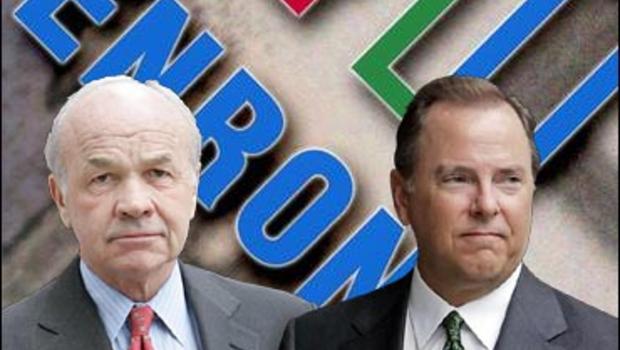
Lay and SkillingAlthough the key presumption in the criminal trial of former key Enron executives Ken Lay and Jeff Skilling is supposed to be that the men are innocent of the charges levied against them, a far different presumption is turning out to be the key one in the trial.

The Enron Task Force’s case against Lay and Skilling heavily relies on an unstated presumption — that Lay and Skilling are rich and Enron collapsed, so they must be guilty of something in connection with Enron’s descent into bankruptcy. Although the presumption is superficially appealing because of the human instinct to find scapegoats for failure, it is insidious because it is not true.

Yesterday, during his initial direct examination, Lay challenged that presumption by testifying that Enron’s meltdown was the result of an unfortunate series of events that coalesced in undermining the market’s trust in the company.

As regular readers of this blog know, I have studied the Enron case and come to much the same conclusion as Lay. Enron was a “trust-based” business — that is, Enron’s business model required that its customers rely on the company’s financial integrity and not necessarily its net worth. Accordingly, when customer confidence in a company such as Enron is undermined, participants in that company’s markets become less willing to engage in the purchase or sale of long-term contracts that might not be fulfilled.

Consequently, as the “bid-ask” spreads on trading contracts in Enron’s trading business diverged in late 2001, Enron’s markets unraveled, Enron’s formerly profitable trading business collapsed and the company melted down into bankruptcy.

A typical reaction of the media reporters covering the Lay-Skilling trial have labeled the “run on the bank” explanation of what happened to Enron as audacious, but it’s really not. Although the bankruptcy of a company as large Enron is unusual, Enronesque experiences for even the largest trust-based companies are not. In fact, over the past couple of years, two of the largest companies in the U.S. — American International Group and General Motors — each have had their own Enronesque experience. AIG survived its Enronesque experience; it remains to be seen whether GM will.

Although AIG and GM are trust-based businesses, they are different companies than Enron was, and the market forces that AIG faced and that GM continues to face are different — and in many ways, more favorable — than the dicey market conditions that Enron confronted after the September 11 attacks in 2001.

However, the point remains that, if any trust-based company loses the trust of the market, then the same thing that happened to Enron could happen to any such company, and such a breach of trust is not necessarily the result of the criminal wrongdoing of its leaders.

That’s an important point to remember as the Enron Task Force continues to rely on its dubious presumption to prop up a fundamentally weak and flawed case in attempting to place Lay and Skilling in prison for most of the remainder of their lives.
