The Extra Man
Reply

 Yesterday’s post touches on the enormous direct costs attributable to the federal government’s questionable policy of regulating business through criminalization of bad or simply incorrect business judgments.
However, as enormous as those direct costs are, the indirect costs of criminalizing bad business judgments dwarfs the direct ones.
Whether management makes such judgments correctly is a fundamental risk of business ownership. Criminalizing that risk — through the prism of hindsight bias — will simply make executives in the future less likely to take the risks necessary to build wealth and create jobs while not deterring in the slightest the Bernie Madoffs of the world from embezzling money.
Business owners deserve protection from theft, but not from risk taking, and it’s not clear that government prosecutors know — or even care about — the difference.
Those indirect costs came to mind again as I read this Wall Street Journal article (H/T Russ Roberts) on the unintended consequences arising from the government?s new regulations concerning rating agencies:
Ford Motor Co.’s financing arm pulled plans to issue new debt, the first casualty of a bond market thrown into turmoil by the financial overhaul signed into law Wednesday.
Market participants said the auto maker pulled a recent deal, backed by packages of auto loans, because it was unable to use credit ratings in its offering documents, a legal requirement for such sales. The company declined to comment.
The nation’s dominant ratings firms have in recent days refused to allow their ratings to be used in bond registration statements. The firms, including Moody’s Investors Service, Standard & Poor’s and Fitch Ratings, fear they will be exposed to new liability created by the Dodd-Frank law.
The law says that the ratings firms can be held legally liable for the quality of their ratings. In response, the firms yanked their consent to use the ratings, hoping for a reprieve from the Securities and Exchange Commission or Congress. The trouble is that asset-backed bonds are required by law to include ratings in official documents.
The result has been a shutdown of the market for asset-backed securities, a $1.4 trillion market that only recently clawed its way back to health after being nearly shuttered by the financial crisis.
Professor Roberts sums it up in his post by quoting Hayek:
“The curious task of economics is to demonstrate to men how little they really know about what they imagine they can design.”
 As noted here and here, my internist converted his practice to a successful concierge practice three years ago. In this recent KevinMD.com post, Dr. Steve Knope speculates that soon patients who are not a part of a concierge practice will not know their doctor if they have to go into the hospital:
What are the consequences for patients? What happens to the average person in Tucson, Arizona when he or she gets chest pain, develops pneumonia or has a seizure? Can they reach their internist or family practitioner for a medical emergency? Most patients who call their primary care doctor for a medical emergency can’t even reach his staff during normal office hours. Instead, they will hear a recording on an answering machine, directing them to go to call “911” for any medical emergency.
Once in the ER, the doctorless patient will be admitted to a hospital physician, who is unknown to them. This so-called hospitalist, who is a salaried shift-worker, will put in his 12 hours, and then go home. He is a doctor who knows nothing about the patient’s medical history. He has never met the patient. There will be no call from the hospital doctor to the primary care doctor in the office to get a thorough medical history. There will be no medical records transferred to the hospitalist. The hospitalist will attempt to get the best medical history he can from the patient, make some quick medical decisions, and then pass the patient off to one of his colleagues when his shift ends. And so it goes. No continuity of care, no understanding of the patient; the sick person now becomes a “case of pneumonia” or “the stroke in bed 3” to a group of unknown, rotating professionals.
Knope goes on to predict that as doctors flee from primary care (see earlier post here and here), the vacuum will be filled by nurse practitioners and medical assistants, who are far less trained in diagnostic procedures.
I don’t know about you, but I’m making sure that my payments on my concierge practice account are current.
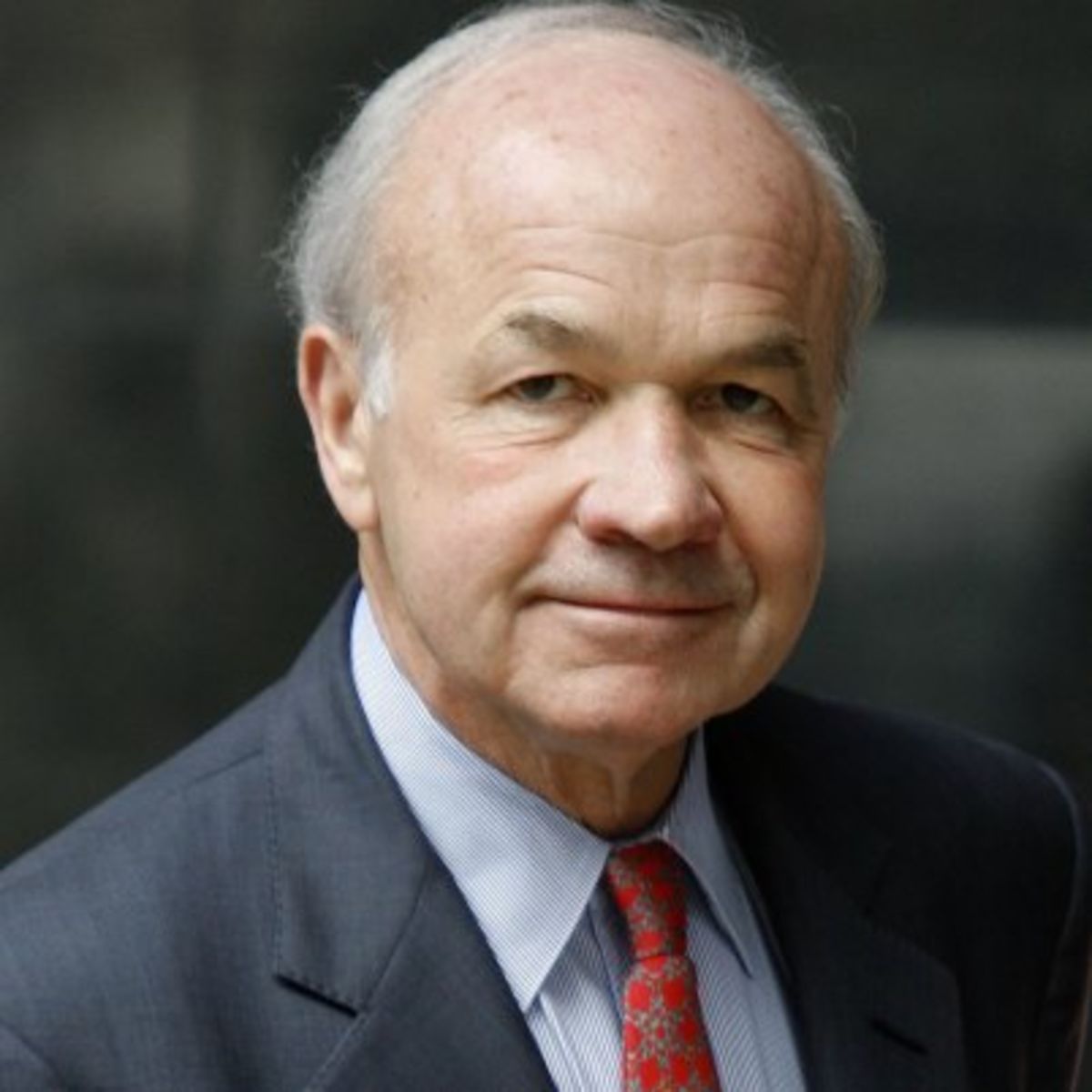 A common topic on this blog has been the power of anti-business myths within American society.
Take Enron, for example. The anti-business myth contended that that Enron — at one time one of the largest publicly-owned companies in the U.S. — was really just an elaborate financial house of cards that a massive conspiracy hid from innocent and unsuspecting investors and employees.
The Enron Myth is so widely accepted that otherwise intelligent people reject any notion of ambiguity or fair-minded analysis in addressing facts and issues that call the morality play into question. The primary dynamics by which the myth is perpetuated are scapegoating and resentment, which are common themes of almost every mainstream media report on Enron.
The mainstream media — always quick to embrace a simple morality play with innocent victims and dastardly villains — was not about to complicate the story by pointing out that the investors in Enron could have hedged their risk of loss by buying insurance quite similar to that which Enron developed in creating their wealth in the first place.
Instead of attempting to examine and tell the nuanced story about what really happened at Enron, much of the mainstream media simply became a part of the mob that ultimately contributed to the death of Ken Lay and hailed the barbaric 24 year sentence of Jeff Skilling. Ambitious prosecutors, given wide latitude to obtain convictions of key Enron executives regardless of the evidence, gladly took advantage of the firestorm of anti-Enron public opinion to lead the mob.
As noted in many subsequent posts here over the years, it is far more likely that the truth about Enron is that no massive conspiracy existed, that Skilling and Lay were not intending to mislead anyone and that the company was simply a highly-leveraged, trust-based business with a relatively low credit rating and a booming trading operation.
Although there is nothing inherently wrong with such a business model, it turned out it to be the wrong one to survive amidst choppy post-bubble, post-9/11 market conditions when the markets were spooked by revelations of the embezzlement of millions of dollars by Enron CFO Andy Fastow and a relative few of his minions.
The carnage of the Enron Myth is now piled high — the destruction of Arthur Andersen, the death of Lay, the outrageous prosecutorial misconduct involved in the case against Lay and Skilling, the senseless prosecution and imprisonment of the four Merrill Lynch executives in the Nigerian Barge case, Richard Causey, Chris Calger, Kevin Howard, Joe Hirko and the other Enron Broadband defendants — the list goes on and on.
In the wake of such destruction of careers and lives, the public is even less willing to confront the vacuity of the myth and the destructive dynamics by which it is perpetrated. indeed, even though what happened to Enron has now happened to Bear Stearns, Freddie and Fannie, Merrill Lynch, Lehman Brothers, AIG and any number of other trust-based businesses over the past two years, much of the public and the mainstream media still cling to the Enron Myth.
Attempting to challenge this enduring myth is a wonderful new resource — Ungagged.net: The Other Side of the Enron Story.
Created, funded and filmed by Beth Stier — who was the subject of prosecutorial misconduct as a non-party witness in the trial of the Enron Broadband case — Ungagged.net is a “webumentary.” That is, a website comprised of short modules of documentary-style content, organized into two main categories: “What It Was Like to Be on The Other Side of the Enron Story,” and “Behind the Scenes of The Other Side of the Enron Story.”
Ungagged.net currently features over a dozen relatives of defendants, attorneys, former Enron executives and employees telling their stories about what they experienced personally in dealing with the overwhelming governmental power and societal forces at work in the Enron saga. Moreover, six experts in economics, political science, finance, UK law and civil liberties — including Clear Thinkers favorites William Anderson and Harvey Silverglate — provide their views on the ominous implications that the government’s handling of the Enron case have on us all.
Ms. Stier continues to add new information to the site, the latest of which are dozens of snippets from fascinating interviews of David Bermingham and Gary Mulgrew, two of the NatWest Three bankers from England who were caught up in an international firestorm in connection with the Enron Task Force’s effort to turn Fastow and his right-hand man, Michael Kopper, into witnesses for the Task Force against Skilling and Lay. This series of interview modules paints an absolutely fascinating tale of three regular fellows from the U.K. having their lives, families and careers turned utterly upside down by governmental forces that viewed them as mere pawns in a much larger game.
Apart from the its egregious human toll and the serious abuse of state power that its promoters ignore, the Enron Myth’s devastating impact is that it obscures the true nature of investment risk and fuels the notion that investment loss results primarily from someone else’s misconduct. As Larry Ribstein has been asking for years, do we really want to be sending a message to investors that risk is bad when it often leads to valuable innovation and wealth creation?
For example, self-settled derivative prepay transactions are not particularly intuitive (no product actually changes hands) and are not well-understood outside the trading business. Nevertheless, such transactions provide the valuable benefit of hedging risk for companies, who pass along that benefit to consumers in the form of lower prices for their products and services.
Do we really want to allow prosecutors and regulators to paint such beneficial transactions as frauds and then manipulate the public’s ignorance to demonize innovative risk-takers who are attempting to create wealth? How does throwing creative and productive business executives such as Michael Milken and Jeff Skilling in prison do anything to educate investors about the true nature of risk and the importance of diversification and hedging?
Ungagged.net is currently a lonely voice in the wilderness advocating against such governmental overreach. Here’s hoping that voice grows louder as those of us who are concerned by the pernicious growth of abusive governmental power listen to the stories and observations contained in this valuable resource.
The trailer for the webumentary is below.
 Charles Murray reasons (H/T Steve Sailer) that it is becoming statistically less probable that Tiger Woods will catch or exceed Jack Nicklaus’ record of 18 major golf championships:
The combination of qualities that enabled Nicklaus to win 18 majors and has enabled Woods to win 14 is freakish. . . .
The role of those psychological strengths is why so much of the commentary about Woods’s play since he returned is beside the point. The commentators focus on whether his component skills are returning to their pre-scandal levels. He can return to precisely the same place on the bell curves of the component skills that he occupied before the meltdown in his personal life, but the package will not be the same. Tiger Woods has experienced a sort of concussion to that Chinese puzzle of psychological strengths, and there must be some residual damage that won’t ever go away.
The long-term effects can be quite small. When we are talking about the extremes of human accomplishment, there is no wiggle room. The package changed at all is no longer at the one-in-many-millions extreme that is required. Woods will still be a sensational golfer, winning a lot of tournaments and probably a few more majors. But to predict that Woods can win five majors between now and the end of his career – something that only 17 other golfers have done in their entire careers – assumes that nothing in the last year has significantly degraded the freakish combination required for extreme accomplishment. I find that assumption untenable.
Murray may be right. As I noted after his last major championship in mid-2008, Woods’ poorly-designed and excessive exercise regimen has damaged his body needlessly. Moreover, his swing has problems and his remarkable putting skills have eroded since his comeback, although that may simply be attributable to concentration problems stemming from the scandal and his pending divorce.
Add to those problems the fact that a half-dozen young, world-class players have emerged over the past two years to challenge for major championships and that only Ben Hogan (8) and Nicklaus (6) have won a large number of majors after the age of 35 (Woods will turn 35 later this year).
Thus, what once looked like a sure thing isn’t such a lock anymore. My sense is that Woods still can beat Nicklaus’ record, but not unless he makes big changes in his training. And as noted earlier here, does Woods really have any true friends who can help him get pointed in the right direction?
 Iíve been asking that question for almost a year now (see also here).
Craig Pirrong is asking the same question after Geithnerís comments about American business to a group of reporters at breakfast this past week.
Meanwhile, Larry Ribstein reviews the politics of supposedly ìobjectiveî governmental regulation.
Frankly, given abysmal leadership provided by both the Bush and Obama Administrations, itís a testament to the resilience of American business that the economy hasnít tanked worse than it has.
From a time when Eddie Murphy was very clever.
 Larry Ribstein notes that AIG scapegoat Joseph Cassano appears to have won in his turn enduring the criminalization-of-business lottery.
Meanwhile, Conrad Black was released from prison this week pending a re-trial of the charges against him, but he is ruined financially by his turn at the lottery.
And Jeff Skilling remains in prison and James Brown awaits another trial in his seven-year ordeal.
So, does the decision not to prosecute Cassano indicate a government move away from the lottery policy of regulating business?
Iíll believe it when I see it.
Sounds as if Louis CK has a wise doctor.
 David Garland of New York University has a new book coming out later this year on a common topic on this blog, Peculiar Institution: America’s Death Penalty in an Age of Abolition (Belknap 2010). He previews the book in this WaPo op-ed in which he addresses the following five myths of the death penalty:
1. The United States is a death-penalty nation.
2. The United States is out of step with Europe and the rest of the Western world.
3. This country has the death penalty because the public supports it.
4. The death penalty works.
5. The death penalty doesn’t work.
Check out the entire article.