Health care finance myths die hard

webdoctorfee In the face of undeniable proof that the concierge medical practice model, particularly when combined with the use of Health Saving Accounts, is an innovative market force that is addressing finance problems for a substantial portion of the health care market, this New York Times grudgingly acknowledges that concierge medicine may be a viable way to control health care costs at least for a substantial portion of health care consumers.

But on the other hand, the Times doesn’t want you to forget that HSA’s don’t work for everybody:

Critics have been less enthusiastic about H.S.A.’s, worrying that high-deductible plans work only for young, relatively healthy people who do not spend a lot on health care anyway. When sick people are faced with paying high out-of-pocket costs for medical bills, they simply go without the care they need, experts note.

As Arnold Kling has observed, why does the Times think that that we cannot possibly afford health care if we have to pay for it individually, but we can afford it if we pay for it collectively?


McMurtry’s Hollywood

McMurtry's Hollywood One of the wonderful things about owning a Kindle is that it is easy to download and read a book that you might have put off for awhile until the stack of books on the nightstand receded a bit.

One such book is Larry McMurtry‘s latest, Hollywood: A Third Memoir (Simon & Schuster 2010). McMurtry has been writing screenplays for Hollywood now for the better part of 50 years, so he has a wealth of anecdotes to pass along about the movie industry.

And somewhat surprisingly, McMurtry passes along keen insight into the business of how movies are conceived, made and sometimes not made.

For example, after the success of the 1971 film Last Picture Show, which was based on McMurtry’s novel of the same name, McMurtry observed the following about the Academy Award-winning stars of that movie, Cloris Leachman and Ben Johnson:

Ironically, but not surprisingly, when Ben Johnson and Cloris Leachman won Oscars for their performances, they decided that, by God, they were stars, and acted like stars from then on.

The first thing they did, as stars in their own heads, was price themselves out of the market, which, Oscars or not, assessed them rather more modestly than they assessed themselves.

Refreshingly, despite his obvious affection for Tinseltown, McMurtry candidly admits that he was drawn to it by the money. As he observes:

Money trumped talent, and, in the movie business, that is usually the case.

He even learned how to be a cost-effective screenwriter:

[T]he fact that I came from a generation of cattlemen gave me a slight edge – I learned not to have scenes in my Westerns that would be prohibitively expensive.

One way to achieve that was to reduce the number of animals to the lowest possible figure. Animals are well protected on movie sets, and are very expensive to use. I think they used three sets of the famous pigs in Lonesome Dove, pigs who in the narrative walk all the way from Texas to Montana only to get eaten.

Finally, on the age-old issue of whether a movie is art or a profit center:

[B]ut any thinking based on the conviction that one movie is art and another not is purely speculative. Only time will answer that question.

If you enjoy good writing, insightful observations and Hollywood, then pick up Hollywood: A Third Memoir. You will not be disappointed.

The Commerce Clause — A conduit for state power

Why do the feds even care?

Clemens Following on this post from last week on the misdirected nature of the criminal prosecution of Roger Clemens, Allen Barra wrote this W$J op-ed mirroring my skepticism over the case:

Never mind that there was no criminal penalty attached to anything Mr. Clemens is accused of using-if there were, Jose Canseco, who has written two books bragging about his use of steroids, would be serving time. Never mind, too, that when Mr. Clemens is said by his accusers to have used such substances, they weren’t even banned from Major League Baseball: the Basic Agreement between the Players Association and owners forbidding the use of PEDs didn’t take effect until 2004.

And let’s disregard as irrelevant the judgment of baseball analysts such as David Ezra (author of “Asterisk: Home Runs, Steroids, and the Rush to Judgment”) and J.C. Bradbury (author of “The Baseball Economist: The Real Game Exposed”), who have studied PEDs and Mr. Clemens’s performance and found no statistical evidence that, even if he took PEDs, he gained any advantage from them. [.  .  .]

All that matters to the government is that, in February 2008, Mr. Clemens may have lied to a House committee on a matter the committee had no business poking its nose into in the first place. If there was no criminal penalty for using the drugs and if MLB and the union have agreed now to police their own house, why do the feds even care?

That’s a good question, and one we all deserve an answer to before the government goes to the expense of putting Mr. Clemens on trial.

As I noted earlier, Clemens has not defended himself well. But the government’s handling of the investigation into his conduct is far more egregious. Here’s hoping that Clemens’ jury sees it the same way.

The pro sports bubble

bubble1.jpgSo, to the surprise of absolutely no one who follows such things, Moody’s Investors Service lowered the ratings of the already junk bond debt of about a billion dollars that the Harris County-Houston Sports Authority issued to finance construction of Reliant Stadium, MinuteMaid Park and Toyota Center:

Moody’s believes the liquidity reserves are sufficient to cover the November 2010 payment, but their depletion may result in a payment default from pledged revenues as early as March of 2011, the report said.

If hotel occupancy tax and motor vehicle rental tax revenue continues to decline through 2010, the ratings could face further pressure, Moody’s said. Revenue from those taxes to the Sports Authority dipped by 11.7 percent in 2009 and are continuing that trend in 2010.

Of course, the romantics among us think it would be peachy to borrow even more money and resurrect the Astrodome into another kind of white elephant. This despite the fact that the markets has been telling us for over a decade now that there is no profitable purpose for it.

Meanwhile, most professional sports franchises are not doing all that well these days even with local governments providing these huge public subsidies

So, highly-leveraged debt, a high-priced product, increasingly unprofitable operations, and intense competition from a myriad of different (and substantially cheaper) forms of entertainment.

Does anyone else think that this pro sports bubble is about to burst?

Inside Job

Training camp — A football tradition that needs to die

Nfl-injuriesLast week, this post noted the growing financial implications of injury risk in the National Football League and the utter lunacy of exposing high-priced player assets to such injury risk during the NFL’s grueling pre-season practices and games.

This week, William Rhoden of the NY Times notices the same thing:

The N.F.L. perpetrates two annual frauds: one against the American public, the other against players who give body and blood to make the league a multibillion-dollar enterprise.

The first fraud is preseason football, those empty, glamorized scrimmages that teams force on season-ticket holders as parts of the regular-season package.

The second, more dangerous fraud is training camp, which exposes veteran players to unnecessary risk and perpetuates the myth that football is more complicated than it really is.

Despite the fact that every NFL player engages in year-around training, the tradition of a long and largely useless training camp still survives at the highest level of American football. Thankfully, at least some in NFL management are starting to notice:

“I don’t know if the body has enough time to recuperate because you’re seeing so many soft-tissue injuries,” Jerry Reese, the Giants’ general manager, said. “There’s more opportunity for injury because there’s so much more time on the field. Then you have training camp and you go double during training camp. And you see all across the league there are a bunch of injuries.” [.  .  .]

“It’s a balancing act; I’m not sure how well we’re balancing it right now.” [.  .  .]

Giants linebacker Keith Bulluck said it did not make sense for players to beat one another up in camp “and then when we have to go play a team, we don’t have the player that we need.”

Bulluck recalled that in his rookie season, in 2000, most teams held two-a-day practices with lots of contact. “It was physical, very physical, when I came in,” he said.

Over the years, many teams have evolved toward more classroom work. [.  .  .]

Referring to Giants camp, he added: “Not too many two-a-days here, either. I guess the coaches are beginning to understand that it’s more about the season. Beating the guys up in August doesn’t help in September, October, November and December.”

This much is certain: training camp is an idea that has outlived its usefulness.

There are few athletic endeavors more boring than football practice. Hammering players for a month and a half before a brutal 4+ month season makes no sense at all.

Teams should complete their hardest workouts a couple of months before the beginning of the season and then tailor pre-season work-outs toward maximizing strength, speed and health while emphasizing scheme understanding.

As Rhoden’s article notes, teams are slowly moving that way. But, then again, despite serious training camp attrition already, did you know that Texans Coach Gary Kubiak announced earlier this week that he intended to expose his starters to high injury risk for three quarters in this week’s practice game against the Cowboys?

So it goes.

Rather than a car, how about a health club membership?

fat_guy_on_a_scooter.jpgNow even driving causes obesity?

So, does that mean we should subsidize light rail boondoggles to help curtail obesity?

Thankfully, Peter Gordon asks that always knotty question: “At what cost?” After analyzing the data, he concludes:

“Cynics started doing the math many years ago and found that buying rail transit users a car would be far cheaper [than public subsidies of inefficient light rail systems]. But that would never fly with the smart set.”

“So consider the 2010 update which suggests that buying them a bus pass plus health club membership is the way to go. The various “cash-strapped” governments would save money.”

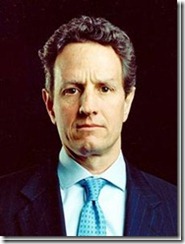
Again, Why is Timothy Geithner Still Treasury Secretary?

Tim Geithner_3_3.jpgRegular readers know that I’m not a big fan of Treasury Secretary Geithner.

But after poorly-conceived governmental programs subsidizing mortgage loans played a not insubstantial part in the worst financial crisis in a generation, this recent NY Times article left me speechless for a few days:

Treasury Secretary Timothy F. Geithner, speaking Tuesday at a conference to discuss the possibilities [of reforming the government’s role in housing finance], made clear that the administration was not pondering such radical kinds of surgery as it develops a proposal it hopes to unveil in January.

Rather, Mr. Geithner and the conference after his remarks focused largely on drafting a new and improved version of the current system, in which the government subsidizes mortgage loans made by private companies.

Mr. Geithner said continued government support was important to make sure that Americans can borrow at reasonable interest rates to buy a house even in a downturn. The absence of such support, Mr. Geithner said, would deepen future recessions because unsubsidized private companies would curtail lending.

I mean really. After what we’ve been through, why on earth should the government be involved in mortgage markets in any respect?

Government intervention in mortgage markets is simply a thinly-disguised redistribution of income. But even if you think government should be doing such things, creating moral hazard in mortgage markets is a very costly way to accomplish that goal.

Stated simply, the social benefits of home ownership result from homeowners building equity in their homes through saving and enhancing neighborhoods. Those social benefits are not generated from homeowners who borrow excessively to speculate on housing in which they have no equity.

As with proponents of publicly-financed sports stadiums, proponents of such redistribution policies should simply make their case that redistribution is sound public policy and not disguise it in expensive mortgage subsidies. They don’t because of fear that voters would reject such a redistribution policy if they came to understand the true cost of these subsidies.

Truth in advertising in politics is rare, indeed.

Hospitalist v. Cardiologist

The primary care doctors are having a nice chuckle over this one.