Financial Ed 101

abacus Itís good to see that James Surowiecki has come around to my way of thinking that better investor education is far more likely to hedge the risk of future financial scandals than throwing a few business executives in prison:

The governmentís new consumer-protection agency has the authority to ìreview and streamlineî financial literacy programs, but thatís not enough. We really need something more like a financial equivalent of driversí ed. Thereís evidence that just improving basic calculation skills and inculcating a few key concepts could make a significant difference. One study of the few states that have mandated financial education in schools found that it had a surprisingly large impact on savings rates.   .   .   .The point isnít to turn the average American into Warren Buffett but to help people avoid disasters and day-to-day choices that eat away at their bank accounts. The difference between knowing a little about your finances and knowing nothing can amount to hundreds of thousands of dollars over a lifetime. And, as the past ten years have shown us, the cost to society can be far greater than that.

Surowiecki is spot-on with his observation (as is this TGR post on Surowiecki’s article), but the promoters of the Greed Narrative continue to protest — what about the innocent victims who lost their nest eggs as a result of the collapse of a company such as Enron?

Well, one of the main reasons that those victims’ nest eggs ever had value in the first place was because innovative executives such as Jeff Skilling and Ken Lay transformed Enron into the world’s leading energy risk management company through the creative use of futures and options contracts to hedge price risk for natural gas producers and industrial consumers.

Although itís fine to feel sorry for someone who loses money on an investment, the Greed Narrative ignores the fact that most of those "victims" who lost their nest eggs were imprudent in their investment strategy. Taking Enron as an example, those investors should have diversified their Enron holdings or bought a put on their Enron shares that would have allowed them to enjoy the rise in Enron’s stock price while being protected by a floor in that share price if it fell below a certain value. Those are the type of precautions that a prudent ñ and well-educated ñ investor would take in regard investing in a trust-based business.

Incongruously, while virtually all of those Enron "victims" hedged the risk of their investment in their homes by purchasing homeowner’s insurance, few of them hedged the risk of their investment in Enron stock. Most of them simply did not understand how Enron’s risk management services created their nest egg in the first place. Thus, when those nest eggs evaporated during the bank run on Enron, those investors didn’t even try to understand what truly had occurred. They simply embraced the easy-to-understand Greed Narrative.

The Greed Narrative’s devastating impact is that it obscures the true nature of investment risk and fuels the myth that investment loss results primarily from someone else’s misconduct. As Larry Ribstein has been asking for years, do we really want to be sending a message to investors that risk is bad when it often leads to valuable innovation and wealth creation?

Do we really want to allow prosecutors and regulators to paint such beneficial transactions as frauds and then manipulate the public’s ignorance to demonize innovative risk-takers?

At a time when America desperately needs innovators and entrepreneurs to create jobs and wealth, better education for investors makes much more sense than the paths we have been taking.

To File or Not to File, That is BP’s Question

bp_logo1 Ever since the Deepwater Horizon oil well blowout in late April, friends in my line of work and I have been debating whether British Petroleum is going to file a chapter 11 case to reorganize while dealing with the huge and still-to-be determined liabilities arising from the catastrophe.

As the spill spiraled out of control, my sense was that the question about a BP bankruptcy filing was not whether the company would file, but rather ìwhenî and ìwhere.î Just dealing with the tens of thousands of claims that will be asserted against BP in hundreds of courts across the U.S. cries out for centralized bankruptcy processing from a logistical standpoint, if nothing else.

But from a purely financial standpoint, the question of whether BP will need to file is a closer call. As Joe Schaefer outlines here, BP is a hugely profitable, hard-asset based company that is ñ at least on paper — capable of weathering this financial firestorm outside of bankruptcy protection, particularly if the relief well is successful and restores investor confidence in BPís capacity to deal with the liabilities. 

On the other hand, as Craig Pirrong reminds us (related NY Times article here), BPís financial situation is perilous and could deteriorate with Enronesque speed if the markets lose trust in BPís capacity to perform on its contractual obligations. Those CDS spreads are indeed ominous.

Stay tuned.

The Wall Street Journal’s Inadequate Apology

It’s as if the nation’s leading business newspaper doesn’t want to face the ugly reality of what it helped create.

This Wall Street Journal editorial applauds the U.S. Supreme Court’s opinion reversing Jeff Skilling’s conviction on honest services wire fraud charges. But when it comes to the WSJ’s role in fanning the flames of public disdain toward business executives that helped to allow this injustice to occur, the WSJ apologizes only to Conrad Black:

The Black and Skilling cases are precisely the kind involving high-profile, unsympathetic defendants in which willful prosecutors like Mr. Fitzgerald are inclined to abuse the honest services law. They know the media won’t write about the legal complexities, and they know juries are often inclined to find a rich CEO guilty of something. We regret that in the case of Mr. Black, that failure of media oversight included us.

But what about an apology to Mr. Skilling? Take it from me WSJ, that lack of media oversight also included you in regard to the Skilling and other Enron-related criminal cases.

Indeed, four years ago the WSJ editorial board was patting the Enron Task Force on the back despite the fact that it was clear at the time that the Task Force had improperly applied the honest services wire fraud statute and engaged in massive prosecutorial misconduct in regard to the Skilling prosecution and numerous other Enron-related criminal prosecutions.

The WSJ’s failure to admit its egregious failures in its coverage of Enron reminds me of a point that John Carney raised several years ago in regard to Eliot Spitzer’s odious tenure as New York Attorney General:

Why didn’t [the mainstream media covering Spitzer’s investigation of Grasso] reveal the slimy tactics of the Spitzer squad?

We suspect part of the problem was the fear of being “cut off” of access. Reporters compete for scoops, and often those scoops depend on sources who will leak information to them. In the NYSE case, reporters assigned to the story were largely at the mercy of the investigators, who could cut-off uncooperative reporters, leaving them without copy to bring to their editors while their competitors filed stories with the newest dirt. They probably felt – not unrealistically – that their very jobs were on the line.

This reveals an unfortunate state of affairs. Playing bugle boy while government officials call the tunes from behind a veil of anonymity is not investigative journalism – it’s hardly journalism at all. It’s closer to propaganda. It would have been far better had the journalists turned their backs on the Spitzer squad, or even revealed these tactics to the public. Sure they may have lost some “good” stories but they could have painted a truer picture of what was going on. But that’s probably too much to hope for.

The same type of mainstream media dissonance went on in regard to the Enron-related prosecutions.

In point of fact, this Ayn Rand Institute press release that was issued in 2006 just a couple of months after the WSJ patted the Enron Task Force on the back is remarkably prescient in regard to the mainstream media’s abysmal coverage of Enron in general and Skilling’s trial, in particular:

The Media’s Mistreatment of Jeff Skilling.

Upon hearing the news that former Enron CEO Jeffrey Skilling was sentenced to 24 years, most Americans, trusting the newspaper articles and books they have read on Enron, think that justice has been served.

But, said Alex Epstein, a junior fellow at the Ayn Rand Institute, “Jeff Skilling has not gotten justice, and the media bear a major portion of the blame.”Few Americans know that during Skilling’s trial, the prosecution came nowhere near proving its central allegation that Jeff Skilling engineered a conspiracy to defraud investors. Few know that Skilling, upon leaving Enron five months before its collapse, destroyed no documents, nor did anything else resembling a criminal cover-up. Few know that the prosecution, unable to prove a conspiracy, spent huge swaths of the trial taking pot-shots at Skilling with issues not even mentioned in the indictment, such as the failure of Skilling, a multi-millionaire many times over, to disclose a failed $50,000 investment to Enron’s board.”

“The media’s mis-portrayal of the case against Skilling long predates the trial. Ever since the fall of Enron, most of the media have treated as fact every conceivable smear against Skilling made by ax-grinding prosecutors or ex-Enron employees, while treating as absurd Skilling’s claim that he neither engineered a conspiracy nor lied to investors.”

“There can be no doubt that the media’s treatment of Skilling contributed to his conviction for a phantom conspiracy–and to the outrageous 24-year sentence that he has now received. And the mistreatment of Skilling is part of a broader trend: the trend of treating businessmen as guilty until proven innocent. Our journalists and intellectuals, accepting the idea that the pursuit of profit is morally tainted, assume that whenever anything goes wrong in business, it is the result of crooked behavior by greedy, rich CEOs–and slant their coverage accordingly. This practice is putting numerous innocent men in jail, and instilling terror throughout corporate America.”

“During Skilling’s appeal, let us call for the media to start treating Skilling–and all businessmen–fairly.”

The WSJ was right to apologize to Lord Black. But it also owes one to Jeff Skilling, as well as to its readers.

Skilling wins at the Supreme Court

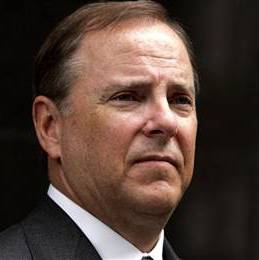
skilling 040711The U.S. Supreme Court vacated Jeff Skilling’s criminal conviction yesterday on the charge of conspiracy to commit wire fraud under 18 U.S.C. 1346 (“Section 1346”), throwing his entire conviction on nineteen counts into question.

The Supreme Court also reversed Conrad Black’s conviction on the same issue, as well as Bruce Weyhrauch’s. Lyle Dennison has this excellent summary of the Court’s opinion, while Stephen Bainbridge provides his usual spot-on analysis of the opinion from a public policy standpoint.

Interestingly, most of the 114 page opinion deals with an issue on which the Court ruled against Skilling – i.e., that the trial should have been moved out of Houston because inflammatory media coverage made it impossible for Skilling to receive a fair trial.

Nonetheless, the Court’s opinion was a resounding victory for Skilling, as all nine justices agreed that Skilling did not commit honest services wire fraud. The only difference is that Justices Scalia, Thomas and Kennedy would have struck down Section 1346 entirely, while the majority simply restricted it’s application to bribery and kickback cases.

The Court remanded the case to the Fifth Circuit Court of Appeals for further disposition consistent with the Court’s opinion, primarily to determine whether the Skilling’s conviction on the honest services wire fraud charge should lead to a reversal of most or all of the other counts of his conviction.

As the Court notes in footnote 47 on page 50, the Fifth Circuit has already indicated that Skilling’s conviction should be set aside in its entirety if any of its three bases (honest services wire fraud, money-or-property wire fraud, or securities fraud) is reversed, but the Supreme Court ordered the Fifth Circuit to review that issue again.

In view of the fact that the Enron Task Force prosecution heavily relied on the honest services wire fraud charge in presenting its case to the jury against Skilling, my sense is that the Skilling team has the decidedly better argument that the prosecution’s mistake in prosecuting him on that charge was not harmless error and that most or all of the rest of his conviction must be reversed.

Moreover, even though a majority of the Court ruled against Skilling on the issue of whether the trial court erred in not moving the trial away from Houston, Justice Sotomayor’s lively dissent on that issue is the best part of the decision.

Justice Sotomayor — who is the most experienced trial judge on the Supreme Court at this time — is clearly appalled at the trial court’s screening of prospective jurors in the face of the overwhelmingly adverse media treatment of Skilling. Here are a few snippets [all citations to the record deleted]:

In concluding that the voir dire “adequately detect[ed]and defuse[d] juror bias,” the Court downplays the extent of the community’s antipathy toward Skilling and exaggerates the rigor of the jury selection process. The devastating impact of Enron’s collapse and the relentless media coverage demanded exceptional care on the part of the District Court to ensure the seating of an impartial jury.

While the procedures employed by the District Court might have been adequate in the typical high profile case, they did not suffice in the extraordinary circumstances of this case to safeguard Skilling’s constitutional right to a fair trial before an impartial jury.[ .  .  .]These deficiencies in the form and content of the voir dire questions contributed to a deeper problem: The District Court failed to make a sufficiently critical assessment of prospective jurors’ assurances of impartiality.

Although the Court insists otherwise, ante, at 26, the voir dire transcript indicates that the District Court essentially took jurors at their word when they promised to be fair. Indeed, the court declined to dismiss for cause any prospective juror who ultimately gave a clear assurance of impartiality, no matter how much equivocation preceded it.

Juror 29, for instance, wrote on her questionnaire that Skilling was “not an honest man.” During questioning, she acknowledged having previously thought the defendants were guilty, and she disclosed that she lost $50,000 – $60,000 in her 401(k) as a result of Enron’s collapse. But she ultimately agreed that she would be able to presume innocence.

Noting that she “blame[d] Enron for the loss of her money” and appeared to have “unshakeable bias,” Skilling’s counsel challenged her for cause. The court, however, declined to remove her, stating that “she answered candidly she’s going to have an open mind now” and “agree[ing] with the Government’s assertion that we have to take her at her word.”

As this Court has made plain, jurors’ assurances of impartiality simply are not entitled to this sort of talismanic significance.   .   .  [.  .  .]Indeed, the District Court’s anemic questioning did little to dispel similar doubts about the impartiality of numerous other seated jurors and alternates. In my estimation, more than half of those seated made written and oral comments suggesting active antipathy toward the defendants. The majority thus misses the mark when it asserts that “Skilling’s seated jurors . . . exhibited nothing like the display of bias shown in Irvin.”Juror 10, for instance, reported on his written questionnaire that he knew several co-workers who owned Enron stock; that he personally may have owned Enron stock through a mutual fund; that he heard and read about the Enron cases from the “Houston Chronicle, all three Houston news channels, Fox news, talking with friends [and] co-workers, [and]Texas Lawyer Magazine”; that he believed Enron’s collapse “was due to greed and mismanagement”; that “[i]f[Lay] did not know what was going on in his company, he was really a poor manager/leader”; and that the defendants were “suspect.”

During questioning, he said he “th[ought]” he could presume innocence and “believe[d]” he could put the Government to its proof, but he also acknowledged that he might have “some hesitancy” in telling people the government didn’t prove its case.[Footnote 21] The majority also notes that about two-thirds of the seated jurors and alternates (11 of 16) had no personal Enron connection. This means, of course, that five of the seated jurors and alternates did have connections to friends or colleagues who had lost jobs or money as a result of Enron’s collapse — a fact that does not strike me as particularly reassuring.

Meanwhile, the government’s case against Skilling continues to look shaky in other respects. Largely overshadowed by the Supreme Court’s decision is the fact that the Fifth Circuit’s previous opinion invited Skilling to file a motion for new trial in the District Court based on issues of prosecutorial misconduct that Skilling raised after discovering the evidence after the trial.

Specifically, the Fifth Circuit was particularly concerned about the failure of the Enron Task Force to comply with federal rules requiring the disclosure of exculpatory evidence to the defense from the Task Force’s pre-trial interviews with main Skilling accuser and admitted felon, former Enron CFO Andrew Fastow.

Fastow testified at trial that he told Skilling about the Global Galactic agreement, which purportedly documented a series of illegal “side deals” between Fastow and former Enron chief accountant Richard Causey that guaranteed Fastow would not lose money on certain special purpose entities that he was managing. Skilling denied any knowledge of the purported agreement.

After Skilling’s conviction, the Skilling defense team discovered the existence of Fastow interview notes that the Enron Task Force had failed to disclose to the Skilling team prior to trial. Among other things, those notes revealed that Fastow had told the Task Force lawyers that he didn’t think he had told Skilling about the Global Galactic agreement. The Fifth Circuit characterized the Task Force’s non-disclosure as “troubling” in inviting Skilling to file a motion for new trial with the District Court.

So, despite his resounding Supreme Court victory, Skilling’s legal battles are not over. But slowly the truth about Enron and Skilling’s role there is emerging from the cloud of prejudice under which he was tried, both in court and in the mainstream media.

The truth about Enron is that no massive conspiracy existed. In reality, Skilling and the late Ken Lay were not intending to mislead anyone and that the company was simply a highly-leveraged, trust-based business with a relatively low credit rating and a booming trading operation.

Although there is nothing inherently wrong with such a business model, it turned out it to be the wrong one to survive amidst choppy post-bubble, post-9/11 conditions when the markets were spooked by revelations of the alleged embezzlement of millions of dollars by Fastow and a few of his minions.

That Jeff Skilling did not predict that Enron would fail under those conditions does not make him a criminal. Unlike his main accusers Fastow and Ben Glisan, Skilling didn’t embezzle a dime from Enron. Did he tirelessly advocate this highly-leveraged but innovative company that was dealing with difficult market conditions during 2001? You bet. But since when is it a crime for a CEO to be optimistic — even overly-optimistic — about his company?

Beyond the shattered lives and families, the real tragedy here is that the mainstream media’s demonization of Skilling has distracted us from examining the tougher issues of what really caused Enron’s demise and understanding the how such a company can be structured to survive in even the worst market conditions. It’s a lot easier just to throw a good and decent man such as Jeff Skilling in jail and simply conclude that it was all his fault. But examining objectively what really occurred at Enron is far more likely to result in real justice.

Who knows? Such an approach might have even prepared us better to deal with this.

Hank Haney talks about Tiger Woods

53340117TL007_2005_PGA_Cham Following on this post from last month on the truly interesting question about Tiger Woods, dontí miss this Guy Yocum/Golf Digest interview of Woodsí former swing coach, Hank Haney (H/T Geoff Shackelford).

The entire interview is fascinating, but a couple of points stood out. First, Haney confirmed my suspicion that Woodsí swing problems derive mainly from deteriorating confidence in his longer clubs:

Tiger has an overall lack of trust with his driver that manifests itself in different ways. One, he obviously swings extremely hard, and sometimes too fast. He feels like he isn’t in the right place in his swing, or that he isn’t going to hit the right shot, and the anxiety of that tends to make people speed up. The quest was to get him to make the same swing with his driver he did with his irons in terms of effort, speed, his head not tilting, rocking and dropping. He was like, "I need to fix that, I’m going to work on it, I’m working on it, I’m going to work on it, I understand," and so on, but I didn’t see it to the extent I felt he needed.

The other observation that stood out to me are ones that Haney makes at the end of the interview regarding a topic that I noted during the immediate aftermath of his infamous car crash:

You’ve said that Tiger needs friends at such a difficult time in his life. Is it hard for such a high-profile individual to find friends?

Yes. Very hard. Especially true friends.

Is your friendship with Tiger on a peer level, or is there a big-brother quality to it?

I think some of my messages to Tiger were along the lines of a big brother, but I don’t know if he ever viewed me that way. Remember, I’m 54 and he’s 34. So I’m sure age is a factor with that.

How does he respond when you try to be close to him? Does he draw lines in the friendship?

Tiger’s different. I’m sure that’s why he’s the golfer he is. I don’t take that personally. It’s not for me to judge how he should be.

At the end of the day, how well do you feel like you really know Tiger Woods?

I always felt like I knew Tiger from observing him. I did not feel like I knew him from knowing him.

What motivates us

Dan Pink presents thoughts on how to motivate people (H/T Political Calculations).

How important is knowing your Father?

pandas_zoom2 Maybe pretty darn important, according to University of Texas researchers Karen Clark, Elizabeth Marquardt and Norval D. Glenn:

Each year, an estimated 30,000-60,000 children are born in this country via artificial insemination, but the number is only an educated guess. Neither the fertility industry nor any other entity is required to report on these statistics. The practice is not regulated, and the childrenís health and well-being are not tracked.

In adoption, prospective parents go through a painstaking, systematic review, including home visits and detailed questions about their relationship, finances, even their sex life. With donor conception, the state requires absolutely none of that, and the effects of such a system on the people conceived this way have been largely unknown.

We set out to change that. We teamed up .   .   . to design and field a survey with a sample drawn from more than 1 million American households.

Our study, released this month by the Commission on Parenthoodís Future, focused on how young-adult donor offspring ó and comparison samples of young adults who were raised by adoptive or biological parents ó make sense of their identities and family experiences, how they approach reproductive technologies more generally and how they are faring on key outcomes. The study of 18- to 45-year-olds includes 485 who were conceived via sperm donation, 562 adopted as infants and 563 raised by their biological parents.

The results are surprising. While adoption is often the center of controversy, it turns out that sperm donation raises a host of different but equally complex issues.

Two-thirds of adult donor offspring agree with the statement ìMy sperm donor is half of who I am.î Nearly half are disturbed that money was involved in their conception. About two-thirds affirm the right of donor offspring to know the truth about their origins.

Regardless of socioeconomic status, donor offspring are twice as likely as those raised by biological parents to report problems with the law before age 25. They are more than twice as likely to report having struggled with substance abuse. And they are about 1.5 times as likely to report depression or other mental health problems.

As a group, the donor offspring in our study are suffering more than those who were adopted: hurting more, feeling more confused and feeling more isolated from their families. (And our study found that the adoptees on average are struggling more than those raised by their biological parents.)

Some feel like a ìfreak of natureî or a ìlab experiment.î Others speak of the searching for their biological father in crowds, wondering if a man who resembles them could be ìthe one.î Still others speak of complicated emotional journeys and lost or damaged relationships with their families when they grow up.

Life is complicated.

Visiting a prison cell

jail The troubling U.S. incarceration rate and the dubious governmental policy of overcriminalization have been frequent topics on this blog. The toll of the overcriminalization policy on citizens and their families is incalculable.

Part of the problem in modifying this destructive policy is that the constituency of current and former prisoners and their families is not powerful politically. But another aspect of the problem is that most well-meaning citizens who could make a difference on this issue politically have never experienced the hell that is most prisons in the United States. Itís human nature to avoid addressing even an important issue that one has never had to confront personally.

Thatís why this A Public Defender post is important ñ it provides penetrating insight into the destructive nature of our governmentís overcriminalization policy:

I sat in a prison cell yesterday.  .   .   .

There was a bed ñ a small bed ñ that was the length of the room. At the foot of the bed a metal toilet, with no cover. Just beyond that the heavy metal door, with a slit for a window. The door was maybe 3 feet wide, if that. At the head of the bed, if you were laying on your right side, youíd be about half a foot away from an ugly metal desk with holes that pretended to be drawers. This could not have been more than a foot long. The bed was flush with one wall. The desk with the opposite.

The bed looked hard, cold and dirty. And thatís it. This particular cell happened to have a window at the head of the bed. A window looking out onto nothing. Any future inhabitant of this particular cell would have it good. It was a single. Across the narrow passageway from this cell was another, identical in every respect except two: it was a double cell and there was no window. (Hereís a post I wrote a while ago about a different take on prisons in a foreign country.) [.  .  .]

I willed myself to stand there, though, for a minute. To look around at the bare walls, the bare desk, the dirty toilet and imagine someone ìlivingî there.

I even briefly closed my eyes and tried to picture myself there, day in and day out, for months, which turned into years, which turned into decades.

Would I survive? How does anyone? Would I give up and stop bathing, shaving, eating? Would I maintain my sanity or would I quickly decompensate? How long would it be before Iíd want to kill myself? [.  .  .]

People in cells are lucky, though. The next portion of the tour took me to the dorm-style housing. Which is nothing like any dorm youíve ever lived in. Imagine instead the makeshift MASH hospitals, or perhaps the busiest train station in your neighborhood at rush hour, except instead of standing, people are milling about a hundred bunk beds on that tiny platform.

There is no privacy, there is no solitude, there is no being left alone. You are part of a large crowd. You are in someoneís face and they are in yours. You are a collective. Day in and day out. You share your bedroom with 125 other people.

Leaving the prison, I asked my colleague: cell or dorm? Thereís no debate. Cell. Iíd rather lose my sanity by myself.

A truly civilized society would find a better way.

Amazing Ukulele

The remarkable Jake Shimabukuro: “One of the things I love about being a ukulele player is that no matter where I go in the world to play, the audience has such low expectations. [This is] a huge plus for sure.”