In a move that may backfire, the Enron Task Force filed this petition requesting that the entire Fifth Circuit Court of Appeals consider and reject the decision of a Fifth Circuit three-judge panel from last month (previous posts here and here) that struck down the wire fraud and conspiracy convictions of four Merrill Lynch executives involved in the controversial Enron-related Nigerian Barge case. The Chronicle’s Kristen Hays reports on the Task Force’s motion here and this post from a year ago provides an extensive thread of posts discussing the case.
The Task Force’s petition — which is focused on the “honest services” issue in the appeal — is somewhat odd, which may reflect the Task Force’s reservations about filing it at all given the considerable risk that a majority of the Fifth Circuit could adopt Judge Harold DeMoss’ dissent in the panel decision. On a threshold basis, the motion does not even mention that the Fifth Circuit panel’s decision reversed and rendered the convictions of Merrill Lynch executive William Fuhs on all counts and then makes the ludicrous suggestion in a footnote that former Enron CEO Jeff Skilling’s anticipated appeal of his conviction and former Enron executive Chris Calger’s recent motion to withdraw his plea agreement are somehow valid reasons for reconsidering the panel’s decision (“we can’t allow those evil former Enron executives be protected by the law!”). Beyond that, the Task Force’s short pleading mischaracterizes the panel’s decision and fails to address the Task Force’s seminal problem with the entire Nigerian Barge prosecution — that the Task Force prosecuted the Merrill Lynch executives for doing their jobs in connection with Enron’s sale of an asset to Merrill for which Enron, not Merrill, may have improperly accounted, although even that issue was never proven by the Task Force during the trial.
Meanwhile, in another interesting development, two of the former Merrill executives involved in the Nigerian Barge appeal, Dan Bayly and Robert Furst, who face the possibility of a retrial as a result of the Fifth Circuit panel’s decision — filed this motion for rehearing in which they request the Fifth Circuit panel to address a key evidentiary issue — the trial court’s decision to allow the Task Force to introduce an email of Brown that was prepared over a year after the barge transaction took place — that the panel did not address in its original decision because of its reversal of the convictions on other grounds. Bayly and Furst argue in the motion that the panel’s ruling on that evidentiary issue will resolve the issue in any re-trial of the case and should be known to the entire Fifth Circuit before it decides whether to grant en banc review of the panel’s decision (if Bayly and Furst are right that the trial court erred in admitting the Brown email, then even an en banc reversal of the panel’s decision on the honest services issue would not alter the reversal of the convictions).
Monthly Archives: September 2006
Stros 2006 Review, Part Nine
As I’ve noted before, it’s funny how our expectations for the Stros color the way in which we view the team at a particular stage of the season.
After essentially playing themselves out of the National League playoff race in the eighth 1/10th segment of the season, the Stros (71-74) have actually played quite well over their ninth segment of the season, going 10-6 and completing a segment with a winning record for just the third time this season. However, as the Stros enter their final 17 games of the season, the general consensus in the local media is that the Stros have not been playing well and certainly not as well as last season at this time when they were also contending for the NL wildcard playoff spot.
Indeed, taking a look at where the Stros stood last season at this time is instructive as to where the Stros find themselves this season. After 145 games last season, the Stros were 77-71, which means that the team had won only six more games than the current club at the same stage of the season. That 2005 team was plagued by the same chronic hitting woes that the current Stros team is experiencing — that club’s team runs created against average (“RCAA,” explained here) after 145 games was within a run or two of being the same as this season’s club (-38).
Meanwhile, the 2005 club’s pitching staff — led by the extraordinary starting trio of Clemens, Pettitte and Oswalt — had an outstanding 97 runs saved against average (“RSAA,” explained here) after 145 games. This year’s staff currently has a very respectable 54 RSAA (third in the NL), but that performance is only about half as good as last season’s pitching staff’s incredible performance after 145 games.
Thus, expectations aside, the reality is that this season’s club has not improved in hitting from last season’s club and thus, the roughly 43 fewer runs saved by the 2006 pitching staff in comparison to the 2005 staff is the difference between the 2005 club winning six more games than the 2006 club at the same stage of the season. That difference — as well as a couple of nagging injuries to Pettitte and Clemens down the stretch of this season — is more than enough to prevent this fragile Stros club from making the push necessary to contend seriously for a playoff spot.
Despite the disappointment of missing the playoffs after the past two magical seasons and flirting with a sub-.500 season for only the second time in the past 14 seasons, the Stros did have a couple of good things happen since the review of the club’s 8th segment of the season:
The Stros locked up Roy Oswalt (3.06 ERA/33 RSAA (tied for 4th in RSAA in Major League Baseball); and
Lance Berkman (57 RCAA (tied for 4th in Major League Baseball)/.414 OBA/.616 SLG/1.030 OPS) officially became the 2nd best hitter in Stros history and, with his tater in yesterday’s win against the Cardinals, became the first Major League Baseball switch-hitter since the late Mickey Mantle to hit 40 or more home runs in multiple seasons (Mantle’s stats for his 18-year career were 1099 RCAA/.421 OBA/.557 SLG/.977 OPS).
The club’s hitting and pitching statistics to date are set forth below, and pdf’s of the current hitting stats are here and the current pitching stats are here, courtesy of Lee Sinins‘ sabermetric Complete Baseball Encyclopedia. The abbreviations for the hitting stats are defined here and the same for the pitching stats are here:
Houston’s nature trail
One of the things about Houston that has surprised many guests of mine over the years are the beautiful nature areas that have been preserved in city’s core. One of the best of such areas is the Memorial Park area, which includes the Houston Arboretum & Nature Center, the 155-acre nature sanctuary on the banks of Buffalo Bayou literally within the shadows of the West Loop skyscrapers. Chronicle columnist Doug Pike, who is one of the local newspaper’s fine contingent of writers on hunting, fishing and other outdoor activities, provides this column today in which he reviews the types of wildlife that visitors can see while hiking through the arboretum. If you have never visited th arboretum (and even many longtime Houstonians have not), I highly recommend it. Just watch out for the snakes and the feral hogs!
Olis Resentencing Hearing Concludes
After a hearing in state court yesterday concluded, I was able to attend the conclusion of the resentencing hearing for Jamie Olis in U.S. District Judge Sim Lake’s court (Tom Fowler’s Chronicle article on the hearing is here). My sense is that the hearing went reasonably well for Olis.
Judge Lake allowed Olis to make a personal statement to him during the hearing, and Olis’ statement was equally heartfelt and heart-wrenching.
Olis, who was not allowed even to look at his delightful and dedicated family in the courtroom during the two-day hearing, choked back tears as he told Judge Lake that he was sorry that he did not — as a young, mid-level executive at a big, publicly-owned company — question the judgment of proceeding with a transaction (Project Alpha) for which he was convicted, and that he was hugely frustrated that he could not do anything about it now. Although Judge Lake is notoriously hard to read, he was clearly moved by Olis’ statement.
In questioning the attorneys during final argument, Judge Lake was primarily interested in the general deterrent effect of the sentence.
Olis defense attorney David Gerger contended that the prison time that Olis has already served and the other ramifications from his conviction (fines, enjoined from serving as an officer of a public company, public humilation, etc) are more than a sufficient general deterrent for other mid-level executives at publicly-owned companies from engaging in wrongdoing, and that the lengthy sentence being proposed by the prosecution is really just a thinly-veiled deterrent for business executives from exercising their right to assert their innocence at trial.
Unfortunately, not mentioned during the hearing was the hugely detrimental effect that the Olis sentence could have on beneficial risk-taking that creates jobs for communities and wealth for shareholders.
Meanwhile, Judge Lake — who clearly has a sound understanding of the sentencing issues — zeroed in on the prosecution by asking why the government was asking for a sentence of a mid-level company executive who did not personally profit from the transaction for which he was convicted that is equal to or harsher than the recent sentences levied on several more senior executives who actually looted their companies while committing wrongdoing.
In what I thought was the defining moment of the portion of the hearing that I attended, the lead prosecutor could not answer Judge Lake’s pointed question and blathered on about how it was important to make Olis a poster boy for what can happen to a business executive who engages in corporate crime. There is no question that Judge Lake noticed the evasiveness of the prosecution on that key point.
So, what will Judge Lake do?
Given that he originally levied the 24+ year sentence on Olis and generally has a reputation of levying stiff sentences, a couple of fellow courtroom spectators predicted afterward that Judge Lake would come back with a 10-12 year sentence.
However, I know that Judge Lake is a man of compassion and grace, and the circumstances of Olis’ case simply do not call for a sentence of that length.
Thus, I’m betting that the sentence lands in the 4-7 year range, with the hope that it will fall into the lower part of that range and that Judge Lake will allow a portion of the sentence to be served in home detention or at least near Olis’ wife and young daughter. Judge Lake stated at the end of the hearing that he will likely issue his ruling late next week, so stay tuned.
Would you want to march at a Texans game?
Although not as bad a public relations blunder as last year’s decision to roast their fans during their first home game, the Texans were not particularly hospitable to the high school band that performed at this past Sunday’s opening game of the 2006 season. In addition to being subjected to NFL-mandated pat downs before entering the stadium, Houston-based public relations expert John Wagner reports that the band members were not even allowed to watch one play of the game!
Of course, based on the way the game went after the Texans’ first drive, the kids didn’t miss much as a result of the Texans’ lack of hospitality.
The Olis Market Loss Hearing
The hearing phase of the re-sentencing of former Dynegy executive Jamie Olis involving the key market loss issue is taking place yesterday and today before U.S. District Judge Sim Lake, and the Chronicle’s Tom Fowler files this report on yesterday’s proceedings.
The hearing is expected to conclude today and Judge Lake — who is usually quite prompt in rendering rulings — is expected to issue his decision on the market loss issue shortly.
By the way, according to the Chronicle article, the prosecutor in the Olis case used the same “deep” line of questioning in attempting to impeach the testimony of Olis expert Joseph Grundfest that the Enron Task Force prosecutors used during the Lay-Skilling trial:
During cross examination, Assistant U.S. Attorney Jimmy Sledge challenged Grundfest’s motive for getting involved in the case, noting a number of news articles that mentioned he is doing this pro bono.
“Does it warm your heart to read nice things about yourself?” Sledge asked.
That a prosecutor stoops to that level of questioning (in front of a sophisticated judge rather than a jury, no less!) in an attempt to impeach the testimony of a noted expert who is donating his time to address a gross injustice is an appalling reminder of the lack of adult supervision that presently plagues the Department of Justice.
The insidious nature of criminalizing business
Under mounting criticism over its dubious tactics in regard to threatening to go Arthur Andersen on KPMG in the prosecution of the firm’s promotion of questionable tax shelters, the Justice Department is now making nice in Congress.
Yesterday, deputy attorney general, Paul J. McNulty testified during a hearing of the Senate Judiciary Committee and, while defending such dubious tactics as criminalizing a potential defendant’s rights to counsel and to assert the privilege against self-incrimination, suggested that the DOJ might consider some changes on the margin to its corporate crime guidelines such as the odious Thompson Memo. Here is a link to McNulty’s testimony and to that of other witnesses at the hearing.
But McNulty’s arrogance in defending the Justice Department’s campaign to criminalize business in the post-Enron era was not even the most appalling part of the hearing.
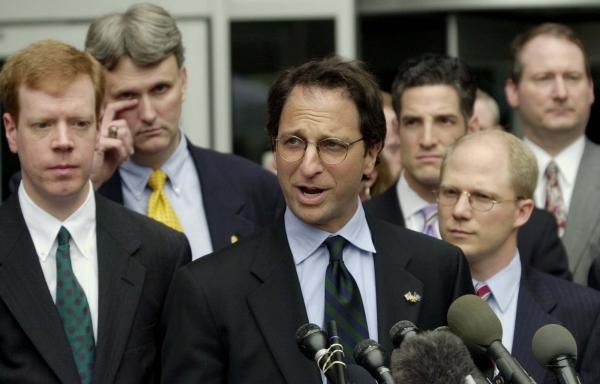
That occurred when Andrew Weissmann, the former chief of the Enron Task Force, presented a written statement in which he calls for revision of the Thompson memo and a “rethinking of corporate criminal liability.”
According to the Weissmann, who parleyed his Enron Task Force job into a partnership at Jenner & Block, the Thompson memo “should be revised so that it no longer encourages an environment where employees risk losing their jobs or legal defense merely for exercising their constitutional right not to speak to the government . . . ” He went on to observe the following:
In determining whether to indict a company, the Department of Justice should not permit consideration of the company’s treatment of an employee who has asserted her Fifth Amendment right. This factor should simply not come into play in the analysis of whether a corporation has or has not cooperated. Although a company itself can properly fire an employee or cut off legal fees based on whether she cooperates with an investigation, the Department of Justice should not weigh in on this determination ñ and not because a court may ultimately deem the company’s actions as government conduct. Rather, for policy reasons, the Department of Justice should simply not base its decision to prosecute a company on whether a person has been punished by her employer for asserting a constitutionally guaranteed right.
And then Weissmann — appearing to be far more open-minded than he was during his prosecutor days — calls for a “rethinking of corporate criminal liability:”
Although the Thompson Memorandum has recently received significant negative attention, and is in some ways an easy target, it is not the real source of the problem. The root cause that renders the Thompson Memorandum such a sharp weapon is the standard for criminal corporate liability and the absence of systemic checks to restrict the government’s power to charge corporations whenever an employee strays. The current standard for corporate criminal responsibility affords prosecutors enormous and unduly disproportionate leverage and power. In this climate, a corporation has little choice but to conform its conduct to the Thompson Memorandum factors, even in the absence of a prosecutor’s overt threats.
Of course, Weissmann then proposes a feckless change for the standard for corporate criminal liability in which the government would be required to take into account “a companyís attempts to deter the criminal conduct of its employees”:
Holding the government to the additional burden of establishing that a company did not implement reasonably effective policies and procedures to prevent misconduct would both dull the threat inherent in the Thompson Memorandum as well as help correct the imbalance in power between the government and the corporation facing possible prosecution for the acts of an errant employee. A more stringent criminal standard, one that ties criminal liability to a company’s lack of an effective compliance program, would have the added benefit of maximizing the chances that criminality will not take root in the first place since corporations will be greatly incentivized to create and monitor a strong and effective compliance program. The objectives of law-abiding society, the criminal law, and even of the Department of Justice’s Thompson Memorandum itself, would then be well served.
So, in short, unless a company has what the DOJ deems as a satisfactory compliance program to deter bad conduct, Weissmann contends that it is acceptable for the government to go Arthur Andersen on companies that pay for the defense costs of employees who assert such fundamental rights as the privilege against self-incrimination.
Neither mentioned nor challenged is Weissmann’s dubious judgment in contributing to billions of dollars in economic loss and inestimable human hardship from pre-emptively prosecuting Arthur Andersen out of business, Weissmann’s continual threats to go Arthur Andersen on Merrill Lynch because of its payment of defense costs for the four former Merrill executives involved in the equally reprehensible Nigerian Barge prosecution and the long line of serious prosecutorial abuses that Weissmann was involved in with regard to the Enron criminal cases.
That the Senate Judiciary Committee is seeking guidance from someone such as Weissmann with a questionable background in abusing fundamental principles of our justice system speaks volumes regarding the unlevel playing field that business interests face in defending against the government’s increasing regulation-through-criminalization policy.
As Geoffrey Manne appropriately asked awhile back, “Where’s the outrage?“
Thinking about global climate change
Andrew Dessler is an associate professor in the Texas A&M University Department of Atmospheric Sciences. A couple of months ago, I came across his interesting new blog that focuses on the science and politics of climate change. In this Chronicle article, the Chronicle’s science reporter, Eric Berger, interviews Professor Dessler, who makes the following common sense observation about the climate change debate:
[T]here are a lot of really legitimate uncertainties [about global climate change] that people don’t seem to argue about. It’s a little bit disappointing that people are still arguing over whether the Earth is round or not. Whether humans are causing the increase in CO2 is really like arguing whether the Earth is round. We know it is. There’s no question. We’ve got lots of evidence. The debate isn’t really where it should be at this point: We need to view climate change as a risk. It’s a somewhat uncertain risk, but it’s a risk nonetheless. The question really becomes, as a policy, how do we address this risk?
Eric has a podcast of his entire interview with Professor Dessler over at his SciGuy blog.
Dell in the crosshairs
Despite Hewlett-Packard’s current problems with its board of directors, my sense is that Dell, Inc. would prefer to have H-P’s problems rather than the ones that the Round Rock-based computer manufacturer faces (previous posts here and here).
This NY Times article reports that Dell will delay filing its fiscal second-quarter reports because of a widening Securities and Exchange Commission investigation and an internal company probe into its financial accounting. To make matters worse, Dell also reported that the U.S. attorney for the Southern District of New York has subpoenaed records in regard to an investigation of the company’s financial reporting from 2002 to present. Continuing a trend that has knocked 30% of the value of Dell’s stock this year, Dell shares declined over 2% yesterday to $21.19.
Dell was already being investigated by the SEC for the timing of its revenue recording, but yesterday’s announcement stated that the investigations have branched into areas “relating to accruals, reserves and other balance sheet items.”
Translation: “We many need to restate prior earnings.”
The Enronesque prosecution of Conrad Black
Washington attorney Alykhan Velshi writing in this New English Review op-ed examines the Conrad Black indictment and doesn’t like what he sees:
The trial by attrition of Conrad Black has exposed the dark underbelly of the legal system, where the government can ruin a man, take his property, his means of livelihood, and make him a social pariah ñ all without the hassle of securing a conviction. There is an insidious little worm that has crept into the legal system, an iconoclastic mentality that is distorting the rule of law. Focused less on securing justice than on bringing down the high and mighty, all the while pandering to the politics of envy, it affects the entire system of corporate governance.
This is highlighted by three developments in the law of corporate governance: the concentration of power in the hands of minority shareholders, the criminalization of technical regulatory violations, the abandonment of the rule of law in favor of aggressive prosecutorial tactics, and the entrenchment of a culture that penalizes success.
Velshi doesn’t get everything right, but his piece is nevertheless worth reading for his analysis of the troubling (and all-too-common) characteristics of the Black prosecution. Check it out.