Shell Houston Open — we have a problem

1A1 First Hole Tee.JPGAs noted in this earlier post, the Tournament Course at Redstone Golf Club — the new home course of the Shell Houston Open golf tournament — received mixed reviews from the players who played in last week’s tournament, a view echoed in this GolfWeek magazine report after the tournament. However, it appears that the verdict on the new course from spectators may not even reach the level of mixed.
First, Chronicle sportswriter and columnist John Lopez noted over the weekend that some spectators were complaining to him of the inordinately long walks between the parking areas and the course entrance, and also the long hikes between the 1st hole green and the 2nd hole tee and the 17th green the 18th tee. That view was shared by a spectator who made the following comment to the Chronicle’s Sports Update blog:

“The golf was fine, but the layout is very poor and too massive for a fan-friendly event. The walking distances are much too long and there is minimal multi-hole viewing. The HGA has really messed up on this venue.”

But that barb was nothing compared to the scathing criticism that I received yesterday from a friend who attended the tournament over the weekend:

“I got to go to the Shell Houston Open on Friday and Sunday. What the hell is the HGA doing? That course is not PGA quality nor fan-friendly. The only holes you can watch easily are 1 and 18. Not too many folks want to make that 20 minute walk over the bayou to chase down another group on holes 2-17. I also got to watch first hand some pretty pissed-off caddies as they lugged their bags from 17 to 18. That was about a 10 minute walk. The viewing sites are sparse, no spectator mounds. No decent food pavilion. This tournament is doomed when it moves to the week before The Masters.”

H’mm. Consequences of bad decisions?

Uh, Reggie, can you return kick-offs, too?

reggie bush leaping3.jpgI may have missed it, but I didn’t see the following news reported in ProFootballTalk reported by any of the local media:

Mathis Pulls a Winslow
A league source tells us that Texans receiver Jerome Mathis is sporting casts on both hands and bandages on his wrists and arms due to a recent motorcycle accident.
The accident happened recently, and nearly a year to the day after Browns tight end Kellen Winslow auditioned for the role of Superman by flying over the handlebars after attempting a reverse wheelie. Winslow suffered far more extensive injuries, including a torn ACL that knocked him out for the 2005 season.
Per the source, the injuries to Mathis appear to be limited to his arms. The source added that Mathis looks like “a mummy from the elbows down” (which raises all sorts of interesting bathroom issues).

Mathis, who excels at returning kick-offs, was the only member of the Texans team to make the NFL Pro Bowl All-Star game this past season.

A class act calls it quits

melloan final.jpgGeorge Melloan, the deputy editor, international, of The Wall Street Journal and the author of the WSJ’s weekly “Global View” column for the past 16 years, is retiring from the Journal at the end of this week. His final Global View column is here, which concludes as follows:

As readers may have suspected from the above, this is my last Global View column. After 54 years of joy at being part of a great news organization, I am retiring at the end of this week. I will keep myself busy writing a book about the 36 years I have spent writing and editing a portion of the copy you have read on the Journal editorial pages.
Part of the pleasure of this column has been the exchanges I’ve had with readers. Let me thank again those of you who have been generous with your time in sending me your thoughts and criticisms. A tiny few readers have expressed their disagreement in barnyard terms, but, having grown up on an Indiana farm, I long ago became familiar with that kind of discourse. I can quite understand hostile reactions to the preachments of a newspaper columnist, since I occasionally have tantrums myself when I disagree with a journo who sees the world in a different light. In America, neither side, thank goodness, can use the power of the state to suppress the other.
I will leave this column in the hands of a far younger and more talented writer. It has been fun, but all good things must end. Sayonara.

Melloan is a talented writer on business and politics, and I have liberally cited his columns in these previous posts. His common sense and — most of all — clear thinking will be sorely missed. Congratulations on a fine career and a job well done.

Plains Exploration’s big deal

Plainslogo.jpgHouston-based Plains Exploration & Production Co. announced Monday that it has agreed to acquire Stone Energy Corp. of Lafayette, La. and assume the company’s debt in a stock deal with a current value of about $1.35 billion.
Under the agreement, Plains will swap 1.25 common shares for each Stone Energy common share as Plains expects to issue about 34.5 million shares and assume about $485 million in debt. When the acquisition closes, Plains shareholders will own 70% of the combined company with Stone Energy shareholders owning the balance. Stone Energy shares rose $1.76 to $48.86, while Plains stock declined $2.92 (7%) to $39.05 as of the end of yesterday afternoon’s New York Stock Exchange composite trading.
The primary purpose of the acquisition is to diversify Plains heavy concentration of reserves in California into Louisiana and the Gulf Coast. After the acquisition closes, Plains will have a proved reserve base of about 500 million barrels of oil equivalent (about 80% in oil) with operations in California, the Rocky Mountain region, Texas and the Gulf of Mexico.

Protecting Bezos

Bezos.jpgIn this era of increasing skepticism regarding executive compensation of public companies, I pass along this Seattle Times blurb on the compensation package of Amazon.com’s CEO, Jeff Bezos:

Amazon.com spent $1.1 million last year protecting Chief Executive Jeff Bezos, according to regulatory filings.
Since 2003, the online retailer has paid roughly $3.2 million on security for Bezos, including at business facilities and for business travel. The expense showed up for the first time on the company’s annual proxy, which was filed Thursday with the Securities and Exchange Commission.
Meanwhile, Bezos’ pay remained the same for the eighth year: $81,840.
As the company’s founder, Bezos owns 101.3 million shares, or 24.3 percent of the company, worth about $3.68 billion.

80 grand in annual compensation and over a million in security costs? Sounds as if Bezos should trade jobs with his bodyguard. ;^)

The Real Presumption in the Lay-Skilling case

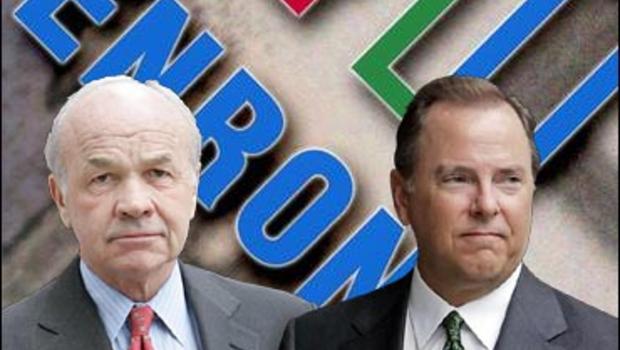
Lay and SkillingAlthough the key presumption in the criminal trial of former key Enron executives Ken Lay and Jeff Skilling is supposed to be that the men are innocent of the charges levied against them, a far different presumption is turning out to be the key one in the trial.

The Enron Task Force’s case against Lay and Skilling heavily relies on an unstated presumption — that Lay and Skilling are rich and Enron collapsed, so they must be guilty of something in connection with Enron’s descent into bankruptcy. Although the presumption is superficially appealing because of the human instinct to find scapegoats for failure, it is insidious because it is not true.

Yesterday, during his initial direct examination, Lay challenged that presumption by testifying that Enron’s meltdown was the result of an unfortunate series of events that coalesced in undermining the market’s trust in the company.

As regular readers of this blog know, I have studied the Enron case and come to much the same conclusion as Lay. Enron was a “trust-based” business — that is, Enron’s business model required that its customers rely on the company’s financial integrity and not necessarily its net worth. Accordingly, when customer confidence in a company such as Enron is undermined, participants in that company’s markets become less willing to engage in the purchase or sale of long-term contracts that might not be fulfilled.

Consequently, as the “bid-ask” spreads on trading contracts in Enron’s trading business diverged in late 2001, Enron’s markets unraveled, Enron’s formerly profitable trading business collapsed and the company melted down into bankruptcy.

A typical reaction of the media reporters covering the Lay-Skilling trial have labeled the “run on the bank” explanation of what happened to Enron as audacious, but it’s really not. Although the bankruptcy of a company as large Enron is unusual, Enronesque experiences for even the largest trust-based companies are not. In fact, over the past couple of years, two of the largest companies in the U.S. — American International Group and General Motors — each have had their own Enronesque experience. AIG survived its Enronesque experience; it remains to be seen whether GM will.

Although AIG and GM are trust-based businesses, they are different companies than Enron was, and the market forces that AIG faced and that GM continues to face are different — and in many ways, more favorable — than the dicey market conditions that Enron confronted after the September 11 attacks in 2001.

However, the point remains that, if any trust-based company loses the trust of the market, then the same thing that happened to Enron could happen to any such company, and such a breach of trust is not necessarily the result of the criminal wrongdoing of its leaders.

That’s an important point to remember as the Enron Task Force continues to rely on its dubious presumption to prop up a fundamentally weak and flawed case in attempting to place Lay and Skilling in prison for most of the remainder of their lives.

Stephen Cooper’s big payday

cooper2.jpgThis earlier post (also see here) noted the wrangling that had developed in the Enron bankruptcy case in New York over former Enron chapter 11 CEO Stephen Cooper‘s $25 million “success fee” request. That success fee, mind you, was on top of over $100 million that Cooper’s firm had already made in providing debtor-in-possession management services to Enron.
Well, as the thorough Steve Jakubowski reports here, Cooper’s proposed compromise of a $12.5 million success fee was approved late last week by the Enron Bankruptcy Judge, Arthur Gonzalez.
Not bad work if you can get it. But still no word yet from Lynn LoPucki.

A potentially Sharp tax on lawyers

business taxes.jpgFlying somewhat beneath the radar screen of a Houston business community that is preoccupied by the corporate criminal case of the decade is a new proposed state tax on earnings of partners that exceeds $300,000 a year (are you listening, law firm partners?).
This Ft. Worth Star-Telegram editorial surveys the political landscape regarding the proposed tax, which has been proposed by the so-called Sharp Commission, the special tax reform commission that former state comptroller John Sharp chaired. The proposed tax is part of a legislative effort to meet a June, 2006 deadline to fix the stateís funding system for schools and — as you might expect — more than a few law firms are opposing it.
Among other things, the Star-Telegram editorial notes that opponents are contending that the tax is unconstitutional because the Texas Constitution contains a 1993 amendment that specifically prohibits any ìtax on the net incomes of natural persons, including a personís share of partnership and unincorporated association incomeî without approval by voters in a statewide referendum.

Enron point and counterpoint

ken lay24.jpgAs former Enron chairman and CEO Ken Lay prepares to take the stand today in Week Thirteen of the corporate criminal case of the decade, I wanted to pass along an interesting exchange of posts from this past week.
This previous post noted this Jim Johnston/Paul Fisher Heartland Institute article that questions the demonization of Enron generally and the validity of the Lay-Skilling prosecution, in particular.
Chronicle business columnist Loren Steffy, who has believed for a long time that the book should be thrown at Lay and Skilling, responded to the Johnston-Fisher piece in this blog post.
In this follow-up post on the Heartland blog, Johnston replies to Steffy’s post and concludes by making the point that the type of innovative risk taking that Enron engaged in is often necessary for the creation of new markets, wealth and jobs:

I am glad to hear that the establishment of a once vibrant risk management system for natural gas is not just chopped liver in Mr. Steffyís opinion. The failed attempts with broadband, water and more importantly electricity, were good attempts and much was learned from the efforts. Maybe someday markets will be established in broadband and water. Electricity markets are even now recovering. It will take entrepreneurial companies with sizable assets to reestablish these markets. These companies will also have to watch out for the politicians.

These companies will need to watch out for the prosecutors, too!

Appleby wins SHO in a cakewalk

appleby2.jpg

Stuart Appleby led from wire-to-wire in winning his second Shell Houston Open golf tournament Sunday at the new Tournament Course at Redstone Golf Club. The final leaderboard is here, local golf writer Ed Fowler’s report on the tournament is here, and GolfWorld senior columnist John Hawkins’ analysis of Appleby’s remarkable performance is here.
Appleby lapped the rest of the SHO field as his 19-under-par performance was six shots better than second-place finisher, University of Texas alum Bob Estes. Appleby posted seven birdies in his closing round as he shot 66-67-69-67 for the tournament on the par-72, 7,500 yard Tournament Course layout. Inasmuch as the tournament was played under near-perfect weather conditions, the field scored well on the new course — better than two thirds of the 70-player field on the final two days finished under par.
On a personal note, Houston clearly has a special place in Appleby’s heart. His first win at the SHO came in 2002, about a year after his wife, Renay, had been hit by a car at the airport in London and killed. Everyone at that tournament will recall the tears in Appleby’s eyes as he accepted the trophy and spoke of carrying on. He has since remarried, is now the proud father of a 1-year-old daughter and is enjoying his best season on the PGA Tour.
The verdict on the new Tournament Course — the foundation of the SHO’s effort to elevate its presence on the PGA Tour — was decidedly mixed. The tree-lined course looked gorgeous on television and several players in the field complimented the design over the weekend. Jesper Parnevik, playing in his first Shell Houston Open, shot a 71 Sunday to shoot a one-under par 287 for the tournament, liked the course:

ìI think it was very nice for a brand new golf course. Thereís no funkiness about it. Very fair.”

Parnevik also thinks the move to a new date next year the week before The Masters Tournament will help the SHO:

“It seems like Phil [Mickelson is] going to be here. Thereís pros and cons playing the week before a major. Some guys love to play. A guy like Tiger never plays. I think itís going to be a fairly good field. I like to play before the majors. The only thing about Atlanta is you could drive to Augusta. Now you have a 2 Ω-hour flight.”

That won’t be much of a problem as I’m reasonably sure that the SHO will charter a flight after the tournament next year to transport those players who are playing in The Masters directly from Houston to Augusta. Second-place finisher Estes also thinks the SHO field will improve with the new date:

ìOverall, itís going to help. Youíll get a lot more foreign players. Youíll definitely have a stronger field and get more of the top players.î

A couple of other players expressed optimism that the Tournament Course will help players prepare for Augusta:

ìI think itís a nice warmup for the Masters,î said Ted Purdy. ìWith the big greens (here), Iím sure theyíll be in perfect condition. Itís a very similar green design, with the big undulations. It will be fun for Houston to have a lot more of the international players here. I think youíre going to have a real strong field.î

ìIf they can find a way to get the greens good and fast, with the undulations, I think they can draw a good field here,î said Lucas Glover. ìTheyíll have to find a way to get the greens fast so everyone will want to come before the Masters. This is as good a tuneup for the Masters as anything because of the iron shots, hitting it into the right areas on the greens.î

However, a couple of key players — neither of whom played particularly well on the new course — expressed reservations about coming back next year:

“The golf course did not grow on me,” said three-time SHO winner Vijay Singh, who shot 2-under for the tournament. “Normally the more you play one, the more it grows on you. For some reason, it didn’t do that. I hope they go back to the old golf course next year. I think a lot of the players feel the same way.”
“Every hole is pretty similar. I wish they had used more trees instead of lakes. It’s a modern golf course. It’s not a bad golf course. I prefer the other one.”

Asked whether he will return to the tournament next year during its new date before The Masters, Singh didn’t sound enthusiastic:

“That’s something to be thought about. I don’t know. If we play the other golf course, I’d play.”

Meanwhile, crowd favorite John Daly, who finished in the top 10 in the last three SHO tournaments, but shot 1-over par to finish 59th, also was not happy:

“Every hole is different. Every day, you’ve got to sit there and decide what you’ve got to hit off the tee. That one (the Member Course), it’s driver. You know it’s driver. This one, there are too many certain shots you’ve got to think about each tee, depending on the wind. It makes it a lot harder.”

And will Daly return to play the Tournament Course again?

“Probably not. It doesn’t set up for me at all.”

Meanwhile, SHO tournament director Steve Timms said he heard much more positive than negative feedback about the Tournament Course during the week.

“You’re not going to get a 100 percent vote of confidence.”

Any changes in the course anticipated?:

“It’s also 11 months away, so we’ll see. Some things can change.”

Any chance that one of those changes would be a move back to the old Redstone Course:?

“None at all.”

Finally, kudos to the CBS Golf Television crew for their fine tribute to the late Dick Harmon during coverage of the tournament. On Saturday, CBS ran a moving segment on Dick in connection with reporting on the opening of the new Dick Harmon Learning Center at Redstone this week. CBS color commentator Lanny Wadkins, on old friend of Dick’s, gave a particularly tender testimonial on his friendship with Dick and his appreciation for Dick working with Wadkins’ sons on their golf games. It was a wonderful expression of admiration for a great ambassador for Houston, who is sorely missed.