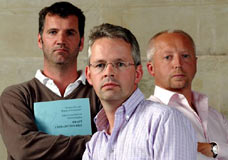
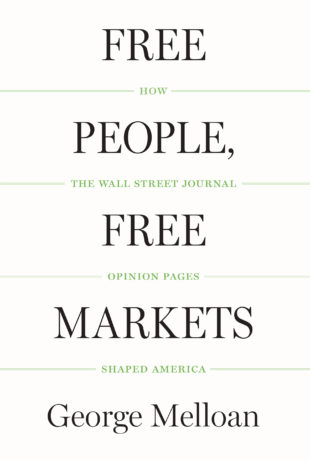
 George Melloan is deputy editor of The Wall Street Journal, where he is responsible for the editorial pages of The Wall Street Journal Europe and The Asian Wall Street Journal and writing a weekly column called Global View. Mr. Melloan has won the Gerald Loeb Award for excellence in financial journalism and two Daily Gleaner awards from the Inter-American Press Association for writings about Central America.
In this column in today’s Journal ($), Mr. Melloan takes dead aim at the government’s abuse of the rule of law to pursue currently unpopular businesspeople:
The Supreme Court has now ruled that it was excessive prosecutorial zeal and inadequate jury instruction that destroyed Arthur Andersen in 2002, not the merits of the federal obstruction-of-justice case. . .
For some years now, U.S. business corporations have been caught between the Scylla of predatory class-action lawyers and the Charybdis of overzealous prosecutors, regulators and lawmakers on the prowl for “white-collar crime.” . .
In a democracy, arrogance or misbehavior by public figures with important responsibilities invites popular resentment.
Then, Mr. Melloan superbly summarizes how we got to this point:
Sensing the public mood, a Congress never reluctant to make work for fellow lawyers whooped through the Sarbanes-Oxley bill, proclaiming it an antidote to corporate corruption. In fact, it’s a law that for proper compliance would require every assistant vice president to have a lawyer seated on his left and an accountant on the right to monitor his every movement, including trips to the WC. CEOs must now sign their annual reports with a trembling hand, knowing full well that a transgression by some anonymous drone in Walla Walla might cost a severe penalty. Corporate board members shiver for the same reason.
The sour public mood has had other effects. Staffers at the Securities and Exchange Commission and other regulatory agencies have been able to break free of adult supervision by appointive commissioners and have set about to regulate everything that moves. U.S. attorneys have endeavored to make their reputations pursuing big names in the business world. Martha Stewart went to jail for fibbing to investigators about what she had told her stockbroker, a misdemeanor at best.
The now-renowned Eliot Spitzer of New York and other state attorneys general began calling press conferences to denounce “crimes” never before known to man. Mr. Spitzer so terrorized the board of AIG, the global insurance giant, that it dumped CEO Maurice R. Greenberg. Among Mr. Greenberg’s sins was “smoothing” quarterly reports, a common practice in industry that probably gives investors a better idea of a company’s condition than letting the numbers bounce around from quarter to quarter. In a further act of appeasement AIG has now restated its profits for the last five years, lopping off $4 billion, which will surely cause confusion among tax collectors.
Read the entire piece. One of the most disturbing aspects of the recent trend of government using its enormous power to criminalize merely questionable business transactions has been much of the public’s acquiescence to this abuse of power. The business-oriented media and blog commentators such as Professor Ribstein and Professor Bainbridge have decried the trend, but prosecutors — with the help of compliant politicians — continue to appeal to the general public’s animus toward wealthy businesspeople in pursuing dubious business-related prosecutions.
As we have seen in the Martha Stewart case, the sad case of Jamie Olis, and the Enron-related Nigerian Barge case, the personal loss to individuals and their families resulting from this abuse of power is enormous. Sadly, the damage to the rule of law may be even greater.
Like this:
Like Loading...

 Washington Post columnist George F. Will adds this column to the growing body of opinion that the Wright Amendment — which restricts Southwest Airlines from flying to most states from its Dallas Love Field hub — is at least obsolescent and probably bad public policy in the first place. Here are previous posts on the Wright Amendment.