Checking in on the NatWest Three

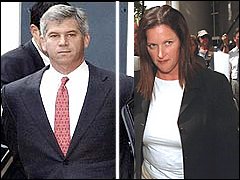
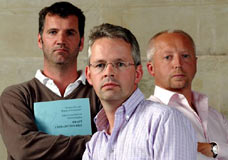
This Telegraph.com article updates the Enron-related case of the “NatWest Three,” the three former National Westminster Bank PLC bankers based in London who are charged in Houston with bilking their former employer of $7.3 million in a scheme allegedly engineered by former Enron CFO Andrew Fastow. Here are the previous posts on the NatWest Three.

Yesterday, the three bankers — David Bermingham, Giles Darby, and Gary Mulgrew — filed their appeal to England’s High Court of the decision last month of Charles Clarke, the Home Secretary, who upheld an earlier decision by a judge at Bow Street Magistrates’ Court in central London to extradite the three bankers to Houston to face the charges.

The case has been undergoing increasing scrutiny in the English media because the U.S. is attempting to extradite the three men under the 2003 Extradition Act, which has been criticized in English legal circles for allowing British courts to extradite British citizens without proper evaluation of U.S. prosecutors’ charges and evidence.

Of particular interest is the article’s analysis of the three bankers’ procedural options in the foreign courts if they lose their current appeal:

If [the NatWest Three] lose, they will take the matter to the House of Lords and then, if necessary, on to the European Court of Human Rights. The process could take over five years.

Five years?!

The thought of the Enron Task Force remaining in business for another five years is definitely not comforting.

George Melloan on the Andersen decision

George Melloan is deputy editor of The Wall Street Journal, where he is responsible for the editorial pages of The Wall Street Journal Europe and The Asian Wall Street Journal and writing a weekly column called Global View. Mr. Melloan has won the Gerald Loeb Award for excellence in financial journalism and two Daily Gleaner awards from the Inter-American Press Association for writings about Central America.

In this column in today’s Journal ($), Mr. Melloan takes dead aim at the government’s abuse of the rule of law to pursue currently unpopular businesspeople:

The Supreme Court has now ruled that it was excessive prosecutorial zeal and inadequate jury instruction that destroyed Arthur Andersen in 2002, not the merits of the federal obstruction-of-justice case. . .

For some years now, U.S. business corporations have been caught between the Scylla of predatory class-action lawyers and the Charybdis of overzealous prosecutors, regulators and lawmakers on the prowl for “white-collar crime.” . .

In a democracy, arrogance or misbehavior by public figures with important responsibilities invites popular resentment.

Then, Mr. Melloan superbly summarizes how we got to this point:

Sensing the public mood, a Congress never reluctant to make work for fellow lawyers whooped through the Sarbanes-Oxley bill, proclaiming it an antidote to corporate corruption. In fact, it’s a law that for proper compliance would require every assistant vice president to have a lawyer seated on his left and an accountant on the right to monitor his every movement, including trips to the WC. CEOs must now sign their annual reports with a trembling hand, knowing full well that a transgression by some anonymous drone in Walla Walla might cost a severe penalty. Corporate board members shiver for the same reason.

The sour public mood has had other effects. Staffers at the Securities and Exchange Commission and other regulatory agencies have been able to break free of adult supervision by appointive commissioners and have set about to regulate everything that moves. U.S. attorneys have endeavored to make their reputations pursuing big names in the business world. Martha Stewart went to jail for fibbing to investigators about what she had told her stockbroker, a misdemeanor at best.

The now-renowned Eliot Spitzer of New York and other state attorneys general began calling press conferences to denounce “crimes” never before known to man. Mr. Spitzer so terrorized the board of AIG, the global insurance giant, that it dumped CEO Maurice R. Greenberg. Among Mr. Greenberg’s sins was “smoothing” quarterly reports, a common practice in industry that probably gives investors a better idea of a company’s condition than letting the numbers bounce around from quarter to quarter. In a further act of appeasement AIG has now restated its profits for the last five years, lopping off $4 billion, which will surely cause confusion among tax collectors.

Read the entire piece. One of the most disturbing aspects of the recent trend of government using its enormous power to criminalize merely questionable business transactions has been much of the public’s acquiescence to this abuse of power. The business-oriented media and blog commentators such as Professor Ribstein and Professor Bainbridge have decried the trend, but prosecutors — with the help of compliant politicians — continue to appeal to the general public’s animus toward wealthy businesspeople in pursuing dubious business-related prosecutions.

As we have seen in the Martha Stewart case, the sad case of Jamie Olis, and the Enron-related Nigerian Barge case, the personal loss to individuals and their families resulting from this abuse of power is enormous. Sadly, the damage to the rule of law may be even greater.

The noose tightens — General Re exec cops plea

Gen Re 3.gifJohn Houldsworth, an executive at Berkshire Hathaway Inc.’s General Reinsurance Corp. unit, has agreed to plead guilty to a charge of criminal conspiracy in connection with the company’s nontraditional insurance finance transactions with American International Group Inc. Although Mr. Houldsworth — who is on paid leave, but who headed General Re’s reinsurance unit in Dublin — faces up to five years in prison for participating in the disputed 2001 transaction between AIG and General Re, that sentence will likely be less so long as Mr. Houldsworth fulfills his pledge to cooperate with the U.S. Justice Department and the Securities and Exchange Commission in their investigation of AIG and Berkshire. Here are the previous posts on the various investigations of AIG and Berkshire.

Lea Fastow Released from Prison

The Chronicle’s Mary Flood reports that Lea Fastow — who served a longer sentence under harsher conditions because of her marriage to former Enron CFO Andrew Fastow — was released to a halfway house from the Federal Detention Center in downtown Houston today. She is scheduled to be released from the halfway house on July 11.

Although U.S. District Judge David Hittner’s handling of the Lea Fastow case has received the most media attention, the case is really a prime example of the Enron Task Force’s lack of prosecutorial discretion and heavy-handed plea bargaining tactics.

In reality, Judge Hittner simply never appeared comfortable with the Task Force’s indictment of Mrs. Fastow. The indictment was a blatant move to place pressure on Mr. Fastow to cop a plea and cooperate with the prosecution, which he eventually did.

During Mrs. Fastow’s sentencing, Judge Hittner harshly criticized prosecutors for vacillating between an original indictment of six felonies and a final charge of just one misdemeanor, suggesting that justice may not have been served in either instance.

“Such maneuvering as is present in this case might be seen as a blatant manipulation of the justice system,” Judge Hittner stated on the record.

Yale law professor John Langbein, who has written extensively regarding prosecutorial abuse of the American plea bargaining system, identifies the problem in the following manner:

“Plea bargaining concentrates effective control of criminal procedure in the hands of a single officer. Our formal law of trial envisages a division of responsibility. We expect the prosecutor to make the charging decision, the judge and especially the jury to adjudicate, and the judge to set the sentence. Plea bargaining merges these accusatory, determinative, and sanctional phases of procedure in the hands of the prosecutor.

Students of the history of the law of torture are reminded that the great psychological fallacy of the European inquisitorial procedure of that time was that it concentrated in the investigating magistrate the powers of accusation, investigation, torture and condemnation. The single inquisitor who wielded those powers needed to have what one recent historian has called ‘superhuman capabilities [in order to] keep himself in his decisional function free from the predisposing influences of his own instigating and investigating activity.

I cannot emphasize too strongly how dangerous this concentration of prosecutorial power can be. The modern prosecutor commands the vast resources of the state for gathering and generating accusing evidence. We allowed him this power in large part because the criminal trial interpose the safeguard of adjudication against the danger that he might bring those resources to bear against an innocent citizen — whether on account of honest error, arbitrariness, or worse.

A picture of Metro, 30 years from now?

metrocar.jpgThis post from last year addressed the economic failure of the urban rail system in Washington, D.C. Now, the Washington Post is running a series of articles (first one here) that is examining the dubious economics and management of D.C.’s subway system. Here are other posts on various urban rail boondoggles.
Tory Gattis over at Houston Strategies picks up on the same WaPo article and observes the following regarding the failed economics of most urban rail systems:

Quite the depressing and scary litany. It’s really hard to have good management at a public agency, and transit is a seriously complicated and expensive business with billions of dollars at stake, especially rail transit. Amtrak’s a mess. DC’s a mess. NY, Chicago, SF/San Jose, and LA all have serious problems with their transit agencies. What makes us think Houston Metro can buck this trend?

Checking in on Krispy Kreme

krispy.jpgIt’s been awhile since we have checked in on the travails of Krispy Kreme Doughnuts, Inc. (earlier posts here), so it seems appropriate to pass along this CFO.com article that does a good job of summarizing the mistakes that the once-trendy franchisor made in quickly expanding beyond its Carolina roots:

How could a company in business for nearly 70 years, with an almost legendary product and a loyal customer base, fall from grace so quickly? The story of Krispy Kreme’s troubles is, at bottom, a case study of how not to grow a franchise. According to one count, there are at least 2,300 franchised businesses in the United States, and many are extremely successful. But there are pitfalls in the franchise model, and Krispy Kreme ? through a combination of ambition, greed, and inexperience ? managed to stumble into most of them.

And what’s the solution for this troubled company? It’s really quite simple. As one commentator observed:

“They need to emphasize the hot-doughnut experience, rather than the cold, old doughnut in a gas station.”

More ripples from the Anderson decision

Ellen Podgor over at the White Collar Crime Prof Blog points us to two documents that raise important issues relating to the federal government’s questionable policy of attempting to regulate business through criminalization of what it deems to be questionable business practices.

Frank Quattrone’s appellate attorneys have based his appeal squarely on last week’s Supreme Court decision in Anderson. The following is the hard-hitting first paragraph from that brief:

The government’s brief is an effort to weave a rope of sand, and to imbue a trial with evidentiary substance and procedural fairness when it was sorely lacking in both. With regard to the evidence, the prosecutors dutifully characterize the defendant as plainly guilty, and describe their proof as “strong” or even “compelling.” [record reference omitted]. This is standard rhetoric for those who write the red-covered briefs in criminal cases. But if this was a “strong” case, then there is no such thing as a weak one. Notwithstanding the government’s cavalier description, this case turned on a “threadbare phrase,” United States v. Mulheren, 938 F.2d 364, 370 (2d Cir. 1991) — Quattrone’s one-line e-mail urging his colleagues to “follow [the] procedures” contained in a standard corporate document retention policy. As the Supreme Court reminded the government only recently, “[i]t is, of course, not wrongful for a manager to instruct his employees to comply with a valid document policy under ordinary circumstances.” Arthur Andersen LLP v. United States, No. 04-368, 2005 WL 1262915, *5 (U.S. May 31, 2005).

Moreover, Professor Geraldine Szott Moohr of the University of Houston Law Center has written this law review article — Prosecutorial Power in an Adversarial System: Lessons from Current White Collar Cases — in which she points out that the increasingly common prosecutorial tactic of bludgeoning white collar defendants into plea bargains undermines the deterrent purpose of such prosecutions. Here is the synopsis for the article:

Successful disposition of the cases against Arthur Andersen, Martha Stewart, high-level Enron officers, and scores of mid-level executives testifies to the authority of federal prosecutors. A review of these cases identifies the sources of prosecutorial power and traces their effect in the investigation, charging, and sentencing phases of white collar crime.

A comparison of the roles of American federal prosecutors and their European counterparts in investigating, charging, and sentencing corroborates the judgment that our present system has a decidedly inquisitorial cast. The power of inquisitorial prosecutors is constrained by inherent safeguards that impose formal and informal limitations on their discretion. In contrast, federal prosecutors exercise greater power in the investigation and charging phases and exercise even more authority in sentencing and plea bargaining. The combination belies adversarial values.

Retreat from the adversarial trial can undermine the goal of deterring business misconduct in several ways. Inconsistent sentences that result from plea bargains can forfeit the moral authority of criminal law in the business community, the very group one wishes to deter. In contrast, public trials provide a rationale for sentences and educate the business community about the illegality of specific conduct, a requirement for optimal deterrence that is especially relevant in white collar crimes. Public trials also strengthen shared social norms of the business community against fraudulent practices. In sum, disposing of criminal cases through quasi-inquisitorial investigation and plea bargaining forfeits an opportunity to reinforce the standards of lawful business conduct and thereby strengthen deterrence.

In that connection, note Professor Langbein’s related comments in this post.

That’s big, even for Texas

cedarmart.jpgThis Sunday Chronicle article has the nice graphic on the left that puts into perspective the size of the new Wal-Mart Distribution Center in the Cedar Crossing Business Center near Baytown between Houston and Beaumont by comparing it to other large facilities in the Houston area.
By the way, Tory Gattis over at the smart Houston Strategies blog provides this nice analysis of the probable economic impact of the Wal-Mart Distribution Center on the Houston area economy. In particular, Tory notes the following:

It’s an important part of Houston’s economic diversification to offer quality blue-collar jobs outside of the oil industry. One of the things I’ve always liked about Houston is our mixed white/blue-collar economic base, which I think makes for a more diverse and interesting city.

On a related note, this Houston Business Journal article points out that Wal-Mart received $19 million in infrastructure improvements and property tax exemptions for the Wal-Mart Distribution Center in Baytown, which was the fifth largest of over $1 billion in such subsidies that Wal-Mart has received from various governmental entities to induce the company to build facilities around the country.

Fallout at Morgan over the Perelman lawsuit

morgan3.gifMorgan Stanley announced yesterday that Donald Kempf will step down as its general counsel two weeks after the firm was hammered with a $1.45 billion jury verdict in Florida state court over a lawsuit brought by billionaire financier Ronald Perelman. Previous posts on the Perelman lawsuit may be reviewed here, here, and here.
Mr. Kempf joined Morgan in 1999 from the firm’s longtime counsel, Kirkland & Ellis, where he was a well-known defense lawyer in the hard-knuckled world of Chicago business litigation. Morgan began its search for a new general counsel toward the end of the Perelman trial when the firm named prominent lawyer David Heleniak as a new vice chairman with oversight of the general counsel’s office.
Mr. Perelman sued the firm in 2003 for its role in advising Sunbeam Corp. in 1998 when the billionaire sold his 82% stake in camping gear company Coleman Inc. to Sunbeam, which was a Morgan Stanley client. He claimed the firm knew or at least should have known about Sunbeam’s accounting shams and the case eventually spun out of control when Morgan’s repeated failure to produce documents prompted the judge hearing the case to sanction Morgan by entering a default judgment on the liability issue in the case.
Consequently, Mr. Kempf is clearly taking the fall for that mishap, but it’s doubtful that he really should be. Mr. Kempf recommended that Morgan settle the case for $20 million early in the litigation, but Morgan’s investment-banking division rejected the proposed settlement on two separate occasions. Sounds to me as if those investment banker types at Morgan need to listen to their main investment banker on litigation matters more carefully.
By the way, this NY Sunday Times article goes into the Perelman v. Morgan case in detail, including Morgan’s pre-litigation threat to Mr. Perelman that the firm would attack him personally if he proceeded with the lawsuit.

Herskowitz on George Mikan

Mickey Herskowitz is the dean of Houston sportswriters, and several of his previous columns have been highlighted on this blog. Mr. Herskowitz is at his best when his columns address the legends of sports, so the death earlier this week of the National Basketball Association’s first true big man — George Mikan — gave Mr. Herskowitz an opportunity to pen another strong column. Here are a couple of tidbits:

In the fall of 1949, Slater Martin was an All-America guard out of Texas, a 5-10 rookie hoping to land a spot on the roster of the Minneapolis Lakers. Mikan was a foot taller, in his fourth year and the greatest attraction in a league struggling to survive.

Martin remembers his first glimpse of the legendary center . . .

“I was just shooting at a basket from the side of the court, and he walked over to where I was and said, ‘Hey, throw me that ball, I’m going to shoot some free throws. Will you fetch ’em for me?’ I said, sure.

He was a very, very good free-throw shooter. Shot them the old way, underhanded, between his legs. He finally missed one and then he said, ‘That’s enough, you can go now.’

“He thought I was the ball boy.”

Mr. Martin goes on to describe Mr. Mikan’s playing style:

Mikan was, in Martin’s words, “a teddy bear off the court.” But he played the game without mercy. One of his victims was his brother Ed, a 6-8 center for the short-lived Chicago Stags.

“He had to guard George,” Martin said. “I felt sorry for him. After the game, we went to a tavern his parents owned. Ed was all bruised and nicked up. He had a cut over his eye, scratches on his face.

“Their folks were Croatian. His mother called him Georgie. This night she said, ‘Georgie, why you beat up your brother like that?’

“He said, ‘Mama, if you had been out there I’d have beat you up, too.'”

Read the entire piece.