Based on the developments related in this previous post, it’s not particularly surprising that a Florida jury awarded billionaire financier and Revlon, Inc. chairman Ronald Perelman $604.3 million against Morgan Stanley on his claims that Morgan defrauded him when he sold about an 80% stake in camping-gear maker Coleman Inc. to Sunbeam Corp. in 1998. Shortly thereafter, Sunbeam went into chapter 11, undercutting the value of much of the $1.5 billion consideration that Mr. Perelman received under the deal.
To make matters worse, the $604 million award is for compensatory damages only. Inasmuch as Mr. Perelman is also claiming entitlement to punitive damages, Morgan’s damages in the case could rise to almost $2.5 billion. Finally, all of this carnage comes after Morgan Stanley had rejected a $20 million settlement offer from Mr. Perelman during early stages of the case.
As noted in the earlier post, Mr. Perelman’s case was helped by the earlier default judgment that the state court judge approved as a sanction for Morgan Stanley’s discovery abuse in failing to turn over documents (mostly emails) to Mr. Perelman’s legal team. Accordingly, the judge instructed the jury during the trial that it must accept as fact that Morgan Stanley helped Sunbeam defraud investors. As a result, Mr. Perelman only had to persuade the jury that he relied on representations made by Morgan Stanley or Sunbeam and that he lost money.
The judgment comes during a troubled time for Morgan Stanley, which is currently undergoing a management revolt in which former executives are attempting to persuade the Morgan board to replace Morgan CEO Philip Purcell over how he is running the company. Morgan is in the “trust” business and, at some point, troubles such as those Morgan is experiencing can undermine customers’ trust in Morgan’s financial integrity. That lack of trust is what brought Enron down, and Morgan’s board needs to be concerned with that same dynamic.
Monthly Archives: May 2005
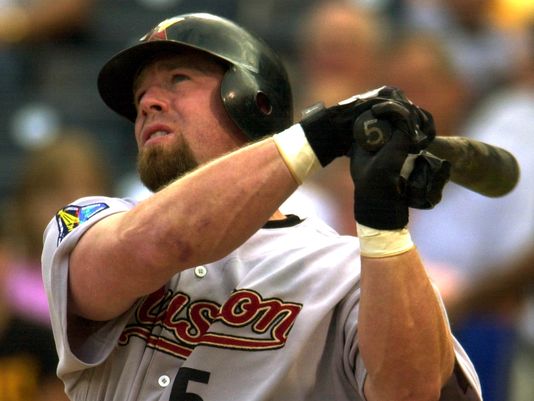
Bags opts for shoulder surgery
In a last ditch effort to salvage another season or two of his career, longtime Stros 1B Jeff Bagwell has decided to undergo surgery on the arthritic right shoulder that has been deteriorating over the past several years.
Bags’ move to the disabled list and this surgery are probably both necessary steps toward the Stros working out a settlement with the disability insurer on Bags’ contract. Such a settlement would assist the Stros financially in paying off the balance of the $39 million or so that the club owes Bags over the remaining two years of his contract. My bet is that Bags will not be able to regain enough strength in his surgically repaired shoulder to withstand the rigors of playing Major League Baseball.
Bags’ impending retirement has generated an gratingly stupid discussion in the mainstream media about whether Bags should be elected to the Baseball Hall of Fame. On both talk radio and in the print media, supposed “experts” (with the notable exception of Charlie Pallilo) opine almost daily as to the pros and cons of whether Bags should be elected. In many respects, the discussion reflects the truth of what Bill James examined in his book about the Hall, Whatever Happened to the Hall of Fame — that is, that election to the Hall is largely an arbitrary political process that has little to do with a player’s performance during his baseball career.
Frankly, Mr. James’ book is one of the reasons why I prefer Lee Sinins‘ much better conceived Baseball Immortals website in which each member of that group is selected solely on the basis of their performance as a baseball player. It is quite illuminating to see how many members of the Hall of Fame do not come close to meeting the standard of performance of membership in Baseball Immortals, and how many of the members of the performance-based Baseball Immortals group still have not been elected to the Hall.
In short, Bags should be elected to the Hall of Fame on the first ballot, and it is not even a close call. For his career, Bagwell has an incredible 680 RCAA (RCAA explained here) in 2,135 games (meaning that he has created 680 more runs than an average National League hitter would have created in those games), a .297 batting average, a gaudy .408 on-base percentage (to put that in perspective, an average National League hitter had about a .340 OBP last season), a slugging percentage of .541, and a monstrous .949 career OPS (on-base percentage + slugging percentage) compared to the league average OPS during Bagwell’s career of .763!
In addition to the foregoing, Bagwell holds the modern NL record for career RCAA by a 1B:
1 Jeff Bagwell 680
2 Johnny Mize 638
3 Willie McCovey 536
4 Bill Terry 425
5 Todd Helton 406
6 Stan Musial 399
7 Keith Hernandez 371
8 Dolph Camilli 353
9 Will Clark 331
10 Frank Chance 330
Indeed, Bags’ running mate — Craig Biggio — has “only” a .810 career OPS (compared to his league average of .756) and 357 RCAA in 2447 games. The fact that Bidg should be a surefire Hall of Famer underscores the fact that Bags should be, too.
And as if the foregoing stats were not enough, Bags was among the best defensive first basemen in the game until his shoulder injury robbed him of his throwing ability over the past several seasons, and he remains — despite average speed — one of the best and most instinctive baserunners in the game during his career.
Just to underscore the foregoing, Mr. James — who knows more about baseball in his pinky than most of us can comprehend — rates Bags as the fourth best firstbaseman of all-time in his New Bill James Historical Abstract, behind only Lou Gehrig, Jimmie Foxx, and Mark McGwire.
So, please. Whenever you hear someone take the ignorant position that Bags was not good enough to be in the Hall of Fame, please refer them to this post. Bags may not make it into the Hall because of arbitrary and capricious bias. However, such a non-selection would have nothing to do with his performance. He is truly one of baseball’s greats.
More favorable date for the Shell Houston Open?
As noted in this previous post, the Shell Houston Open has suffered for years because it is played two weeks after The Masters Tournament when most of the best players are taking a break before gearing up for the U.S. Open in June.
However, the PGA Tour is currently negotiating a new television contract and, in that connection, is considering a revamped schedule that would move the Players Championship’s current late March date to a more favorable date in May. This Florida Times-Union article on the subject sets forth the following tournament schedule model that is being considered as an alternative to the current one, and this schedule would give the Shell Houston Open a much more favorable date the week before the Players Championship:
January
Mercedes Championship, Hawaii
Sony Open, Hawaii
Buick Invitational, La Jolla, Calif.
Bob Hope Chrysler Classic, Palm Desert, Calif.
February
FBR Open, Scottsdale, Ariz.
AT&T Pebble Beach National Pro-Am
Nissan Open, Los Angeles
Chrysler Classic of Tucson
March
Ford Championship at Doral, Miami
Honda Classic, Palm Beach Gardens
Bay Hill Invitational, Orlando
Accenture Match Play, Innisbrook
April
BellSouth Classic, Atlanta
Masters, Augusta, Ga.
MCI Heritage, Hilton Head, S.C.
Shell Houston Open
May
Players Championship
Wachovia Championship, Charlotte, N.C.
EDS Byron Nelson Championship, Irving, Texas
MasterCard Colonial, Fort Worth, Texas
FedEx St. Jude Classic, Memphis, Tenn.
June
Memorial, Dublin, Ohio
Booz Allen Classic, Potomac, Md.
U.S. Open
Barclays Classic, Westchester, N.Y.
July
Western Open, Lemont, Ill.
American Express Invitational
British Open (B.C. Open, Endicott, N.Y., the same week)
U.S. Bank Championship, Milwaukee
August
Buick Open, Warwick Hills, Mich.
International, Castle Rock, Colo.
PGA Championship
NEC Invitational (Reno-Tahoe Open the same week)
September
Deutsche Bank Championship, Norton, Mass.
Tour Championship, Atlanta (John Deere Classic, Silva, Ill., same week).
End of official money season and beginning of next official money season.
September
Bell Canadian Open
84 Lumber Classic, Farmington, Pa.
Southern Farm Bureau Classic, Annandale, Miss.
October
Valero Texas Open
Chrsyler Classic of Greensboro
Michelin Championship of Las Vegas
Funai Classic at Disney World
End of official money events for calendar year
Senate report implicates Bayoil with helping Kremlin in Oil for Food Scandal
This Washington Post article reports that a Senate Permanent Subcommittee on Investigations investigation into the U.N.’s oil-for-food program has concluded that Houston-based oil trading company, Bayoil, “paid millions of dollars in illegal, under-the-table surcharges” to the Iraqi regime of Saddam Hussein regime under the program and that Hussein used the illicit proceeds from the oil sales to buy weapons, among other things. The Senate Subcommittee report was made public last night in advance of a hearing today on the matter. Here are earlier posts on the oil-for-food scandal.
The report concludes that the Bayoil payments were part of a scheme under which Iraq sought to influence and reward the Russian government for supporting the Hussein regime in U.N. Security Council deliberations regarding sanctions against the Iraqi government. The Senate report contends that Bayoil played a key role in numerous transactions with the Iraqi government, and that Bayoil arranged transactions between Iraq and former prominent Russian politician Vladimir Zhirinovsky under which a Russian entity would purchase the oil and, without ever taking possession, sell it to Bayoil. Apparently, the Senate report includes a copy of a letter from Bayoil described how the company paid an “agreed premium” to Mr. Zhirinovsky for his cut of the transaction.
“And those legacy airlines are doing just great, too”
Federal Reserve chairman Alan Greenspan gave the commencement address at Wharton yesterday and was quoted as saying the following: “I am surprised that the Sarbanes-Oxley Act, so rapidly developed and enacted, has functioned as well as it has.”
H’mm. This earlier post notes Mr. Greenspan’s rather dubious views on criminalizing negligence of business executives. But if you want a detailed analysis of the error in Mr. Greenspan’s opinion on the Sarbox legislation, Professor Ribstein’s archive of Sarbox posts is an excellent resource.
Definitely not Ozzie and Harriet’s family
Tiger Woods isn’t playing this weekend, but I bet you will want to watch the final round of the Byron Nelson Golf Tournament in Dallas after you read this blog post, anyway.
22 year-old Sean O’Hair — who was born and raised in Lubbock — is leading the tournament going into the final round. O’Hair was a high school student and one of the nation’s top junior players when he turned pro at 17 in September, 1999, one calendar year before fellow teens and future PGA Tour card-holders Ty Tryon and Kevin Na.
However, O’Hair’s journey to the PGA Tour was anything but a smooth one. He languished on the mini-tours for the past five years, traveling over 200,000 miles in the process. O’Hair finally won his Tour card by finishing fourth in the 2004 PGA Tour Qualifying School this past fall, but as this January, 2005 GolfWorld article reports, O’Hair has had to overcome a lot more than just the rigors of travel on the mini-tours in attaining his PGA Tour Card:
Marc O’Hair [Sean O’Hair’s father], 52, signed management contracts with his son, says he invested $2 million in his boy’s professional future and subjected Sean to a physical and psychological regimen that would make most drill sergeants blush. Sean broke free in 2002 and has not spoken to his father since a perfunctory greeting at Sean’s wedding more than two years ago.
Marc O’Hair, a large man who wore dark sunglasses, subjected Sean to a rigorous routine that stood out. He was sometimes brusque to tournament, rules and school officials, event organizers and other parents. His son, by design, was treated as a commodity.
Sean signed his first contract with his dad when he was 17, requiring him to pay his father 10 percent of his professional earnings for life. He signed another when he was 20, Marc says.“I told him, ‘I can’t blow this kind of money without a return,'” Marc says.” ‘When you make it, there has to be payback someday.'”
Taking a tough-love approach, Marc drove his son hard. While the results speak for themselves, those who watched the duo believe there was madness in the method. As a junior player, Sean was forced to run a mile for making bogeys or finishing over par at tournaments. Marc once claimed he made Sean run eight miles in 93-degree heat after shooting an 80. At a 1998 AJGA tournament in California, Sean shot 79, then spent part of the night logging seven miles on a treadmill, a friend, Christo Greyling, says.
“The next day, he could hardly walk,” remembers Greyling, a former AJGA player and a senior at University of Georgia. “We could hardly believe he [Marc] went through with it.”
Other players . . . say Marc would berate his son in the presence of others. Dad admits slapping his son, but he says he never injured him. Sean declines to discuss the specifics of his father’s behavior, but he missed numerous social activities because he was on the driving range, working out or watching tapes of his swing. “We’d go to the beach, have an outing at Disney, do something social, and he’d be out in the parking lot with his dad doing some crazy crap [drill],” says Erik Compton, who competed in AJGA events with Sean and roomed with him at the 1998 Canon Cup team matches.
In addition to the golf work, Marc awakened his son at 5 a.m., had him run a mile and lift weights. After Sean turned pro, Marc cooked meals on a portable stove in their hotel room so that Sean ate the right foods. Every day was like boot camp, and the military comparisons aren’t by accident.“What am I supposed to do, say, ‘Oh, Seany boy, you don’t have to get up early today,'” Marc says sarcastically. “The military, they know how to build a champion. Somebody who slacks off, that’s a loser. The typical high-school kid is hanging out at the mall – that’s a loser. You have to have a goal or you are just wasting time. I busted my [butt] on this thing. I thought I was doing him a favor. You would not believe what I did for him.”
How the family dynamic develops from here is anybody’s guess. No question, dad feels a broiling sense of festering betrayal. In fact, Sean is worried that Marc will someday sue him for repayment of the money spent fostering his career. “I hope I don’t have to go through that,” he says of a legal battle, “because that’s been a bit of a concern.” Truth be told, dad has other ideas. Marc says he has placed 25 photocopies of their contracts and a cover letter into envelopes he plans to mail to media outlets when his son makes a splash on tour.
“As soon as he gets famous, I am going to lower the boom,” Marc says. “I am going to show everybody what he did to me. I have no intention of suing him. I intend to crucify him in the media, because what he did to me is not right.”
Read the entire article. Then go watch the tournament and pull for this kid to win it, and for his father never to receive a nickel from him.
Update: Young O’Hair acquitted himself well in the final round, shooting a two under par 68 and finishing in second place, one stroke off Ted Purdy’s 15 under par winning score. O’Hair won $669,600 for his second place finish.
T. Boone Pickens on energy prices
T. Boone Pickens started Mesa Petroleum Company in 1956 with a $2,500 investment and built it into the largest independent oil and gas company in America. Then, during the 1980’s, Mr. Pickens became well-known in business circles (Fortune magazine called him the “most hated man in America”) for leading a series of hostile takeover attempts that earned him a reputation as a corporate raider and greenmailer. Although Mr. Pickens’ ideas about corporate restructuring and the tactics he used for achieving them were controversial in those days, many of those ideas are common practice in the business world today, even among hedge funds.
This article reports on recent remarks of the 77 year old Mr. Pickens in which he provides an interesting overview of current oil demand and production statistics:
Let me tell you some facts the way I see it. Global oil (production) is 84 million barrels (a day). I don’t believe you can get it any more than 84 million barrels. I don’t care what (Saudi Crown Prince) Abdullah, (Russian Premier Vladimir) Putin or anybody else says about oil reserves or production. I think they are on decline in the biggest oil fields in the world today and I know what’s it like once you turn the corner and start declining, it’s a tread mill that you just can’t keep up with.
So, when you start adding the reserves in these countries, you’re not even replacing what you’re taking out.
Let me take you to another situation quickly. 84 million barrels a day times 365 days is 30 billion barrels of oil a year that we’re depleting. All of the world’s (oil) industry doesn’t even come close to replacing 30 billion barrels of oil. We don’t spend enough money to even give ourselves a chance to replace 30 billion barrels. It may be because the prospects are not there. I rather imagine that’s what the answer is to that.
So, if you accept that 84 million barrels a day is all the world can (produce), and then look at refining capacity, I think it’s just a coincidence that refining capacity… world capacity… is 84 million barrels a day. So, we’re in balance: 84, 84.
Now you see the projections for the fourth quarter of ’05, I mean like tomorrow; it is 86 to 87 million barrels of oil a day required. China (and) India (are) growing fast. Our economy is going down a little bit, but it doesn’t seem to be shutting off demand for gasoline, oil, natural gas, whatever. But around the world… just assume that the (U.S.) economy is slowing, but China is still ramped up; it is still 86, 87 million for the fourth quarter.
Now we’ve got some pretty good inventory, those will be… I think.. they’ll be gone in the third quarter. I can’t wait to see how this is all going to play out.
After his remarks, Mr. Pickens was asked if he agrees with Houston-based investment banker Matt Simmons that Saudi Arabia’s oil fields may be on the verge of decline. Mr. Pickens replied that he agreed with Mr. Simmons.
As the article on Mr. Pickens’ remarks notes, if he and Mr. Simmons are correct that Saudi promises to raise production over the next decade cannot be fulfilled, then Saudi Arabia’s role as a swing producer and oil price stabilizer will be a thing of the past. That would probably lead to more volatility in energy prices as the world economy begins to adjust to more expensive fossil fuels. Thus, the coming year could be a very interesting one in the oil and gas business.
First AIG exec cops immunity deal
Joseph H. Umansky, president of AIG Reinsurance Advisors over the past 13 years, became the first senior executive at American International Group Inc. to strike a deal with authorities to offer his testimony in return for immunity from potential charges related to the ongoing investigations of the company’s accounting of structured finance transactions, although it is still unclear with which governmental entity Mr. Umansky has cut his deal. Here are previous posts on the various investigation of AIG and Berkshire Hathaway related to these transactions.
Various governmental agencies are investigating AIG’s structured finance transactions involving reinsurance over the past five years or so that the regulators contend artificially inflated the company’s financial statements to mislead investors. The basic theory of the government’s case is that the reinsurance deals in question did not transfer enough risk to qualify for the favorable accounting that AIG used. Earlier this month, AIG announced that its revision of accounting treatment relating to various transactions would reduce its net worth by about $2.7 billion, which is about 3.3% of the company’s net worth.
Mr. Umansky is expected to testify against two key AIG executives who appear to be the prime targets of the investigations — AIG’s former chief financial officer, Howard I. Smith, who AIG fired in March for declining to cooperate with the ongoing investigations, and Maurice R. “Hank” Greenberg, AIG’s chief executive for almost 40 years, who resigned under pressure when he decided to exercise his his Fifth Amendment rights in response to the governmental inquiries.
Meanwhile, on the Berkshire Hathaway side of the investigatory landscape, that company announced on Friday that two executives working for overseas units of its General Reinsurance Corp. unit have been put on administrative leave with pay while U.S. and foreign authorities investigate their involvement in AIG reinsurance transactions and other similar transactions.
Just in case you are keeping track, the value of AIG’s shares has dropped by almost 30% since the disclosure of the government investigations in mid-February and, as this earlier post points out, the end of that drop may not yet be in sight.
U.S. Attorney calls it quits
Michael Shelby, the U.S. Attorney for the Southern District of Texas for the past three and a half years, announced his resignation today to enter private practice.
The U.S. Attorney’s position in Houston has been a revolving door for years. It’s a big district with a ton of drug and immigration cases, and — despite the ongoing Enron prosecutions — has really never been a particularly active office in pursuing the juicier white collar criminal cases. Moreover, because of a myriad of conflicts, Mr. Shelby withdrew the local office early from investigating or prosecuting any of the Enron cases, which have been handled by a special Enron Task Force comprised of prosecutors primarily from New York City and Washington. Here’s hoping that the local bar committee will be able to come up with a candidate for the position who will be able to stay for a prolonged period, say a decade or so. My sense is that the assistant U.S. Attorneys in the local office would really appreciate the stability that such a long tenure tends to promote.
Discovery’s Great American Tour hits Houston
Over the past several months, The Discovery Channel has been promoting an interesting project called the Greatest American of All Time. During a road show promoting the contest, Americans from all over the country have been nominating other Americans who they believe have had the greatest influence on what it means to be an American.
The road tour kicked off last month in Boston and is stopping in Houston over this weekend. The Great American Tour Bus will be at the Art Car Parade on Saturday between 10 and 3 and at the Galleria on Sunday between 11 and 7. Attendees have the opportunity to write a short blog entry essay or give a video testimonial on who they think deserves to be the Greatest American.
The road tour will conclude in June and be followed by a TV series with Matt Lauer of the Today Show that counts down the top 100 nominations to No. 1, who will be named the Greatest American. This appears to be a great project to introduce young children (and older ones, too) to great Americans, so check it out if you’re in the neighborhood this weekend.
