
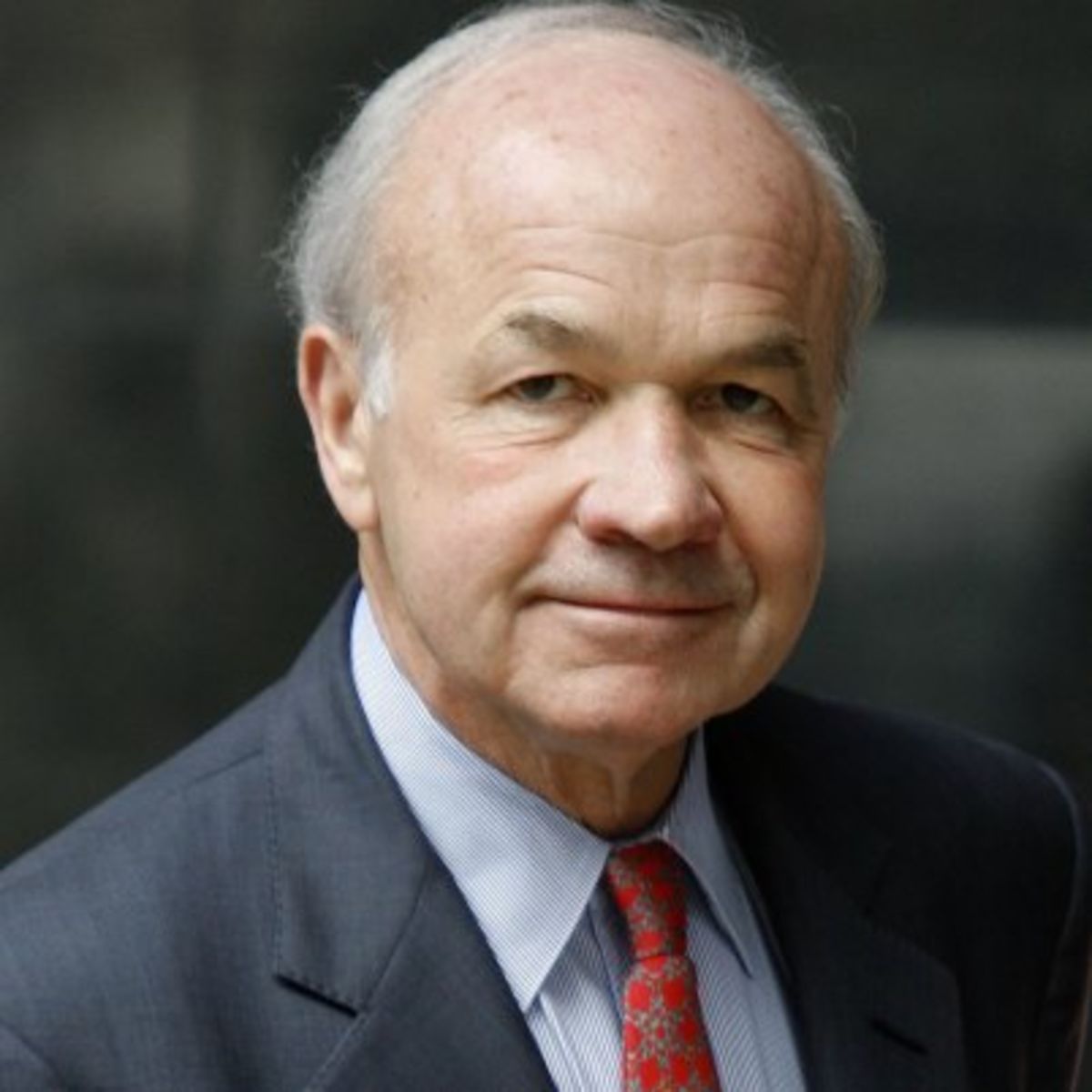
Is Ken Lay a Criminal?

William Anderson is an economics professor at Frostburg State University and an adjunct scholar at the Mises Institute. Here is an earlier post in which Professor Anderson challenged the reasoning behind an indictment earlier this year of several former executives of Houston-based Reliant Resources.

In this article that he co-authored with California attorney Candice E. Jackson, Professor Anderson challenges the conventional wisdom that the indictment of former Enron chairman and CEO Kenneth Lay is justified:

The “prosecutor as hero” theme reverberates in the media. What follows (from the July 19, 2004, edition of U.S. News) is typical of the state-worshiping press in the wake of the Lay indictments:

The federal prosecutors mopping up after corporate scandals can remember the summer of 2004 as their season of sweet victory. Last week a jury convicted Adelphia Communications founder John Rigas and his son Timothy Rigas of conspiracy, bank fraud, and securities fraud. A judge denied Martha Stewart’s bid for a retrial and will deliver her sentence this week. And charges finally reached the top in the biggest case of all when a grand jury indicted former Enron CEO Kenneth Lay on 11 criminal counts, including bank fraud, securities fraud, and making misleading statements.

One would remind people that the supposed pursuit of “justice” is not a game in which we have “victory.” These are legal procedures that destroy families, incarcerate talented people, and eviscerate legitimate business firms, apparently so that U.S. attorneys can bask in the glory that only the news media can provide.

Indeed, in Professor Anderson’s view, Mr. Lay is a political prisoner:

Ken Lay is a political prisoner. To put it another way, the charges against him are political, not criminal in nature. He was in charge of a company that had a spectacular fall, which is not a surprise, given that Enron was riding the crest of a speculative bubble that almost certainly was going to burst.

And such criminalization of ordinary business behavior likely would not change under a Kerry Administration:

The problem with the Lay indictment, according to Kerry, whose campaign advertisements tout his experience as a prosecutor, is that it did not come soon enough; Bush’s friendship with Lay delayed what Kerry claimed should have been done three years ago.

This is disconcerting, to say the least. It took a long time for the DOJ to put together a case against Lay that even is presentable, and the indictment itself presents a weak (but politically charged) legal case. Kerry’s response makes one wonder if he even believes that Lay should receive a fair trial at all — or, for that matter, even a trial, as opposed to summary judgment or the infamous military tribunals.

Professor Anderson is particularly unimpressed with the substance of the indictment:

Indictments are written for maximum effect, and Lay’s is no exception. . . Yet, after one slogs through the 65 pages or so (another ploy by the government to imply guilt — the longer the document, the more guilty someone must be) in the federal indictment, one is struck by the lack of criminality.

The most “damning” charges stem from stock sales Lay made after it became clear that Enron was headed for trouble. Yet, his behavior during this whole episode does not square with the criminality that the government is alleging. For the most part, Lay held the bulk of his investments in Enron stock. When some of his financial advisors told him to diversify, he insisted on borrowing against his Enron stock to purchase other securities.

However, at times he received margin calls, which means that the borrower must produce cash immediately; the only thing he could sell quickly was his Enron stock, but then he also continued to purchase that stock even in the face of company problems. At the same time, he urged employees to purchase the stock, as he was doing.

Or, as the Wall Street Journal’s Holman Jenkins put it shortly after Enron filed its chapter 11 case, “if Mr. Lay was committing securities fraud, he was shooting himself in the foot while doing it.”

Professor Anderson then decries the media and the government’s unwillingness to confront the weakness of the criminal case against Mr. Lay and the fact that he really does not have — under the inflamed circumstances surrounding Enron’s demise — any realistic chance of receiving a fair trial:

These matters are public record, yet news accounts have made statements like “he was quietly dumping his Enron stock at the same time that he was urging employees to buy more,” which says more about the integrity of U.S. mainstream journalists than it does Lay’s stock sales. Even a cursory glance at the record demonstrates that reality is not what the government is claiming. But then, neither the government nor mainstream journalists are bound by truth; nothing should get in the way of a good story or a politically popular indictment.

[W]we are pessimistic about Lay’s chances of avoiding conviction. His jurors most likely will consist of middle-class individuals who are loyal to the U.S. Government and will be of the mentality that anyone in the dock must be guilty by definition. Since the media has a vested interest in having been “right” in its demonization of Lay, it is doubtful that the coverage of the trial and pre-trial activities will change in its pro-prosecution, pro-government bias.

Professor Anderson then notes that Mr. Lay’s failures are better dealt with in the civil justice system rather than the criminal justice system:

It’s doubtful that Lay is guilty of criminal activity, especially in the sales of Enron stock. However, as the chairman of the firm, he had fiduciary responsibilities to the firm and stockholders. Moreover, many of the decisions he made, in good faith or not, resulted in huge business losses for investors, not to mention employees who purchased large blocks of Enron stock.

These matters are better suited for civil, not criminal court. Historically, this has been the venue where issues like this were argued and — at least to a point — resolved. By muscling into this legal realm, U.S. attorneys not only are criminalizing acts that are not traditionally criminal, but they also ensure that the people who should be receiving real justice are left out.

In closing, Professor Anderson provides a disturbing insight into the current psyche of American society in regard to business leaders:

There is no doubt that there will be cheering when Lay’s guilty verdict is announced and he is sentenced to what effectively will be a life term in prison. Americans have become people who enjoy watching others suffer — particularly watching leaders fall from grace — and perhaps one should remember that business executives have wives and children who also will have loved ones incarcerated for many years.

While U.S. attorneys are not providing bread and circuses to the masses, they are giving the public the next best thing: public humiliation of wealthy executives and their families, many of whom have committed the crime of being successful. Others, apparently, have committed the crime of not being successful enough.

Read the entire piece. As Professor Ribstein aptly notes in his blog today regarding yesterday’s post about the Global Crossing, Ltd.:

Yes, it is true, that the market often got it wrong during the speculative bubble that ended with Enron. But as I’ve discussed, many people share the blame for this mass delusion, not least investors themselves. We are going to find as these cases go to trial that there are nuances here the headlines have missed, and that raise serious doubts about dealing with these cases as criminal matters.

Kerry’s spending proposals

This post from a few days ago addressed the Bush Administration’s rather lackluster record in regard to fiscal policy.
Now, American Enterprise Institute fellows Eric M. Engen and Kevin A. Hassett provide this analysis of John Kerry’s spending promises combed from his public statements, policy memos, and other information provided by his campaign staff. the Kerry spending promises add up to an extraordinary amount of money. Their best estimate is that Kerry’s proposals would increase federal spending $2 trillion and $2.5 trillion over the next ten years. Mr. Hassett comments:

[R]oughly half of this additional spending is attributable to Senator Kerry’s health care proposals that would add more than $900 billion in federal outlays. Education expenditure accounts for nearly one quarter of Kerry’s new spending, with almost $500 billion added over ten years. A $400 billion expansion of military personnel and benefits for veterans comprises most of the remainder of Kerry’s spending plans, with the balance distributed among numerous social programs and increases in international aid.

Hat tip to the Marginal Revolution for the link to this foreboding analysis.

Arlington seeks new Cowboys stadium

Already the home of the Texas Rangers baseball club and AmeriQuest Field this Dallas Morning News (free online reg required) article reports on the city of Arlington’s play to be the home of the Dallas Cowboys’ new stadium.
As usual, Arlington city officials tout the economic benefits of the new stadium. However, Professor Sauer suggests otherwise.
Craig Depken, an economics professor at the University of Texas at Arlington who runs the Heavy Lifting blog, is doing a particularly good job of keeping up with the saga of the Cowboys’ quest for a new stadium.

PGBC objects to United’s financing plan

The federal Pension Guaranty Benefit Corporation, the quasi-governmental pension insurer, challenged the key portion of United Airline’s new debtor-in-possession financing arrangement in United’s Bankruptcy Court on Friday by asserting that the agreement violates federal-pension law by forbidding the company from contributing to its underfunded retirement plans. Earlier posts on United’s chapter 11 case can be reviewed here.
The PBGC, which is a member of United’s creditors’ committee, appears to have a clear conflict of interest now with most other unsecured creditors of United, who face receiving a greatly reduced dividend — or nothing at all — on their unsecured claims if United has to meet its underfunded pension obligations.
The PBGC alleges that if United terminates the pension plans — which would require the permission of the Bankruptcy Court and the PBGC — it would be on the hook for $6.4 billion. In the event of a termination, the benefits that UAL’s 120,000 workers and retirees would lose would amount to around $2 billion because they exceed the guarantee limits set by Congress.
United also asked the bankruptcy judge on Friday to extend to the end of the year the company’s exclusive right to file a plan of reorganization, meaning it wouldn’t have to compete with other plans filed with the Court by creditors. United’s exclusive right currently expires on Aug. 30.

Stros finally beat Expos

After losing four straight to the Expos, the Stros rallied for three runs in the ninth to salvage the final game of the weekend series in Montreal, 5-4.
With the victory, the Stros ended a four-game losing streak and won for just the second time in their last eight games. Reflecting their futility this season, the Stros had been 0-51 before today’s game when trailing after eight innings.
The Expos led 4-2 in the ninth when Jeff Kent and Michael Lamb hit consecutive one-out singles to chase Expos starter Livan Hernandez, who up to that point had allowed only Carlos Beltran‘s two-run yak in the first. Jason Lane then hit a run-scoring single off Expos reliever Ayala and Viz tied the score with a groundout to shortstop. Pinch-hitter Orlando Palmeiro then singled in the go-ahead run. Brad Lidge pitched the ninth for his 13th save in 15 chances.
The Stros get a golf day on Monday in Philly before opening a three game set against the Phils on Tuesday (sorry about the error in the previous Stros’ posts–I had deluded myself into thinking the Stros got to play the equally woeful Reds next). The Stros return home on Friday for a big three game homestand against the Cubbies.

Interview with Professor Porter on health care finance

Following up on this earlier post, this NY Times piece interviews Michael E. Porter, who is one of America’s foremost business theorists and who has been recently studying America’s dysfunctional health care finance system. This is interesting reading on one of the most important domestic issues in American politics today.

How much longer does Carly have?

Following on prior posts here and here, the NY Times’ Gretchen Morgenson examines the latest carnage at Hewlett-Packard, Inc over the continued inability of the company to generate any economic benefit from spending almost $20 billion in buying Compaq almost three years ago.
I wonder whether Professor Bainbridge will set up a pool on when H-P CEO Carly Fiorina will resign or be fired?

The importance of good timing in going bust

This NY Times article provides a fine report on the demise of Global Crossing, Ltd., the telecommunications company that went down under suspicious circumstances at the same time as Enron Corp. was cratering. However, unlike Enron, the Justice Department established no “Global Crossing Task Force.” Moreover, neither Global Crossing CEO and chairman Gary Winnick nor any other Global Crossing executive was ever charged with a crime:

Along with Kenneth L. Lay of Enron, L. Dennis Kozlowski of Tyco International and Bernard J. Ebbers of WorldCom, Mr. Winnick has emerged as a symbol of the financial shenanigans behind the 1990’s bull market. Unlike the others, however, Mr. Winnick, Global’s founder and chairman, has already been cleared of criminal charges. The Justice Department quietly dropped a criminal fraud investigation of him on Christmas Eve of 2002, relieving him of the prospect of prison time.

Nevertheless, the allegations in pending civil lawsuits sound the same as the core allegations in pending criminal indictments against various former Enron executives:

J. P. Morgan Chase and other leading banks are seeking $1.7 billion in damages from Mr. Winnick and other Global Crossing executives, contending that the group engaged in a “massive scam” to “artificially inflate” the company’s performance to secure desperately needed loans. . .
Among other things, the suit refocuses attention on exactly what Mr. Winnick knew about his company’s finances during times when it was borrowing heavily and he was selling hundreds of millions of dollars in stock.

Which led the U.S. District Judge Gerald E. Lynch to comment with regard to the banks’ case against Global Crossing:

“I am prepared to look at this case as, with all respect to the people involved, a bunch of crooks getting sued by a bunch of bankers who are too dumb to stop throwing money down the toilet.”

Indeed, Global Crossings’ growth was even more meteoric than Enron’s:

In a three-year whirlwind, Mr. Winnick tapped the stock and bond markets for $20 billion, all on the prospect that Global would keep growing and securing new customers. Global went public in August 1998, its shares leaping from $9.50 to $13.40 the first day of trading. Less than two years later, with the stock at a peak of about $64, the market valued Global at $47 billion – more than PepsiCo, more than CBS, more than McDonald’s.
None of Global’s financials justified this. It lost $20 million on sales of just $424 million in 1998, and it would never earn a penny in profits after that. In fact, losses would balloon. In 2000 alone, Global lost $1.4 billion, a staggering amount for any start-up, no matter how bright its future.
Nonetheless, Mr. Winnick’s $20 million initial stake in Global was, at its height, worth more than $6 billion. He had become a billionaire faster than anyone in American history – faster than Bill Gates, faster than John D. Rockefeller – and his picture landed on the cover of Forbes magazine, with a headline that read “Getting Rich at the Speed of Light.”

And, of course, as with Enron, Global Crossing had its helpers among market promoters, including the ubiquitous politicians:

Mr. Winnick’s team also gave large donations to Republicans and Democrats, hired well-connected lobbyists in Washington and secured Wall Street’s loyalty, including that of Jack Grubman, a Salomon Smith Barney analyst who played carnival barker for the telecom joyride of the 1990’s. Mr. Grubman, whose firm reaped hefty fees for underwriting Global’s stock and for advising it on acquisitions, lavishly praised Global in his investor reports.

However, Global Crossing’s world came crashing down in 2001 as the telecommunications industry went through a severe shakeout. Although garnering only a fraction of the public attention of Enron’s meltdown, Mr. Winnick’s analysis of what caused Global Crossing’s demise sound the same as that of Enron’s Jeffrey Skilling or Kenneth Lay regarding Enron’s collapse:

In his Congressional testimony in 2002, Mr. Winnick offered his thoughts on his company’s fate. “Global Crossing’s bankruptcy, based on the facts known to me, is not a result of fraud but of a catastrophe that befell an entire industry sector,” he said. “I don’t offer this as an excuse because it’s certainly not an acceptable excuse. It’s an explanation.”

But, as with Enron, there are many who do not agree that Mr. Winnick and Global Crossing were just the victims of bad luck:

Susan Kalla, a telecom analyst at Friedman Billings Ramsey, said Mr. Winnick inflated the scope of every deal he struck and overstated what he was able to charge for access to Global’s network. “I believe this guy has set American business culture back greatly,” she said. “He wasted billions and billions of dollars that could have been spent on far more useful purposes. He’s set innovation in the industry back by a decade because he, and others like him, beat investors down so badly. “This was just about speculation,” she said.

Although Mr. Lay has been indicted for selling his Enron stock on margin calls while Enron spun downward in late 2001, Mr. Winnick skated free while selling his Global Crossing stock under the same circumstances:

According to the J. P. Morgan suit, [Mr. Winnick] sold $860 million worth of stock from 1999 to 2001, and the lawsuit contends that most was sold at a time when serious problems at the company were not being publicly disclosed. (Mr. Winnick’s representatives contest that figure, saying he sold $735 million worth of stock.)
[Mr. Winnick’s] lawyer, Mr. Christensen, said that all Mr. Winnick’s stock sales were preplanned or tied to the normal course of business – including a sale of $123 million of shares in May 2001 that has drawn S.E.C. scrutiny.
In the months before that sale, Global’s managers were on tenterhooks about the company’s precarious finances, according to documents introduced in various lawsuits. One internal Global e-mail message from a customer service representative to a company vice president in March 2000 said the company was “losing customers left and right” because of “network problems” and “poor service.” Three months later, Leo Hindery, the company’s chief executive at the time, sent a memo to Mr. Winnick saying that Global’s business “niche” was “going to die.”
The J. P. Morgan lawsuit raises questions about what Mr. Winnick knew about Global’s finances. It says that Mr. Winnick and other Global Crossing executives “personally oversaw and reviewed Global Crossing’s financial results” and “were aware of Global Crossing’s precarious financial position.”
At meetings in April 2001, senior Global executives discussed that revenues were going to fall $1 billion short of earnings estimates that had already been shared with the public, according to memos uncovered by Congressional investigators. Mr. Winnick did not attend those meetings, but he sold his shares a month later – with, he told Congress, the approval of Global’s chief executive.
In early June 2001, about two weeks after Mr. Winnick sold those shares, Global’s lawyers closed the window on all insider stock sales, citing the company’s deteriorating finances. Although Mr. Winnick orchestrated most of Global’s biggest deals, raised all of the company’s initial financing, answered analysts’ questions at road shows, kept in daily contact with a string of executives and even supervised landscaping at Global’s headquarters in Beverly Hills, he told Congressional investigators that it was not until that point that he learned Global would not hit its numbers. (His lawyer says others at the company did the numbers-crunching.)

And, as with Mr. Lay and Enron, Mr. Winnick was not the only Global Crossing executive to profit from stock sales while the company was spiraling downward:

Other Global executives also profited handsomely from a wave of stock sales. As a whole, the company’s culture was, one former senior Global executive said, “just a hot-deal shop.”
“There was this dichotomy between this small cabal in Beverly Hills and thousands of people in the rest of the country,” said the former executive, who requested anonymity. “It was put together by a bunch of flippers who saw an amazing gravy train and nothing else.”

So, why are dozens of former Enron executives currently subject to criminal proceedings while no former Global Crossing executives are experiencing similar troubles? Frankly, there is no good explanation. The answer lies primarily in politics — a Republican administration could not afford politically to look as if it was going easy on Enron, which was a highly visible financial supporter of the President Bush’s campaign. Although Global Crossing and Mr. Winnick also contributed to both political parties, Mr. Winnick’s primary support was to former President Clinton, who was gone by the time that Global Crossing was going into the tank.
The discrepany in treatment between the Justice Department’s handling of Enron and Global Crossing highlights the high risk of arbitrary and capricious results that occur when government seeks to criminalize business behavior. As Professor Ribstein has pointed out on several occasions, criminalization of ordinary business behavior risks diluting the moral force of the law, not to speak of discouraging beneficial risk-taking that generates economic development and job creation.
And the counterproductive political activity does not end with criminalization. Sarbones-Oxley Act (“SOX”) was a political regulatory reaction to Enron and other business scandals of the early part of this decade, and Professor Ribstein’s post today points to yet another article that hints of the negative effects of such increased regulation:

In a nutshell, after SOX executive pay becomes less risky and therefore provides lower-powered incentives, and firms are managed more conservatively. The authors concede that they establish only a temporal and not a causal relationship, but the inference is there.
Hopefully politicians and voters will remember that, just as a speculative market bubble can have a regulatory hangover, so a “regulatory bubble” like SOX can put a long-term damper on the market. But I doubt it.

Given the current popularity of criminalizing ordinary business behavior among politicians, I share the Professor’s pessimism.

Expos pound Stros

The Stros wasted a solid pitching performance from Carlos Hernandez as their fragile bullpen again allowed the Expos to trounce the Stros late, 8-3 in Montreal on Saturday night.
Hernandez’s performance was promising, as he yielded three runs on seven hits in six innings. His velocity is not what it was before his injury (a torn labrum), but he battled gamely and put the Stros in a position to win the game. Reliever Chad Qualls screwed the pooch, giving up 5 runs in the seventh, including a grand salami to Nick Johnson. Beyond Lidge, the Stros bullpen is falling into oblivion.
Oh, and let’s not overlook the Stros’ offense. Four hits, three runs. Bags had a two run yak and a double, but the impotency of the Stros’ offense has to be discouraging for the pitching staff members, who know they have no margin for error.
Pete Munro attempts to salvage a game in this series before the Stros take off to Cincy for a series with the reeling Reds. It will be nice to see the Stros play a club that is playing as badly as they are.

VDH on the Politics of bashing

Victor Davis Hanson’s NRO column this week picks up on the phenomenom that Professor Ribstein noted some time ago — the almost pathological hatred of President Bush exhibited by some on the political left. The entire column is well worth reading, but Professor Hanson’s conclusion is particularly insightful and also cautionary:

In short, the Left hates George W. Bush for who he is rather than what he does. Southern conservatism, evangelical Christianity, a black-and-white worldview, and a wealthy man’s disdain for elite culture ? none by itself earns hatred, of course, but each is a force multiplier of the other and so helps explain the evolution of disagreement into pathological venom.
September 11 cooled the furor of these aristocratic critics, but Iraq re-ignited it. Not voting for George Bush is, of course understandable and millions in fact will do precisely that. But for those haters who demonize the man, their knee-jerk disgust tells us far more about their own shallow characters than it does anything about our wartime president.
And there is a great danger in all these manifestations of pure hatred. We are in a war. And in these tumultuous days, the Left’s unhinged odium will resonate with and embolden not only our enemies abroad, but also the deranged, dangerous folk here at home.

Read the entire piece.