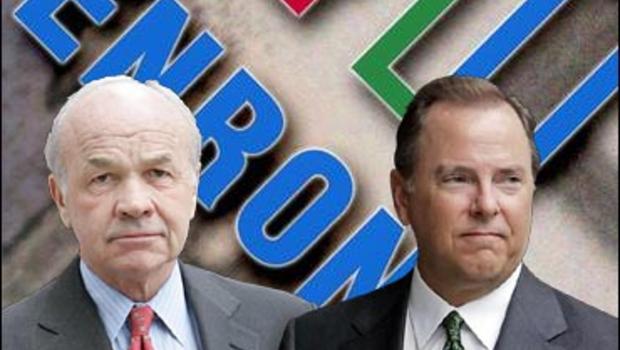
Former Enron Broadband chief operating officer Kevin Hannon will finish his testimony today in the trial of former key Enron executives Ken Lay and Jeff Skilling. Most likely, with the testimony of former Enron CFO Andy Fastow to follow, Hannon’s testimony will quickly fade into obscurity.
However, the nature of the media reporting on Hannon’s testimony from last Thursday afternoon got me to thinking. The prosecution went for a cheap score with Hannon by eliciting from him that Skilling had supposedly admitted during a May 2001 meeting with a group of other Enron executives that “they’re on to us” after a small analyst firm had produced a research note critical of some Enron transactions. Most of the media covering the trial (representative examples: NY Times and Houston Chronicle) seized on Hannon’s statement as gripping testimony that could prove to be highly probative in the government’s case against Skilling.
Well, maybe so, but doesn’t Hannon’s testimony really undermine the government’s case? The report that supposedly prompted Skilling’s remark was based on negative information about Enron that the company had made available to the efficient securities market. The report was not even a particularly novel analysis of Enron, given that it came a couple of months after Peter Elkind and Bethany McLean’s much-bantered Fortune article that suggested that Enron stock was overpriced. Despite the negative inference that Hannon attributed to Skilling’s alleged comment, it’s at least just as likely that Skilling — if he made the statement at all — was making light of the report to a group of company executives while emphasizing that his more optimistic opinion of the same information should also be made known to the markets.
But more importantly, how does the Enron Task Force square the report’s negative evaluation based upon information that Enron disclosed to the efficient securities markets with its core allegation that Skilling withheld such information from the markets?
Call it the risk of going for the cheap score. The prosecution went for testimony that seemed damaging to Skilling on its face, but in substance is counterproductive to the prosecution’s case. By the time Skilling lawyer Mark Holscher had elicited from Hannon on cross-examination yesterday that previous anti-Skilling witness David Delainey had also attended the meeting and heard Skilling’s supposed dramatic admission, but somehow failed to recall it in his testimony last week, it would not be surprising if the jury is, might we say, skeptical of Hannon’s testimony about Skilling’s statement and of the prosecution’s motive in eliciting it.
All of which just reinforces that Lay and Skilling will never win their case in the court of public opinion. But they still just might win it in court.
And you thought that Southlake Carroll football was competitive?
Southlake Carroll High School is a suburban Metroplex high school that, over the past decade or so, turned into a proverbial Texas high school football powerhouse. This past season, the Dragons won their second straight Texas 5A-Div. II championship and were named the mythical no. 1 high school football team in the country by USA Today.
However, according to this Ft. Worth Star Telegraph article, as tough as competition is in the Southlake football program, it’s nothing compared to the competition in the cheerleading program:
SOUTHLAKE — The Carroll school district has been consumed for weeks about how to handle the selection of cheerleaders for Carroll Senior High School’s varsity squad.
Investigations have been conducted, grievances filed and several meetings held between administrators and parents. Tonight, the school board will convene behind closed doors to consider a request by parents of 12 cheerleaders to cut more than half the squad members, who the parents say don’t deserve to be on the team. . .
Read the entire sordid tale, which does not mention the possible solution of forming a parent-cheerleader team at Southlake to mollify the demands of several of the mothers involved.
Can SBC, er, I mean, AT&T swallow BellSouth?
Last year, San Antonio-based SBC Communications swallowed the much smaller AT&T Corp., but then started using the venerable AT&T brand for the merged company. This year, SBC/AT&T is attempting to eat BellSouth Corp. in an estimated $67 billion deal, which is a much larger acquisition than the SBC-AT&T merger of last year.
The proposed merger continues a trend in the telecommunications industry over the past several years that really is a reaction to what happened in the industry after the court-ordered 1984 breakup of the old AT&T or “Ma Bell.” That break-up led to a restructuring of the entire industry and then the landmark 1996 Telecommunications Act enhanced head-to-head competition between phone companies for customers.
Since that time, long-distance phone rates have decreased substantially as consumers have many more options for such service. Meanwhile, cable companies are increasingly offering phone service as part of their consumer packages, declining prices on wireless calling plans have induced some consumers to forego traditional landlines entirely, and broadband connections are generating an entirely new new industry that allows calls to travel over the Internet.
Thus, in the wake of that competition, AT&T CEO Edward Whiteacre justified the new merger because AT&T needs “a bigger footprint. The world is changing. There is more competition.” Maybe so, but as with Hewlett-Packard’s acquisition of Compaq and Comcast’s failed bid for Disney, is the acquisition price for BellSouth so high that — as Professor Ribstein has observed — it takes a near-delusional synergy theory for AT&T management to justify it?
Oral argument today in the Nigerian Barge appeal

Oral argument takes place today at the Fifth Circuit Court of Appeals in New Orleans in the appeals of Dan Bayly, Robert Furst, James Brown and William Fuhs, the former Merrill Lynch executives who were convicted of wire fraud and conspiracy charges in November 2004 in the trial of the Enron-related case known as the Nigerian Barge case.
The plight of the Merrill Four in the Nigerian Barge case is a case study in the dubious nature of the government’s criminalization of business in the post-Enron era (for a thorough discussion of that subject, begin here). In the barge case, the Task Force took a finance transaction between Enron and Merrill Lynch and criminalized it through a brazen web of distortion, suppression of key testimony, inadmissible hearsay, opposition to the defense’s jury instruction on the key issue in the case and prosecutorial misconduct. In short, the Task Force effectively prosecuted the Merrill Four for doing their jobs in connection with the firm’s purchase of a dividend stream for which Enron, not Merrill, may have improperly accounted, although even that issue was never proven at trial.

Then, to make matters worse, the Task Force at trial played on the jury’s hindsight bias and presented to the panel a fictional screenplay of the underlying transaction while effectively effectively preventing the Merrill Four from presenting exculpatory testimony and evidence that contradicted the Task Force’s fictional account. The Task Force is deploying precisely the same deplorable tactics in the ongoing trial of former key Enron executives Ken Lay and Jeff Skilling.
Interestingly, part of the key testimony that the Task Force has elicited to date during the Lay-Skilling trial contradicts an important part of the testimony that it presented in convicting the Merrill Four during the Nigerian Barge trial. In Lay-Skilling, the Task Force had former Enron investor relations chief Mark Koenig testify that he learned on January 14, 2000 — just days before Enron was scheduled to publish its fourth-quarter 1999 financial statement — that earnings were likely to be 30 cents a share, a penny below the 31 cents a share that had been forecast on Wall Street. Koenig then testified that he alerted Enron’s CFO, Richard Causey, that the company would miss its forecast and that, on January 17 — the day before the earnings report was scheduled to be publicly released — he saw a draft memo saying that the company would earn 31 cents a share. On Jan. 19, the day after the earnings release, Koenig testified that he discussed the sudden change with Lay, who seemed surprised and allegedly observed to Koenig that “he went to bed and we were at 30 cents and, when he woke up, we were at 31 cents.”
In contrast, during the barge trial, the Task Force elicited extensive testimony and contended during closing argument that Enron’s motivation to arrange the barge transaction with Merrill Lynch in December 1999 was to help Enron hit its earnings target of 31 cents per share, not the 30 cent-per-share target that Koenig in his Lay-Skilling testimony suggested was the company’s true target until just days before the January 18 earnings release. Thus, the Task Force’s evidence in the barge trial that Enron’s earnings target in December 1999 was 31 cents per share directly contradicts Koenig’s testimony in Lay-Skilling that the company increased its earnings target by a penny-per-share just days before the January 18, 2000 earnings release.
So it goes in the wacky world of criminalizing corporate agency costs.
Meanwhile, Alexei Barrionuevo and Kurt Eichenwald of the NY Times provide this article today in which they summarize the testimony to date in the Lay-Skilling trial and observe that this week’s star witness — demonized former Enron CFO Andy Fastow — may end up being just another witness in the trial.
Warren Buffett Live!
Warren Buffett’s annual letter to Berkshire Hathaway shareholders is always entertaining (previous letters here and here), but this year’s edition contains so much levity that Buffett could use it as the script for a guest stand-up routine on Leno, Letterman or Comedy Central. My favorite observation is the following one on the subject of picking good managers for Berkshire’s businesses:
The attitude of [Berkshire’s] managers vividly contrasts with that of the young man who married a tycoon’s only child, a decidedly homely and dull lass. Relieved, the father called in his new son-in-law after the wedding and began to discuss the future:
“Son, you’re the boy I always wanted and never had. Here’s a stock certificate for 50% of the company. You’re my equal partner from now on.”
“Thanks, dad.”
“Now, what would you like to run? How about sales?”
“I’m afraid I couldn’t sell water to a man crawling in the Sahara.”
“Well then, how about heading human relations?”
“I really don’t care for people.”
“No problem, we have lots of other spots in the business. What would you like to do?”
“Actually, nothing appeals to me. Why don’t you just buy me out?”
Baseball Prospectus 2006
Any brief perusal of the Stros/Baseball category of this blog will reflect that I am a big supporter of the folks at Baseball Prospectus, who produce the flat-out best research and analysis of baseball on the planet. A couple of days ago I received my copy of Baseball Propectus 2006 and, as usual, it’s combination of witty writing and first-rate statistical research and analysis makes it essential reading for anyone who wants to keep up with the current status of MLB teams and players. I actually take my copy of Baseball Prospectus with me to each of the many Stros games that I attend each season.
The lastest edition of Baseball Prospectus — as with the past two annual editions — is bearish on the Stros, primarily because of the club’s reliance on high-priced aging stars Bagwell and Biggio and an overall lack of talent in the farm system. My more optimistic appaisal of the Stros allowed me to one-up Baseball Prospectus in predicting that the Stros would be a playoff club last season (pre-season post here), although I must admit that — during both of the past two seasons — there were times that I was ready to throw in the towel on the Stros, too.
Is the Flagship Hotel this hard up?
I knew from my friends with Galveston homes that the venerable Flagship Hotel had seen its better days, but I didn’t realize that it had come to this:
United States Attorney Chuck Rosenberg announced today the return of a 39-count indictment charging Daniel Yeh, 52, of Sugar Land, Texas, with 22 counts of wire fraud and 17 counts of filing false claims against the Federal Emergency Management Agency (FEMA). Yeh is the principal owner of Flagship Hotel Ltd., which operates the Flagship Hotel (Flagship), located at 2501 Seawall Boulevard in Galveston, Texas.
The San Antonio Marlins?
Following on this earlier post, this Miami Herald article reports that the Florida Marlins, beset by lease and attendance problems, are seriously focusing on San Antonio as its most likely relocation target:
[Marlins President] Samson said the Marlins are ”very encouraged” about how aggressively San Antonio is pursuing the Marlins and that the city is ”under very serious consideration.” Samson always has said the Marlins prefer to remain in South Florida, but stadium talks remain stalled.
San Antonio was the first city the Marlins visited after receiving permission to explore relocation. ”I imagine there will be another visit there,” Samson said.
San Antonio is presently preparing a stadium financing plan, which will be submitted soon to the Marlins and Major League Baseball. With a stadium located with good access from both the San Antonio and Austin metro areas, my sense is that the Marlins could do quite well in San Antonio, which — along with Austin — is a hotbed of baseball interest.
However, San Antonio’s leaders may want to get the Chamber of Commerce in line with their effort to attract the Marlins.
Lay-Skilling, Week Five
The pace of the Enron Task Force’s legacy case against former key Enron executives Ken Lay and Jeff Skilling continued to pick up pace during its fifth week, but that quicker pace is highlighting an unusual aspect of the trial — that is, the Task Force’s case appears to be shrinking dramatically before our very eyes.
After years of a highly-publicized propaganda campaign against anything having to do with Enron, after bludgeoning plea bargains from over a dozen former Enron executives, after alleging the biggest criminal conspiracy in the history of federal prosecutions, and after issuing a 66-page indictment against Lay and Skilling that is so far afield from what is going on in court that the prosecutors don’t want the jury to see it, the Task Force’s case is coming down to a complex jumble that relies heavily on innuendo and requires the jury to connect the dots of amorphous points that the Task Force is hoping will be enough to convict Lay and Skilling.
This week’s testimony was a case in point. The Task Force’s main theme was that Enron was so successful in making money in its trading operations that it allowed Lay and Skilling to soft-pedal to the investing public the losses that Enron was incurring in a couple parts of its business.
Mind you, the Task Force is not suggesting that Lay or Skilling was involved in approving fraudulent accounting; rather, the Task Force alleges that Skilling engineered a reorganization of an Enron business unit in a manner that hid losses of the poorly-operating unit underneath the blanket of high profits of Enron’s trading unit.
According to the Task Force, the hiding of these losses, along with over-reserving to hide excess profits of the trading unit, allowed Skilling — and presumably Lay, although he was almost an afterthought this week — to misrepresent Enron as a stable logistics company than a more volatile trading company, which the Task Force contends would not have been as highly valued in the marketplace.
Thus, the prosecution of Lay and Skilling is shaping up as the purest prosecution of corporate agency costs in the post-Enron era.
The underlying message of this prosecution is that an executive of any publicly-owned corporation better disclose every bit of bad news about their company or risk prosecution — under the sharp lens of hindsight bias — for misleading the investing public about the true health of the company. If the Task Force’s approach is successful against Lay and Skilling, one would wonder why any executive of a publicly-owned corporation would risk saying anything to analysts and the investing public other than “go read the financial statements in our regulatory filings. It’s all there.”
Amidst this muddle, the Task Force continues to show clear signs of desperation.
One such sign is that the Task Force continues to fumble about in regard to the order of its witnesses, a problem that drew the rare ire of the remarkably patient Judge Lake early this week.
Moreover, the Task Force continues to rely heavily on testimony from witnesses who are testifying under cooperation agreements with the Task Force under which the witnesses hedged the risk of a long prison term and the loss of millions in return for their testimony.
Is the jury really going to believe that the biggest corporate conspiracy in history was hidden from everyone except the relative few Enron executives who have copped pleas or entered into non-prosecution agreements?
An even bigger problem for the Task Force is that the testimony of the cooperating witnesses has been all over the map in regard to their conduct.
Mark Koenig testified that he lied a few times while touting Enron. Paula Rieker testified that others lied, but she did not — she only “overstretched” a few times. This week’s star prosecution witness, former Enron Energy Services executive David Delainey, testified that he lied all the time. Wes Colwell, a former Enron trading unit accountant, incredibly testified that he was involved at Enron in defrauding Tom Bauer, a former Andersen accountant with whom Colwell is now in business!
Meanwhile, there is no documentary evidence that any of these cooperating witnesses thought they were lying at the time of the alleged crimes and no meaningful evidence that they even told anyone that they thought they were lying.
Meanwhile, the defense has introduced on cross-examination large amounts of documentary and video evidence that the cooperating witnesses appeared to be working hard under difficult conditions to help Enron’s cause.
Is the jury going to believe that all of these witnesses were such good liars? And, if so, will the jury believe that they were lying then or lying now on the stand?
Seemingly sensing this dynamic, the Task Force elicited testimony at the end of the week from its latest cooperating witness — former Enron Broadband executive Kevin Hannon — that Hannon had actually participated in a meeting with Skilling, Lay and others in May 2001 in which Skilling supposedly admitted that an analyst’s report at the time had finally figured out his elaborate fraud on the market.
Testimony for the week closed with Hannon still under direct examination from the prosecution, so no cross-examination has occurred. But just how likely is it that such a significant meeting took place and Skilling made such incriminating statements, and yet none of the half-dozen previous former Enron executives who have testified during the trial were told about it by either Hannon or any other participant in such meeting? Stay tuned on that issue.
Consistent with the shrinking nature of the prosecution’s case, the Task Force announced this week that it is over halfway through with putting on its case in chief and expects to be through presenting its case by the end of this month. Inasmuch as the Task Force originally estimated that it would take 36 days (i.e., nine weeks) to put on its case, assuming an equal amount of time on cross-examination to that spend on direct.
Even though the Task Force took more time than was necessary or advisable with its initial witness Koenig and cross-examination has been taking far longer than direct, the Task Force is now over halfway through presenting its case. That’s another indication that the Task Force is literally adjusting its theory of the case “on the fly” during the trial, and that it has concluded that it cannot prove the vast majority of what it alleged in its charging documents against Lay and Skilling.
Next week should be particularly interesting as demonized former Enron CFO Andy Fastow — the architect of Enron’s special purpose entities or “SPE’s” — takes the stand after Hannon.
Fastow was a notoriously volatile fellow — at least to subordinates — while at Enron, and it will be interesting to see whether his demeanor has changed since he copped a plea deal with prosecutors back in early 2004.
On the other hand, the Task Force’s case to date has wandered away from the SPE’s, so there is a decent chance that a difficult-to-control Fastow could end up being a not-so-important witness in the ever-changing big scheme of this corporate criminal case of the decade.

Graceless
Looks as if Bill O’Reilly is not the only prominent television pundit who is a tad wacky.
This NY Observor article (hat tip to Walter Olson) reveals that CNN personality Nancy Grace is playing fast and loose with background facts that bear on the motivation for her crime-busting agenda.
Beward of the demagogues.