BAPCPA Interim Rules online

bapcpa_btn.gifThis past Tuesday evening, my old friend Randy Wilhite and I did our annual divorce-bankruptcy class for Randy’s Family Law Course at the University of Houston Law Center, and the usual good time was had by all. For those interested in the subject — which Randy and I characterize as “the train wreck of the law” — feel free to review my powerpoint presentation and contact me if you desire further information on our presentation.
This year’s presentation was particularly interesting because of the impact of Bankruptcy Abuse Prevention and Consumer Protection Act of 2005, which went into effect this past October. The Advisory Committee on Bankruptcy Rules has approved Interim Bankruptcy Rules and Official Forms for BAPCPA, the purpose of which is to implement BAPCPA’s substantive and procedural changes during the gap period between the effective date of BAPCPA and the Supreme Court’s promulgation of new BAPCPA rules. These interim rules and forms officially took effect on December 1, 2005, and here is the full text of the new rules and forms. Some of the additional proposed rules and forms remain subject to public comment until February 15, 2006 and, thus, are not yet effective, but you can review the text of those rules here.

A real hero

kidney.jpgWhile enduring Andy Fastow’s explanations this past week on how he was a hero at times while working at Enron, I’ve been meaning to note the story of a real hero, Dallas-based blogger and writer, Virginia Postrel.
Check out Virginia’s posts here, here and here for the story.
What a gal!

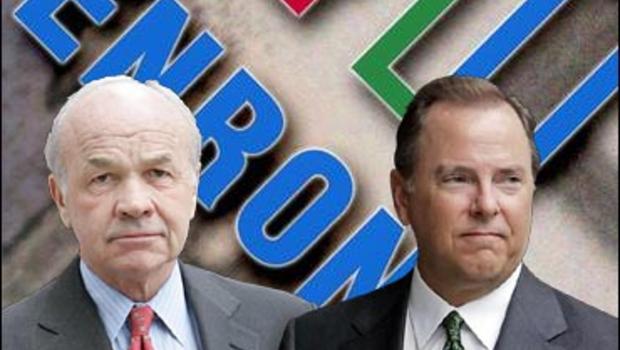
Lay-Skilling, Week Six

The Andy Fastow Week of the criminal trial of former key Enron executives Ken Lay and Jeff Skilling drew to a quiet close on Thursday afternoon, which contrasted sharply with the crispness of his heavily-scripted direct examination and the combative opening cross-examination of Skilling lawyer, Daniel Petrocelli.

Thus, the corporate criminal trial of the decade is now through six weeks and the Enron Task Force’s case against Lay and Skilling continues to shrink before our eyes.

Fastow’s testimony drew the largest crowds of trial spectators to date, who appeared to be drawn to Fastow’s appearance in much the same way many fans are drawn to NASCAR events to see the collisions.

Fastow really is a train-wreck of a witness, and his gaunt appearance on the stand dramatically contrasted with the ebullient nature of Petrocelli, who clearly has become a jury favorite during his entertaining cross-examinations of Task Force witnesses.

Normally, a defeated and somewhat pathetic person such as Fastow would tend to draw sympathy from the jury, but Fastow admitted to doing such despicable things that it is decidedly unclear whether even his repeated apologies could generate much juror empathy.

Even grizzled courthouse veterans were shaking their heads in disbelief over Fastow’s duplicity.

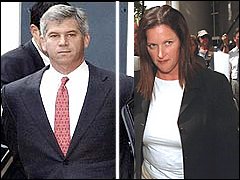
Fastow’s brazen conduct in regard to his wife Lea is a case in point.

During direct examination, Fastow played the part of a loving and protective husband in resolutely maintaining that his wife was innocent of the tax fraud charges for which she served a year in prison from mid-2004 through mid-2005.

However, during the electric opening moments of Petrocelli’s cross-examination, it became clear that Fastow had actually hung his wife out to dry while negotiating his own plea deal with the Task Force, and that his gaming of Lea’s fate almost certainly contributed to the fact that prosecutors did not believe Fastow’s eventual protestations of his wife’s innocence.

Incredibly, Fastow was apparently so insistent upon negotiating retention of a substantial net worth under his plea deal that he agreed that his and Lea’s plea deals would be “cross-collateralized” — i.e., if Fastow breaches his plea deal, then the Task Force can pursue additional charges against Lea!

Fastow’s testimony in regard to his hidden “Global Galactic” memo was almost as bizarre.

Fastow testified that the memo outlined a series of secret guaranties that former Enron chief accountant and former Lay-Skilling defendant Richard Causey had supposedly approved with Skilling’s alleged blessing.

However, Fastow admitted that he had never had Skilling approve the memo directly and that he destroyed the original of the memo soon after he was canned as Enron’s CFO. Only after Fastow had cut his plea deal with prosecutors and was attempting to negotiate a better deal for Lea did he come up with a copy of the memo, which Fastow testified that Lea fetched from a safe-deposit box.

However, even that part of Fastow’s story was put into question on Thursday when Petrocelli clearly surprised Fastow by showing him that Lea and her attorney — well-known Houston-based criminal defense attorney, Mike DeGeurin — had visited the safe-deposit several months earlier and apparently had either not found the copy of the memo in the box or decided not to bring it to Fastow’s attention at the time.

That bizarre revelation prompted Petrocelli to ask Fastow, “Mr. Degeurin wasn’t going to your safe deposit box to retrieve your wife’s jewelry, was he?”

So, although Fastow did implicate Skilling in “secret side deals” and undisclosed “bear hug” guaranties, and Lay in supposedly misrepresenting Enron’s financial condition after Skilling’s resignation, Fastow is such a despicable character that it remains decidedly unclear whether the prosecution gained much of anything with the jury from his testimony.

Likewise, it’s not a feather in the cap of the Task Force that prosecutors were forced to allow the jury to understand that even they thought the Task Force’s most-publicized witness to date was lying to them about his wife’s case at the same time while he was cooperating with them in regard to the Lay-Skilling case.

However, one thing is absolutely clear from Fastow’s testimony — the prosecution is likely going to have to put Causey on the witness stand to corroborate Fastow’s story on the Global Galactic memo or else the jury is going to sense a massive hole in the prosecution’s case.

Moreover, that is not the only problem in the prosecution’s case.

Through six weeks of its case, the prosecution still has not presented a substantive witness who has not testified under either a plea deal or a non-prosecution agreement. Although that approach is partly the result of the prosecution’s strategy in regard to freezing-out testimony that would be exculpatory for Lay and Skilling, the Task Force faces a substantial risk of jury skepticism regarding the prosecution’s case if the primary witnesses alleging wrongdoing are doing so under deals in which the are retaining large amounts of money and hedging the risk of a long prison sentence.

Perhaps sensing that dynamic, the prosecution plans to call a couple of witnesses next week — former Enron risk analyst Vince Kaminski and trading analyst David Port — who apparently will not be testifying under either a plea deal or a non-prosecution agreement with the Task Force.

Consequently, despite the enormous public relations advantage that the Enron Task Force enjoys in this case, my sense continues to be that the Task Force has big problems in making its case in court.

Although the Task Force is probably 75% through its case-in-chief, all of the Task Force’s substantive witnesses have initially lied to investigators for years until copping a plea in which they bargained for a reduced prison term and a substantial net worth in return for testifying against Lay and Skilling.

Virtually none of the testimony from Task Force witnesses has supported a key element of the prosecution’s case — the alleged huge conspiracy within Enron to cover up the wrongdoing at the company — and documentary evidence that corroborates the allegations of wrongdoing has been practically non-existent.

On the other hand, the Lay-Skilling defense has been able to submit mounds of documentary evidence that casts doubt on much of the allegations of wrongdoing by prosecution witnesses and the defense has not even begun what will almost certainly be a vigorous and well-orchestrated case-in-chief.

In short, this does not appear to be the stuff of a clear-cut winner for the prosecution.

Breakfast of Champions?

bbonds5.jpgThis SI.com article contains the excerpts from the new book about Barry Bonds’ alleged steroid use that has received a fair amount of media play this week.
However, as noted in this earlier post, the issue of whether use of steroids allowed Bonds to hit more home runs than he otherwise would have hit is an entirely different issue and not as clear-cut as most folks assume. Art DeVany has written this paper on the subject and here is the abstract:

There has been no change in MLB home run hitting for 45 years, in spite of the new records. Players hit with no more power now than before. Records are the result of chance variations in at bats, home runs per hit, and other factors. The clustering of records is implied by the intermittency of the law of home runs. Home runs follow a stable Paretian distribution with infinite variance. The shape and scale of the distribution have not changed over the years. The stable Paretian law of home runs generalizes the laws of extreme human performance developed by Pareto, Lotka, Price, and Murray. The greatest home run hitters are as rare as great scientists, artists, or composers.

By the way, don’t miss this hilarious DeVany post on taking a meal in a sports bar.

Eliot Spitzer’s next investigation?

betting.jpgWhile the Lord of Regulation engages in one of his more dubious forms of business regulation, this NY Times article reports on a study that could really get people’s attention as the NCAA Basketball Tournament cranks up next week:

College basketball is a big business today, and betting on it is not merely a sideline for mobsters. It is a national pastime.
One thing about the sport, however, has not really changed since Henry Hill’s day. Of all the major forms of betting ó lotteries, poker, craps, slots, football ó college basketball is almost certainly the easiest to fix.
It is played by young men who don’t usually have a lot of money. With just five players on the court, one person can determine the outcome. And the point-spread system, in which bets are based on the margin of victory rather than wins and losses, allows players to fix a game without losing it.
“There’s every reason to think this is as bad as it gets,” Justin Wolfers, an economist at the University of Pennsylvania, said.
Mr. Wolfers, a blond pony-tailed Australian, calls himself part of a new generation of forensic economists ó researchers who sift through data to look for patterns of cheating that otherwise go unnoticed. . .
You can probably guess where this is going. Mr. Wolfers has collected the results of nearly every college basketball game over the last 16 years. In a surprisingly large number of them, it turns out that heavy favorites just miss covering the spread. He considered a number of other explanations, but he thinks there is only one that can explain the pattern. Point shaving appears to be occurring in about 5 percent of all games with large spreads. . .

Read the entire article. The bottom line — be careful in betting the favorite in games with big point spreads.

The “Carly-got-overpaid” lawsuit

carly.jpgSo, two Hewlett-Packard shareholders filed the seemingly inevitable lawsuit yesterday against the company contending that a $21.4 million severance package provided to former CEO Carly Fiorina violated the company’s policy on executive compensation. Previous posts on Fiorina’s reign at HP are here.
Although the corporate case of decade would appear to be fairly persuasive authority for dismissal of this lawsuit, the cause of action might survive simply because of a dispute over the technical issue of valuation of Fiorina’s severance package.
Nevertheless, as I recall, HP stock was trading at around $19 per share at the time of Fiorina’s forced resignation in early 2005. The stock closed at $32.96 yesterday. Rather than criticizing the severance package for Fiorina, shouldn’t HP shareholders be celebrating the wisdom of the HP board in cutting Fiorina loose even with a generous severance?

The increasingly bizarre case of Lea Fastow

As expected, the media is all over the well-scripted direct examination of former Enron CFO Andy Fastow, although some media sources are already questioning the credibility of some of Fastow’s direct testimony.

However, given the breadth of Fastow’s direct examination, the media has not yet focused on the absolutely bizarre testimony that Fastow gave yesterday on the sad case of his wife, Lea Fastow.

The Enron Task Force prosecuted Mrs. Fastow on tax fraud charges more harshly than normal — and she endured longer and harsher punishment (one year in prison) — because of her relationship to Mr. Fastow.

In that regard, Fastow filed an affidavit in his wife’s criminal case during 2003 in which he swore that “I never, and to my knowledge and belief, Michael Kopper never, agreed or conspired with Lea Fastow to commit the crimes alleged in Counts 1 and 2 of Lea’s indictment.”

The purpose of that affidavit was to support a motion requesting that Mrs. Fastow’s trial be put off until after Mr. Fastow’s criminal trial so that Mr. Fastow could testify on his wife’s behalf without waiving his Fifth Amendment privilege against self-incrimination, although Mr. Fastow’s affidavit comes pretty darn close to waiving it, at least in regard to the tax fraud charges.

U.S. District Judge David Hittner ultimately denied that motion and scheduled the case against Mrs. Fastow to trial, which prompted both Fastows to have their plea deals with the Enron Task Force approved in May, 2004.

By that time, Mr. Fastow had been cooperating with Task Force prosecutors for since at least January, 2004 and Mrs. Fastow had withdrawn from an earlier plea deal with prosecutors after Judge Hittner had rejected it. Judge Hittner proceeded to sentence Mrs. Fastow to a year in prison, which she has completed.

With that backdrop, Fastow attempted to explain during the early afternoon portion of his testimony yesterday the statements that he made in the affidavit that he filed in his wife’s criminal case. Apparently, Fastow contends that his affidavit was technically truthful because it says that he and Kopper did not conspire with Mrs. Fastow to commit tax fraud.

Left unsaid in the affidavit is that Fastow and Kopper did conspire with each other to commit tax fraud; they just didn’t include Mrs. Fastow in that conspiracy.

So, let’s get this straight.

While cooperating with Task Force prosecutors, Fastow tells prosecutors that his wife is innocent of the tax fraud charges. Either the Task Force prosecutors did not believe him and proceeded with the criminal case against Mrs. Fastow, anyway, or the Task Force prosecutors believed him and proceeded with the criminal case against Mrs. Fastow, anyway.

If the reason that the Task Force proceeded against Mrs. Fastow is that they didn’t believe Mr. Fastow, that certainly doesn’t say much for the credibility of one of the prosecution’s key witnesses in the case against Skilling and Lay.

On the other hand, if the prosecutors believed Mr. Fastow and proceeded with the criminal case against an innocent Mrs. Fastow, anyway, that is an egregious example of the type of prosecutorial misconduct that has plagued the Task Force’s entire investigation of the Enron scandal.

Cross-examination of Mr. Fastow is going to be very interesting.

Be careful what you ask on re-direct

hannon3.jpgAs predicted yesterday, the media frenzy over former Enron CFO Andy Fastow’s testimony relegated the previous Enron Task Force witness — former Enron Broadband chief operating officer Kevin Hannon — to obscurity rather quickly. However, before leaving the stand, the final moments of Hannon’s testimony yesterday reminded me that a lawyer should always be extra-careful about what to ask the witness during re-direct examination.
As noted here, one of the Enron Task Force’s main themes last week during the testimony of former Enron Energy Services executive David Delainey and a couple of other witnesses was that Skilling engineered a reorganization of the Enron Energy Services (“EES”) unit in a manner that hid trading losses of that unit underneath the blanket of high profits being generated by Enron’s top-flight trading unit, Enron Wholesale. During cross-examination, Skilling’s lawyers challenged Delainey and the others by suggesting that the true purpose of the reorganization was simply business efficiency — to combine EES’ poorly-performing trading operation with the better trading expertise of the Wholesale unit. Delainey, in particular, generally contested that defense contention during cross-examination.
Which leads us to the following exchange between Task Force prosecutor Cliff Stricklin and Hannon during redirect examination yesterday:

Q. And what did [Enron Wholesale CEO] Mr. Whalley, first of all, remind the jury who Mr. Whalley was at the time?
A. He was the CEO of Wholesale.
Q. And what did Mr. Whalley tell you about the rationale for Mr. Skilling moving EES into Wholesale?
A. He said he had met with Dave Delainey, who was depressed over the state of the EES business and he said we had to do something. I didn’t want Dave to quit, so we made the argument to Arthur Andersen that we should move the risk folks [from EES] into Wholesale.
Q. And why?
A. To improve the operation of EES [was] my impression.

Mr. Stricklin quickly moved on to another line of questioning, but it’s hard to downplay testimony of a prosecution witness that directly contradicts a major theme of the testimony of the prosecution’s previous witness.
Be careful what you ask on re-direct.

More on rearranging the deck chairs on the Titanic

usair_silver2.gifA day after the news of the latest big merger, the WSJ’s Melanie Trottman reports here ($) that the merger of U.S. Airways and America West Airlines is having, ahem, might we say, “cultural problems”:

As executives try to figure out how to make the newly merged US Airways Group Inc. profitable, employees from both sides of the merger are squabbling over everything — from choosing uniforms to more weighty issues such as how to determine seniority for pilots and how to manage discounted free-flight privileges for workers.
Last month, violence erupted at a Philadelphia airport hotel between members and officials of unions vying to represent the fleet-service workers of the combined airline. According to the police, 25 members of the premerged US Airways’ fleet-service workers union showed up at an open meeting conducted by five organizers for the union that represents fleet-service workers at America West, telling them to leave. When they didn’t, the entrants started to fight and throw chairs at the five organizers, according to police.

Read the entire article. Inasmuch as US Airways has been in chapter 11 twice over the past several years and America West has also been through a chapter 11 reorganization in its past, the next chapter 11 reorganization of this merged airline would technically be a chapter 44 (4 X 11) case, which I believe would be a record for even the notoriously reorganization-prone airline industry.

Leif Clark denies motion on grounds of incomprehensibility

Leif Clark.jpgThe indefatigable Peter Lattman shares with us this hilarious opinion by Bankruptcy Judge Leif Clark of San Antonio, who cites a scene from the Adam Sandler movie, Billy Madison, in concluding that “[t]he court cannot determine the substance, if any, of the Defendantís legal argument, nor can the court even ascertain the relief that the Defendant is requesting. The Defendantís motion is accordingly denied for being incomprehensible.î
A friend of mine commented that Judge Clark’s opinion reminded him of Houston-based U.S. District Judge Lynn Hughes‘ reaction several years ago to a particularly illiterate FDIC motion to substitute counsel. After marking up the proposed form of order to delete surplusage, Judge Hughes wrote the following message in bold pen under his signature to the attorney who had drafted the motion:

“How did you write before your lobotomy?”