
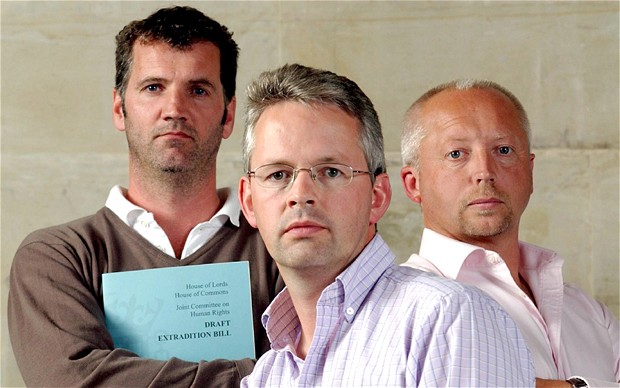
The Spokesman for the NatWest Three

What do you do when you can’t hang out and chat with your blokes?

Well, in the case of David Bermingham — one of the three former London-based National Westminster Bank PLC bankers dubbed the “NatWest Three” in the lexicon of Enron criminal cases — he sits for this interesting interview with the Chronicle’s Tom Fowler.

Although he does not reveal how he and his co-defendants intend to defend against the prosecution, Bermingham tells the story of how he and his NatWest colleagues — Gary Mulgrew and Giles Darby — voluntarily went to the UK equivalent of the SEC in November 2001 upon learning through news reports that a transaction in which they and NatWest Bank were involved had become part of the fraud investigation of former Enron CFO Andrew Fastow and his right-hand man, Michael Kopper.

Subsequently, the UK authorities passed along the information provided to them by Bermingham and his mates to the SEC and, the next thing you know, Bermingham, Mulgrew and Darby are the subject of a criminal complaint in Houston.

No US investigator contacted Bermingham, Mulgrew or Darby to get their side of the story before firing off the criminal complaint against them, but — as Bermingham notes — the Enron Task Force probably viewed the three bankers as pawns in their effort to put pressure on Fastow. After Fastow copped a plea, the Task Force was stuck with its dubious decision to prosecute the three UK citizens.

Although not well-reported in the press yet, the case against the NatWest Three is fairly straightforward, at least as Enron-related criminal cases go.

The Task Force alleges that the three defrauded their former employer by conspiring with Fastow and Kopper to underpay NatWest for its interest in an entity named Swap Sub, an affiliate of LJM1, the Fastow/Kopper-managed special purpose entity that was created in 1999 to hedge Enron’s valuable but highly volatile interest in a technology company called Rhythms.

Fastow arranged to have an entity called Southhampton that was owned by his family, Kopper and several other Fastow underlings at Enron (including Ben Glisan) buy NatWest’s interest in Swap Sub in March, 2000 for $1 million, which was substantially more than NatWest had that interest valued at the time.

After NatWest sold out, Fastow sold a portion of the old NatWest interest in Swap Sub through Southhampton to the three bankers personally for $250,000. About a month and a half later, Fastow and Kopper arranged to have Enron and Swap Sub unwind the hedge on the Rhythms stock, which resulted in Enron purchasing a large chunk of Enron stock from Swap Sub. The NatWest Three’s net share of the Enron stock sales proceeds was $7.3 million.

In short, the Task Force alleges that the NatWest Three’s making $7.3 million on an investment of $250,000 a month and a half earlier violates the “too good to be true” rule.

Presumably, Fastow and Kopper are prepared to testify that the NatWest Three knew that Fastow and Kopper had arranged with Enron to unwind the hedge on Rhythms stock with Swap Sub, knew that such unwinding would make Swap Sub worth much more than NatWest had it valued at the time, and that neither Fastow nor the NatWest Three disclosed the situation to NatWest before the bank sold its interest in Swap Sub to Southhampton for a measly $1 million.

For their part, Bermingham, Mulgrew and Darby contend that they knew nothing about Fastow and Kopper’s plan to unwind the Rhythms hedge with Enron, that the $1 million price that Southhampton paid for NatWest’s interest in Swap Sub was substantially more than it was worth at the time, that the $250,000 price they paid for an interest in Swap Sub was similarly reasonable given the risk of the investment, and that they were as pleasantly surprised as anyone on the big return on their investment when Enron and Swap Sub unwound the hedge a month and a half later (remember, all this took place before the bursting of the stock market bubble on tech stocks).

Interestingly, despite the fact that all of the foregoing information has been well-known to NatWest for several years now, the bank did not pursue either a civil case or criminal prosecution of the NatWest Three in the UK.

By the way, colorful Houston-based criminal defense attorney Dan Cogdell, who successfully defended former Enron in-house accountant Sheila Kahanek in the Nigerian Barge case, is defending Bermingham. Cogdell’s involvement ratchets up the entertainment value of any case, so stay tuned.
Colbert strikes again


How on earth did Florida Democratic Congressman Robert Wexler’s staff allow him to do an interview with Stephen Colbert without first advising him what he was getting into?

Thinking about progress in health care

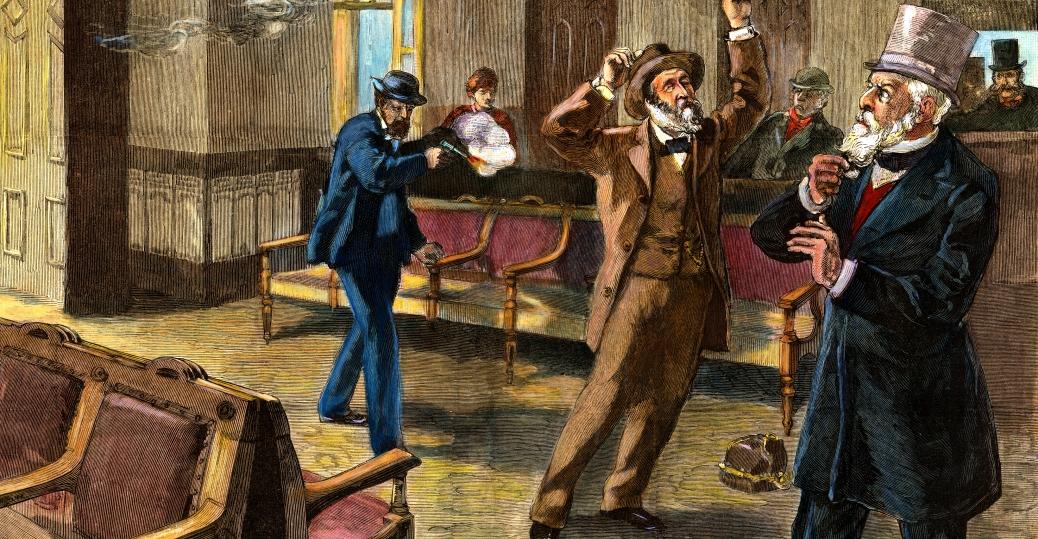
This NY Times article tells the fascinating story about the assassination of President James A Garfield in 1881 an exhibit commemorating the 125th anniversary of Garfield’s assassination at the National Museum of Health and Medicine at Walter Reed Army Medical Center.

President Garfield was shot in Washington by a disgruntled federal job-seeker, Charles J. Guiteau, who made his move while Garfield was waiting for a train. What is not as well-known is that neither of the shots that hit Garfield should have fatal even by the more primitive medical standards of the 1880’s.

As my late father once observed to me in a discussion of Presidential assassinations, “Garfield’s assassin just shot him. Garfield’s doctors killed him.”

The Times article reminds me of another interesting medical case that Dr. Donald J. DiPette, chair of the Department of Internal Medicine at Texas A&M University Medical School, presented earlier this year during the annual Walter M. Kirkendall Lecture that the University of Texas Medical School conducts in honor of my father.

Dr. DiPette’s lecture was about how advances in clinical research on hypertension had contributed to our understanding and knowledge of related chronic illness. He used a case study of a man in his mid-50’s in the late 1930’s who was showing signs of acute hypertension as an example of how that understanding can change the world.

The negative impact of hypertension on an individual’s health was not well-understood in the late 1930’s and 40’s. Dr. DiPette showed how the patient’s health in the case study deteriorated at an accelerated rate as his blood pressure readings increased markedly from 1937 to 1945. One evening in early 1940, the subject in the study fainted at the dinner table. The patient’s doctors at the time were unsure why.

By 1945, the patient — who was still working in an important and high-pressure job — had blood pressure that was off the charts and was experiencing a combination of associated medical problems that would have landed him in a hospital these days.

Nevertheless, the patient continued to work and, a couple of months after a particularly important work-related meeting, the patient died of a massive stroke.

Most times, the subjects of medical case studies are anonymous. But at the end of his lecture, Dr. DiPette revealed the name of the subject of this particular case study — President Franklin D. Roosevelt.

Dr. DiPette’s point was that President Roosevelt’s acute hypertension clearly affected his performance. Our lack of knowledge about hypertension in 1945 — which finally began to be better understood in the decade after FDR’s death — changed the course of the 20th century. That “important work-related meeting” that Dr. DiPette referred to was the Yalta Conference of early February 1945 that doomed Eastern Europe to over a generation of tyranny.

Remember that the next time you hear someone complain about the cost of advancing medical research.

Where Tiger stands

woods_tiger.gifThe NY Times Damon Hack, who is writing some of the best articles on golf in the mainstream media, weighs in on Tiger Woods’ British Open victory with this article that summarizes where Tiger stands in relation to the greatest golfers in history.
Woods, who is 30, won his 11th professional major championship (14th if you include his three straight US Amateur championships), which tied him with Walter Hagen and places him seven professional major victories behind Jack Nicklaus’ record of 18 majors. No one else stands between Woods and Nicklaus, and Nicklaus did not win his 11th professional major until he was 32.
After Nicklaus won seven professional majors by 1967, he had his biggest lull in his prime when he went the next 12 majors without a win, from the last two of ’67 through the first two of 1970. Nicklaus came back to win 10 more by the end of 1980, and then added on his sixth Masters in 1986 for his 18th.
In the best stretch of his professional career, Woods won seven majors in less than three years from the 1999 P.G.A. Championship at Medinah Country Club to the 2002 United States Open at Bethpage Black. Then, Woods went 10 majors without a victory between 2002 and 2005 as he went through an extensive swing change that flattened his swing plane, but with the victory over this past weekend, Woods has now won three of the last seven majors and will enter the final major of the year — the P.G.A. at Medinah in August — as the odd’s-on favorite again.

The New Spirit of Aggieland?


Given the recent downturn in Texas A&M football fortunes, rumor has it that Coach Fran is going to replace the Aggies’ traditional pre-game ritual “Spirit of Aggieland” with the New Zealand National Rugby team’s traditional pre-game HAKU.
Just kidding.

Something to think about before you grab the big stick

woods wins BOtiger_060723.jpgTiger Woods’ dominating performance (and here is a video of the swing that he used) in winning this year’s British Open gives us hackers something to think about next time we tee it up on our home course.
Woods averaged 291 yards off the tee at Royal Liverpool, which stretches over 7,200 yards. He led the field by hitting 48 of 56 fairways while making three eagles, 19 birdies, 43 pars and seven bogeys. And nothing worse than that.
By the way, Woods accomplished this mostly by not using his driver, which he used precisely once during the entire tournament. His club of choice off most par 4’s and 5’s was his steady 2-iron.
Now, links golf is different from American golf in that the ball rolls farther and the need for forced carries is not as great on links courses. However, count the number of fairways you are hitting with your driver the next time you play. If it’s less than 75%, then try a round without using it at all. My bet is that your score will not be much different and, if it is, it will probably be lower.
By the way, I wonder if Phil Mickelson noticed what Tiger was hitting off the tee?

More rumblings at Dell, Inc.

dell_logo_lg.jpgFollowing on this previous post from about a month ago, Round Rock-based Dell, Inc. announced late last week that — as Jeff Matthews aptly notes — it had “puked the quarter.”
Dell’s announcement sent its shares sliding almost 10% for the day on Friday to the lowest close in about five years (Dell’s stock was down $2.19 to $19.91 a share, its lowest since October, 2001). This type of announcement is getting a tad monotonous for Dell, which missed forecasts for its fiscal first-quarter revenue and earnings earlier this year, and missed sales projections last year for its fiscal second and third quarters. Dell’s basic problem is that the computer market is shifting away from Dell’s core strength in providing computers to business toward consumer PC’s, which is a smaller part of Dell’s business. To make matters worse, Dell’s cost-structure is such that it doesn’t have any room left to undercut competitors on the cost of PC’s.
Meanwhile, Dell competitor Hewlett-Packard is taking advantage of the situation. HP has restructured its operations to focus on sales growth in consumer PC’s, where its wide footprint in retail stores across the US gives it an advantage over Dell’s focus on web-based and mail order sales. HP’s PC shipments in the U.S. jumped more than 15% in the second quarter.
Finally, Matthews is not convinced that the slide in Dell’s stock price is over, either:

[Dell] has used options extensively as a key component of its employee compensation. . . Dell spent more than $15 billion in the last four fiscal years buying back stockóyet fully diluted shares declined a mere 200 million shares over that time, thanks to the companyís willingness to dilute its shareholder base with large option grants. This is all perfectly legal, of course, but as options lose their place in the hearts and minds of investors, Dell may have to figure out a better way to keep costs down.

Thinking about foreign policy

foreign_affairs.jpgInasmuch as foreign affairs issues are simmering all over the place right now, I pass along the following items that I’ve come across recently:

In this Investorís Business Daily article, Claremont Institute President Brian Kennedy evaluates the US missle defense capabilities and explains why it is wholly indequate. Most interestingly, Kennedy describes an admittedly “fanciful” scenario under which North Korea would hit Seattle with a nuclear missle and an aftermath that is foreboding. The Claremont Institute is also maintaining this site that updates America’s vulnerability to ballistic missile attack as the proliferation of ballistic missile technology increases.
We haven’t checked in with Victor Davis Hanson in awhile, so this National Review op-ed provides a welcome contrary view to the gloom and doom of most media reports regarding the current Israeli-Hezbollah conflict.
For up-to-the-minute updates on the situation in the Middle East, the Truth Laid Bare provides this useful page of bloggers categorized by region and this NY Times article passes along several online diaries from the front of the Israeli-Hezbollah conflict.
Finally, Foreign Affairs magazine is providing this excellent online forum on the question of “What to Do in Iraq.” Take a few minutes to review the give-and-take from the various experts particpating in the forum.

Sending bad messages

prosecutorial misconduct4.JPGIt’s hard to imagine that the federal government could have sent worse signals to foreign investors in US markets and businesses than the ones that it sent over the past week.
First, there was the latest news about the NatWest Three, the three UK bankers who had the misfortune of making an investment in one of Enron’s special purpose entities controlled by former Enron CFO Andrew Fastow and his right-hand man in crime, Michael Kopper. Remarkably, the only reason that the NatWest Three were spared from the Enron Task Force demanding their incarceration in Houston’s downtown Federal Detention Center pending their trial was the intervention of UK Prime Minister Tony Blair, who assured an angered British Parliament a week ago that the bankers would be released on bail.
Nevertheless, even Blair’s intervention didn’t stop the Task Force from demanding that the bankers remain in the US pending their trial (despite the fact that the three offered to waive extradition for trial) and that the three friends live apart and not talk to each other about their case unless their counsel is present. Unbelievably, the federal magistrate who adjudicated the bankers’ bail motion accepted the Task Force’s ludicrous “live seperately” and “no-talk” demands, which means that three UK friends in a foreign land must live alone and cannot talk freely with each other while preparing their joint defense in an extraordinarily unfriendly venue. In the meantime, their only known accusers — admitted felons and liars Fastow and Kopper — have no such restriction in hobnobbing with each other and continue to live comfortably in their expensive Houston homes.

Continue reading

Stros 2006 Review, Part Six

Berkman15.jpgAfter the Stros were blown out by the Mets on Friday night and fell to a season-worst 46-51 record, it’s looking clearer by the day that the magic of the Stros’ past two second-half playoff runs has worn off completely.
Now through 60% of the season (7-9 in the last 10% of the season; prior periodic reviews here), the Stros have not won more games than they have lost in any of the five 10% segments of the season after the first one. The club’s hitting overall remains almost precisely National League average (team RCAA is -2 — 10th among the 16 NL teams) and the pitching staff continues to toil at well below National League-average level (RSAA of -20 — 13th in the NL). As noted in previous posts, the Stros’ trend of average or below National League-average hitting over the past half-dozen seasons means that the Stros need extraordinary pitching to contend for a playoff spot, and the club received just that in the past two seasons. Unfortunately, this season, the Stros pitching staff is a bit below National League average and, thus, the Stros are currently just that — a slightly-below National League-average club.

Continue reading