Good swing thoughts

Nike Golf.jpgAs I write this, Tiger Woods is leading by 3 strokes in the second round of the the Open Championship.
For one of the main reasons why Woods is the favorite to win the Open at the relatively defenseless Royal Liverpool Golf Club, check this out.
Sweet!

Do we really need this?

online gambling3.jpgThis NY Times article reports on the latest international reaction to the US Justice Department’s over-the-top crackdown on internet gambling:

The World Trade Organization set up a panel on Wednesday to investigate whether United States restrictions on Internet gambling comply with international trade rules.
The Caribbean country of Antigua and Barbuda asked the W.T.O. to set up the panel after consultations with the United States failed to yield a solution to a dispute over whether Washington should drop prohibitions on Americans placing bets in online casinos.
A previous W.T.O. ruling said that some United States laws were in line with international commerce rules, but others were not. ìThe United States has been busy passing legislation that is directly and unequivocally contrary to the ruling,î Antigua told a meeting of the W.T.O.ís dispute settlement body.
The nation contends that the United States has taken no measures to comply with the recommendations and rulings of the dispute settlement body, Antigua said.

Let me get this straight. A supposedly free-trade and business-friendly GOP administration is risking World Trade Organization sanctions over criminalization — as opposed to regulation — of internet gambling?

What’s that criminal charge again?

kpmg logo51.jpgOne big problem with the federal government’s criminal case against the defendants in the KPMG tax shelter case is that neither the defendants nor any of their clients engaged in any affirmative act of evasion, such as keeping false accounting books or literally hiding income so that the IRS could not find it. Rather, each taxpayer claimed losses on the taxpayer’s return in accordance with a literal application of the tax law and then, as often happens, the IRS challenged the claims. KPMG’s clients needed KPMG’s opinion regarding the validity of the tax shelters to protect themselves against civil penalties the IRS might try to impose as a result of a challenge to the tax returns, but they did not need the KPMG opinions to file the tax returns claiming the losses. Thus, the KPMG opinion had not bearing on the propriety of filing a tax return and is irrelevant to the crime of tax evasion.
To get around that problem, federal prosecutors came up with the second crime of so-called tax perjury, which involves a demonstrable lie asserted in a tax return or some other document that is submitted to the IRS under penalty of perjury. However, the tax perjury case against the accountants is flimsy at best. During the audit of the KPMG clients’ returns, the KPMG clients contended that they had a business purpose sufficient to meet the IRS standard for avoiding civil penalties and then produced KPMG opinion, which is not submitted under penalty of perjury. Thus, best case for the prosecution is that the taxpayers and KPMG may have been disingenous, but that hardly renders perjurious the submission of a tax return that was factually correct.
Now, it appears that at least some of those tax returns were not even misleading. According to this NY Times article, US District Judge T. John Ward of the Eastern District of Texas ruled earlier this week in a civil case that one of the KPMG tax shelters that is at the center of the KPMG tax shelter case is essentially legitimate.
What is the Justice Department’s justification for criminalizing such conduct? According to the article, “prosecutors in the KPMG case have indicated that they will argue that the shelter itself was technically valid, but that the way the defendants carried it out was not.”
As this Wall Street Journal ($) editorial opines today, there is a serious shortage of adult supervision in the US Department of Justice these days.

John Daly storms the Beatles hometown

daly at british open.jpgThe 135th edition of the British Open begins today, and the venerable tournament has returned to Liverpool — the gritty hometown of the Beatles — for the first time in 40 years. As you might expect, 1995 British Open champ John Daly is having quite a time (see also here) this week. The overweight, chain-smoking, beer-guzzling and problem-laden Daly turned philosophical while visiting the Cavern Club, the Liverpool pub in which the Beatles legend began:

ìMusic is my therapy,î Daly said. ìI think for all of us it is therapy, whatever style of music you are into. If I am driving my bus, I canít do it with no sound. The world canít exist without music.î

The Scotsman’s Alan Patullo has more here. Meanwhile, wouldn’t you like to be the caddy for a day for one of the members of this twosome?
By the way, in the morning rounds, 4-under par is leading the tournament and Houstonian Steve Elkington — who had an easier time getting into the British Open than the US Open — had an opening round 71 (one under part). K.J. Choi of The Woodlands had an opening round 72 and Jeff Maggert — who also lives in The Woodlands — has not yet teed off in the first round.

Say what?

texans_215.gifChronicle reporter Megan Manfull opens her article on the latest development in Texanville with the following paragraph:

Spencer, an offensive tackle out of Pittsburgh, will receive a $610,000 signing bonus on a four-year contract that voids to three years. He is slated to make $275,000 this season, $360,000 in 2007 and $440,000 in 2008. The deal is expected to be finalized today.

I have my limitations as a lawyer, so can someone explain to me what “a four-year contract that voids to three years” means? By the way, my understanding is that Spencer has not yet dispensed formally with his first name, which is Charles.
Manfull also reports that the Texans — who begin their pre-season camp next week — have signed all of their draft choices except University of Miami offensive tackle Eric Winston (3rd round, 66th player chosen in 2006 NFL draft). Winston’s agent is Drew Rosenhaus, which may explain why the once highly-touted Winston was still available for the Texans to pick up in the 3rd round of the draft.
Update: Ted Frank, who knows a bad regulation when he sees it, writes to explain the “four voiding to three” jibberish: “A four-year contract that voids to three years is a four-year contract where the fourth year can (and almost certainly will) be unilaterally voided by the player. The effect is to fool the salary cap by allowing the team to divvy the signing bonus over four years, rather than the three years that is the economic reality of the contract.”

The Abbeville Institute’s tribute to Dr. Ross M. Lence

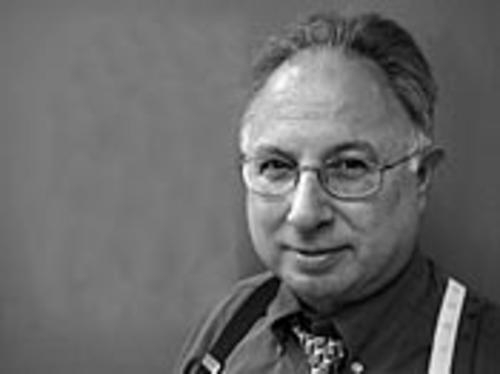
Ross LenceThe late Dr. Ross M. Lence of the University of Houston was a founding member of board of directors of the Abbeville Institute in Atlanta, which is an association of scholars devoted to the critical study of philosophical nature of the Southern tradition in the United States. Upon his death last week, the Abbeville Institute issued the following endearing tribute to Dr. Lence, which — as is always the case in discussing the indomitable Good Doctor — provides several amusing anecdotes, including this classic:

Once at a seminar with other academics, Ross was challenged by an especially obnoxious participant who, rather than confront his arguments, hoped to end the argument by saying that Ross had not read Locke carefully. Ross calmly replied (he was always calm) with that wry smile of his that if the gentlemen would tell us the paragraph number of the Second Treatise that interested him, he would quote it from memory and then attend to what the gentleman thought he had failed to understand in it.

The entire Abbeville Institute tribute is below.

Dear Colleagues, Students, and Friends,

It is with sadness that I inform you that Professor Ross M. Lence died on July 11th, 2006. Ross was a founder of the Abbeville Institute and a member of its Board of Directors. Much of what we stand for was exemplified by his teaching and character.

Ross studied at the University of Chicago, Georgetown University, and the British Museum before completing his Ph.D. at Indiana University under Professor Charles Hyneman. He greatly admired Hyneman who became his mentor and friend. Ross often quoted him and had a portrait of him prominently displayed in his office at the University of Houston over a table set with bottles of whiskey and sherry for the refreshment of his visitors.

Ross tells the story of how, as a raw graduate student, he first met Hyneman. Ross appeared in his office, confronting the abrupt question, what do you want? Ross replied, to study American political science. Hyneman asked, have you seen it? Ross answered, seen what? America, Hyneman replied. If you want to see it, meet me tomorrow morning. They spent the next few summers traveling around America observing its life in small and large towns, villages, and out of the way farming communities.

This story expresses a truth Ross learned from Hyneman and which he embodied in his own work; that theorizing about political things must be rooted in a connoisseur’s understanding of practice. Unhappily this essentially Aristotelian wisdom is missing from much of American political science which has not freed itself from an ideological style of theorizing.

Ross also thought one had to have a detailed knowledge of classical political texts. He could quote Locke’s Second Treatise and The Federalist from memory. Once at a seminar with other academics, Ross was challenged by an especially obnoxious participant who, rather than confront his arguments, hoped to end the argument by saying that Ross had not read Locke carefully. Ross calmly replied (he was always calm) with that wry smile of his that if the gentlemen would tell us the paragraph number of the Second Treatise that interested him, he would quote it from memory and then attend to what the gentleman thought he had failed to understand in it.

His knowledge of political theory and of political things was broad and deep. But he wore his learning lightly. It never intruded pedantically in conversation. It was there as a cultural inheritance which he had worked hard to make his own and from which flowed his disarming Socratic questions; his refusal to accept facile answers even when they favored his own position; his insistence on clarity; and all of this carried on with a wit that was both piercing and lovable.

These qualities made him a great teacher. It is no exaggeration to say that he must be included in a handful of the greatest teachers in the America of our time. He joined the Department of Political Science at the University of Houston in 1971. Over the years he won many teaching awards within and outside the University.

In the late 1990’s hundreds of students established an endowment for a chair in his honor. In 2001 Ross was appointed to the Ross M. Lence Distinguished University Teaching Chair. For over twenty years he regularly taught at the Women’s Institute of Houston. Ross was one of the earliest, and a frequent participant in Liberty Fund Colloquia, a private foundation devoted to exploring the ideal of a society of free and responsible individuals.

He was devoted to “Liberty,” the ideal of an older federative America which today has largely been replaced with talk of “democracy,” and “freedom” both of which typically reduce to “equality.” By liberty he meant the right of individuals and communities of human scale to govern themselves. He lectured at the first Abbeville Institute summer school, 2003, which was recorded on video. So we are fortunate to have a film of his lectures.

Ross was a leading scholar on the philosophy of John C. Calhoun whom he saw as embodying much of what he loved in the ideal of liberty. He edited the Liberty Fund collection of Calhoun’s writings Union and Liberty in 1992. He never published much. Learning for him was inseparable from character, and was a way of life best communicated through face to face knowledge. He not only gave of his time freely to students, he in time acquired an informal reputation at Houston as one to whom students could turn for counsel.

His last year was an ordeal of serious illness and suffering, made more bearable by the great numbers of current and former students and friends who gave their love, respect, and gratitude, and assistance. Few people will leave the world more loved than Ross. And so the Abbeville Institute salutes for the last time our never to be forgotten friend, mentor, and colleague with the words he always used in parting:

Gaudeamus!

More on the latest prosecutorial abuse

online gambling2.jpgFollowing on the latest example of out-of-control federal prosecutors, Cato Institute’s Radley Balko has the best line of the day in responding to one of the vapid rationalizations for Congress’ jihad against online betting — “we have to protect our chidren from such evils:”

“The people who are pushing this ban in Congress . . . try to argue these sites prey on children, which is totally ridiculous,” [Balko] said. “If your kid has access to your checking account or credit card and is making transfers to off-shore accounts across the world, Internet gambling is the least of your worries.”

Balko has more on the absurdity of all this here.

What’s driving the latest business scandal?

backdating options_scandal04.jpgAs noted in this previous post, the mining of claims in regard to the widespread corporate practice of backdating options as a method of executive compensation is in full gear despite the relatively straightforward nature of the legal issues related to the practice. So, what’s driving this litigation freight train?
In this lucid post regarding the allegedly dastardly practice of granting options after the stock market dropped on the heels of the 9/11 attacks, Larry Ribstein observes that the scandal reflects a journalistic cooking of the books:

The whole backdating/springloading story has had the aspect of the mutual fund “scandal” — leveraging a bunch of tangentially related stories involving quite disparate practices into one big scandal that keeps the readers coming back and buying newspapers. The last thing the journalists want is the sort of analytical clarity that we need for useful public policymaking. Rather, they want to obfuscate differences to enlarge the apparent, though not actual, size of the story. With respect to the 9/11 “scandal,” the reporters can add to the usual book-cooking large dollops of greed-and-resentment-mongering curried in sanctimony.

But now, the WSJ’s Peter Lattman — author of the popular Law Blog — weighs in with this WSJ ($) article that reports on another powerful driver of the latest business scandal de jure — big law firms:

For public companies, investigations of possible stock-option backdating have become a huge headache. But for big law firms, they’re the latest full employment act, generating hour after billable hour of work across practice areas, from tax and executive compensation to securities and white-collar defense.[. . .]
Because cases of backdating can require restating earnings, there is tremendous pressure on companies to address any problems immediately. And even as backdating touches myriad legal disciplines, individual players — from the company itself to a board committee to individuals — often require their own separate counsel. [. . .]
Some law firms are marketing themselves aggressively in the area. Earlier this month, [law firm] Proskauer [Rose] issued a press release saying it had formed a “Stock Options Task Force,” bringing together more than 20 lawyers across practice areas. Mr. Cleary says that when he and his partners began to work on options-timing matters they asked themselves, “Why are we doing this all discretely? We can be much more efficient, much more nimble and much more effective in handling these issues collaboratively.”

Ah, the synergistic power of the media and big law firms! ;^)

Michael Shelby, R.I.P.

shelby4.jpgMichael Shelby — former U.S. Attorney for the Southern District of Texas from 2001-2005 and more recently a partner at Houston’s Fulbright & Jaworski (previous posts here and here) — died at his home in northwest Houston on Tuesday from what authorities described as a self-inflicted gunshot wound. Shelby, who was 47, had been suffering from cancer that had rendered him unable to work in recent weeks. The Chronicle story on Shelby’s life is here.

Ted Estess eulogizes Ross M. Lence

Ross LenceAs noted in this post from last week on the funeral services for one of Houston’s finest teachers, Dr. Ross M. Lence of the University of Houston, Dr. Ted Estess — Dean of the University of Houston Honors College and one of Ross’ closest friends — gave a superb eulogy during the Requiem Mass for Ross.

Ted has kindly allowed me to post the text of his eulogy (pdf here), the quality of which is surpassed only by Ted’s moving delivery of the eulogy during the funeral mass. Take a moment to read this touching tribute from a dear friend to a teacher’s teacher who has left an indelible mark on Houston:

Farewell to Our Teacher and Friend

I begin with the salutation that Ross himself used most often: Salutem in Domine.

Our teacher and friend Ross Lence was well known and loved for many things: certainly for the clarity and sharpness of his intellect; for the generosity and gaiety of his spirit; for his indefatigable dedication to his students.

In his early years, he was known for the briskness of his step across campus, such that admiring students hurried to keep up; throughout his years, we knew him for the garish colors and shocking patterns of his ties and suspenders.

But perhaps above all, our friend and brother Ross was known and loved for the quickness of his wit; for the merriment and laughter that he bestowed on any gathering, effortlessly, with grace, bite, and kindness.

If his greeting was Salutem in Domine, his farewell was Gaudeamus! Rejoice! Take pleasure in life! Enjoy!

A spirit of hilaritas and felicitas! That is what our friend gave us. That  is what we gladly remember, what we shall sorely miss.

So it is not surprising that every one of Ross’ students has some story to tell. One student received his first paper back from the Good Doctor, only to read this comment: “Young man, if we are going to communicate, we are going to have to settle on a common language. I prefer English.”

This morning, we have no difficulty finding a common language. And I am not speaking of English. What we hold in common — what holds us in common — is gratitude, respect, and affection for Ross himself.

For you see, Ross Lence had an extraordinary capacity to dispose persons in a common direction, and to constitute community. The means by which he did so was conversation; for conversation, practiced with Ross’ wit and generosity, binds persons together. It builds and manifests community.

Anyone who visited Ross in the hospital this past weekend, or anyone who saw him during the year of his illness, witnessed that community. Last evening and again this morning, that community gathered in abundance, present and palpable.

Graybeards from the early 1970’s are taking interest in current Honors students; graduates from the 1980’s are interacting easily with Lencians from the 90’s — all of them, students, faculty, and alumni from four decades, immediately connecting, telling their own stories about their outrageous and beloved teacher and friend.

One Lencian tells of the student who, having been late or absent from class a number of times in the semester, walked up to turn in her final exam. His back turned to her, the Good Doctor was writing something on the board, as she said:

“Dr. Lence, you are a horrible teacher, and I want you to know that because of the way you teach, we haven’t learned a single thing this semester.”

And without so much as turning around, Ross replied:

“Yes, madam, and you are empirical proof of that.”

Circero helps us understand the charisma — the spirited gifts — of Ross Lence when he says, “The essence of friendship consists in the fact that many souls . . . become one.”

The collegial community of friends that arose around Ross Lence owed much, of course, to his own altogether distinctive qualities: his personality was as winsome and energetic and engaging as one is ever apt to find.

Donald Lutz — Ross’ close colleague of thirty-five years and a master teacher himself — got it right when he told me earlier this week, “Every thing that Ross did had a little bit of magic about it. He was a chariot of fire, a visitor from another place, a gift of God.”

Ross was our chariot of fire, our celebrity teacher, the one we showed off, the one whom we sent out to the community, the one in whose radiating light we like to stand, as if to suggest, We are a bit like him ourselves. He was our high star (High Star was the street on which Ross lived in Houston for some thirty years), the one by whom we charted our course and calibrated our compass, pedagogically, intellectually, and morally.

But not always politically. Ross was sometimes — well, often — heard to complain about the state of political affairs in the country he so dearly loved. He would snort, “In America, anything is permitted between and among consenting adults except the shooting of firecrackers.”

Those of you who studied Greek philosophy with Ross certainly learned that we can measure every art, including the art of teaching, by its product. The monument to the artist is what he creates.

If we would see the monument to Ross Lence, we need only look around this morning at the community that he, as artist and midwife, brought into being.

Ross would of course want me to say that he had much help in his life and his work, most notably that of his mother, Nickie. “Big Momma” he sometimes called her. One needs only to meet Nickie to see the source of many of her son’s gifts. Over the years, literally thousands of students came to her house to see her son and to eat her food. They also came for the beer.

Our friend Ross, of course, was a teacher of virtue, a philosopher, a lover of wisdom. But he was, as well, a lover of sights and sounds, and of all things beautiful. His offices at the University were appointed more stylishly than mine and other faculty’s offices. And I have to say it: he was an impulsive shopper. Once he told me, “Ted, the only things I regret are the things I didn’t buy.”

To be sure, not all students took to Ross — some were unhappy because he wouldn’t tell them what they should think. He wouldn’t even tell them what he thought.

Other students were unhappy because Ross was irreverent. He said things that would get any other faculty member fired. He talked about cannibalism and goats, and you were never quite sure why.

He certainly was a trickster. Some students, and probably one or two colleagues and an occasional dean, suspected him of being a diabolical Machiavelli. This made him especially happy.

But in reality, the wellspring of Ross’ irrepressibility, of his merriment and generosity, the ground bass of the songs that he sang, was religious. To him, teaching itself was a religious vocation.

I am speaking of religious in the root sense of the word: re-ligio, a binding together again, as ligaments connect and bind. Ross was bound, first of all, to life itself; to reality and to the structure of the real; but also to country, family, and friends — and to the religious tradition that nurtured him from his mother’s arms to his dying day.

The inclination of Ross Lence toward the religious is evident in words that he wrote several years ago to the parents of an Honors student who had suddenly, and tragically, died. As was his custom when people were in trouble — and Ross did such things an untold number of times over the years — Ross reached out to those parents.

He visited them in their home, attended the funeral service of their son, called them several times, and wrote a note, a portion of which I, in closing, want to share with you. As is often the case with what a teacher says, these words of Ross return now to their source:

How I wish that some faint words of mine could erase the sorrow in your hearts. All of us wish for a little more time to reflect and to love life. But God will never abandon those who love him. I am reminded of the immortal words of Catullus on the death of his own brother: atque in perpetuum, frater, ave atque vale — and so for all eternity, brother, hail and farewell.
