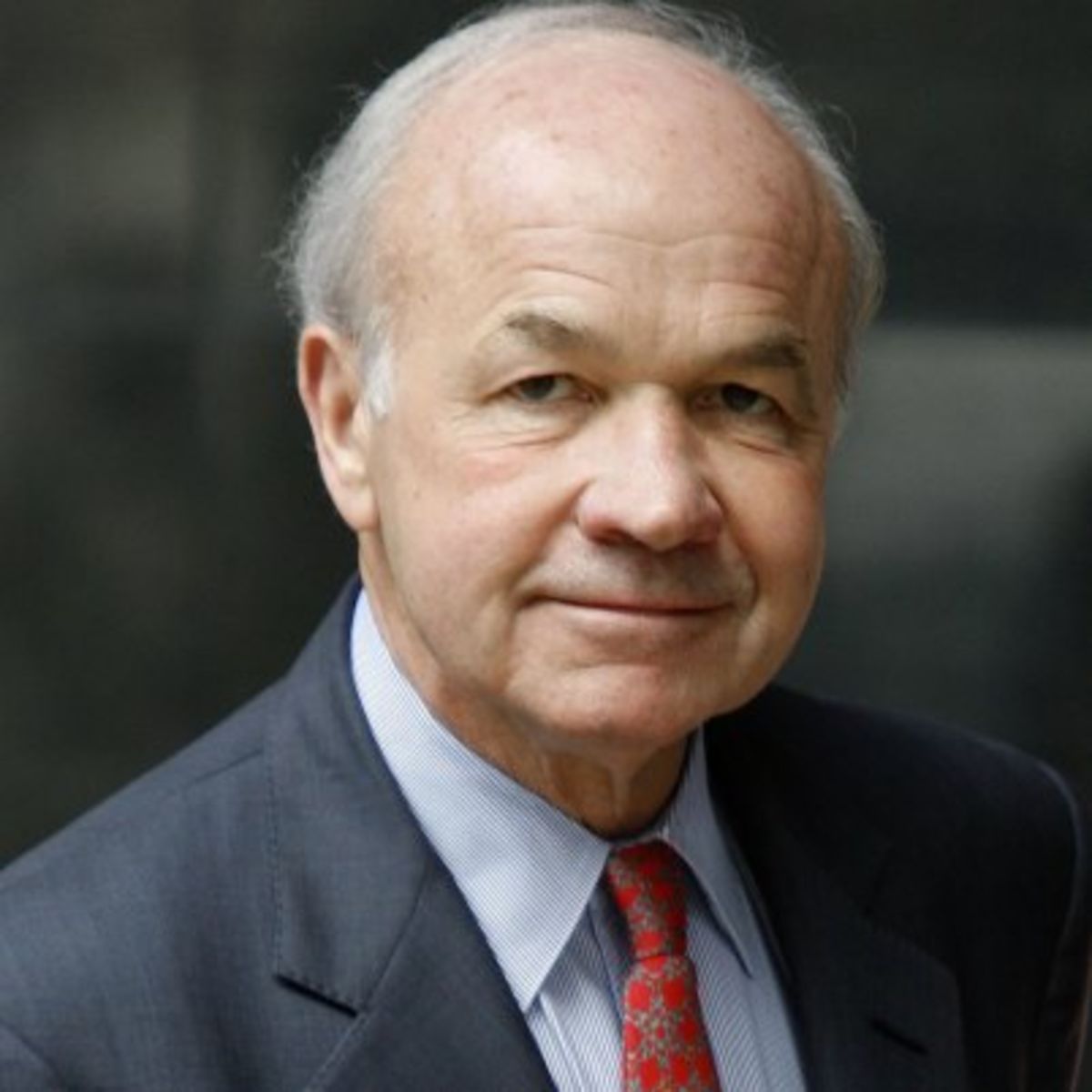
Former U.S. District Judge James deAnda, former chief judge of the U.S. District Court for the Southern District of Texas, died yesterday at the age of 81 at his summer home in Traverse City, Mich. after a short bout with prostrate cancer.
Judge deAnda was the last surviving member of a four-man legal team that handled the appeal in Hernandez v. Texas, the landmark 1954 Supreme Court case that overturned an all-white jury’s murder conviction of a Texas man because Hispanics had been systematically excluded from the jury pool in the case. The Supreme Court ruled for the first time in Hernandez that Hispanics were a separate group deserving of the same Constitutional protections as other minorities.
Judge deAnda was a native Houstonian who graduated from Davis High School before obtaining an undergraduate degree from Texas A&M and a law degree from the University of Texas. He practiced law in Houston for almost 30 years before President Carter appointed him to the U.S. District Court bench in 1979, where he served with grace and wit until he resigned in 1992 to return to private practice. Judge deAnda continued to practice law ably until shortly before his death.
A funeral Mass will be celebrated for Judge deAnda at 11 a.m. Wednesday, September 13th at St. Michael’s Catholic Church on Sage Rd. near the Galleria.
Houston Texans, Year Five
Has it really been only a year since the pre-season review of the Texans’ 2005 season? Look at all that has transpired over the past year:
The Texans had a disastrous start to what was considered a promising 2005 season, which included a first home game roasting of some understandably upset season-ticket holders;
A previously-fawning media bailed out quickly as the Texans ship was sinking, even though some reporters remained quite confused over the Texans seemingly inexplicable decline;
Former Texans general manager Charlie Casserly was initially in disbelief over the season, but then became increasingly defensive over criticism of his personnel management, which — at least in regard to drafting players — turned out not to be as bad as most folks assumed, although it became apparent that selecting QB David Carr with the first pick of the 2002 NFL draft was a mistake;
As the Texans’ fortunes faded, hope sprang anew that the team would be revived by a once-in-a-decade-type running back, only to have those hopes dashed by intrigue and then the selection of what may end up being a more prudent choice in the long run, even though John McClain contended that it is impossible (except for him) to evaluate NFL drafts accurately in the short term;
Coach Dom Capers graciously accepted being cut loose at the end of the horrifying season, but then worked his new job to scam Texans owner Bob McNair for more salary. Meanwhile, despite strong denials from Casserly and McClain that Casserly was being shown the door, Casserly was fired after the NFL draft even while denying that he was being fired, and then confirmed that he was indeed fired a couple of months later;
After three seemingly successful seasons and a fourth disastrous season in the team’s first four years, Texans owner Bob McNair changed the management model for the Texans going into the team’s fifth season;
Increasingly sophisticated statistical analysis of professional football generated some underappreciated factors for determining the outcome of NFL games; and
Although more circumspect about the Texans’ prospects in comparison with the pre-season last year, the local media’s pre-season coverage of the team and its players frequently continues to lack any objective analysis.
Whew! So where does that leave the Texans coming into the 2006 season? Well, certainly not in great shape but, somewhat surprisingly, in better shape than would normally be the case of team coming off a 2-14 season. Indeed, a reasonable case can be made that the Texas are finally moving in the right direction.
Appreciating Agassi
Don’t miss this superb Jay Winick/Opinion Journal op-ed on tennis icon, Andre Agassi, who retired gracefully this past weekend after after putting on a stirring performance during the first three rounds of the U.S. Open tournament in New York.
I’ve never met Agassi, but I have followed his career with interest because of our mutual friendship with prominent Las Vegas attorney, David Chesnoff. Several years ago, I had the pleasure of spending a morning with Agassi’s parents while Andre’s father gave David’s son a tennis lesson at the Agassi’s Las Vegas home where they have lived for several decades. Andre’s parents are wonderfully down-to-earth folks who are a joy to be around, so it’s no surprise to me that their son has matured into a fine man.
By the way, although probably not the greatest tennis player of his generation, Agassi nevertheless is one of the most remarkable athletes of this era. A case in point is a golf game that he played several years ago with David in which Agassi faced a daunting recovery shot around trees to a small green protected by a lake. Agassi grabbed a 3-iron, sized up the situation and then hammered a 200 yard shot that sliced around the trees on to the green, stopping 15 feet from the cup. Agassi calmly put the club back in his bag, jumped into the golf cart, looked at David and asked with a wink:
“So, David. What’s so tough about this game again?”
Is the backdating options scandal “the Enron of 2006?”
Yes, in an observation made yesterday during a Senate committee hearing that should send shivers up the spine of anyone concerned about the increasing criminalization of business in the United States, that’s how Senator Robert Menendez (N.J. Dem) characterized the widespread practice of backdating options as a means of compensating corporate executives (previous posts here).
That Senate hearing follows on a recent and far more reasoned discussion of the issues involved in backdating options that Matthew Bodie began here. Larry Ribstein returned Bodie’s serve here and Bodie volleyed back here. Geoffrey Manne and Josh Wright got into the game with this post, which Bodie responded to here. Finally, Professor Ribstein ripped this winner to close the discussion, at least for now.
Compare the depth of the foregoing discussion with the superficial platitudes described in the article about the Senate hearing yesterday. Then consider the damages to lives, communities and careers that occurred as a result of the criminalization of business that occurred as a result of the Enron meltdown. Is the allegedly wrongful conduct in regard to the practice of backdating options so clear that it should be handled with the blunt instrument of the criminal justice system? If you really think so, then consider this.
Wanted: Adult Supervision at the Enron Task Force
After trampling justice and the rule of law for five years while damaging lives, families and careers of former Enron executives and a selected few who did nothing other than have the misfortune of engaging in transactions with Enron, the Enron Task Force outdid itself yesterday in responding to the Ken Lay Estate’s motion to vacate the jury verdict against the late Mr. Lay.
In its response, the Task Force requests U.S. District Judge Sim Lake to postpone ruling on the Lay Estate motion until the Task Force has had an opportunity to lobby Congress to change the law that mercifully provides for the dismissal of charges against individuals such as Lay who die during the criminal proceedings. The Chronicle’s Tom Fowler reports on the Task Force pleading here, Chronicle business columnist Loren Steffy comments here and the NY Times’ Alexei Barrionuevo reports here.
Given the Task Force’s lengthy track record of exhibiting dubious judgment, its over-the-top response to the Lay Estate motion is really not surprising.
However, it is a stark reminder that the use of the overwhelming power of government to criminalize business executives — now even in death — is seriously out of hand, as even some prominent former Justice Department officials are now acknowledging publicly.
As Sir Thomas More reminds us, we better address the difficult task of curtailing use of that power, lest it be used on us.
HP’s board under the microscope
The Wall Street Journal’s Alan Murray reports in this article ($) (related NYT article here and Newsweek article here) about the internal investigation that ensued of the Hewlett-Packard board of directors after former HP CEO Carly Fiorina (previous posts here) was forced out early last year. The subject of the investigation was the leaking of confidential information to a Wall Street Journal reporter regarding board deliberations and ultimately led to the resignation of one board member — venture capitalist Tom Perkins — and the board’s decision not to nominate a second board member — George Keyworth, the alleged leaker — for another term on the company’s board.
The article is interesting and all, and certainly maintaining the confidentiality of board deliberations is important. However, if I were an HP investor, I would feel a whole lot better about the company if I was not left with the impression that the company’s board members behaved in a manner not quite as mature as my 16 year-old daughter’s social circle of friends.
Update: Professor Bainbridge predicts that HP’s directors are not going to react kindly in regard to the way in which the HP board chairperson handled the investigation, and Larry Ribstein is about as impressed with the HP’s corporate governance as I am.
McClain leads more cheerleading for the Texans
As noted earlier here and here earlier, even his hyprocrisy in turning on the Texans during their disastrous 2005 season after predicting in the pre-season that the team was a playoff contender does not deter Chronicle NFL sportswriter John McClain from engaging in more cheerleading for the Texans with this puff-piece regarding the team’s recent acquisition of journeyman running back, Ron Dayne (for a positive, but more realistic, view of Dayne, see John Lopez’s column here). The article even includes a chart noting that Dayne is the fifth Heisman Trophy winning running back to have played for a Houston professional football team, the others being former Oilers Billy Cannon, Earl Campbell, Mike Rozier and Eddie George.
Not mentioned in McClain’s article is that Dayne is overweight and slow, and is unlikely to have any meaningful impact on the Texans’ performance this season. Football Prospectus, which uses objective criteria to rank Dayne as a below-NFL average running back for his career, observes that “Dayne’s problem has always been finding the hole to run through. You literally have to stick the hole in front of him, slap him across the face, point, and yell ‘HOLE!'”
Now, this all may work out just fine for the Texans, but don’t you think that such a counter-analysis of Dayne might creep into at least a part of an article by the Chronicle’s lead NFL writer? Stay tuned for my pre-season evaluation of the Texans coming this Friday.
Prosecution Continues Bidding in the Olis Sentencing Case
Let’s see here.
First, the Justice Department misleads U.S. District Judge Sim Lake in regard to the true amount of the market loss resulting from the transaction that forms the basis of former mid-level executive Jamie Olis’ conviction, which in turn resulted in the imposition of an over-the-top 24+ year sentence.
Then, after the Fifth Circuit reversed that abomination, the prosecution — while dragging its feet in regard to the re-sentencing of Olis — recommended to Judge Lake in December of last year that the Olis should be re-sentenced to “only” 15 years in the slammer.
Now, after U.S. District Judge Jed Rakoff provided a much-needed dose of sanity in regard to sentencing of business executives and Stanford University law professor Joseph Grundfest eviscerated the Olis prosecution’s market loss arguments, the Chronicle’s Tom Fowler reports that the Olis prosecution is now contending that Olis should be re-sentenced to “only” 12 1/2 years.
At this rate, I figure the prosecution will finally reduce their demands for the length of Olis’ sentence to an appropriate level by, say, 2009 or so.
The hearing on the market loss issue in the Olis case is scheduled for next Tuesday.
Inasmuch as it is going on 11 months since the Fifth Circuit reversed Olis’ original sentence, Judge Lake will likely re-sentence Olis shortly after Tuesday’s hearing.
Big news from the oil patch
Chevron Corp. and partners Devon Energy Corp. and Norway’s Statoil ASA are expected to announce today (WSJ ($) article here and NYT article here) the first successful oil production from a deep-water region in the Gulf of Mexico called the Jack Field that could become the biggest domestic source of oil since the discovery of Alaska’s North Slope over 30 years ago.
Meanwhile, the Wall Street Journal ($) is reporting that Paris-based Compagnie Generale de Geophysique has agreed to acquire Houston-based geophysical seismic company Veritas DGC Inc. for about $3.1 billion in cash and stock.
And Clear Thinkers favorite James Hamilton notes a drop in gasoline prices, which is good news. Or is it?
Costly assumptions
Tory Gattis over at Houston Strategies continues to do a great job of analyzing Houston Metro’s proposed Richmond (or is that Westpark?) rail line (see here and here). However, I continue to be amazed by the Houston mainstream media’s myopia in failing to take a look at the rail experience of Los Angeles, an area that shares many characteristics with the Houston metro area, but is much more densely-populated, which is normally a requirement for making an urban rail line successful.
That myopia is leading to a dangerous dynamic in the rail transit debate that USC urban economics professor Peter Gordon notes in commenting on this LA Times story regarding extension of the LA region’s rail system. Professor Gordon observes that, despite irrefutable evidence that the LA rail system has been a boondoggle of massive proportions, the LA Times article does not even bother to address the threshold issue of whether more money should be dumped into the black hole rail transit system in the first place. Rather, the article assumes that the money will be spent and then simply addresses the issue of where it will go. Professor Gordon notes the incongruity of it all: