
The insidious nature of criminalizing business

Under mounting criticism over its dubious tactics in regard to threatening to go Arthur Andersen on KPMG in the prosecution of the firm’s promotion of questionable tax shelters, the Justice Department is now making nice in Congress.

Yesterday, deputy attorney general, Paul J. McNulty testified during a hearing of the Senate Judiciary Committee and, while defending such dubious tactics as criminalizing a potential defendant’s rights to counsel and to assert the privilege against self-incrimination, suggested that the DOJ might consider some changes on the margin to its corporate crime guidelines such as the odious Thompson Memo. Here is a link to McNulty’s testimony and to that of other witnesses at the hearing.

But McNulty’s arrogance in defending the Justice Department’s campaign to criminalize business in the post-Enron era was not even the most appalling part of the hearing.

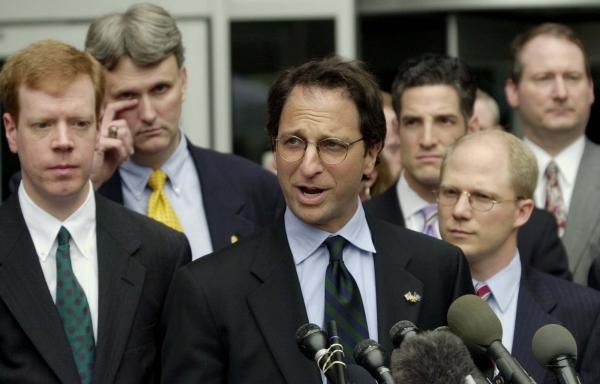
That occurred when Andrew Weissmann, the former chief of the Enron Task Force, presented a written statement in which he calls for revision of the Thompson memo and a “rethinking of corporate criminal liability.”

According to the Weissmann, who parleyed his Enron Task Force job into a partnership at Jenner & Block, the Thompson memo “should be revised so that it no longer encourages an environment where employees risk losing their jobs or legal defense merely for exercising their constitutional right not to speak to the government . . . ” He went on to observe the following:

In determining whether to indict a company, the Department of Justice should not permit consideration of the company’s treatment of an employee who has asserted her Fifth Amendment right. This factor should simply not come into play in the analysis of whether a corporation has or has not cooperated. Although a company itself can properly fire an employee or cut off legal fees based on whether she cooperates with an investigation, the Department of Justice should not weigh in on this determination ñ and not because a court may ultimately deem the company’s actions as government conduct. Rather, for policy reasons, the Department of Justice should simply not base its decision to prosecute a company on whether a person has been punished by her employer for asserting a constitutionally guaranteed right.

And then Weissmann — appearing to be far more open-minded than he was during his prosecutor days — calls for a “rethinking of corporate criminal liability:”

Although the Thompson Memorandum has recently received significant negative attention, and is in some ways an easy target, it is not the real source of the problem. The root cause that renders the Thompson Memorandum such a sharp weapon is the standard for criminal corporate liability and the absence of systemic checks to restrict the government’s power to charge corporations whenever an employee strays. The current standard for corporate criminal responsibility affords prosecutors enormous and unduly disproportionate leverage and power. In this climate, a corporation has little choice but to conform its conduct to the Thompson Memorandum factors, even in the absence of a prosecutor’s overt threats.

Of course, Weissmann then proposes a feckless change for the standard for corporate criminal liability in which the government would be required to take into account “a companyís attempts to deter the criminal conduct of its employees”:

Holding the government to the additional burden of establishing that a company did not implement reasonably effective policies and procedures to prevent misconduct would both dull the threat inherent in the Thompson Memorandum as well as help correct the imbalance in power between the government and the corporation facing possible prosecution for the acts of an errant employee. A more stringent criminal standard, one that ties criminal liability to a company’s lack of an effective compliance program, would have the added benefit of maximizing the chances that criminality will not take root in the first place since corporations will be greatly incentivized to create and monitor a strong and effective compliance program. The objectives of law-abiding society, the criminal law, and even of the Department of Justice’s Thompson Memorandum itself, would then be well served.

So, in short, unless a company has what the DOJ deems as a satisfactory compliance program to deter bad conduct, Weissmann contends that it is acceptable for the government to go Arthur Andersen on companies that pay for the defense costs of employees who assert such fundamental rights as the privilege against self-incrimination.

Neither mentioned nor challenged is Weissmann’s dubious judgment in contributing to billions of dollars in economic loss and inestimable human hardship from pre-emptively prosecuting Arthur Andersen out of business, Weissmann’s continual threats to go Arthur Andersen on Merrill Lynch because of its payment of defense costs for the four former Merrill executives involved in the equally reprehensible Nigerian Barge prosecution and the long line of serious prosecutorial abuses that Weissmann was involved in with regard to the Enron criminal cases.

That the Senate Judiciary Committee is seeking guidance from someone such as Weissmann with a questionable background in abusing fundamental principles of our justice system speaks volumes regarding the unlevel playing field that business interests face in defending against the government’s increasing regulation-through-criminalization policy.

As Geoffrey Manne appropriately asked awhile back, “Where’s the outrage?

Thinking about global climate change

climate2.jpgAndrew Dessler is an associate professor in the Texas A&M University Department of Atmospheric Sciences. A couple of months ago, I came across his interesting new blog that focuses on the science and politics of climate change. In this Chronicle article, the Chronicle’s science reporter, Eric Berger, interviews Professor Dessler, who makes the following common sense observation about the climate change debate:

[T]here are a lot of really legitimate uncertainties [about global climate change] that people don’t seem to argue about. It’s a little bit disappointing that people are still arguing over whether the Earth is round or not. Whether humans are causing the increase in CO2 is really like arguing whether the Earth is round. We know it is. There’s no question. We’ve got lots of evidence. The debate isn’t really where it should be at this point: We need to view climate change as a risk. It’s a somewhat uncertain risk, but it’s a risk nonetheless. The question really becomes, as a policy, how do we address this risk?

Eric has a podcast of his entire interview with Professor Dessler over at his SciGuy blog.

Dell in the crosshairs

dell_logo4.jpgDespite Hewlett-Packard’s current problems with its board of directors, my sense is that Dell, Inc. would prefer to have H-P’s problems rather than the ones that the Round Rock-based computer manufacturer faces (previous posts here and here).
This NY Times article reports that Dell will delay filing its fiscal second-quarter reports because of a widening Securities and Exchange Commission investigation and an internal company probe into its financial accounting. To make matters worse, Dell also reported that the U.S. attorney for the Southern District of New York has subpoenaed records in regard to an investigation of the company’s financial reporting from 2002 to present. Continuing a trend that has knocked 30% of the value of Dell’s stock this year, Dell shares declined over 2% yesterday to $21.19.
Dell was already being investigated by the SEC for the timing of its revenue recording, but yesterday’s announcement stated that the investigations have branched into areas “relating to accruals, reserves and other balance sheet items.”
Translation: “We many need to restate prior earnings.”

The Enronesque prosecution of Conrad Black

conrad_black_250_1.jpgWashington attorney Alykhan Velshi writing in this New English Review op-ed examines the Conrad Black indictment and doesn’t like what he sees:

The trial by attrition of Conrad Black has exposed the dark underbelly of the legal system, where the government can ruin a man, take his property, his means of livelihood, and make him a social pariah ñ all without the hassle of securing a conviction. There is an insidious little worm that has crept into the legal system, an iconoclastic mentality that is distorting the rule of law. Focused less on securing justice than on bringing down the high and mighty, all the while pandering to the politics of envy, it affects the entire system of corporate governance.
This is highlighted by three developments in the law of corporate governance: the concentration of power in the hands of minority shareholders, the criminalization of technical regulatory violations, the abandonment of the rule of law in favor of aggressive prosecutorial tactics, and the entrenchment of a culture that penalizes success.

Velshi doesn’t get everything right, but his piece is nevertheless worth reading for his analysis of the troubling (and all-too-common) characteristics of the Black prosecution. Check it out.

The art of predicting energy prices

crude_prices.gifOil prices continued a steady slide last week, ending the week at a five-month low as concerns about possible shortages that fueled this summer’s rally ebbed. The October crude contract on the New York Mercantile Exchange settled at $66.25, the lowest level for a front-month contract since April 5. The contract has lost more than $11 in the past month. Previous posts on the energy markets are here.
Meanwhile, James Hamilton posted this typically astute analysis of the big discovery in the Gulf of Mexico last week and explains why it may not have as big an effect on energy markets as big discoveries of the past. Also, the Chronicle’s David Kaplan provides this interesting article on Houston-based chemical engineer Henry Groppe, who has long been one of the most respected behind-the-scenes experts in the Houston business community for predicting energy prices. As noted in this Resource Investor piece from last year, the 80-year old Groppe is the forerunner of such younger experts as Matt Simmons, who have carved-out careers in advising businesses on risks relating to energy prices.
Finally, this recent Economist article reminds us the silliness of bashing big U.S. oil companies for supposedly controlling energy prices. Turns out that the thirteen largest oil companies in the world are all state-owned and control about 90 percent of the world’s oil reserves. The biggest U.S. major — Exxon Mobil — is a measly 14th and controls only a fraction of the world’s reserves.
Pass that information along to Bill O’Reilly if you have a chance.

The best and worst of the Stros

Berkman6B.jpgAs the Stros play out the string of the 2006 season amidst the beginning of the football season, the Stros’ lone slugger — Lance Berkman — quietly reached another milestone in his quest to become the best hitter in Stros history.
Over the weekend against the Brewers, Berkman overtook future Hall of Famer Craig Biggio for second place in career runs scored against average (“RCAA”) among Stros players. As regular readers of this blog know, RCAA is a Lee Sinins-developed statistic that is among the best in reflecting the effectiveness of a hitter. The reason for this is that it focuses on the most important statistic in baseball for a hitter — creating runs. Whereas more commonly cited statistics such as batting average can be very misleading (for example, some local media commentators misconstrue Willy Taveras‘ .284 batting average as meaning that he is having a good hitting season), RCAA is particularly valuable in evaluating hitters because it focuses on the two most important things in winning baseball games — that is, creating runs and avoiding making outs.

Continue reading

2006 Weekly local football review

matthew-mcconaughey-hook-em-horns.jpgOhio State 24 Texas Longhorns 7

Ohio State came into Austin on Saturday night and won the season’s first big game by playing as exceptionally as Texas did last year in Columbus. The Horns did not play badly and would have been threatening to take the lead deep in Ohio State territory midway through the 4th quarter had Michael Pittman not fumbled away a Longhorn TD in the first half. Although the Horns ran the ball reasonably well against an always rugged Buckeye defense, none of the Horns’ receivers were able to break a big play, which is going to be an important element for the Longhorns to win big games in the post-Vince era. And what on earth is UT doing allowing Matthew McConaughey to act like an idiot on national TV while on the Longhorns sideline? The Horns have a nice scrimmage against Rice this weekend in Houston at Reliant Stadium before beginning the Big 12 schedule the following weekend in Austin against Iowa State.

Continue reading

The silicosis-asbestos web

silicosis.jpgDon’t miss this Matt Tolson/Houston Chronicle investigative piece on the cooperation between several Houston plaintiff’s attorneys — including prominently John O’Quinn — regarding the prosecution of dubious silicosis and asbestos claims, sometimes based on the same plaintiff (see related earlier post here). This part of the article is particularly interesting:

From the moment in late 2004 that silicosis litigation began to unravel under [U.S. District Judge Janis] Jack’s scrutiny, [former O’Quinn partner Richard] Laminack has denied any wrongdoing. The O’Quinn firm did not do asbestos work, he said, so it should not be lumped in with other firms who recycled their old clients, a practice that Jack saw as presumptive evidence of fraud.
“We never, never represented an asbestos claimant and then turned around and retreaded it as a silicosis claimant,” Laminack told the judge, an assertion he repeated to the congressional committee. “We never, ever did that.”

Continue reading

Institutionalized scapegoating

scapegoat.jpgTwo news items at the end of this week reflect the festering cauldron of resentment toward business in American society that government is manipulating to advance its troubling regulation-through-criminalization policy.
First, there was the news that New York’s Attorney General Eliot Spitzer — after defaming former AIG chairman and CEO Hank Greenberg in the media (see also here) and strong-arming the company to show Greenberg the door — dropped virtually all the substantive charges of wrongdoing in his lawsuit against Greenberg. All that is left in the lawsuit is what amounts to an arcane accounting dispute over about $25 million in the context of a $150-200 billion company.
So, over this relative pittance, Spitzer blemished the reputation and career of a man who generated enormous wealth for millions of AIG shareholders, while extracting a $1.64 billion fine from AIG by threatening to cause the company to endure an Enronesque meltdown (see also here). For this and other anti-business crusades, Spitzer will soon be rewarded with the governorship of New York. Larry Ribstein adds additional perspective.
And lest you think that Spitzer’s manipulation of AIG and Greenberg is an isolated incident, just review what happened to the Merrill Lynch executives in the Enron-related Nigerian Barge case and the prosecutor who caused that outrage.
Meanwhile, a day after Spitzer dropped his lawsuit, New York authorities arrested Peter Dicks, the chairman of the English publicly-owned gambling company, Sportingbet. Dicks was detained under an outstanding warrant issued by Louisiana gaming authorities and the arrest comes just a couple of months after federal authorities arrested David Carruthers, the former CEO of BetOnSports, another British publicly-owned gaming company.
By the way, while Dicks sits in jail today, gamblers will place billions of dollars worth of bets in Louisiana casinos.
As Geoffrey Manne aptly asks, “Where’s the outrage?”

Academic wrangling

TSU prez Slade2.jpgTurns out that former Texas Southern University president Priscilla Slade’s decision to teach accounting at the school — while under indictment for accounting irregularities — was not a good idea. The school announced yesterday that Ms. Slade has been put on leave from her teaching duties and that a proceeding is being commenced to attempt to revoke her tenure at the school. The proceeding to revoke tenure will almost certainly be postponed pending disposition of the criminal charges against Ms. Slade.
Meanwhile, up in always-interesting Austin, University of Texas law professor Loftus Carson‘s lawsuit against the University of Texas and related parties hasn’t received much publicity. However, that all changed when Professor Loftus filed a motion to recuse U.S. District Judge Sam Sparks from his case after the Austin American-Statesman listed Judge Sparks as one of 30 judges who have received complementary Longhorn football tickets and attended exclusive receptions while at UT football games. Judge Sparks recused himself from Professor Loftus’ case yesterday and appointed a judge who is not a Longhorns fan (a rare jurist in Austin) to handle the case. I mean, what else could Judge Sparks have done given that the no. 2 Longhorns are playing no. 1 Ohio State on Saturday night in Austin?
By the way, the Statesman article on the Loftus case reports that Judge Sparks observed during the recusal hearing that he considered the tickets and receptions “a small favor” from UT for the time that he serves on panels at the UT Law School. Longhorn football tickets “a small favor?” Judge Sparks has obviously not purchased any UT football tickets lately. ;^)