It’s football season, so let’s talk golf

Tiger-Woods2.jpgThe start of the college football season over the Labor Day weekend tends to overwhelm all other sports news, but it’s hard to overlook the fact that Tiger Woods shot a 63 yesterday to win his fifth straight golf tournament, a streak that includes two major championships. Doug Ferguson puts it in perspective:

Byron Nelson won 11 straight tournaments in 1945, a streak regarded as one of the most untouchable in sports. Woods won six straight at the end of 1999 and the start of 2000, and Ben Hogan won six in a row in 1948.
Woods now takes a week off before heading to England for the HSBC World Match Play Championship, followed by the Ryder Cup. His next PGA Tour start will be the American Express Championship outside London at the end of September.
He still isnít even halfway home to Nelsonís hallowed mark, but he surpassed Lord Byron in one category with his 53rd victory, moving into fifth place alone on the career list. Woods, who finished at 16-under 268, won for the seventh time this year. No other player has won more than twice.

By the way, only Hogan has had a streak similar to Woods’ current one where more than one major was involved. Hogan won four straight in 1953, including three majors.

Continue reading

2006 Weekly local football review

Kolb.jpgThe Labor Day weekend marks the beginning of the football season and HCT’s weekly local football reviews, so here’s the first weekly review of the 2006 season:
Houston 31 Rice 30

The only real game of the weekend occurred at Rice Stadium on Saturday night as the Cougars pulled one out that they should not have won against the feisty Owls playing their first game under new head coach Todd Graham. The Coogs looked to be preparing for a blowout by taking a 14-0 lead in the first quarter, but then the Ows scored 30 straight points behind clever QB Chase Clement over the next quarter and a half to take a 16 point lead, only to have UH score the final 17 points of the game to nab the victory.
Despite the win, Cougar supporters were not thrilled. The Cougars under head coach Art Briles frequently engage in an untraditional, discombobulated sort of game that leaves UH supporters scratching their heads. Briles runs an unconventional offense — sort of a combination of the Wing-T, Single Wing, Run ‘N Shoot, and Spread offenses, if you can imagine that — which, when it is clicking, is very difficult to defense. Unfortunately, the offense is also based largely on timing and, when a defense figures out how to disrupt that timing, the UH offense struggles. And when Houston’s offense stuggles, it tends to affect the other components of the UH football team.

Continue reading

They Never Really Had a Chance

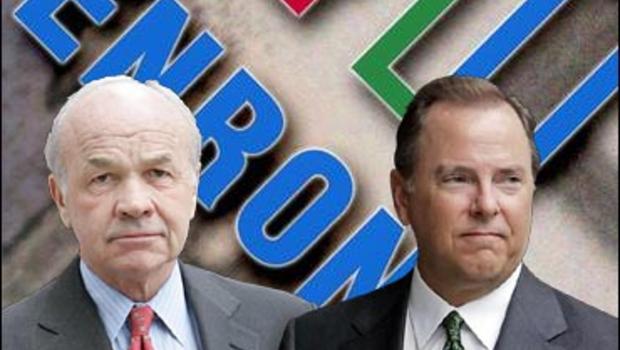
As I noted at the conclusion of the Lay-Skilling trial, my sense is that the trial was over before it began because the jurors — particularly its leaders — were predisposed to convict.

Now, according to this Brenda Sandburg/American Lawyer article, the jury consultants working the Lay-Skilling case thought the same thing. In fact, they gave little hope that any jury anywhere could be empaneled that would view the case without a strong predisposition to convict.

Remember that the next time you read and hear the prosecution in a criminal case undertaking a propaganda campaign to fan the flames of resentment and scapegoating in the jury pool.

As Sir Thomas More reminds us, do any of us really think that we could “stand upright in the winds that would blow” if that power were applied to us?

Lay and Skilling’s Legacy of Beneficial Risk-taking

During the criminal trial of Ken Lay and Jeff Skilling, attorney Paul Fisher and economist Jim Johnston of the Heartland Institute authored this piece regarding the unjust prosecution Lay and Skilling that echos a common theme of this blog regarding almost all of the Enron-related criminal prosecutions — that the prosecutions were fundamentally weak criminal cases that were really a smokescreen to promote an underlying political agenda of regulating beneficial risk-taking that generates robust markets, wealth, and jobs.

Following on their earlier piece, Fisher and Johnston have written this excellent article that speculates on what the business legacy of Lay and Skilling should be. In so doing, Fisher and Johnston note another common theme of this blog — the intrinsic weakness of the convictions against the two executives:

We are left with two convictions that are devoid of any gain to the perpetrators and illogical to the extreme. The real culprit, in our opinion, is the political establishment in California, primarily Democrats, who were intent on punishing a friend of President George W. Bush and his father. While the California Democrats have escaped unscathed, except for ex-governor Davis, the energy trading system is impaired and corporate accounting is now in chaos. It remains to be seen if these institutions will recover any time soon.

However, even more importantly, Fisher and Johnston note the extraordinary wealth creation that resulted from Lay and Skilling’s risk-taking at Enron, and lament how the understanding of the beneficial nature of that risk-taking is now largely lost amidst the media and government-hyped societal condemnation of Lay, Skilling and Enron:

At the end of the day, when the successes and mistakes are tallied for Ken Lay and Jeffrey Skilling, we predict the result on balance will be positive. Perhaps the biggest contribution was to provide risk management of natural gas prices for producers and industrial consumers. Enron operated the over-the-counter market for a year until the exchange-traded futures and options contracts were offered on the New York Mercantile Exchange in 1990. Those futures contracts are now among the most liquid in the world.

The electricity markets established for California are no longer traded. However, there is a market in the PJM (Pennsylvania, New Jersey, Maryland) region and an auction is to be established soon in Illinois. In the meantime, natural gas contracts serve as a hedging vehicle because gas is the fuel used at the margin to generate electricity.

Enron’s failed broadband joint venture with Blockbuster was intended to bring video on demand. This now exists on cable and is similar to the iPod offered by Apple Computer. This latter system is a masterful accommodation to copyrighted music and video programming where artists are compensated.

Weather derivatives started by Enron and Koch Industries in 1996 for a swap in the following year have evolved into an exchange-traded contract offered by the Chicago Mercantile Exchange. Futures and options contracts based on temperatures in 18 U.S., nine European, and two Asia-Pacific cities are now traded in this market.

Finally, the establishment of a robust water market by Enron failed. However, much was learned from the effort and there is optimism about another try.

We fervently hope that Ken Lay and Jeffrey Skilling will be remembered for their extraordinary contributions, rather than their politically-inspired prosecution.

Amen.

As noted in many of my posts on the Lay-Skilling trial and the Nigerian Barge case, the Enron Task Force turned the Enron-related criminal cases into morality plays that appealed to the dynamics of resentment and scapegoating in disingenuously portraying legitimate and productive business transactions as complex frauds.

The result has been a dangerous misuse of the government’s overwhelming prosecutorial power to impose burdensome regulatory costs on valuable markets.

In reality, a far more progressive government policy would be to encourage precisely the type of risk-taking that Lay and Skilling promoted at Enron to facilitate productive markets, employment growth and wealth creation.

A Dirty Secret of the Enron Criminal Cases

Most mainstream media accounts of the Enron-related criminal prosecutions case have perpetuated the myth that the Enron Task Force has done a good job in handling the criminal cases, partly because the Task Force has obtained plea bargains from 16 former Enron executives.

Inasmuch as those former executives pled guilty, the media’s reasoning goes, that is proof that Enron really was just a den of thieves that needed to be eradicated.

However, the truth is far more nuanced.

At least several of those 16 plea bargains were the result of the Enron Task Force bludgeoning a former Enron executive who had not committed a crime into a plea deal to avoid the high risk of asserting innocence in a venue that is highly adverse to anyone that worked for the social pariah, Enron.

Indeed, any former Enron executive only needed to review the ordeals that Jamie Olis and the four former Merrill Lynch executives in the Nigerian Barge case — much less that of Ken Lay and Jeff Skilling — to be reminded that attempting to assert innocence in the face of weak criminal charges was a losing proposition.

Well, at least one former Enron executive who the Task Force bludgeoned into a plea deal is attempting to withdraw it.

Chris Calger, a former executive with Enron North America who pled guilty a year ago to a single criminal conspiracy count, has replaced the attorney who advised him in connection with that plea deal and hired Philip Hilder, Sherron Watkins‘ counsel (it’s a small world, isn’t it?) to file a motion requesting that he be allowed to withdraw his guilty plea.

As noted in this Tom Fowler/Houston Chronicle article on the motion, Calger argues that he should be allowed to withdraw his guilty plea because it was based on the Task Force’s malleable theory that any remotely questionable business judgment of a business executive is a criminal act of depriving the executive’s company (or, in the case of the Merrill Lynch executives in the Nigerian Barge case, of another company) of that executive’s duty to provide the company with the executive’s “honest services.”

Inasmuch as the Fifth Circuit eviscerated that theory in its recent decision in the Nigerian Barge case, Calger reasons that he should be allowed to withdraw his guilty plea.

The Calger plea deal was obtained under particularly egregious circumstances.

In an extraordinary exchange with an Enron Task Force prosecutor during the Calger plea bargain hearing, U.S. District Judge Lynn Hughes makes clear that the Task Force prosecutor neither understood the underlying transaction involved in the indictment nor could articulate precisely what crime Calger had committed. At the end of the hearing, Judge Hughes accepted Calger’s guilty plea, although it is clear from the transcript that he was troubled in doing so.

Calger’s guilty plea is only one of several that were obtained by the Enron Task Force under questionable circumstances. As with the Task Force’s equally dubious tactic of fingering dozens of former Enron executives as unindicted co-conspirators to induce them from testifying for Lay and Skilling (as well as for the Merrill Lynch executives and other Enron-related defendants), the Task Force’s bludgeoning of guilty pleas out of overwhelmed individuals is a serious affront to justice and the rule of law that the media has largely ignored.

Yale Law Professor John Langbien, who has written extensively on prosecutorial abuse in the American criminal justice system, puts the tactic of bludgeoning guilty pleas into perspective:

Plea bargaining concentrates effective control of criminal procedure in the hands of a single officer. Our formal law of trial envisages a division of responsibility. We expect the prosecutor to make the charging decision, the judge and especially the jury to adjudicate, and the judge to set the sentence. Plea bargaining merges these accusatory, determinative, and sanctional phases of procedure in the hands of the prosecutor.

Students of the history of the law of torture are reminded that the great psychological fallacy of the European inquisitorial procedure of that time was that it concentrated in the investigating magistrate the powers of accusation, investigation, torture and condemnation. The single inquisitor who wielded those powers needed to have what one recent historian has called ‘superhuman capabilities [in order to] . . . keep himself in his decisional function free from the predisposing influences of his own instigating and investigating activity.'”

I cannot emphasize too strongly how dangerous this concentration of prosecutorial power can be. The modern prosecutor commands the vast resources of the state for gathering and generating accusing evidence. We allowed him this power in large part because the criminal trial interpose the safeguard of adjudication against the danger that he might bring those resources to bear against an innocent citizen — whether on account of honest error, arbitrariness, or worse.

The pressure to cop a plea is overwhelming for individuals caught in the crossfire of a highly-publicized criminal investigation such as the one involving Enron. So, I ask again — who is the greater threat to justice and the rule of law?

The Chris Calgers of the world?

Or out-of-control prosecutors who place businesspeople in the untenable position of risking a long prison sentence for merely asserting their innocence?

Or a pliable media that largely ignores this injustice to fan the flames of the latest juicy story?

Merck’s good day

merck_logo10.jpgAs noted earlier here, the occasional bad day that Merck experienced recently in regard to a couple of its Vioxx cases is inevitable when defending tens of thousands of such cases.
However, it’s also inevitable that Merck will experience some good days during the Vioxx trial marathon. One of those occurred yesterday as the federal judge in the recent New Orleans trial that concluded with a $51 million jury verdict against Merck threw out the verdict on the basis that the jury’s award was clearly excessive.
Meanwhile, according to this Heather Won Tesoriero/WSJ ($) article, a juror involved in awarding a plaintiff a $32 million verdict against Merck in a Vioxx trial that took place earlier this year in Texas’ Rio Grande Valley had borrowed money from the plaintiff prior to the trial, a small detail that the juror did not disclose during pre-trial questioning. As noted in this prior post, the Rio Grande Valley was rated by the American Tort Reform Association as the number one “judicial hell-hole” for 2005. The ATRA describes a judicial hell-hole as a venue of “disproportionately harmful impact on civil litigation. Litigation tourists, guided by their personal injury lawyers, seek out these places because they know they will produce a positive outcome – an excessive verdict or settlement, a favorable precedent, or both.”
Looks to me as if Merck needs to compare notes with Ford Motor Company over this one.

Amazing arrogance

Senator_George_Allen_46686d.jpgVirginia Republican Senator George Allen is in a fight for his political life, which is not what one would normally expect from a candidate who was recently mentioned as Presidential timber. Senator Allen has been hammered in the media for some apparently patronizing remarks that he made to a minority student, but my sense is that the attitude reflected in this Washington Post article is a far bigger problem for Allen with voters than his impolite remarks to a student.
The article reports that last week ìthe Secret Service asked Virginia officials if they would be kind enough to shut down all of the HOV lanes on I-395 from 1 to 7 p.m. the next day so President Bush could get where he needed to be,î which was a fundraiser for Senator Allen. State traffic experts explained the likely results of closing the HOV lane to accomodate President Bush and Senator Allen:

There will be approximately 8,600 cars using the HOV lanes over a three hour period (4 to 7 pm). This equates to approximately 20,000 to 22,000 people. If the HOV lanes are closed, according to the Districtís estimate the back up of traffic in the general purpose lanes will not be cleared until 10 p.m.

Despite that effect, local officials apparently had quite a time talking the Secret Service out of the plan.
When a couple of politicians expose an attitude that they could not care less about how much they inconvenience 20,000 of their citizens so long as one of the politicians can get to a rubber-chicken fundraiser for the other one on time, that’s a pretty good signal that it’s time for a change.
Hat tip to Gene Healy for the link to the WaPo article.

Understanding contango in the oil markets

oil trading_0021351p.jpgAs noted in this earlier post, the recent run-up in energy prices and the lingering “contango” in the crude oil trading markets — that is, futures contracts for a given product priced substantially higher than that same product for near-term delivery — has prompted the usual conspiracy claims from demagogues who seek more power through damaging regulation of the beneficial trading markets. As if on cue, the U.S. Senate Permanent Subcommittee on Investigations recently issued a report asserting that traditional supply and demand conditions cannot adequately explain current high oil prices and contending that evil capitalist roaders in the trading markets are to blame for a substantial portion of the lingering high prices.
Thankfully, the blogosphere provides a counterbalance to such demagogic appeals. In this post, University of Houston business professor Craig Pirrong disassembles the Senate report, observing at the outset:

Where to begin? The report is a farrago of facts, factoids, and falsehoods stitched together to arrive at a conclusion that is miles beyond what the evidence actually supports. Moreover, although I concur that manipulation is a potential problem in energy marketsñas it is in all commodity and even financial marketsñthe report does not even make the effort to show that current price levels are the effect of manipulation. Nonetheless, it sternly recommends a variety of new regulatory initiatives to combat manipulation, suggesting (by implication) that manipulation is the cause of high oil prices. This is a flagrant example of bait-and-switch of a variety that I imagine that the Subcommittee members would vigorously condemn if committed by your local used car salesman.
The report (and most of the other criticisms of speculation) fails on only two points: logic and evidence. Other than these shortcomings, itís great.

Read the entire post.

A few good reads

bookstack.jpgThe following are several reading recommendations for a busy Wednesday:
In this TCS Daily article, Hoover Institute fellow David R. Henderson examines the media coverage of the criminal trials of Frank Quattrone and concludes that it left much to be desired:

The evidence seems to suggest that [Quattrone] was innocent. And even in the unlikely case that he was guilty, the prosecutor never made the case beyond a reasonable doubt, the standard for conviction for a crime. What wasn’t a victory, though, was the media’s role in this. Many reporters pandered to their audiences’ desire to see a wealthy man take the fall because of the dotcom bust.

Meanwhile, the always insightful Stephen Bainbridge posts this interesting TCS Daily article on New York’s next governor, the Lord of Regulation, Eliot Spitzer, in which the Professor makes the following observation:

A fair reading of Eliot Spitzer’s record as presented by [Brooke Masters’s biography of Spitzer] suggests that he is both a genuine cause crusader and a career political hack. Spitzer has consistently used — and abused — his authority as New York attorney general to level sweeping accusations against a wide swath of American business. In some cases, like the proverbial stopped clock, he got it right. In a lot of cases, however, the much ballyhooed charges got a lot of press attention but then quietly went away. Indeed, on the few occasions he’s taken one of these high profile business cases to trial, he’s lost at least as often as he’s won. Instead, his record consists mainly of using media pressure to extort settlements from frightened executives.

Finally, I’ve not addressed the sad case of the the Duke University Lacrosse team members accused of rape, but this recent NY Times article provides a comprehensive review of the case. Perhaps not surprisingly, the two NY Times reporters who reviewed the public documents in the case concluded that the evidence against the three students is neither as strong as prosecutors have publicly claimed nor as weak as defense attorneys have asserted. However, where the standard of proof is beyond a reasonable doubt, this would appear to be a case where prosecutors should have concluded on the front end that the allegations are better left for resolution in the civil justice system rather than the criminal justice system. It’s an ugly case that promises only to get uglier as the criminal trial nears.

Stros lock up Roy O

Roy Oswalt29.jpgIn my most recent periodic review of the Stros 2006 season, I observed that the personnel moves that Stros General Manager Tim Purpura made this past off-season do not inspire much confidence that he knows what to do in turning the Stros back into a legitimate playoff contender. However, it’s comforting to know that when it comes to the best pitcher in the history of the Stros franchise — Roy Oswalt — that Purpura and Stros owner Drayton McLane know exactly what to do.
In the richest contract ever given to a Stros pitcher, the Stros announced last night that they had signed Roy O to a five year extension worth $73 million, but which could be worth as much as $87 million should the club pick up a $16 million option for the 2012 season. Oswalt will be paid $13 million in 2007 and ’08, $14 million in ’09, $15 million in 2010 and $16 million in 2011. The club can either exercise a $2 million buyout after 2011 or pick up the $16 million club option for 2012. The contract will include a no-trade clause.
While the Stros normally do not do deals for over three years with pitchers because of the high injury risk, Roy O is a special case. Drafted by the Stros ten years ago and developed within the Stros’ heralded (at the time) minor league pitching program, Oswalt jumped from AA ball to the Stros in 2001 and quickly became one of the best pitchers in the National League. Remarkably durable throughout his career to date, Oswalt pitched the key win that vaulted the Stros into their first World Series last season and has developed into one of the best pitchers in MLB history at this stage of his career. Oswalt, who turned 29 yesterday, is tenth in the history of the National League in runs saved against average (“RSAA,” defined here) for pitchers through the age of 28:

Continue reading