Not your typical academic research project

FrancisBeckwith.jpgIt’s not every day that a Baylor University professor‘s conversion from an Evangelical Protestant to Roman Catholicism (reversing a prior conversion the other way) generates a story in the weekend Washington Post. Here is Professor Francis J. Beckwith’s announcement of his conversion, the announcement of his resignation from the Evangelical Theological Society, and an interview of Beckwith regarding his decision. James Grant provides this reaction from an evangelical standpoint to Professor Beckwith’s decision, while Father Alvin Kimel provides a Roman Catholic perspective of the decision.

The American Experience on Alexander Hamilton

AlexanderHamilton.jpgPBS’ excellent American Experience series provides a two-hour documentary tonight appropriately entitled “Alexander Hamilton” (PBS, Monday 8-10 p.m. CDT, but check your local listings), which will focus on the remarkable life of arguably America’s most controversial Founding Father. One of my favorite books of the past several years is Ron Chernow’s excellent biography of Hamilton, so I am looking forward with great interest to the American Experience‘s treatment of the man who is most responsible among the Founding Fathers for the success of the U.S. market system.
Hamilton’s numerous political opponents used to call him “the bastard son of a Scottish peddler,” but the truth is that his parents were not legally married, he grew up dreadfully poor in the West Indies, and he was orphaned at an early age. Although the prideful Hamilton was ashamed of his troubled start in life, it fueled a fierce ambition that propelled him as a teenager to write newspaper articles that were so impressive that a group of men from St. Croix passed around the hat to pay his way to New England so he could attend college. At the age of 17, Hamilton literally stepped off the boat in Boston into the beginning of the American Revolution and, within three years, had risen through the ranks to become General Washington’s chief of staff and most trusted aide.
That the young Hamilton in just a few years went from writing newspaper articles about hurricanes in the West Indies to becoming one of the key leaders of the American Revolution is merely one of numerous remarkable aspects of his compelling life. So, pull up a chair tonight and enjoy the fascinating story about the man who has much to do with establishing the foundation for the enormous wealth creation that has taken place in American society over the past 200 years.

Rationalizing a boondoggle

dome.jpegAnne Linehan over at BlogHouston.net continues to do a fine job of following the various rationalizations of several local governmental types over how to justify public financing for the proposed the Astrodome hotel project (Charles Kuffner comments, too). The latest proposal being floated is to give the deal $150 million in hotel and sales tax breaks over a ten year term to facilitate about half a billion in private financing for the deal. The rationalization is that the rebates are worth it because the tax revenue wouldn’t be there in the first place but for the hotel generating it. Plus, the hotel really is a good thing for Houston, so why worry about a measly $150 million over the long term?
Putting aside that dubious reasoning for the moment, the reason that this project is a boondoggle isn’t because of $150 million tax rebates over ten years. On a boongoggle of this potential magnitude, that’s peanuts. The real financial risk comes when the hotel falters in paying its private financing. In almost every case, the local government that backed the facility will be placed in the difficult position of either putting up additional funds and security for the project or face the politically untenable position of watching the project fail. Guess what politicians usually vote to do when the alternative is to be embarrassed with a failed deal on their watch?
The problem with boondoggles of this type is that they “eat” — they must be fed money when the operating losses start mounting. There is a reason that the promoters of this deal can’t arrange private financing. That is a reason for the county government to back off the deal, not to embrace it.

The real New York squeeze play

hrlogo.jpgOne of Houston’s many alluring qualities is the depth and variety of affordable housing, so those local businesses or institutions in competition with New York entities for employees should take note of this recent NY Times article:

As the [New York City] apartment-hunting season begins, fueled by college graduates and other new arrivals, real estate brokers say radical solutions among young, well-educated newcomers to the city are becoming more common, because New Yorkís rental market is the tightest it has been in seven years. High-paid bankers and corporate lawyers snap up the few available apartments, often leading more modestly paid professionals and students to resort to desperate measures to find homes.
While young people in New York have always sought roommates to make life more affordable, they are now crowding so tightly into doorman buildings in prime neighborhoods like the Upper East Side that they may violate city codes. [. . .]
. . . The rents for one-bedroom apartments in Manhattan average $2,567 a month, and two-bedrooms average $3,854 a month, . . . but rents tend to be far higher in coveted neighborhoods like the Upper West Side and TriBeCa.
Because landlords typically require renters to earn 40 times their monthly rent in annual income, renters of those average apartments would need to earn at least $102,680, individually or combined, to qualify for a one-bedroom and $154,160 to afford a two-bedroom.

Trouble at Whole Foods

wholefoods.jpgFormer Austin resident Joe Weisenthal over at DealBreaker sums up this Street.com analysis of the continuing financial performance troubles of Austin-based Whole Foods:

Being from Austin, it’s a little painful to see cracks in a homegrown success story like Whole Food success story (Dell has been painful enough). Then again, every company has to get its comeuppance, which is what the company is now in the process of receiving. Sure, it continues to open new stores, and apparently the one on Houston even has a sushi conveyor belt, although we haven’t been able to verify that first hand. But everyone sells sushi now, and everyone sells organic foods. Basically, a Whole Foods store isn’t unique like it used to be, and the company is feeling the pain. Plus, the high-end grocery space is getting more crowded. In the east, there’s Wegmans, which ostensibly makes Whole Foods look like an Albertsons. And then supposedly there’s a chain called Eataly, coming from Italy, which will make Whole Foods look like your little Korean grocer down the street. So it’s finally getting tested, something its investors aren’t used to.

Whole Foods shares dropped more than 10 percent Thursday, closing at a 2 1/2-year low of $41.15. That Texas grocery store competition remains absolutely brutal.

Doesn’t it always happen this way?

Tom%20Lehman.jpgYesterday morning, Golf.com blogger Josh Sanburn provided this remarkable piece of information about PGA Tour professional Tom Lehman and the devilish 17th island hole at the TPC at Sawgrass (picture on the golf post from yesterday):
Lehman has 55 straight safe landings at 17

Who’s the master of the par-3 17th? That honor goes to Tom Lehman, who, through 55 rounds at the Players Championship, has never hit his tee shot in the water and is 13-under overall on the hole. He parred the 17th on Thursday.
“You catch the wrong gust on that one, you’re in huge trouble,” Lehman said after his two-under first round, which put him among the leaders. Lehman hit an 8-iron to the left side of the green Thursday, good enough for a two-putt par. We’ll see if he can keep the streak alive through the rest of the week.

So, what did Lehman do when he played the 17th later in the day on Friday? Of course, he dunked his tee shot in the drink.

Thoughts on the “pay for a better jail” option

clooney.jpgAs a result of this article about the option that some California prisoners have of paying for better prison conditions, there has been quite a bit of comment around the blogosphere about the fairness of providing such a perk. Heck, even the judge in Paris Hilton’s revocation of probation hearing felt compelled to deny Paris the “pay for a better prison” option in sentencing her to 45 days of jail time.
However, given the abysmal condition of most jails in the U.S. and the intractable political problems that prevent those conditions from being improved, I found Rick Garnett’s comment on the issue particularly insightful:

What should we think about these “upgrades”? Certainly, one could hardly blame one convicted of a “relatively minor” crime for wanting to take advantage of this option. And, these upgrades might well provide a useful source of revenue. I wonder, though: Why stop at $82.00 per day? I would think that corrections agencies could fill their “upgrade” cells while charging substantially more. What if it turned out that many of those convicted of “relatively minor” offenses were willing to pay, say, $1000 per day — or $10,000 per day — not to avoid the loss of physical freedom associated with punishment, but to avoid the non-trivial risks of being harmed by other inmates? What would this willingness tell us about the extent to which we are failing in (what I take to be) our obligation to protect those we incarcerate?
I assume we don’t want to say that these risks are “part of” the punishment that is justly imposed upon those convicted of crimes. So, if someone buys their way out of those risks, it is not — is it? — that they are buying their way out of duly imposed “punishment.” But, once we acknowledge that there are non-essential, unpleasant incidents of punishment that we *are* willing to allow people to pay to avoid, then how do we justify imposing those incidents on those who cannot (or simply do not) pay to avoid them?

They’re off at The Players!

17th%20green.jpgThe Players Championship is underway over in Ponte Vedra, Florida near Jacksonville on the renovated Tournament Players Course at Sawgrass. Each year, The Players has the strongest field of any golf tournament — 48 of the top 50 players in the World Rankings are playing this week. For some reason, the PGA Tour continues to believe that it must attempt to persuade everyone that the tournament should be considered a the fifth “major” tournament along with The Masters, the U.S. and British Opens and the PGA Tournament, and the Tour has moved the tournament to May this year in an effort to facilitate that goal. But regardless of whether it’s characterized as a major, The Players is a terrific tournament with the best golfers competing on a great golf course. From a pure golfing standpoint, what more can you ask for?
Sal Johnson provides this excellent Golf Observer overview of the tournament, and the Golf Challenge is providing extensive coverage of the tournament today and during the morning hours on the weekend, while NBC takes over coverage during the afternoons on the weekend. Golf Digest provides this handy interactive overview of the TPC at Sawgrass, while The Players website includes about halfway down the page The 17th hole “Pipeline”, which provides a really slick telecast of the famous island green par 3. When the wind blows as it did on Thursday (and probably will through the tournament given that a tropical storm is swirling off the northeastern Florida coast), watching the players play the 17th is a real blast. Check it out.

More on the futility of dieting

dieting_for_dummies.jpgEarlier posts here, here and here discussed the general ineffectiveness of dieting. Now, this Gina Kolata/NY Times article reports that researchers at Rockefeller University are finding that “it is entirely possible that weight reduction, instead of resulting in a normal state for obese patients, results in an abnormal state resembling that of starved nonobese individuals.î
In other words, being fat may just be an inherited condition.

More on the Enronesque Prosecution of Conrad Black

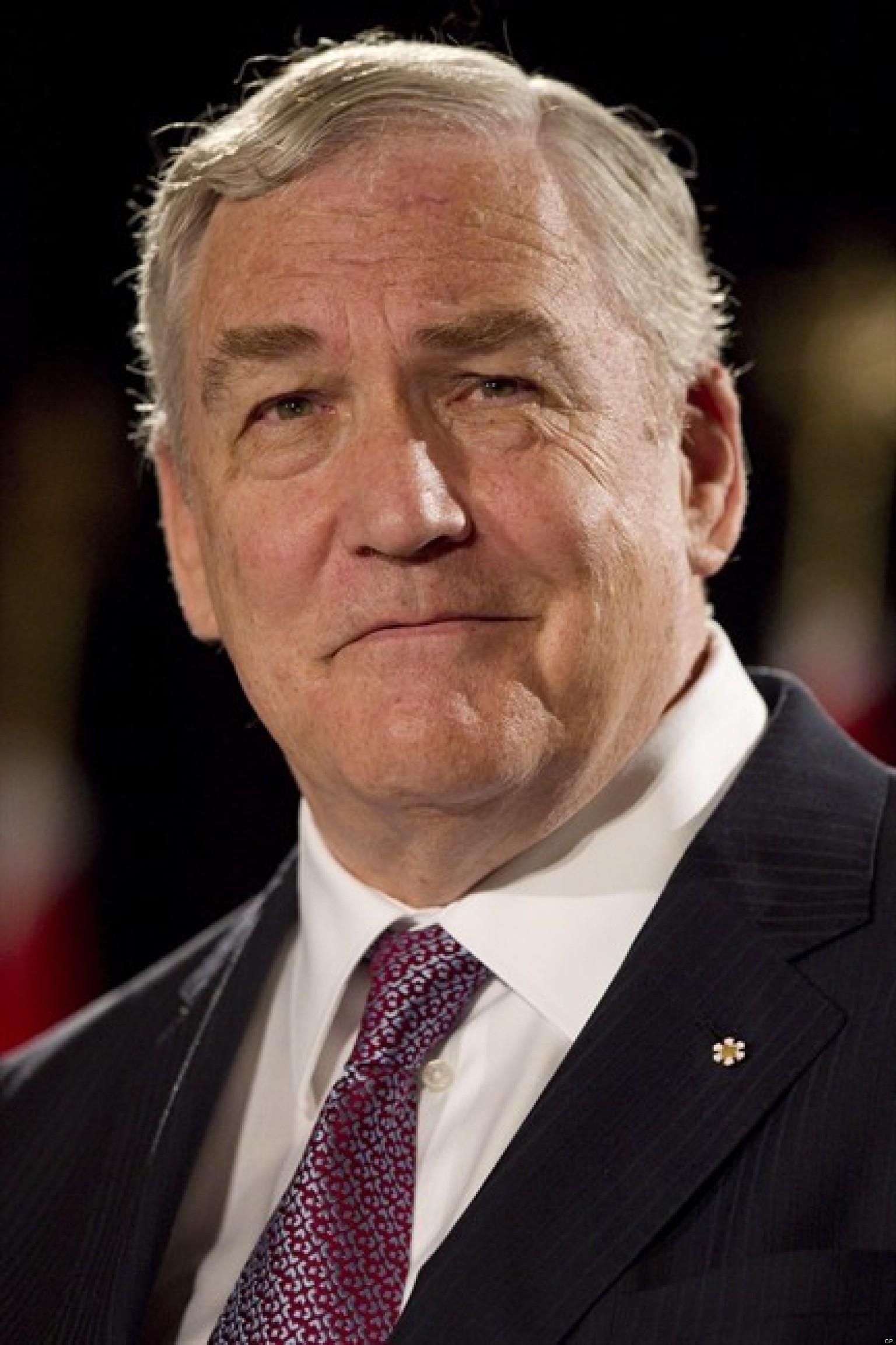
David Radler, the key prosecution witness against former Hollinger International chairman and CEO Conrad Black, is currently testifying in the trial. Mark Steyn’s blog of the trial continues to be the “go to” site for keeping up with the proceedings.

In thinking about Radler’s testimony, it occurs to me that the criminal case against Black is quite similar to the notoriously misguided prosecution in the Nigerian Barge case (see also extensive discussion thread here) against four former Merrill Lynch executives in connection with the demise of Enron.

In the barge case, the prosecution contended that the Merrill Lynch executives had entered into a secret oral “side deal” with Enron CFO Andy Fastow that rendered illegal Enron’s accounting of the sale of a energy-producing barge interest to Merrill.

Among many other problems with the prosecution, the government’s theory ignored the undisputed fact that the written agreements between the parties contained standard provisions that rendered any such oral side agreements unenforceable and specifically provided that neither party in doing the deal was relying on oral representations of the other that were not contained in the written contract.

In Black’s trial, the prosecution essentially contends that Black and several of his associates stole $60 million in sales proceeds that should have gone to Hollinger International despite the fact it is undisputed that the Hollinger board of directors approved multiple documents in the ordinary course of their duties that disclosed the payment of $60 million in non-compete fees out of the sales proceeds to Black and his associates.

Moreover, in both cases, the government liberally appealed to jury bias against wealthy businessmen and relied on only one key witness (it was Ben Glisan in the barge trial) who cut a deal with the government in return for testimony against the defendants.

So, in both cases, the prosecution pursued criminal cases against wealthy businessmen regardless of undisputed documentary evidence that might well have formed the basis of a summary judgment for the defendants in a civil case involving the same allegations.

At the very least, the documentary evidence in both cases established reasonable doubt regarding the government’s allegation that a crime had occurred. Nevertheless, the prosecutions proceeded, stellar business careers were badly damaged, families who rely on these men were disrupted, four men have already been unjustly imprisoned for a year, and Conrad Black’s freedom hangs in the balance.

Do we really want the most powerful force in American society pursuing criminal cases in such a manner?
