
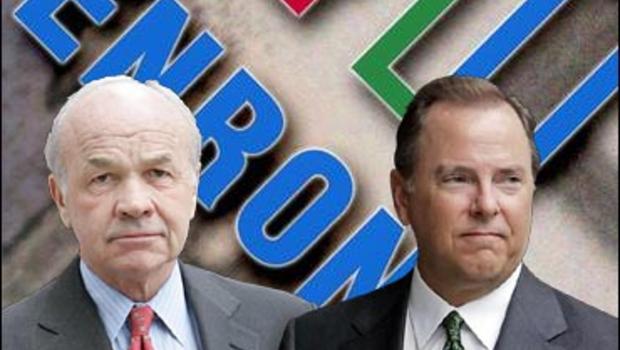
 Mary Flood, the Houston Chronicle’s lead reporter on the criminal trial of former Enron executives Jeff Skilling and Ken Lay, reports that some of the former Lay-Skilling jurors are now hitting the rubber-chicken circuit:
Deliberating the fate of Jeff Skilling and Ken Lay last year was “horribly confusing” and very intense, juror Jill Ford told a group of appellate lawyers at a dinner Thursday night.
Ford, juror Dana Fernandez and alternate jurors Gary Creakbaum, Amanda Perry and Kristine Statham answered after-dinner questions from the inquisitive lawyers at the Four Seasons Hotel. U.S. District Judge Sim Lake, who oversaw the trial, was also in attendance.
Some of the juror observations that Flood reports are quite telling. One of the jurors confirmed that the real presumption in the case was not that of innocence and that Skilling and Lay never really had a chance:
Ford, who was 24 when the jury deliberated last May, said she learned that Diet Coke could keep her awake in the morning and that she took things very seriously. “I felt it was important that somebody was guilty because they were guilty . . . not because we needed somebody to blame,” she said.
Flood goes on to report that the jurors thought that former Enron treasurer Ben Glisan and former investor relations chief Mark Koenig were the most damaging witnesses to Skilling and Lay, and that none of them believed Skilling or Lay’s testimony, although they all agreed that both of the former executives had to testify under the circumstances.
Given the 25 year sentence that Skilling received, one shudders to think what basis the jury would have given Judge Sim Lake to sentence him had he not testified.
Of course, in a trial of such complexity, Skilling’s testimony regarding his under-disclosed investment in his former girlfriend’s fledgling company named Photofete was a key issue for at least two jurors. And apparently no one cared to ask the jurors what they thought about the fact that the Enron Task Force prevented them from hearing from dozens of witnesses who would have provided exculpatory testimony for Skilling and Lay.
This post outlines the case and evidence that was presented at trial against Skilling, and this one does the same for the case against Lay.
But it all still boiled down to Photofete. So it goes in the wacky world of regulating business through the blunt instrument of the criminal justice system.

