
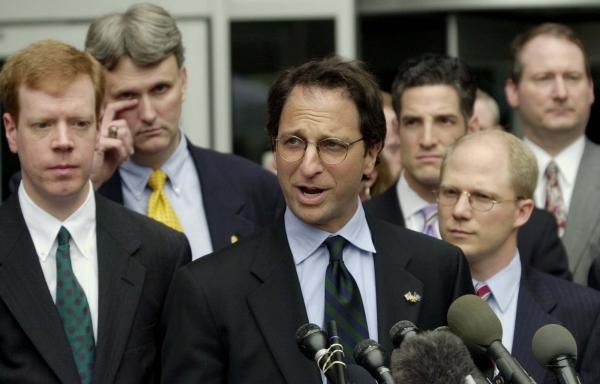
 Remember when the Wall Street Journal characterized the Enron Task Force as having “a good record overall?”
Well, the latest development in that “good record” is that the Department of Justice Criminal Division — the successor to the disassembled Task Force — announced quietly on Friday that it does not oppose former mid-level Enron executive Christopher Calger’s withdrawal of his guilty plea to a highly questionable Task Force indictment and that the DOJ is dismissing the criminal case against Calger altogether.
That announcement didn’t receive the same level of publicity as the Task Force’s various “perp walks” of former Enron executives, now did it?
The indictment against Calger was dubious from the beginning — the judge who handled the hearing to approve the initial plea bargain was flabbergasted when the Task Force prosecutor handling the hearing could not even articulate what action of Calger constituted a crime. Later, this post noted that Calger’s attempt to withdraw his guilty plea exposed several dirty secrets of the Task Force’s multiple abuses of power in regard to its handling of the Enron criminal cases.
So, let’s take stock of the Enron Task Force’s slate.
It procured a deeply flawed conviction that put the nail in the coffin of one of the oldest and most respected U.S. accounting firms, costing tens of thousands of jobs in communities throughout the nation.
Then, the Task Force ruthlessly ruined the careers of four respected former Merrill Lynch executives and sent them to prison for a year before the Fifth Circuit overturned that atrocity.
After two inflammatory trials, the Task Force finally obtained a conviction against former Enron Broadband executive Kevin Howard, only to have that conviction tossed out before an appeal.
The Fifth Circuit — even before the appeal briefs have been filed — has opined that “serious frailties” exist in the conviction of former Enron CEO Jeff Skilling. Moreover, the stress associated with mounting a defense to the Task Force’s questionable case against former Enron chairman Ken Lay almost certainly contributed to his death.
For the past year and a half, DOJ lawyers have been attempting to patch something together to make a case against Howard’s former co-defendants in the Enron Broadband case that the Task Force has already lost once, and serious questions exist as the validity of the Task Force’s controversial prosecution of the NatWest Three.
Meanwhile, as noted earlier here and here, most of the Task Force lawyers who contributed to making this mess have moved on to lucrative careers outside of government.
If the foregoing is a “good record,” then what on earth would constitute a bad one?