After more than a decade of fascinating discoveries and pictures, the Hubble Space Telescope got some good news last week — NASA announced a Space Shuttle mission to repair and upgrade the observatory, which will be the fifth servicing mission for the Hubble.
Take a moment to review this fascinating archive of 100 of the best Hubble pictures and marvel at this wonderful conduit to viewing the universe.
Monthly Archives: November 2006
The 2006-07 Houston Rockets
After a rather uninspiring effort against Utah on the road to start the season, the Houston Rockets open their 2006-07 home schedule tonight at Toyota Center against the Dallas Mavericks.
As noted here and here, the Rockets have performed poorly for the better part of a decade now and have been far surpassed during that time by Texas’ two other NBA teams, the San Antonio Spurs and the Dallas Mavericks. After waiting too long to do so, Rockets’ owner Les Alexander finally hired some new blood earlier this year for the Rockets’ front office in the person of Daryl Morey, who is effectively taking over this year for longtime Rockets GM, Carroll Dawson. As this Wall Street Journal ($) profile explains, Morey represents a new wave of NBA executives who base their player evaluations primarily on statistical analysis of a player’s contributions to his team’s performance.
The early indications of Morey’s effect on the Rockets are positive. The roster has been re-tooled since last season’s disappointing 34-48 record, and such NBA experts as the Wages of Wins bloggers believe that the Rockets are primed for a good season, albeit still below the Spurs and the Mavs. Given the Rockets’ decade of deterioration, I remain skeptical that the team will be much better than a .500 club this season — the team still has glaring holes at power forward and point guard, which will result in rebounding and turnover problems. However, there is no doubt that Yao Ming, Tracy McGrady, Bonzi Wells and Shane Battier are a solid core of key players that is capable of turning the Rockets into a playoff-caliber team once the latter two players are integrated into the team’s style of play. I will take the under on the current over/under of 46 wins, but it will not be shocking if this Rockets team surpasses 50 wins if Yao and McGrady are reasonably healthy and can play for 70 games or so.
Just don’t expect the Rockets to have a better record than either the Spurs or the Mavs.
Berkowitz Cashes In
So, as Peter Lattman reports, most recent Enron Task Force director Sean Berkowitz is the latest in a long line of former Task Force prosecutors who parleyed prosecuting unpopular Enron executives into a more lucrative career than government work.
Berkowitz led the team that obtained convictions against Jeff Skilling and Ken Lay, but his main attribute as the Task Force director is that he was not as bad as his predecessor, Andrew Weissmann, who was primarily responsible for the economic and human carnage of putting Arthur Andersen out of business and of sending four Merrill Lynch executives to prison for over a year before their utterly unjust convictions were vacated and, in one case, reversed.
However, one interesting item about Berkowitz arose shortly after the Lay-Skilling trial when the New York Magazine reported that Berkowitz was having a whirlwind romance with Bethany McLean, the co-author of the original Enron expose’, Smartest Guys in the Room.
Inasmuch as McLean had covered the trial for Fortune magazine, both Berkowitz and McLean were careful to state publicly that they didn’t start dating until after the conclusion of the trial.
However, several reporters who covered the trial confided to me after the romance became public that they had suspected something was up between the two during the trial because of how chummy they had become.
All of which reminded me of something that occurred at an early stage of the Lay-Skilling trial. Taking a page from this earlier post that criticized the Wall Street Journal’s coverage of the trial, lead Skilling lawyer Daniel Petrocelli sent a letter to the Fortune editor pointing out the rather clear conflict of interest that McLean and her Smartest Guys co-author, Peter Elkind, had in covering a trial in which they had a vested interest in the outcome.
As this Talk News Biz post relates (the entire letter, published by Fortune on March 2, is here, but you have to scroll down), Petrocelli noted as follows:
It is ironic that so much of Elkind and McLean’s criticism of Enron has been based on their claimed outrage about a conflict of interest at Enron. These two have an obvious financial interest in having the trial — or at least the public’s perception of the trial — turn out consistent with the one-sided and ultimately cartoonish depiction of Enron and my client in their book and in the so-called documentary to which they have lent their names and other support.
To which the Fortune Editor — presumably not yet aware of the budding Berkowitz-McLean relationship — replied self-righteously as follows:
Peter Elkind and Bethany McLean are journalists of the highest reputation, as well known for their integrity as they are for their knowledge of Enron. While they have certainly chronicled the failings of the company and its management, they have neither a rooting interest nor a financial interest in the outcome of the trial.
Yeah, right.
Eliot Spitzer, the bully
Given this record of criminalizing business interests for political gain, it’s not surprising that New York’s next governor was stacking the deck to obtain convictions in a number of his prosecutions. This David Hechler/Law.com article reports the ugly news:
Like the U.S. Department of Justice, New York state Attorney General Eliot Spitzer has also pressured companies to stop paying the legal fees of employees who face criminal charges. Spitzer appears to be the only state AG who has raised fee payment as an issue. [. . .]
Most of Spitzer’s targets are financial institutions swept up in his probe of mutual funds. According to a Corporate Counsel review of 17 agreements that Spitzer’s office struck with companies accused of market timing, nine settlements included “no indemnification” clauses. These provisions prohibit a business from paying the legal fees of indicted employees unless its bylaws require it. In one instance, Bank of America Corp. agreed to a no-indemnification clause even though its bylaws require it to pay fees. Moreover, the bank had already begun advancing expenses in at least one case.
Spitzer’s office declined to comment on the no-indemnification clauses. (Spitzer is running for governor of New York.)
Hit of the Year?
Professor Podgor on the trial penalty
As noted in this prior post, one of the most perverse elements of the government’s criminalization of business in the post-Enron era has been the trial penalty — that is, the substantially longer prison sentences that executives face if they elect their Constitutional right to a trial instead of copping a plea bargain.
Over the past two years, Stetson Law Professor Ellen S. Podgor has been examining the trial penalty over at the White Collar Crime Prof Blog. In this Law.com op-ed, Professor Podgor analyzes the current landscape well:
Whether it be an individual or company, it is clear that those who play in the government’s sandbox will be their friends and will reap enormous benefits through a sentence reduction or deferred prosecution. In contrast to the rewards received for cooperation, availing oneself of the constitutional right to trial by jury is an incredible gamble, with the stakes raised higher than ever before, as the sentencing guidelines provide for draconian sentences in white-collar cases. [. . .]
The government needs cooperators to make their cases. Cooperators also provide a more efficient system that reduces the costs for a government prosecution. But when the risk of a conviction after trial is so distinct from that received for cooperating with the government, it diminishes the right to a trial by jury, an essential part of our constitutional democracy.
Justice Byron White, in the famed case of Duncan v. Louisiana, 391 U.S. 145 (1968) noted the importance of this right when he stated that “the right to trial by jury is granted to criminal defendants in order to prevent oppression by the government.” Id. at 155.
We have to wonder whether this right is fully realized when so many individual defendants and companies are folding to government demands because of the high risk entailed in proceeding to trial.
Add in the willingness of prosecutors to scapegoat business executives and appeal to the resentment of most jurors toward wealthy executives, and you have an environment where gross injustices such as what happened to the Merrill Four in the Nigerian Barge case and the sad case of Jamie Olis, among others. Meanwhile, a serial liar such as Andy Fastow is rewarded, even when it is clear that he testified falsely (see also here) against Jeff Skilling and Ken Lay.
This is not the product of a rational criminal justice system.
Those all-important quart-sized bags
I swear, you can’t make this stuff up. The Wall Street Journal’s airline travel reporter Scott McCartney reports ($) (see McCartney’s follow-up article here) about the Transportation Security Administration’s latest campaign to make airline travel a complete and utter aggravation:
An airport security screener sat at a Dallas-Fort Worth International Airport checkpoint beside a plastic tub filled with small cans of shaving cream and tiny tubes of toothpaste.
Were they contraband items that ran afoul of safety rules?
“No, people didn’t have quart-size plastic bags,” the Transportation Security Administration official said.
Where’s Seinfeld when you need him? In a quintessential bureaucratic bedevilment, the TSA allows small bottles and tubes of liquids to be carried aboard airplanes only if they are enclosed in a quart-size, zip-top plastic bag. No gallon bags. No fold-over sandwich bags. Even if you have only one bottle on you, it must be carried in a quart-size, zip-top plastic bag. Screeners confiscate any nonconforming items or send travelers to ticket counters to check luggage.
That’s just one of the frustrations travelers have found as TSA began implementing new rules on liquids last month and, in the eyes of some travelers, seemingly prohibited common sense. [. . .]
Either frustrated or confused by the new rules, or unable to squeeze all they need into a quart-size bag, passengers continue to check baggage at elevated rates, airlines say. And TSA is encouraging that for passengers who don’t want to mess with quart zip-top bags.
All of this to reassure us that airline travel is safe from terrorists? Seems more like security theater to me.
Gil Brandt on David Carr
Texans QB David Carr gets the NY Times treatment this week as the local team prepares to be hammered by the Giants this Sunday in the Meadowlands. Former Dallas Cowboy personnel director Gil Brandt, who knows a thing or two about evaluating football players, is quoted as making the following observation about Carr:
ìI think maybe sometimes a guy doesnÃt have the tenacity or is too nice a guy to really play to his capabilities,î Brandt said in a telephone interview. ìHeÃs an enigma to me.î
That is football-speak for questioning whether Carr has the heart and leadership ability to be an above-average quarterback in the NFL. Based on what I saw last Sunday, Brandt is spot on in his observation about Carr. With each passing week, it is becoming clearer than Carr is not going to be as good an NFL quarterback as contemporaries such as the Saints’ Drew Brees or the Bengals’ Carson Palmer. Indeed, Carr is at a point where he must answer the question of whether he is a better QB than Sage Rosenfels.
Carr’s defenders point to his salty NFL quarterback rating, which was 4th in the league going into last week’s debacle against the Titans. However, the NFL’s QB rating is about as misleading as batting average in baseball in terms of evaluating a player’s true effectiveness. QB Score per play — a far more accurate statistic for evaluating QB play developed by the folks over at the Wages of Wins blog — reflects that Carr is nowhere near the top level of NFL QB’s. When rushing, sacks, and fumbles are considered along with passing stats, then Carr was ranked only as the 19th best QB in the NFL going into the Titans game. Based on his disastrous game against the Titans last Sunday, Carr was ranked dead last in the NFL for the week in QB Score per play.
Just to underscore the misleading nature of the NFL’s QB rating, after CarrÃs horrific Week Eight effort, he barely dropped in the NFL QB rating — from 4th to 6th. In comparison, QB Score per play ranks him 23rd among NFL signal-callers, which appears to be much closer to where Texans head coach Gary Kubiak is rating Carr.
I don’t think that level of performance is what Bob McNair had in mind when he selected Carr as the Texans’ first draft choice in 2002.
Smartest Guys in the Courtroom?
Peter Elkind of The Smartest Guys in the Room fame has now turned his sights toward class-action plaintiff’s law firm, Milberg Weiss Bershad & Schulman (prior posts here). In this lengthy article (hat tip to Peter Lattman) entitled The law firm of Hubris Hypocrisy & Greed, Elkind uses his same irreverent Smartest Guys-style in telling the tale of how Milberg Weiss became a criminal defendant. For example, take Elkind’s description of L.A. lawyer-entreprenuer, Seymour Lazar, who the government alleges took illegal kickbacks from Milberg Weiss:
When Lazar appeared in federal court in L.A. earlier this year after being charged with fraud, conspiracy, and obstruction of justice in the Milberg Weiss case, it seemed a miracle he was still alive. A small, wild-haired man, Lazar, now 79, sat in a wheelchair and listened to the proceedings with a hearing aid. Later court filings detailing his medical history – and asking for the charges to be dismissed because the stress of a trial was likely to kill him – reported that Lazar was suffering from congestive heart failure, diabetes, renal failure, high blood pressure, anemia, gout, strokes, a suppressed immune system, and cancer (in remission).
Yet Lazar, who had pleaded not guilty, remained combative and defiant. He’d recently protested his innocence on the front page of the Wall Street Journal, declaring, “I swear, they treat me like an absolute thug. . . Who did I cheat? Did anybody get screwed?” While Milberg Weiss was insisting that it had no idea its “referral fees” were ending up with plaintiffs, Lazar admitted that Milberg had paid him. He simply argued that no one got harmed because the money came out of the law firm’s pockets.
Stros buyout Bags’ contract
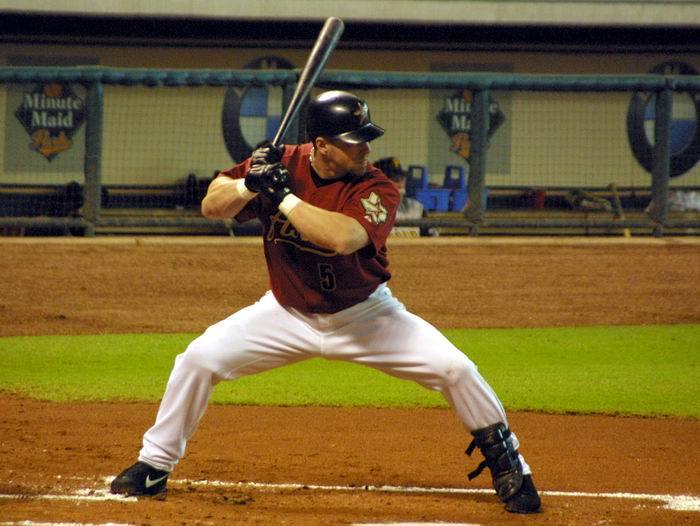
The Stros made official yesterday what had been expected for the past couple years — the club did not pick up the option year on injured slugger Jeff Bagwell’s contract. As noted earlier here, Bags is easily the best player in Stros franchise history and should be a shoo-in for the Baseball Hall of Fame.
Although most folks know that Bagwell was an extraordinary player, relatively few people realize that he was one of the best hitters in Major League Baseball history over the course of his career.
As regular readers of this blog know, I believe that the statistic of runs created against average (“RCAA”) is the best measure of a baseball player’s hitting ability. RCAA is a Lee Sinins-developed statistic that focuses on the most important statistic in baseball for a hitter, which is creating runs to help the hitter’s team score more than the other team.
Whereas more commonly cited statistics such as batting average can be highly misleading regarding a hitter’s true effectiveness, RCAA is particularly insightful in evaluating hitters because it focuses on the two most important things in winning baseball games for a hitter — that is, creating runs and avoiding making outs.
RCAA computes the number of runs that a particular player creates for his team relative to the number of outs that he makes, and then compares that number of runs to the number (zero) that a hypothetical average hitter would create while using an equivalent number of outs. Inasmuch as the hypothetical average hitter’s RCAA is always zero, a player can have either an RCAA that is a positive number — which indicates he is an above average hitter — or an RCAA that is a negative number, which means that he is below-average hitter.
Moreover, RCAA is also a valuable tool in evaluating hitting ability because it allows for comparison between hitters from different eras.
Inasmuch as RCAA measures a player’s hitting ability against that of an average player in the player’s league for each particular season, a player’s career RCAA measures how that hitter compared to an average hitter during the hitter’s career.
Thus, comparing RCAA of hitters from two different eras allows us to compare how those hitters produced relative to an average hitter in their particular era, whereas comparisons of other hitting statistics — such as on-base average, slugging percentage, and batting average — are often skewed between players of hitter-friendly eras (such as the past 15 year or so) versus players of pitcher-friendly eras, such as the late 1960’s and early 70’s.
A review of Bags’ career using RCAA as a the measuring stick reflects his greatness. He has the 9th best career RCAA among National League hitters since 1900:
1 Barry Bonds 1591
2 Stan Musial 1204
3 Rogers Hornsby 1081
4 Hank Aaron 1039
5 Willie Mays 1008
6 Mel Ott 989
7 Honus Wagner 938
8 Albert Pujols 691
9 Jeff Bagwell 680
10 Joe Morgan 657
In addition to the foregoing, Bagwell holds the modern National League record for career RCAA by a 1B:
1 Jeff Bagwell 680
2 Johnny Mize 638
3 Willie McCovey 536
4 Todd Helton 521
5 Albert Pujols 485
6 Bill Terry 425
7 Stan Musial 399
8 Keith Hernandez 371
9 Dolph Camilli 353
10 Will Clark 331
Finally, as noted several times before, Bags is far and away the career-leader in RCAA among Stros players, so much so that Lance Berkman is the only player at this time who even has a remote chance of catching him:
1 Jeff Bagwell 680
2 Lance Berkman 485
3 Craig Biggio 314
4 Jose Cruz 277
5 Cesar Cedeno 249
6 Jimmy Wynn 240
7 Bob Watson 216
8 Joe Morgan 170
9 Moises Alou 128
10 Terry Puhl 114
In addition to his extraordinary hitting ability, Bags was an excellent baserunner and a superb defensive player until his shoulder injury restricted his ability to throw over the final three seasons of his career.
In short, Jeff Bagwell was the entire package, and it will be a long time before the Houston Astros organization and its followers will ever enjoy a player of comparable ability. Bagwell’s complete career statistics are here.