Gearing up already for the 2008 Ryder Cup

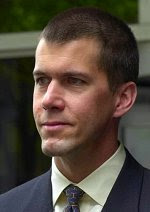
azinger2.jpgPaul Azinger was the choice earlier in the month to be the captain of the U.S. Ryder Cup team for the 2008 matches at Valhalla in Louisville, and Golf World’s John Hawkins thinks it’s a great choice:

In his prime as a player, Azinger was fiery but focused, a natural leader with the talent and disposition to excel in the Ryder Cupís high-intensity atmosphere. In his second life as a TV analyst, the 1993 PGA champion has proven to be an independent thinker whose insights and observations are accentuated with a touch of redneck bravado. Azinger has long been one of my go-to guys in my years covering the PGA Tour. He speaks from the heart, doesnít compromise his thoughts, and he shares anecdotes. Heís a fabulous source.

But Hawkins doesn’t think choosing Azinger will make much of a difference in the outcome:

Youíd have thought the í04 rout at Oakland Hills would have brought the í06 squad together, motivating them to perform at a level close to their potential. And with Lehman in charge, there was unity and camaraderie. There just wasnít any chemistryóitís a component that canít be manufactured. I hope Iím wrong, but things are likely to get worse before they get better. European squads have gotten younger and deeper, and passion has become their most valuable weapon. Azinger is the perfect man to lead the Yanks, which leads me to wonder: Are certain groups, for whatever reasons, averse to being led?

Meanwhile, on the other side of the pond, it’s good to see that the Scotsman’s John Huggan is already getting the juices flowing:

Over the course of four Ryder Cups, the 46-year-old [Azinger] all but covered the playing and behavioural spectrum, from sublime to distasteful. Indeed, Azinger’s whole career has been regularly blighted by doubts over his character amid accusations that his adherence to golf’s rule-book is sometimes less than exemplary.

Hoo boy! Read the entire article. Then get ready to rumble.
Speaking of remarkable feats under intense pressure, Craig Kanada chipped in on each of the final two holes yesterday to win the Nationwide Championship held at the Houstonian Golf Club in the far southwest part of the Houston area and, in so doing, earning his PGA Tour card for 2007. Melanie Hauser provides this interesting story on Kanada’s long quest to regain his Tour card.

The Blind Side of Big-Time College Football

Last week, the resignation of my friend, Iowa State head football coach Dan McCarney, prompted this post reflecting on how the pressures of big-time college football prompted a resignation that is quite likely contrary to the long term ability of Iowa State to remain competitive in big-time college football.

As if on cue, George Will, in this NY Times book review, provides his view on the new book by Michael Lewis of Moneyball fame, The Blind Side: Evolution of a Game.

In Moneyball, Lewis explored how the small-market Oakland Athletics were able to remain competitive against far richer clubs in Major League Baseball by emphasizing objective evaluation of players and, in so doing, introduced sabremetric statistical analysis to the general public.

As Will notes, Lewis “is advancing a new genre of journalism that shows how market forces and economic reasoning shape the evolution of sports.” Lewis’ latest book involves big-time college football, which — as noted earlier here — has long been a means by which universities in the U.S. have compromised academic integrity to rent athletically-gifted young men to serve as cash cows for the institutions.

As noted in this earlier post, the National Football League reaps the fruits (as if those teams really needed it) of an effectively free farm system that college football provides, while the vast majority of the universities — including Iowa State — either lose money or barely eke out a profit in their football programs.

Moreover, Lewis examines how the winds of change ripple down from the NFL to big-time college football and dictate the course of the college game. One case in point is Lawrence Taylor, who singlehandedly changed the nature of professional football by becoming the prototype of the huge, athletic and extraordinarily fast outside linebacker who could increase the pressure on the quarterback.

At about the same time as Taylor was wreaking havoc on QB’s, Bill Walsh‘s West Coast offense was spreading the field, which made it even more important for teams to find agile offensive linemen to block the likes of Taylor. Most important was to protect the QB’s blind side, so the position of left offensive tackle increased in importance and, as a result, the position’s economic value skyrocketed.

As demand increased in the NFL for the colleges to produce another kind of freak of nature to play what had been an obscure position but now was now one of the most important positions on the field, Lewis explains that the colleges were more than willing to compromise any notion of academic integrity to admit athletes who project to have the physical stature and talent to play the demanding left tackle position.

In short, it’s not just the star QB or running back who gets the royal treatment from the institutions in this day and age — potential left tackles are now included, too. Lewis’ book describes one of those freaks of nature, a freshman tackle at the University of Mississippi with an I.Q. of 80 who bounced from foster home to foster home as a youth.

Just as we should not be surprised that many folks enjoy betting illegally on college football, neither should we be shocked with the corruption in college football that Lewis examines in his book.

One of my uncles who played SEC football during the late 1920’s used to tell me how much money he was paid under the table even in those days. Moreover, there is no question that big-time college football — even as corrupt as it is — is a pretty darn entertaining form of corruption.

As noted in my earlier post, there is a model that would likely minimize the corrupt elements while not affecting the entertainment value of college football much. But it’s going to take leadership and courage from the top of the educational institutions to promote and implement such reform.

Unfortunately, those considerations were not on the minds of the Iowa State administrators last week as they began figuring out how to replace a very good football coach who had just left one of the most difficult jobs in his profession.

Similarly, my sense is University of Miami president Donna Shalala will not be contemplating those matters when she begins her search to replace Larry Coker later this month as head coach of one of the most storied programs in all of big-time college football.

That seems to be the tunnel vision that is generated from the sponsorship of minor league professional football by U.S. academic institutions.

2006 Weekly local football review

TexasvKSU.jpgTexans 13 Jaguars 10

If I didn’t know better, I’d think that the Texans (3-6) have the Jaguars’ (5-4) number.

In a game that stands for the proposition that you don’t have to play great offensively to win when the other team’s QB plays poorly, the Texans took advantage of four Jaguar QB David Garrard interceptions and a stout defensive effort to win their third game of the season, two of which have been over the Jags. The win was the Texans’ first road in almost two years and ended an NFL-leading 12 game losing streak in road games, The Texans mostly stunk offensively (306 yds total offense) , but they were at least well-balanced (148 yds rushing/158 yds passing) and most importantly, protected the football. Texans QB David Carr was knocked out with a sprained shoulder in the 4th quarter, but it did not look like a serious injury. The Texans now actually have a chance of stringing some wins together as their next four games are at home against the Bills (3-6), at the Jets (5-4) and Raiders (2-7), and at home against the Titans (2-7).

By the way, Chronicle sportswriter Richard Justice — who is presumably paid to notice such things — is just noticing that Texans kicker Kris Brown is not very good:

“K Kris Brown is becoming something of a concern. His miss of a 32-yard field goal late in the first half was his third miss in four games. He missed a more difficult kick, a 52-yarder, later in the game.”

Uh, Earth to Richard, Earth to Richard — Brown has been a concern for the past several seasons!

Continue reading

Re-evaluating the kickers

kickoff.jpgAs noted in earlier posts here and here, Aaron Schatz is the lead author of Pro Football Prospectus 2006, which is an innovative effort to develop the same type of objective statistical framework for evaluating professional football players that Bill James and other sabermetricians have developed and refined for evaluation of Major League Baseball players.
In this provocative NY Sunday Times op-ed, Schatz suggests that NFL teams are using the wrong criteria when they pay a large amount to acquire or retain a field goal kicker who has made almost of all of his field goal attempts in the previous season. Schatz’s argument is that a field goal kicker may have a “hot” season from time-to-time, but will almost always regress in the following season to his career success rate for field goals. On the other hand, Schatz notes that another key kicking statistic — average kickoff distance — shows far more consistency from season-to-season than field goal percentage. Kickoff distance is important because longer kickoffs generally give the team kicking off a better chance of pinning their opposition deep in their own territory, which reduces the risk of giving up touchdowns and field goals. A case in point is the Cardinals’ Neil Rackers:

No kicker reflects the difference between field goals and kickoffs better than Neil Rackers of the Arizona Cardinals. Last season, Rackers set an N.F.L. record with 40 field goals, and led the league by converting 95 percent of his attempts. But in 2004, he connected on 76 percent of his attempts. This year, Rackers is even worse, making just 67 percent of his tries. His high-profile misses include a 40-yard attempt that probably would have completed an upset and handed the Chicago Bears their first loss of the season.
Nonetheless, while his field-goal percentages have swung up and down over the past three seasons, Rackers has consistently ranked as one of the leagueís premier kickoff men. He led the N.F.L. in average kickoff distance in 2004 and 2005, and is fifth in the league this year.
This disparity in consistency between field goals and kickoffs means that N.F.L. teams are generally signing and drafting kickers based on the wrong skills.

Saves you money!

mac090905.jpgIn this column, Chronicle business columnist Loren Steffy profiles Gallery Furniture owner “Mattress Mac” Jim McIngvale, who transformed a run-down location on Houston’s near northside over the past 20 years into a furniture sale and distribution center that generates over $100 million in annual revenues.
Everyone in Houston knows Mattress Mac because of the idiosyncratic television commercials in which he frenetically hawks his store’s furniture and immediate delivery service, punctuated by his trademark “Gallery Furniture saves you money!” declaration. But under that playful exterior is a savvy businessman who has built an extraordinary business based on simple principles — a broad selection, easy access, quick service and same-day delivery. In many ways, Mattress Mac’s business success reflects why the Houston area is such a good incubator of new business. With low barriers to entry, no zoning, relatively few regulations and a public that prefers low prices and quick service to allegiance to brand name stores, Houston provided the perfect launching pad for Gallery Furniture’s success.

Continue reading

Fastow singing like a canary

Andy Fastow21.jpgThe NY Times’ Alexei Barrionuevo provides this entertaining article on former Enron CFO Andrew Fastow’s deposition in connection with the various civil lawsuits involving the demise of Enron.
Frankly, it’s rather remarkable that anyone would be particularly interested in what Fastow might have to say or so gullible to believe anything that might come out of his mouth, but you know how such lawsuits go.

The Enron Task Force’s Extraordinary Admission in Kevin Howard’s Case

Flying somewhat beneath the radar screen of the lynch mob that is fascinated with watching former Enron CEO Jeff Skilling imprisoned for the rest of his life is the case of former Enron Broadband executive, Kevin Howard.

As you may recall, Howard was tried and convicted of five counts of conspiracy, wire fraud, and falsifying the books and records under extremely prejudicial circumstances at the end of the Lay-Skilling trial. Subsequent to Howard’s conviction, however, the Fifth Circuit issued its decision in the Nigerian Barge case, which formed the basis of Howard’s motion to vacate his conviction on all charges.

The Enron Task Force put off responding to Howard’s motion to vacate for several weeks hoping that the Fifth Circuit might reconsider its Nigerian Barge decision. However, the Fifth Circuit recently declined to do so, so the Task Force was required to buck up and finally respond to Howard’s motion. In an uncharacteristic moment of clarity, the Task Force essentially admits in its response that Howard’s entire conviction must be vacated:

The United States concedes that under [the Fifth Circuit’s Nigerian Barge decision] the conduct that forms the basis for Howard’s convictions on Counts One through Four does not fall within the honest services provision. Because a reviewing court cannot determine whether the jury relied on the honest services theory to convict Howard, his convictions on those counts must be vacated.

The Task Force’s response goes on to argue unpersuasively that Howard’s conviction on one count of falsifying Enron’s books and records should not be vacated, but it’s clear that the Task Force does not have much confidence in its position on that count. I will be surprised if U.S. District Judge Vanessa Gilmore does not throw out Howard’s conviction on all counts.

Thus, the Task Force’s response underscores what I have been saying for almost three years now. The true criminal activity in regard to the Enron was limited to former CFO Andrew Fastow and a few of his close associates — such as Ben Glisan and Michael Kopper — who effectively embezzled millions from Enron.

As with Jeff Skilling, Kevin Howard didn’t embezzle a dime from Enron and was simply trying to do the best job he could of preserving value in Enron Broadband under difficult market conditions.

Violation of honest services charges are supposed to address the situation where an executive takes a kickback or a bribe from a third party in violation of his fiduciary duty to his company. In Howard’s case — as with the case against Jeff Skilling — the Task Force simply used those inapplicable charges as a means to appeal to juror resentment against anything having to do with Enron to obtain a conviction.

As the Fifth Circuit panel observed in its decision in the Nigerian Barge case, if you start from the premise that a defendant is guilty of a crime, then it’s far easier to conclude that the defendant is guilty of the crime. It’s far tougher to prove it honestly.

A Good Football Coach Steps Away from a Coaching Graveyard

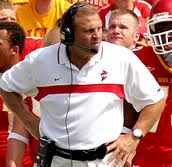
Dan McCarney.jpgDan McCarney, the “dean” of the Big 12 Conference football coaches, resigned under pressure on Wednesday as head football coach at Iowa State University after 12 seasons.

The announcement barely made a blip in the local Houston media, but Coach Mac’s resignation highlighted many aspects of the troubling direction of major college football.

I am biased about Coach McCarney, who is called Coach Mac by most everyone. As regular readers of this blog know, Coach Mac and I have been friends since growing up together in Iowa City, Iowa, where we played together on City High School’s championship football team in 1970.

I moved to Houston with my family shortly after finishing high school and Mac went on to play football at the University of Iowa in Iowa City, but we remained in contact over the years as I went to law school and began a legal career in Houston and Mac went on to the Iowa coaching staff after graduating from undergraduate school.

When Hayden Fry was hired to revive the downtrodden Iowa program in 1979, Coach Mac was one of the only coaches who Coach Fry retained from the previous coaching staff.

As with most of Coach Fry’s personnel decisions, retaining Coach Mac was a good one.

For the following decade, Coach Mac was a part of an extraordinary Iowa coaching staff that not only revived Iowa’s football fortunes, but also produced such outstanding head coaches as Wisconsin’s Barry Alvarez, Oklahoma’s Bob Stoops, Kansas State’s Bill Snyder, Iowa’s Kirk Ferentz and South Florida’s Jim Leavitt.

In 1990, Coach Mac followed Alvarez to Wisconsin, where they took over a 2-9 Badger program and, by 1993, had the team winning the Big Ten Conference championship with a 10-1-1 record, which included a Rose Bowl victory over UCLA.

The next year, Iowa State came calling for Coach Mac and the native Iowan was off to Ames for his first head coaching job.

Over the years, Mac and I have laughed many times about the fact that neither of us really had a clue of what he was getting into at Iowa State. We both knew that the university had long been a coaching graveyard and had eeked out a barely-winning record only a couple of times in the previous 15 years.

Ames is nice little college town, but it is in north central Iowa, pretty much in the middle of nowhere in the opinion of most good college football players. As a result, the football program has always struggled to attract good football prospects, who usually have sexier alternatives to living in central Iowa for four years.

The physical facilities of Iowa State’s football program were poor and the entire football budget at the time was just over $3 million, which was by far the smallest of any public school in the then newly-constituted Big 12 Conference that included such far better-funded programs as Texas, Texas A&M, Oklahoma, and Nebraska, just to name a few.

To make matters worse, Iowa State was a clear second fiddle in the state of Iowa to the University of Iowa, which has a far superior football tradition and an athletic budget more than twice as large as Iowa State’s.

Most folks assume that Kansas State was the toughest head coaching job in the United States before Bill Snyder resurrected it in the 1990’s, but I think a good case can be made that the Iowa State job was even more difficult before Coach Mac took over.

To Mac and Iowa State’s credit, they agreed at the outset that turning Iowa State’s program around was going to be a long-term project. As he did at Iowa and Wisconsin, Mac literally threw himself into the job of rebuilding the Cyclone football program, taking on any speaking engagement and going anywhere to promote Iowa State and its athletic teams.

An outstanding recruiter, Mac and his coaching staff began to expand Iowa State’s traditional Midwestern recruiting base to such football hotbeds as Texas, Florida and California. Mac began to challenge Iowa’s traditional toehold on the best recruits in the state of Iowa.

The progress was slow, though — Mac’s teams lost 42 or their 57 games during his first five seasons.

However, by the 2000 season, Mac and his staff had built a solid foundation for the program. Behind QB Sage Rosenfels (yes, the Texans’ backup QB), Iowa State went 9-3 during that season and won the university’s first post-season bowl game in the university’s 108-year football history (over Pitt in the Insight.com Bowl in Tucson).

That started a 40 game run where Mac’s teams were 25-15, a remarkable feat considering that Iowa State was competing in the brutally-tough Big 12 Conference and playing cross-state rival Iowa each season (Mac’s teams won six of their last nine games against their in-state rival).

By the 2004 and 2005 seasons, Coach Mac had his teams on the cusp of the Big 12 North Division title both seasons only to lose them in an agonizingly close final games in each season.

Nevertheless, after Iowa State had gone to only four bowl games in its history before Coach Mac’s tenure, Mac took the Cyclones to five bowl games in six years, winning two of them. Coming into the 2006 season, optimism was high that the Cyclones would again contend for the Big 12 North Division championship and go to yet another bowl game.

Alas, the 2006 season did not turn out as planned.

First, the Cyclones faced one of the toughest schedules in the country, including an initial stretch of Big 12 games at Texas, at home against Nebraska, at Oklahoma and at home against Texas Tech. Iowa State lost all four and were battered in the process, losing six senior starters to season-ending injury.

Lack of depth is a chronic problem at a place such as Iowa State, so a thin and deflated Cyclone team was smoked over the past two weeks by mediocre Kansas State and Kansas teams. That brought out the “what have you done for me lately” crowd in full force, many of whom were calling on Iowa State to fire Coach Mac despite the fact that few of them have any idea how difficult it is to win consistently at the top levels of major college football.

Suddenly, a little over a year after one of Mac’s best wins as a coach, Mac concluded it was not right for him to become a divisive issue for the university. Understanding Spike Dykes‘ advice that “you lose 10% of your support each season” as a college football coach, Mac understood that he was 20% in the hole at Iowa State based on that formula.

So, Coach Mac elected to resign as head football coach at Iowa State, a difficult job that he would have gladly continued to perform for the rest of his coaching days.

Take a moment to watch his performance during the press conference (click the video camera icon on the left side of the page) to announce his resignation — Mac exudes the class and passion with which he handled all of his duties at Iowa State. In this age of cold-hearted and businesslike coaches who are constantly posturing for the “better” job, it is refreshing to watch someone such as Mac, who wears his big heart and humanity on his sleeve.

Thus, 12 years after arriving at Iowa State, Mac leaves the football program in far better shape than he found it.

The football budget has quadrupled in size under Mac, but it remains the smallest of any public institution in the Big 12 Conference (Texas and A&M’s football budgets are at least 4 to 5 times larger than Iowa State’s). Mac worked behind the scenes continually to improve Iowa State’s facilities and they have improved substantially during his time there.

However, Cyclone athletic department officials are now attempting to raise another $135 million for facilities upgrades in an effort to keep up with the seemingly endless arms race of major college football. In one of the more bizarre aspects of Mac’s resignation, that imminent capital funds campaign was one of the key pressure points that prompted the resignation of the best fundraiser in the history of the Cyclone football program. So it goes in trying to keep up with the Joneses in the wacky world of college football.

After coaching the Iowa State team in its final two games this season, Mac will kick back for a few days, but then I suspect that he will back out looking for another opportunity. His motor is always running and he has a passionate love for coaching. Inasmuch as Mac is widely popular among his fellow coaches, I am confident that he will land on his feet.

However, I am not so sure about Iowa State. The institution is caught in the proverbial rat race of attempting to compete with far-better funded programs and the gap between Iowa State’s resources and those of programs such as Texas and A&M are likely to get even larger. The pressure of that competition has now prompted Iowa State’s administration to take what appears to be a huge risk that the program will decline from the solid foundation that Mac painstakingly built over the past 12 years.

Does Iowa State think that it is going to hire someone who will magically recruit better athletes to Ames than Mac? That’s highly doubtful as Mac is one of the best recruiters in the business and Ames is always going to be a difficult sell to all but a few of the best football prospects.

Does the institution think that it is going to hire someone who will coach better than Mac? Maybe, but Mac is a pretty darn good coach and how many more wins does Iowa State really believe it can achieve through slightly better coaching methods? And even Iowa State officials readily concede that it is highly unlikely that they will ever be able to find someone who can match Mac’s tireless enthusiasm for promoting the institution and the football program.

The bottom line is that seasons such as the one that the Cyclones and Mac are enduring this season are inevitable at a program such as Iowa State’s. That is one of the costs of attempting to compete with limited resources at the highest level of major college football.

That’s not a particularly pleasant reality, but it’s dubious decision-making to take big risks based on an emotional reaction to a disappointing result that is inevitable. That appears to be precisely what Iowa State is doing in letting Mac get away. Wouldn’t embracing a good coach who understands the institution’s limitations and has competed effectively in spite of them be far less risky and much more likely to result in continued success?

Ironically, the Cyclone family now finds itself looking for a new head coach who has the depth and characteristics of . . . well, Dan McCarney. Iowa State will be extremely fortunate if they find one.

Why it’s not a good idea to soak the energy companies

mars6.jpgWhen you meet someone who doesn’t quite get the correlation between high energy company profits and the capital-intensive nature of oil and gas production, pass along this NY Times article to them:

As oil consumption grows and access to most oil-rich regions becomes increasingly restricted, companies are venturing farther out to sea, drilling deeper than ever in their quest for energy. The next oil frontier ó and the next great challenge for oil explorers ó lies below 10,000 feet of water, through five miles of hard rock, thick salt and tightly packed sands.
ìItís not a place for the timid,î said Paul K. Siegele, the vice president for deepwater exploration at Chevron, which commissioned a survey by the Neptune. ìItís a place where a lot of people have lost their shirts.î
To picture the challenge, imagine flying above New York City at 30,000 feet and aiming a drill tip the size of a coffee can at the pitcherís mound in Yankee Stadium. Then imagine doing it in the dark, at $100 million a go.
Even after hitting pay dirt, it will take another decade and billions of dollars to transform oil from these ultra-deep reserves into gasoline. Some of the technology to pump the sludge from these depths, at these pressures and temperatures, has not yet been developed; only about a dozen ships can drill wells that deep, and no one knows for sure how much oil is down there.
While most people regard affordable and abundant supplies as an essential element of the nationís prosperity, few realize how complex and costly the quest has become, even in the nationís own backyard. At the same time, some experts argue that the industry is nearing the limits of what it can do to maintain a growing supply of fossil fuels.

Amen. Read the entire article.

The Best Vegas Sports Book

Stardust casino.jpgIn late 1980, I helped my friend, prominent criminal defense lawyer David Chesnoff, move to Las Vegas. Inasmuch as it was the first trip to Vegas for either of us, Dave and I ventured on to the Strip and quickly discovered the Stardust Casino’s venerable Sports Book. For a couple of single young lawyers with a little bit of money and a lifelong interest in sports and betting, Dave and I thought we had died and gone to Heaven.
Over the years, the Stardust’s Sports Book has been surpassed by bigger and glitzier sports books at the newer Vegas hotels and casinos. Nevertheless, it was with a touch of sadness that I read this fine Jeff Haney/Las Vegas Sun article on the closing of the Stardust’s Sports Book last week. Interestingly, the success of the Stardust’s Sports Book was based on a fundamentally sound business principle — hire the most competent people available and then let’em rip:

The secret of the Stardust’s success, [Scotty Schettler, the boss of the Stardust sports book from 1983 to 1991] said, lay in the skill of its oddsmakers. They not only could create point spreads with uncanny accuracy, but also set betting limits – higher than most, but not unmanageable – with precision.
“We were a true ‘book joint,’ ” Schettler said. “We knew the limits we could get away with that would give us the maximum amount of action laying 11-10 both ways.” [. . .]
For six years in a row, the book never sustained a losing month, Schettler said.
“The other guys said the Stardust was lucky,” Schettler said. “I say it was skill.”
A bookmaker in his native western Pennsylvania as a teen, Schettler held others from that part of the nation in high esteem.
“I hired all guys from back East,” he said. “Kansas City was the furthest west I ever hired anybody from. They were bookmakers – no suits and ties.”

What a place. There is nothing quite like the feeling of nailing and collecting on a three-game parley for the first time. Thank you, Stardust. Rest in peace.