Wanted: Adult Supervision at the Enron Task Force

This one takes the cake.

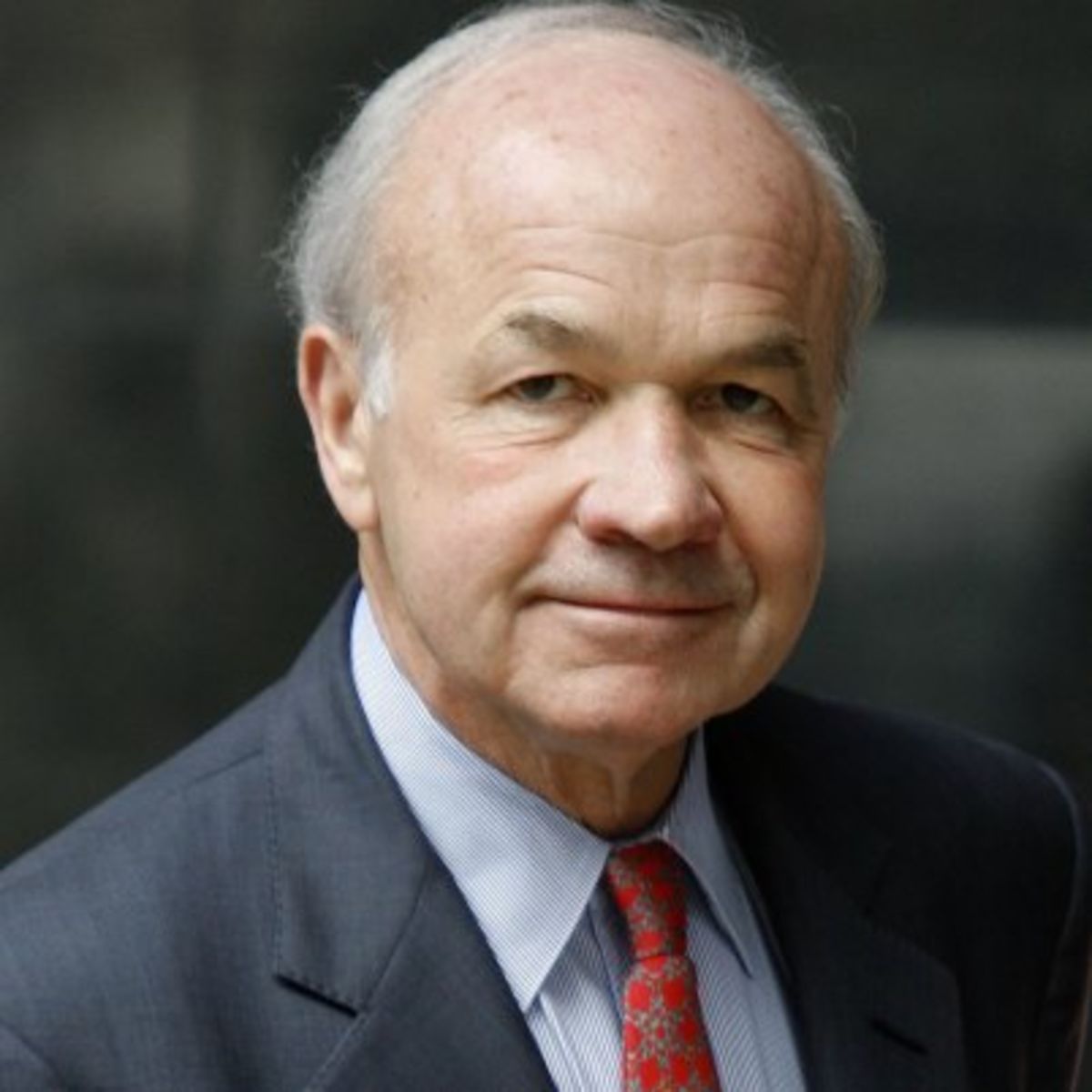
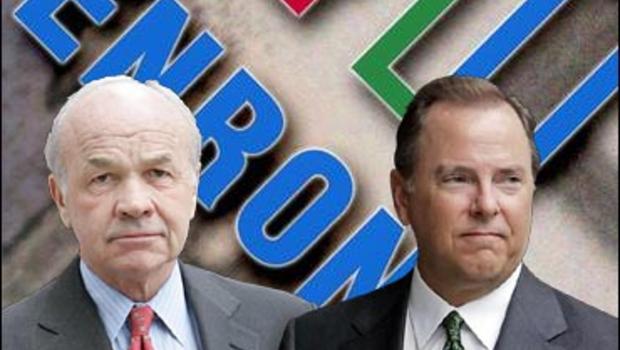
After trampling justice and the rule of law for five years while damaging lives, families and careers of former Enron executives and a selected few who did nothing other than have the misfortune of engaging in transactions with Enron, the Enron Task Force outdid itself yesterday in responding to the Ken Lay Estate’s motion to vacate the jury verdict against the late Mr. Lay.

In its response, the Task Force requests U.S. District Judge Sim Lake to postpone ruling on the Lay Estate motion until the Task Force has had an opportunity to lobby Congress to change the law that mercifully provides for the dismissal of charges against individuals such as Lay who die during the criminal proceedings. The Chronicle’s Tom Fowler reports on the Task Force pleading here, Chronicle business columnist Loren Steffy comments here and the NY Times’ Alexei Barrionuevo reports here.

Given the Task Force’s lengthy track record of exhibiting dubious judgment, its over-the-top response to the Lay Estate motion is really not surprising.

However, it is a stark reminder that the use of the overwhelming power of government to criminalize business executives — now even in death — is seriously out of hand, as even some prominent former Justice Department officials are now acknowledging publicly.

As Sir Thomas More reminds us, we better address the difficult task of curtailing use of that power, lest it be used on us.

HP’s board under the microscope

HP logo.JPGThe Wall Street Journal’s Alan Murray reports in this article ($) (related NYT article here and Newsweek article here) about the internal investigation that ensued of the Hewlett-Packard board of directors after former HP CEO Carly Fiorina (previous posts here) was forced out early last year. The subject of the investigation was the leaking of confidential information to a Wall Street Journal reporter regarding board deliberations and ultimately led to the resignation of one board member — venture capitalist Tom Perkins — and the board’s decision not to nominate a second board member — George Keyworth, the alleged leaker — for another term on the company’s board.
The article is interesting and all, and certainly maintaining the confidentiality of board deliberations is important. However, if I were an HP investor, I would feel a whole lot better about the company if I was not left with the impression that the company’s board members behaved in a manner not quite as mature as my 16 year-old daughter’s social circle of friends.
Update: Professor Bainbridge predicts that HP’s directors are not going to react kindly in regard to the way in which the HP board chairperson handled the investigation, and Larry Ribstein is about as impressed with the HP’s corporate governance as I am.

McClain leads more cheerleading for the Texans

Ron dayne_ron_mug.jpgAs noted earlier here and here earlier, even his hyprocrisy in turning on the Texans during their disastrous 2005 season after predicting in the pre-season that the team was a playoff contender does not deter Chronicle NFL sportswriter John McClain from engaging in more cheerleading for the Texans with this puff-piece regarding the team’s recent acquisition of journeyman running back, Ron Dayne (for a positive, but more realistic, view of Dayne, see John Lopez’s column here). The article even includes a chart noting that Dayne is the fifth Heisman Trophy winning running back to have played for a Houston professional football team, the others being former Oilers Billy Cannon, Earl Campbell, Mike Rozier and Eddie George.
Not mentioned in McClain’s article is that Dayne is overweight and slow, and is unlikely to have any meaningful impact on the Texans’ performance this season. Football Prospectus, which uses objective criteria to rank Dayne as a below-NFL average running back for his career, observes that “Dayne’s problem has always been finding the hole to run through. You literally have to stick the hole in front of him, slap him across the face, point, and yell ‘HOLE!'”
Now, this all may work out just fine for the Texans, but don’t you think that such a counter-analysis of Dayne might creep into at least a part of an article by the Chronicle’s lead NFL writer? Stay tuned for my pre-season evaluation of the Texans coming this Friday.

Prosecution Continues Bidding in the Olis Sentencing Case

Let’s see here.

First, the Justice Department misleads U.S. District Judge Sim Lake in regard to the true amount of the market loss resulting from the transaction that forms the basis of former mid-level executive Jamie Olis’ conviction, which in turn resulted in the imposition of an over-the-top 24+ year sentence.

Then, after the Fifth Circuit reversed that abomination, the prosecution — while dragging its feet in regard to the re-sentencing of Olis — recommended to Judge Lake in December of last year that the Olis should be re-sentenced to “only” 15 years in the slammer.

Now, after U.S. District Judge Jed Rakoff provided a much-needed dose of sanity in regard to sentencing of business executives and Stanford University law professor Joseph Grundfest eviscerated the Olis prosecution’s market loss arguments, the Chronicle’s Tom Fowler reports that the Olis prosecution is now contending that Olis should be re-sentenced to “only” 12 1/2 years.

At this rate, I figure the prosecution will finally reduce their demands for the length of Olis’ sentence to an appropriate level by, say, 2009 or so.

The hearing on the market loss issue in the Olis case is scheduled for next Tuesday.

Inasmuch as it is going on 11 months since the Fifth Circuit reversed Olis’ original sentence, Judge Lake will likely re-sentence Olis shortly after Tuesday’s hearing.

Big news from the oil patch

oil rig offshore2.jpgChevron Corp. and partners Devon Energy Corp. and Norway’s Statoil ASA are expected to announce today (WSJ ($) article here and NYT article here) the first successful oil production from a deep-water region in the Gulf of Mexico called the Jack Field that could become the biggest domestic source of oil since the discovery of Alaska’s North Slope over 30 years ago.
Meanwhile, the Wall Street Journal ($) is reporting that Paris-based Compagnie Generale de Geophysique has agreed to acquire Houston-based geophysical seismic company Veritas DGC Inc. for about $3.1 billion in cash and stock.
And Clear Thinkers favorite James Hamilton notes a drop in gasoline prices, which is good news. Or is it?

Costly assumptions

Metrorail car-Houston2.jpgTory Gattis over at Houston Strategies continues to do a great job of analyzing Houston Metro’s proposed Richmond (or is that Westpark?) rail line (see here and here). However, I continue to be amazed by the Houston mainstream media’s myopia in failing to take a look at the rail experience of Los Angeles, an area that shares many characteristics with the Houston metro area, but is much more densely-populated, which is normally a requirement for making an urban rail line successful.
That myopia is leading to a dangerous dynamic in the rail transit debate that USC urban economics professor Peter Gordon notes in commenting on this LA Times story regarding extension of the LA region’s rail system. Professor Gordon observes that, despite irrefutable evidence that the LA rail system has been a boondoggle of massive proportions, the LA Times article does not even bother to address the threshold issue of whether more money should be dumped into the black hole rail transit system in the first place. Rather, the article assumes that the money will be spent and then simply addresses the issue of where it will go. Professor Gordon notes the incongruity of it all:

Continue reading

It’s football season, so let’s talk golf

Tiger-Woods2.jpgThe start of the college football season over the Labor Day weekend tends to overwhelm all other sports news, but it’s hard to overlook the fact that Tiger Woods shot a 63 yesterday to win his fifth straight golf tournament, a streak that includes two major championships. Doug Ferguson puts it in perspective:

Byron Nelson won 11 straight tournaments in 1945, a streak regarded as one of the most untouchable in sports. Woods won six straight at the end of 1999 and the start of 2000, and Ben Hogan won six in a row in 1948.
Woods now takes a week off before heading to England for the HSBC World Match Play Championship, followed by the Ryder Cup. His next PGA Tour start will be the American Express Championship outside London at the end of September.
He still isnít even halfway home to Nelsonís hallowed mark, but he surpassed Lord Byron in one category with his 53rd victory, moving into fifth place alone on the career list. Woods, who finished at 16-under 268, won for the seventh time this year. No other player has won more than twice.

By the way, only Hogan has had a streak similar to Woods’ current one where more than one major was involved. Hogan won four straight in 1953, including three majors.

Continue reading

2006 Weekly local football review

Kolb.jpgThe Labor Day weekend marks the beginning of the football season and HCT’s weekly local football reviews, so here’s the first weekly review of the 2006 season:
Houston 31 Rice 30

The only real game of the weekend occurred at Rice Stadium on Saturday night as the Cougars pulled one out that they should not have won against the feisty Owls playing their first game under new head coach Todd Graham. The Coogs looked to be preparing for a blowout by taking a 14-0 lead in the first quarter, but then the Ows scored 30 straight points behind clever QB Chase Clement over the next quarter and a half to take a 16 point lead, only to have UH score the final 17 points of the game to nab the victory.
Despite the win, Cougar supporters were not thrilled. The Cougars under head coach Art Briles frequently engage in an untraditional, discombobulated sort of game that leaves UH supporters scratching their heads. Briles runs an unconventional offense — sort of a combination of the Wing-T, Single Wing, Run ‘N Shoot, and Spread offenses, if you can imagine that — which, when it is clicking, is very difficult to defense. Unfortunately, the offense is also based largely on timing and, when a defense figures out how to disrupt that timing, the UH offense struggles. And when Houston’s offense stuggles, it tends to affect the other components of the UH football team.

Continue reading

They Never Really Had a Chance

As I noted at the conclusion of the Lay-Skilling trial, my sense is that the trial was over before it began because the jurors — particularly its leaders — were predisposed to convict.

Now, according to this Brenda Sandburg/American Lawyer article, the jury consultants working the Lay-Skilling case thought the same thing. In fact, they gave little hope that any jury anywhere could be empaneled that would view the case without a strong predisposition to convict.

Remember that the next time you read and hear the prosecution in a criminal case undertaking a propaganda campaign to fan the flames of resentment and scapegoating in the jury pool.

As Sir Thomas More reminds us, do any of us really think that we could “stand upright in the winds that would blow” if that power were applied to us?

Lay and Skilling’s Legacy of Beneficial Risk-taking

During the criminal trial of Ken Lay and Jeff Skilling, attorney Paul Fisher and economist Jim Johnston of the Heartland Institute authored this piece regarding the unjust prosecution Lay and Skilling that echos a common theme of this blog regarding almost all of the Enron-related criminal prosecutions — that the prosecutions were fundamentally weak criminal cases that were really a smokescreen to promote an underlying political agenda of regulating beneficial risk-taking that generates robust markets, wealth, and jobs.

Following on their earlier piece, Fisher and Johnston have written this excellent article that speculates on what the business legacy of Lay and Skilling should be. In so doing, Fisher and Johnston note another common theme of this blog — the intrinsic weakness of the convictions against the two executives:

We are left with two convictions that are devoid of any gain to the perpetrators and illogical to the extreme. The real culprit, in our opinion, is the political establishment in California, primarily Democrats, who were intent on punishing a friend of President George W. Bush and his father. While the California Democrats have escaped unscathed, except for ex-governor Davis, the energy trading system is impaired and corporate accounting is now in chaos. It remains to be seen if these institutions will recover any time soon.

However, even more importantly, Fisher and Johnston note the extraordinary wealth creation that resulted from Lay and Skilling’s risk-taking at Enron, and lament how the understanding of the beneficial nature of that risk-taking is now largely lost amidst the media and government-hyped societal condemnation of Lay, Skilling and Enron:

At the end of the day, when the successes and mistakes are tallied for Ken Lay and Jeffrey Skilling, we predict the result on balance will be positive. Perhaps the biggest contribution was to provide risk management of natural gas prices for producers and industrial consumers. Enron operated the over-the-counter market for a year until the exchange-traded futures and options contracts were offered on the New York Mercantile Exchange in 1990. Those futures contracts are now among the most liquid in the world.

The electricity markets established for California are no longer traded. However, there is a market in the PJM (Pennsylvania, New Jersey, Maryland) region and an auction is to be established soon in Illinois. In the meantime, natural gas contracts serve as a hedging vehicle because gas is the fuel used at the margin to generate electricity.

Enron’s failed broadband joint venture with Blockbuster was intended to bring video on demand. This now exists on cable and is similar to the iPod offered by Apple Computer. This latter system is a masterful accommodation to copyrighted music and video programming where artists are compensated.

Weather derivatives started by Enron and Koch Industries in 1996 for a swap in the following year have evolved into an exchange-traded contract offered by the Chicago Mercantile Exchange. Futures and options contracts based on temperatures in 18 U.S., nine European, and two Asia-Pacific cities are now traded in this market.

Finally, the establishment of a robust water market by Enron failed. However, much was learned from the effort and there is optimism about another try.

We fervently hope that Ken Lay and Jeffrey Skilling will be remembered for their extraordinary contributions, rather than their politically-inspired prosecution.

Amen.

As noted in many of my posts on the Lay-Skilling trial and the Nigerian Barge case, the Enron Task Force turned the Enron-related criminal cases into morality plays that appealed to the dynamics of resentment and scapegoating in disingenuously portraying legitimate and productive business transactions as complex frauds.

The result has been a dangerous misuse of the government’s overwhelming prosecutorial power to impose burdensome regulatory costs on valuable markets.

In reality, a far more progressive government policy would be to encourage precisely the type of risk-taking that Lay and Skilling promoted at Enron to facilitate productive markets, employment growth and wealth creation.