More Food Fifth Circuit News in the Nigerian Barge Case

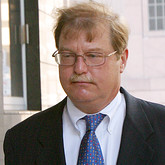
James Brown — the only former Merrill Lynch executive who remains in prison after last week’s Fifth Circuit decision reversing and vacating the convictions of the four former Merrill Lynch executives in the Nigerian Barge case — appears to be on the verge of being released from prison pending further disposition of his appeal.

In a motion filed with the Fifth Circuit, Brown’s attorneys argue persuasively that the year that Brown has already served in prison in regard to his conviction on perjury and obstruction of justice charges — combined with the fact that substantial issues remain as to whether Brown’s conviction on those charges should stand (read Judge DeMoss’ dissent from the Fifth Circuit decision on that issue) — is more than enough to justify Brown’s release from prison pending further disposition of his appeal.

In a pleasant surprise, the Justice Department filed a short response to Brown’s motion not opposing Brown’s release. Inasmuch as it would be highly unusual for the Fifth Circuit not to grant such an unopposed motion under the circumstances, Brown should be released from prison shortly, perhaps as early as today.

Does the Justice Department’s response signal something?

After last week’s decision in the case, Ellen Podgor, among others, speculated that the DOJ might request that the Fifth Circuit conduct an en banc review of the panel’s decision. That’s certainly possible, but the DOJ should be careful what it asks for — my sense is that a good number of other Fifth Circuit judges would view the case much as DeMoss did.

If the DOJ is concerned that the panel’s decision is going to be dished up to them in virtually every deprivation of honest services case, then just think how often the DOJ would have to confront an en banc decision that adopts Judge DeMoss’ dissent as the majority view. As a result, although the DOJ may still request it, I would not be surprised if the DOJ passes on en banc review in this case.

Update: The Fifth Circuit has now issued an order directing Brown’s release. What a wonderful surprise for the Brown Family and hopefully the beginning of the end to a long nightmare and travesty of justice.

Another Longhorn winner

steinhauer203.jpgThe University of Texas has a storied golf program, and another chapter was written in that story yesterday as Sherri Steinhauer won the Women’s British Open yesterday at Royal Lytham. It was Steinhauer’s third Women’s British Open victory, but the first since 2001 when the tournament became a major on the LPGA circuit.
Steinhauer is a native of Wisconsin who attended the University of Texas, where she was an All-American in 1985. She was the MVP of the UT women’s golf team in 1983 and ’85.

Who exactly is Judge Kaplan?

lewis-kaplan-2-sm.jpgThis Paul Davies/Wall Street Journal Weekend ($) article provides a profile of U.S. District Judge Lewis Kaplan, the judge who is at the center of the KPMG tax shelter case.
Judge Kaplan is quite a character, as reflected by his following response to one of the banes of federal judges — the wrong-number caller to the in-court conference speaker phone that is used by out-of-town attorneys to participate in hearings that do not necessitate their in-person appearance in court:

During one hearing, an outside caller was mistakenly connected to the courtroom telephone.

“Hello?” the caller said over the speaker phone.
Judge Kaplan deadpanned: “Punch one if you want to enter your credit card number.”

Perpetuating the Enron Myth

As noted in this prior post on the death of former Enron chairman Ken Lay, the myth of Enron is now so fully embraced within American society that otherwise intelligent people reject any notion of ambiguity in addressing facts and issues that call the Enron morality play into question.

One of the poster boys for the myth of Enron is Chronicle business columnist Loren Steffy, who has made a good part of his living for the past several years appealing to resentment and scapegoating rather than fair-minded analysis in covering the aftermath of Enron’s demise.

Steffy’s latest effort in that regard is this column on the Fifth Circuit’s recent ruling eviscerating most of the Enron Task Force’s dubious Nigerian Barge prosecution of four former Merrill Lynch executives.

Steffy dismisses the ruling as “a quagmire” and “thick mumbo jumbo” that “only a lawyer could love,” and suggests that none of the three judges on the Fifth Circuit panel who wrote the decision “completely agreed with each other.” Compare Steffy’s treatment of the case with this analysis from a year ago, which foreshadowed much of the Fifth Circuit’s decision.

But the best indication that Steffy’s appeal to resentment trumps sound analysis or good judgment is his statement that none of three Fifth Circuit judges involved in Fifth Circuit’s decision “completely agreed with each other.”

That’s simply false, as each of the Fifth Circuit judges agreed with each other that the conviction of Merrill Lynch executive William Fuhs should not only be vacated, but reversed and rendered (i.e., the case cannot be re-tried).

In so doing, each of the judges agreed that the Enron Task Force had produced insufficient evidence during its case-in-chief against Fuhs for a jury to find him guilty beyond a reasonable doubt of any crime. The ruling is a strong rebuke of the Task Force’s decision to prosecute Fuhs in the first place.

Inasmuch as that part of the Fifth Circuit’s decision does not fit neatly into the myth of Enron, Steffy ignores and misrepresents it. The human tragedy of a young man with a wife and two young children being unjustly imprisoned for almost a year and having his professional career shattered by a wrongful prosecution does not even register on Steffy’s morality radar screen.

That it does not reflects the shallow nature of Steffy’s analysis well. As Larry Ribstein has observed in his ongoing series of posts regarding the disingenuousness of NY Times business columnist Gretchen Morgenson:

The last thing the journalists want is the sort of analytical clarity that we need for useful public policymaking. Rather, they want to obfuscate differences to enlarge the apparent, though not actual, size of the story.

Say what?

dutton.jpgAccording to this Chronicle article, State Representative Harold Dutton chose the keynote address at the summer commencement ceremonies of Texas Southern University to declare who is truly responsible for the recent scandal involving former TSU president, Priscilla Slade:

Along with the usual advice and good wishes for graduates, State Rep. Harold Dutton delivered some pointed criticism of Texas Southern University’s Board of Regents during his keynote address at the school’s summer commencement ceremony Saturday.
“You (regents) are directly responsible for the unsuccessful management and government of TSU,” Dutton said in his speech, with the regents arrayed on the platform behind him.
In an interview later, Dutton, D-Houston, said he was referring to the “dark clouds” looming over TSU because of the regents’ handling of the investigation, dismissal and subsequent indictment of former university president Priscilla Slade and their current dispute with the school’s radio station. [. . .]
Dutton, an alumnus of the university, said that although the controversy centered on Slade, he felt that the regents were just as much to blame because it is the board’s responsibility to oversee TSU’s fiscal management. He said the regents acted so poorly he considered them “co-conspirators.”
“I don’t think you just look to Priscilla Slade for the reason why, I think you have to look at all the board members,” he said. “She may be in the spotlight, but I don’t think she’s the only one responsible for the mess we’re in.”

H’mm, let’s see here. The TSU regents hire Slade, who by all accounts did a good job as TSU president, except for that little problem with managing her expense accounts, which is hardly something that regents of a university should be using their time to oversee. Yes, TSU has chronic financial and related management problems, but this and this has a lot more to do with those problems than the efforts of regents who donate their time to deal with the mess.
In short, Representative Duncan, you and the parochial nature of Texas education politics are much more responsible for TSU’s problems than the TSU regents or even Ms. Slade.

The view from the front lines of Iraq and Afghanistan

rory stewart.jpgScottish author and diplomat Rory Stewart has packed a lifetime of fascinating experiences into his 33 years. In this interesting interview tucked into the weekend Wall Street Journal ($), the WSJ’s Jeffrey Trachtenberg talks with Stewart, who has become one of the foremost authorities on the day-to-day problems involved in stabilizing Iraq and Afghanistan after years of brutal totalitarian governments.
Born in Hong Kong, Stewart went on to receive undergraduate and master’s degrees in Modern History and Politics, Philosophy and Economics from Balliol College, Oxford University, and has written for the New York Times Magazine, Granta and the London Review of Books. After college, Stewart served in the British Army and Foreign Office in a variety of capacities before electing in 2000 to set off on a two-year, 6,000 mile walking journey through Iran, Afghanistan, Pakistan, India and Nepal. He chronicled his journey through Afghanistan during the the winter of 2002 in The Places in Between (Picador/Macmillan 2004), which Harcourt Harvest published this past May in paperback.
Stewart returned to public service in late 2003 as Deputy Governorate Coordinator (Amara/Maysan) and Senior Adviser and Deputy Governorate Coordinator (Nasiriyah/Dhi Qar) in which Stewart established the governance structures of Maysan province, resolved tribal disputes to restore security and consolidate the authority of the Iraqi government and the police, set up NGOs and civil society organizations, ran municipal elections, inaugurated a new Provincial Council in Dhi Qar and saw the province through to the transfer of sovereignty in June 2004. Stewart was awarded the Order of the British Empire (OBE) by the British Government for his service in Iraq.
Last week, Harcourt published Stewart’s second book — The Prince of the Marshes — in which Stewart describes his recent experiences in Iraq, including the troubling problem of persuading the Iraqis to embrace the Coalition’s mission there and the abject failure of a Coalition military unit from Italy to come to Mr. Stewart’s rescue when his compound came under a brutal mortar attack. During the WSJ interview, Stewart provides many insights into the practical problems involved in stabilizing Iraq and Afghanistan, including the following:

Continue reading

Colbert on “wikiality”

colbert12.jpgYou have to hand it to Stephen Colbert. He sure has a way of keeping things lively.
First, Colbert does a segment on his Comedy Central show on the online encyclopedia Wikipedia and the phenomenon of “wikiality” — the reality that exists if you make something up and enough people agree with you, it becomes reality.
Thousands of viewers then get online and storm Colbert’s Wikipedia entry and engage in widespread wikiality.
Hilarity ensues.

MotherRock’s bad bet

natural gas flare.jpgThis Bloomberg article is reporting that former Nymex president and former El Paso Merchant Energy trading chief J. Robert “Bo” Collins sent investors in his hedge fund MotherRock L.P. a letter yesterday informing them that MotherRock is shutting down after betting big and losing on trades in the volatile natural gas market during June and July.
Collins formed MotherRock in early 2005. At its peak, the fund managed about $430 million in assets and reported net gains of 20% for 2005. Although its energy fund was up slightly as of the end of May, that MotherRock fund lost $230 million as investors fled and the natural gas prices moved contrary to MotherRock’s positions. After an unusally high draw in natural gas from storage last week and a a heat wave across much of the country, natural gas prices rose 17% during the week of July 24 and 14% this past Monday. Guess which way MotherRock was betting prices would go?

A $43 million limousine service

Metrorail car-Houston.jpgAnne Linehan and Kevin Whited, and Tory Gattis continue to do a good job of covering Houston Metro Rail’s ever-present expansion plans, which seem to be impervious to whether the expansion is actually needed. Previous posts on the boondoggle of rail systems in cities such as Houston are here.
Although not as slick as a trendy Metro economic report analyzing the projected benefits of an expansion of the light rail system in Houston, this Bill Schadewald/Houston Business Journal ($) op-ed describes his rather compelling analysis of Metro Rail’s ridership on one portion of the existing rail line:

As Yogi Berra once observed, sometimes you can see a lot just by looking. Neighborhoods can change character in a just a year.
Today I’m revisiting the outer Texas Medical Center area with a stroll down Fannin past Reliant Stadium along the light rail line.
It’s half-past five on a Tuesday afternoon. The walk from South Braeswood to the end of the line is about a mile, give or take. . . .
A Metro train passes, whistle wailing. The trains regularly come and go in opposite directions every few minutes.
I’m focused on heart rate and rock, not paying much attention to the rhythm of the rails. Then I happen to look over. Staring back is a single solitary face on an entire train.
The cell phone says a quarter to six. Just one rider? During rush hour? It doesn’t make sense.

Continue reading

The latest boom

bubblepop.jpgThe Wall Street Journal’s ($) Ann Davis reports from Houston on the funny money flowing into oil and gas investment opportunities, even those that do not own any oil and gas yet:

Barry Kostiner traded electricity and natural gas for eight years on Wall Street. Last fall, he reinvented himself — as a Texas oilman.
With no assets beyond plans to buy oil and gas fields, he set up shop as Platinum Energy Resources Inc. He had never worked in the oil industry or managed a company. Yet he carried out an initial public offering of stock and within two months persuaded several New York hedge funds to buy a large chunk of the shares, raising $115 million in all. . .
Energy-related endeavors of all kinds are a magnet for cash these days, thanks to the gravity-defying rise of oil prices and the recent boom in investment pools that cater to deep-pocketed institutions and the wealthy. Some energy investments, to be sure, are relatively low-risk and involve industry veterans. But private-equity firms, hedge funds and other professional speculators are also pouring billions into unconventional loans, management teams with limited track records and IPOs on lightly regulated stock markets.[. . .]
The fevered pitch reminds some of the Silicon Valley boom a few years back. “Energy’s about as hot right now as tech was in 2000,” says Ben Dell, an energy analyst with Sanford C. Bernstein & Co. [. . .]

Continue reading