I don’t know about you, but it sure seems to me that the first 20% of the Major League Baseball season flew by quicker than a Roger Clemens fastball. Now, if we could only see a Clemens fastball.
As predicted in my first Stros review for this season, the Stros (19-13) as a team have cooled off, going 8-8 in their second 16 game segment of the season after their sterling 11-5 start, which is still good enough to keep the Stros in the thick of the Central Division race with the Cardinals (20-13), the surprising Reds (21-11), the Brewers (16-16) and the Cubs (14-17). But despite several members of the club enjoying All-Star caliber seasons to date, there are enough warning signs about the Stros that it’s still not clear to me — absent a comeback from Clemens, that is — that the Stros can remain in playoff contention throughout the season in the strong NL Central.
Daily Archives: May 9, 2006
Our Justice Department at work
Yesterday, in the last day of testimony in the criminal trial of former key Enron executives Ken Lay and Jeff Skilling, the Enron Task Force confirmed in open court that it refuses to grant immunity to half-a-dozen former Enron executives who have declined to testify during the trial on Fifth Amendment grounds, but would likely provide exculpatory testimony for Lay and Skilling if they were granted immunity to testify.
The Lay-Skilling defense team limited the immunity request to those six witnesses even though the Task Force has fingered about 100 former Enron executives as unindicted co-conspirators in the case and targeted many of those in the Enron criminal investigation without indicting them. U.S. District Judge Sim Lake declined to grant defense immunity to the witnesses after the Task Force refused to recommend immunity to facilitate the witnesses’ testimony.
Meanwhile, during a hearing yesterday in New York federal district court, a Skadden, Arps lawyer representing accounting firm KPMG in negotiations with the Justice Department over KPMG’s involvement in creating and promoting allegedly illegal tax shelters testified that a Justice Department prosecutor threatened that “if [KPMG has] discretion regarding [payment of attorneys’ fees of KPMG partners involved targeted in the probe], we will look at that under a microscope.” Ellen Podgor in this post provides excellent background information on this hearing.
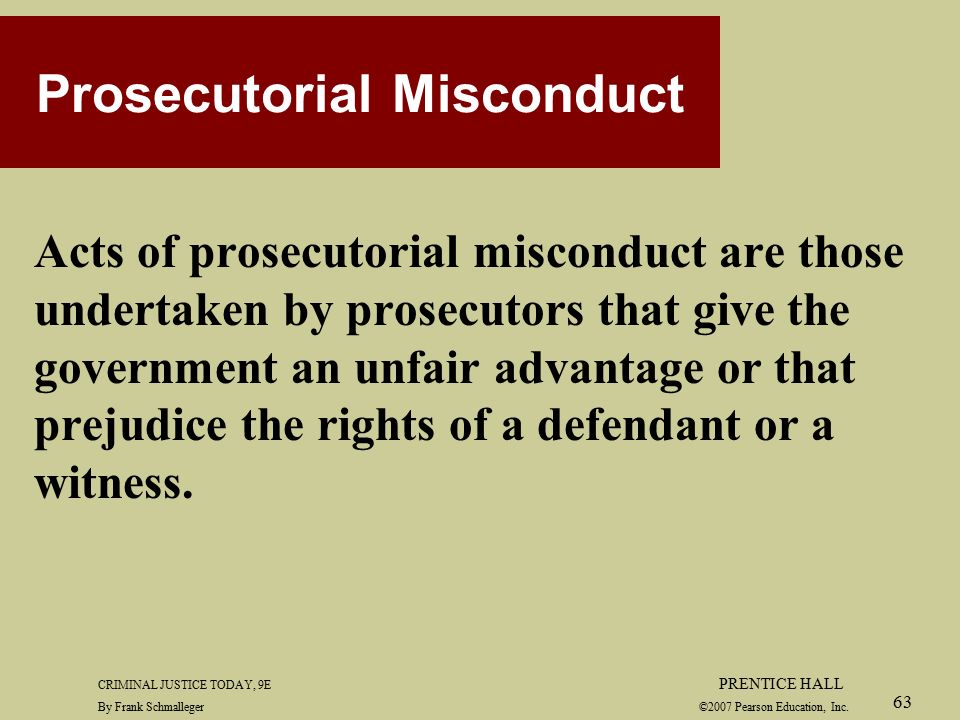
So, in one case, the Justice Department prevents a jury from assessing potentially exculpatory testimony for the defense while, at the same time, arguing that its witnesses alleging criminal conduct against the defendants are unrefuted.
In another case, the Justice Department attempts to undermine individual defendants from defending themselves by cutting off their main source of funds for a defense to a prosecution that — absent such a source for defense costs — would likely overwhelm them.
Yet two more examples of the increasingly high price of asserting innocence in our criminal justice system. As Sir Thomas More reminds us, “do you really think you could stand upright in the winds [of abusive prosecutorial power] that would blow” if that power were to set its sights on you? And what is the more serious danger to justice and the rule of law — out-of-control prosecutors or risk-taking businesspersons?

Aggies and Seahawks settle the 12th Man dispute
Withering under the logic of Texas A&M’s complaint (picture on the left) in the university’s copyright infringement lawsuit over its revered 12th Man slogan, the Seattle Seahawks gave in and entered into a settlement with the Aggies under which the Ags will allow the NFL club to continue using the phrase “12th Man” so long as the Seahawks acknowledge in doing so that the copyright on the slogan belongs to the Aggies.
The 12th man tradition began at Texas A&M in the 1920s, and the Seahawks adopted it in 1984 when they retired the no. 12 because of the help that their noisy fans provided in the old Kingdome Stadium. The Seahawks’ use of the 12th Man slogan became more prominent this past season during a successful playoff run when the volume at Qwest Field was so loud that more false-start penalties were committed there than in any other NFL stadium. As a result, the Aggies demanded that the Seahawks refrain from using the slogan and then filed a lawsuit.
Both sides of the lawsuit attempted to spin the settlement favorably. A&M Chief Marketing Officer & Vice President for Communications Steven B. Moore emailed this message to A&M alums :
“I’m pleased to inform you that, after months of negotiations, the university has reached an amicable agreement with the Seattle Seahawks resolving the controversy regarding the use of Texas A&M’s 12th Man trademark. Under the agreement, the university has granted the NFL team a license to use the 12th Man trademark in a seven-state area in the northwest that encompasses the current primary broadcast area of the Seahawks. As is the case of all licensees, the Seattle Seahawks will pay the university a licensing fee and will state publicly that Texas A&M owns the 12th Man trademark each time it is used.”
On the other hand, Seahawks CEO Tod Leiweke said:
“You won’t see any change. In certain places we will acknowledge their license and trademark. [. . .] Once they got into it, they realized it was the real deal here. It wasn’t a one-time marketing slogan . . . there was something real and authentic here.”
Meanwhile, a friend of mine — a fervent Aggie booster — emailed me with this reaction to the settlement, which is apparently shared by a number of Aggie faithful:
“The Ags gave up, just like [Head Coach Dennis] Franchione‘s defense.”
Oscar Wyatt’s Oil-for-Food motion to dismiss
Lawyers for Oscar S. Wyatt Jr. have filed a motion to dismiss criminal conspiracy charges against the longtime Houston oilman in connection with the United Nations’ Oil-for-Food scandal in which they contend that the federal charges are retaliation for his being “a persistent and vocal critic of U.S. policy.” A copy of the motion to dismiss is here, the table of contents of the memorandum in support of the motion to dismiss is here, and you may download a copy of the 88-page memorandum here. Previous posts on the federal investigation of Wyatt in connection with the Oil-for-Food scandal are here, here and here.
Mr. Wyatt was indicted in October, 2005 is an expansion of another federal case that was brought in April against David B. Chalmers Jr., president of Houston-based Bay Oil USA Inc. The indictment accuses Wyatt of conspiring with Chalmers and two Swiss business executives of paying millions of dollars in kickbacks to Saddam Hussein’s regime in Iraq so that Wyatt’s companies could continue to sell Iraqi oil under the Oil-for-Food program. Under the indictment, the 81 year old Mr. Wyatt faces a potential jail term of at least 60 years and the threat that the Justice Department will attempt to freeze a substantial amount of his assets. Wyatt — who was arrested early in the morning of October 21 at his home in Houston — is currently free after pleading not guilty to the charges and posting bail of $2.5 million.