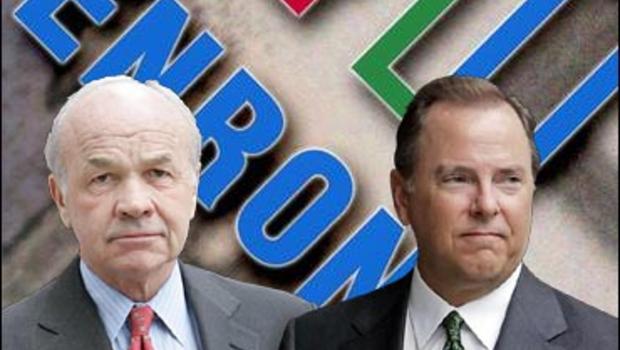
 Week 15 of the corporate criminal case of the decade was the relative calm before the final battle of closing arguments next week.
Although there was a skirmish over the Ostrich jury instruction, the lull in the trial provides an opportunity to step back and survey the massive landscape of this important case and attempt to place what has occurred during the trial in a reasonable framework for evaluating closing arguments.
As noted previously, the Enron Task Force has done a much better job in this trial of presenting its case than in the trials of the three previous Task Force prosecutions, the Arthur Anderson case, the Nigerian Barge case and the Enron Broadband case.
Nevertheless, as was the case in all three previous trials, the Task Force has presented a fundamentally weak case against the defendants in this trial.
That the Task Force has made a weak case certainly does not mean that the prosecution cannot win it. Indeed, given the societal bias against anything related to Enron, the betting markets have lined up solidly in favor of conviction of both defendants.
But that does not alter the fact that the Task Force’s case is tenuous, perhaps best reflected by the fact that the Task Force believed it necessary to protect its heavily-scripted case by taking the unprecedented step of effectively precluding dozens of former Enron executives with exculpatory testimony for Ken Lay and Jeff Skilling from testifying in the trial. If the Task Force were confident in the strength of its case, then why would it be necessary to prevent the jury from hearing such relevant testimony?
In the event that Lay and/or Skilling is convicted, you can make a good bet by wagering that this Task Force tactic will be a front-and-center issue of any appeal.
Another reflection of the weakness of the Task Forceís case is the degree to which the Task Force’s theory of the case changed since the original indictment against Skilling and Lay over two years ago.
In fact, the Task Force’s indictment ended up being such a mess that the prosecution attempted to prevent Lay and Skilling from using it in questioning certain witnesses during the trial because the prosecution conceded that it was too confusing.
About the only thing that has been consistent about each transformation in the Task Force’s theory of the case is the unstated but nevertheless omnipresent presumption that underlies this entire prosecution — i.e., that Enron went bust and Lay and Skilling became rich while leading the company, so they must be guilty of some crime in connection with the company’s meltdown.
Initially, the prosecution alleged that Lay and Skilling presided over a house of cards at Enron that was hidden from the investing public by the fraudulent behavior of Enron management and its conspiring auditor, Arthur Andersen.
Then, after a unanimous Supreme Court rebuked the Task Force for prosecuting Andersen out of business, the Task Force modified its original story to allege that Lay and Skilling had also fooled Andersen about Enron’s true nature.
After the plea bargain of former Enron chief accountant and former Lay-Skilling defendant Richard Causey about a month before the trial, the Task Force’s case evolved into a fairly standard “pump and dump” theory based on Lay and Skilling’s alleged non-disclosure of material information.
As an aside, one of the many daunting messages that this prosecution is sending to the business community is that an executive of any publicly-owned corporation better disclose every bit of bad news about their company. Otherwise, that executive will risk prosecution — under the sharp lens of hindsight bias — for misleading the investing public about the true health of the company.
If the Task Force’s approach is successful against Lay and Skilling, then one has to wonder why any executive of a publicly-owned corporation would risk saying anything to analysts and the investing public other than “go read the financial statements in our regulatory filings. It’s all there.”
In fact, in this insightful post, Jeff Matthews asks the salient question: Since when did corporate spin-doctoring in America become a crime?
Once the Task Force finally fixed on its theory of the case, the prosecution presented a case during the trial that largely relied on a complex jumble of innuendo and opinion from plea-bargained prosecution witnesses that requires the jury to connect the dots of many amorphous points in finding a crime.
For example, the Task Force does not contend that either Lay or Skilling was involved in approving fraudulent accounting, but rather that mainly Skilling engineered a reorganization of a poorly-performing Enron business unit in a manner that hid losses of that unit underneath the blanket of high profits of Enron’s trading unit.
The Task Force theorizes that the hiding of these losses — along with over-reserving to hide excess profits of the trading unit — allowed Skilling and Lay to misrepresent Enron to the investing public as a stable logistics company rather than the more volatile trading company that prosecutors allege it had become.
Stated simply, the Task Force contends that Enron was a successful but volatile trading company that was having severe financial problems in other parts of its business empire, and the greedy Skilling and Lay covered up the real condition of the company so that they could unload their Enron stock at higher prices than what they would have gotten had they disclosed the true financial condition of the company to the investing public.
However, the premise for the Task Force’s theory seems particularly flimsy.
Did Lay and Skilling really orchestrate this alleged massive fraud simply because they are greedy men? During his testimony, Skilling did not come across as a greedy man at all.
Similarly, even though the Task Force humiliated Lay during cross-examination regarding his legal use of a company line of credit and his family’s lavish lifestyle, he did not appear to be a particularly greedy man, either.
As Lay lawyer Mike Ramsey foreshadowed during opening argument:
“When you don’t have a case, you talk about something else, and that’s what [the prosecution is] doing when they are trying to make Ken Lay look greedy and when they start talking about him selling stock based on inside information.”
Meanwhile, almost all of the incriminating testimony against Lay and Skilling came from former Enron executives who are cooperating with the Task Force, and there are considerable problems for the Task Force with regard to each one of those witnesses.
For example, former Enron investor relations executives Mark Koenig and Paula Rieker claimed that they believed that Skilling and Lay misled the investment community in various ways, but they admitted that their knowledge of Enronís finances was a mile wide and an inch deep, and that they didn’t really know the mechanics of how Enron’s earnings estimates were finalized.
On the other hand, former Enron Broadband executive Ken Rice asserted that Skilling misled the investment community on the prospects of Enron’s broadband unit, but conceded on cross-examination that he also believed the unit had great long-term potential.
Similarly, the prosecution went for a cheap score with former Enron Broadband executive Kevin Hannon by eliciting from him that Skilling had supposedly admitted during a May 2001 meeting with a group of other Enron executives that “they’re on to us” after a small analyst firm had produced a research note critical of some Enron transactions.
However, when you think about it, Hannon’s testimony really undermines the Task Force’s core case.
The report that supposedly prompted Skilling’s remark was based on negative information about Enron that the company had made available to the efficient securities market. The report was not a particularly novel analysis of Enron; it came a couple of months after Bethany McLean’s much-ballyhooed Fortune article in early 2001 that suggested that Enron stock was overpriced.
How does the Enron Task Force square publication of the report’s negative evaluation based upon information that Enron disclosed to the efficient securities markets with its core allegation that Skilling withheld such information from the markets?
Another risk to the Task Force is how the jury assimilates the highly-publicized and sometimes bizarre testimony of former Enron CFO, Andy Fastow, and his former sidekick, Ben Glisan.
Although Fastow implicated Skilling in “secret side deals” and undisclosed “bear hug” guaranties, Fastow is such a despicable character that it remains decidedly unclear whether the prosecution gained much of anything with the jury from his testimony.
Moreover, the prosecution’s emphasis with Fastow in regard to the Global Galactic memo creates a huge hole in its case given that the Task Force chose not to risk attempting to corroborate Fastow’s testimony on that key issue with the testimony of former Enron chief accountant, Richard Causey.
Likewise, former treasurer Glisan — whose heavy-handed treatment by the Task Force had to have made an impression on the jury — contended that he had been advising Lay and others of Enron’s dire financial condition since mid-August of 2001 immediately after Skilling’s resignation. However, he had no meaningful documentary evidence to support his testimony on that issue.
In contrast, Lay’s attorneys on cross-examination introduced Glisan’s own reports from September and October, 2001 detailing Enron’s improving finances, which included one presentation dated October 8 in which Glisan informed Enron’s directors that the company was “on target” to meet its year-end liquidity goals, that it would hold onto its investment-grade credit rating and calling a lowered outlook the “most likely worst-rating outcome” from its third-quarter earnings report. Ten days later, Glisan transmitted an October 17 Deutsche Bank credit analysts’ report to Mr. Lay and others that noted Enron’s “liquidity remains solid.”
Thus, the Task Force’s case relies heavily on testimony from cooperating witnesses who initially lied to investigators — sometimes for years — until finally copping a plea in which they bargained for a reduced prison term and usually a substantial net worth in return for testifying against Lay and Skilling.
Despite alleging now that Lay and Skilling were involved in lying about Enron to the investment community years ago, none of the Task Force witnesses produced any meaningful corroborating documentary evidence that they had any reservations at the time about the statements that Lay and Skilling were making.
None of the witnesses testified that Lay or Skilling at the time ever admitted that they thought they were making misleading statements.
None of the Task Force witnesses provided meaningful testimony in regard to the alleged huge conspiracy within Enron to cover up the alleged wrongdoing at the company.
In short, the Task Force would have the Lay-Skilling jury believe that the biggest corporate conspiracy in American history was hidden from everyone except Lay, Skilling and these relative few Enron executives who have copped pleas, struck deals while in prison or entered into non-prosecution agreements.
That’s not a compelling case in my book.
What is particularly interesting to note while reading through the posts on the Lay-Skilling trial is how the focus of the Task Force’s case subtly shifted during presentation of the defense’s case.
Rather than attempting to challenge Skilling and Lay on the core business fraud charges, the Task Force during the defense case emphasized marginal but easy-to-understand matters such as PhotoFete and Layís personal finances.
By the time Lay’s testimony was completed, the Task Force prosecutors had asked Lay and Skilling several hundred questions over PhotoFete and Lay’s handling of his personal finances while asking precisely zero questions on such issues as the alleged Global Galactic agreement and the alleged huge conspiracy at Enron.
Yet another indictation that this is simply not a strong prosecution case.
So, on Monday, U.S. District Judge Sim Lake will read the 40 plus page charge to the jury and then Prosecutor Kathy Ruemmler will give 3-4 hours of closing argument for the Task Force.
On Tuesday, Dan Petrocelli will give about 3 hours of argument on behalf of Skilling and Mac Secrest and Mike Ramsey will provide about 2 hours of argument on behalf of Lay.
Task Force director Sean Berkowitz will close with a couple of hours on Wednesday morning and then Judge Lake will give the corporate criminal case of the decade to the jury.
My experience with closing arguments is that they are mostly about reinforcement of beliefs that have developed during the trial and rarely about persuading jurors about changing their position. Consequently, there is a good chance that the Lay-Skilling jurors have already made up their minds about the case and, given the enormous pre-trial publicity in this case, they may have done so even before the trial began.
If the jurors have already made their decision before the trial began, then that would not only be an injustice for the defendants, but also an unfortunate ending to this chapter of the Enron saga.
Despite the fact that the Task Force has prevented many witnesses with exculpatory testimony from testifying on behalf of Lay and Skilling, much of what has been presented during the trial conflicts with the presumptions and biases of the numerous societal forces that adhere to the now familiar Enron morality play that rejects any notion of ambiguity or fair-minded analysis in determining the truth of what really happened at the company.
Twelve citizens of Houston have an opportunity to evaluate the evidence presented during the Lay-Skilling trial objectively without the veneer of that Enron morality play.
For the sake of justice, the rule of law and our criminal justice system, here’s hoping they do.

 One of the enduring law firm-client relationships of the past generation in Texas has been that between the family of Dallas billionaire Ross Perot and the Dallas-based firm of Hughes & Luce, LLP. The firm long represented Perot personally and his various companies, including EDS while Perot was building the company into a computer-services giant before selling it to General Motors in the mid-1980’s for $2.4 billion. The firm has continued to represent the Perot family over the years, including Ross Perot, Jr., who has become a wealthy real estate developer in the Dallas area.


