The Yukos chapter 26 case?

yukos-houston.jpgChapter 22 cases — the nickname for successive but seperate reorganization cases under chapter 11 — are uncommon, but certainly not unheard of. However, a chapter 26 case — a reorganization under chapter 11 followed by a bankruptcy case in a foreign country and an ancillary case in the U.S. under chapter 15 of the U.S. Bankruptcy Court — well, you just don’t see that even once a decade.
Enter OAO Yukos, the embattled Russian oil and gas company that filed a chapter 11 case last year in Houston (subsequently dismissed) in a failed effort to stop a Russian government-imposed dismantling of the company to pay the government for past-due taxes. A couple of weeks ago, Russia’s Moscow Arbitration Court placed Yukos under outside supervision and appointed a supervisor, which is the rough equivalent of a bankruptcy trustee under the U.S. system. The Russian court then set a June 27 hearing in which it will consider formally declaring Yukos bankrupt under the Russian bankruptcy system.
Meanwhile, Yukos’ supervisor and institutional creditors are claiming that Yukos managers are engaging in a “fire sale” of assets in an attempt to subvert the Russian bankruptcy case. Consequently, yesterday, the supervisor initiated a chapter 15 bankruptcy case for OAO Yukos in the Southern District of New York in an effort to derail the purported impending sale by Yukos of the company’s interest in a refinery.
I wonder if Yukos will seek a change of venue of the chapter 15 case to Houston? ;^)

Lay-Skilling, Week Eleven

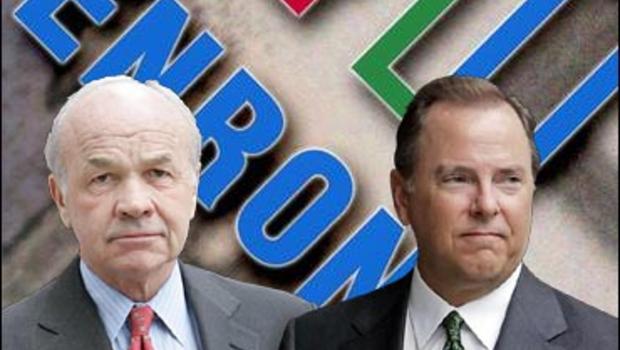
Week Eleven of the corporate criminal case of the decade was the Jeff Skilling Week, and the former Enron CEO did not disappoint.

In over three and a half days of direct examination (of which I was able to sit in for a couple of hours on Wednesday and Thursday afternoons), Skilling provided a clear, thorough, passionate and at times riveting account of Enron’s business and the wide array of issues and considerations that he confronted on a daily basis in helping build the company into one of the largest U.S. companies.

In so doing, Skilling’s testimony underscored plainly what the Lay-Skilling case has become — the purest instance of criminalizing corporate agency costs in recent American history.

Skilling’s testimony on direct disputed head-on the presumption on which the Enron Task Force’s entire case is based — i.e., that Enron melted down and, thus, Skilling and Lay must be guilty of some crime — and included the following points:

In educating the jury about Enron’s business, Skilling analogized Enron’s gas bank — the creative model for buying and selling natural gas that Skilling devised while working as an Enron consultant for McKinsey & Co. — to a slaughterhouse.

The gas bank was like a cow in that some folks want steak and are willing to pay more for it, while some people want hamburger, and others want waste items such as hooves. Enron got all the cows together, cut’em up and organized them into their various pieces, and then delivered them to customers that distributed them to the public.

In so doing, Enron turned itself into an aggregator of natural gas and an intermediary between gas drillers and distributors.

In short, Skilling noted that Enron sold “reliable delivery and predictable prices” of natural gas and electricity.

Described the complexity of Enron and the extensive planning and reviews that went into management of the company’s business decisions. Skilling’s portrayal of the way the company operated was in sharp contrast to the prosecution witnesses who testified under plea deals that many of Enron’s key business activities were based upon misrepresentations to the market or secret side deals.

In disputing the Task Force’s allegations of wrongdoing regarding Enron’s earning-per-share estimates, explained the internal process of continually updated financial information from Enron’s various business units after the end of each quarter in explaining how an earnings-per-share estimate could move from 30 cents to 31 cents in one day.

Skilling noted that it was not unusual at all for such earnings estimates to change on a daily basis because of the torrent of information that management absorbed from its various business units following the end of a quarter and that such changes occurred systematically within the company.

Defended the purpose and validity of Enron’s special purpose entities — including LJM and the other SPE’s involved in the Raptor structures — as providing valuable hedging and related financial benefits for Enron that were thoroughly reviewed and approved by scores of professionals both within Enron and outside the company.

Denied that he ever pressured former Enron CFO Andrew Fastow to unload any Enron assets into the SPE’s in order to hit Wall Street earnings targets and denied ever guaranteeing Fastow that an SPE would not lose money on a transaction with Enron.

Explained the valid business purposes for the reorganization of Enron’s EES trading operation into Enron’s wholesale unit, and denied the Task Force’s allegation that hiding losses of EES in the more profitable wholesale unit was any motivation at all for the reorganization.

Explained his purpose in selling less than half of his Enron stock on the first day that the stock market reopened after the 9/11 attacks and why he simply forgot in prior SEC testimony about his attempt to sell a smaller amount of Enron stock five days before 9/11.

Conceded that Enron’s broadband unit turned out to be a mistake, but that nothing about it was criminal in nature. Although ultimately a failed investment of about $1 billion, Skilling noted that — if Enron’s bet on broadband had been correct — the unit could have been worth as much as $30 billion. That’s precisely the type of reasoned bets that companies need to be taking to build wealth for their shareholders, contended Skilling.

Moreover, Skilling noted the fallacious nature of the Task Force’s allegation that Enron’s sales of “dark fiber” and structured finance transactions in its broadband unit were used to cover up how badly the unit was really performing. In fact, Skilling noted that those sales and structured finance transactions were always viable alternatives under the unit’s business plan to hit earnings targets.

Reviewed how Enron was in outstanding financial shape when he resigned as CEO in August 2001, even with the shattered telecom industry affecting the broadband business and his failure to sell overvalued international assets sooner.

Moreover, while noting that short selling was a legitimate market tool, Skilling blamed the market panic in regard to Enron that occurred two months later on inflammatory and often untrue media reports on Enron that were improperly planted and promoted by short sellers of Enron stock.

Contended that the Enron Task Force intentionally misrepresented Enron’s business practices and purposely failed to consider exculpatory evidence in its effort to make a case against him and Lay.

Not only was the substance of Skilling’s passionate performance impressive, the method that he and defense attorney Daniel Petrocelli used in presenting it to the jury was equally effective.

Inasmuch as the method of the Task Force’s presentation of its case-in-chief against Skilling and Lay was essentially to throw as much mud as possible against the wall to see how much might stick, Petrocelli navigated Skilling through direct examination by having Skilling respond to the actual language of each charge in the Task Force’s indictment against Skilling, something that the Task Force had sought to prevent.

In so doing, Petrocelli brought structure to Skilling’s defense and provided the jury with a handy framework in which to consider Skilling’s defense to the Task Force’s charges.

Keeping the jury interested in a key witness over a long direct examination is not easy, but my sense is that Petrocelli’s method of juxtaposing heavily-scripted questioning on key points with frequent periods where he simply allowed Skilling to defend himself with passionate and knowledgeable explanations to the jury was a particularly effective way to present Skilling’s case.

The fact that Petrocelli and Skilling seem to have an easy and genuinely-friendly relationship with each other also facilitated the presentation.

By the way, the effervescent Petrocelli and the witty Judge Lake are clearly the jury’s favorite lawyers in the trial, and the two of them have developed an engaging relationship through this long case.

Yesterday, after the second afternoon break and as a long week of tiring testimony was drawing to a close, Petrocelli used a baseball analogy in advising Judge Lake that he was almost finished and in “the bottom of the ninth.” Judge Lake responded with a wry smile: “With two out.” Petrocelli, Skilling, the jury and the spectators in the courtroom cracked up.

Although reading a jury is highly speculative business, my sense is that Skilling’s direct examination resonated well. The reports early in the week from the major news reporters who are attending the trial daily (Barrionuevo-NY Times; Carrie Johnson/WaPo; Emshwiller-McWilliams/WSJ($); and Mary Flood/Houston Chronicle) described the jurors as responding somewhat coldly toward Skilling during the first stages of his testimony, but by yesterday afternoon the jurors — particularly the ones who I perceive to be the leaders — appeared to me as being fully engaged and warming considerably toward Skilling.

By the time Skilling noted late yesterday afternoon that he enjoyed working on cars as a hobby and that the reason he owned two Range Rovers was because “they’re English cars, so they don’t work” and thus, “there’s always something to work on,” the jurors were laughing heartily and looking as if they were genuinely enjoying Skilling’s observations.

So, on the Monday after Easter Sunday, the next key stage of the Lay-Skilling trial takes place as the Task Force begins the difficult task of cross-examining Skilling.

Although the conventional wisdom is that the Task Force will attempt to goad Skilling into becoming unattractively angry and self-righteous on the stand, my bet is that Skilling will not take that bait.

Moreover, a particularly daunting problem for the Task Force is that Skilling understands Enron’s business so much better than the prosecutors could ever hope to that they run the risk of actually allowing Skilling to help himself during cross-examination if they delve too deeply into the nuts and bolts of Enron’s business practices.

My sense is that cross-examination and re-direct of Skillling will take most of next week, and then the Skilling team has only a few additional witnesses before they will turnover the defense to the Lay team, probably sometime in Week Thirteen.

Accordingly, stay tuned as the corporate criminal case of the decade turns toward home in what will likely be as fascinating a finish as this remarkable trial has proven to be to date.

Playing for keeps in the SEC

secbook2.gifThis SI.com article reports that Logan Young, a University of Alabama football supporter who was convicted in 2005 for money laudering and racketeering in connection with bribing a high school coach to induce a top high school football recruit to play football from the Crimson Tide, was found brutally murdered in his Memphis, Tenn. home this past Tuesday.
Interestingly, Philip Shanks, a Memphis attorney involved in a lawsuit stemming from the resulting NCAA sanctions over the Young affair, was attacked in his office and left unconscious in May 2004. No one was ever charged in that incident.
Update: Memphis police are now contending that Young’s death was the result of a bizarre accident.

No harm?

Spitzer56.jpgOne of New York AG Eliot Spitzer‘s misguided regulation-through-litigation forays has been his lawsuit barrage against various radio station owners over payola — i.e., the practice of radio stations owners accepting money from promoters to pay certain types music over the airwaves.
I’m normally sympathetic to companies that have the misfortune of having to deal with Spitzer’s regulatory thrusts, but this WSJ ($) article on a radio owner’s defense to one such Spitzer lawsuit stretches even my liberal sympathy:

To properly file a suit under the consumer-protection laws, Entercom’s lawyers say, [Spitzer] must prove that consumers were harmed as a result of material deception. Entercom argues that, because radio is free, there can be no harm.

As a father of two teenage daughters who insist upon listening to free radio music while riding in the car with me, I can attest that Entercom’s allegation of “no harm” from listening to free radio music is wrong.

Houston is a baseball hotbed

Brad Lincoln.jpgdrabek53041.jpgAlthough the Stros have been one of Major League Baseball’s best clubs over the past 12 years of the Biggio-Bagwell era, what is not as well-known outside of baseball circles is that the Houston area has become one of the leading sources of young baseball talent in the nation.
Most folks already know about Coach Wayne Graham and Rice University’s outstanding baseball program, which won the College World Series in 2003. However, not as many folks realize that the University of Houston and its fine baseball coach Rayner Noble also have an excellent program, which this season is competing neck-and-neck with Rice for the Conference USA regular season title and — along with Rice — is likely to receive a spot in the upcoming NCAA Baseball Tournament. Finally, one of the local high school programs in my hometown of The Woodlands, about 30 miles north of downtown Houston — The Woodlands High School baseball program — is currently the number one-ranked high school baseball program in Texas and the United States by Baseball America.
With that backdrop, the Chronicle’s Richard Justice profiles UH pitcher Brad Lincoln, who Baseball America currently ranks third among college players and is likely to be one of the top 10 picks in the upcoming Major League Baseball draft. Lincoln is 7-1 with a 1.68 ERA this season, has allowed just 70 baserunners in 75 innings and has 92 strikeouts compared to only 18 walks. Lincoln is just the most recent in a long-line of outstanding pitchers developed at UH by Coach Noble, who was a fine pitcher in his day before a Major League career was doomed by an arm injury.
But not mentioned in the Justice column is that Kyle Drabek of The Woodlands — the son of former Cy Young-award winning and Stros pitcher Doug Drabek — is also currently projected as a top 10 pick in the MLB draft. During the current high school season, Drabek has already thrown four shutouts, two no-hitters and two one-hitters, and did not allow an earned run through his first 36 innings this season.
I think it’s safe to say that baseball is booming in Houston.

The “Hail Mary” strategy

slade2.jpgEmbattled Texas Southern University President Priscilla Slade has apparently decided to take a page from the playbook of Steve Spurrier — that is, an aggressive offense is the best defense.
According to this Matthew Tresaugue/Chronicle article, President Slade — who is on paid leave pending the outcome of the TSU board’s ongoing investigation into allegations that she has embezzled hundreds of thousands of dollars from the school through reimbursement of unauthorized expenses — has recently gone on a public relations offensive:

This week, Slade started talking in public about the case, meeting Sunday with some of Houston’s most prominent black leaders at the Rev. Bill Lawson’s house.
She later granted her first interview since the inquiry began to Lawson’s daughter, Melanie, at KTRK (Channel 13). Slade also sent a letter explaining the expenses to the Houston Chronicle, instead of giving an interview.
On Wednesday, Slade defended her spending and highlighted the achievements of her seven-year presidency for an hour without commercial interruption on KCOH-AM (1430), the city’s oldest black radio station. Mike Petrizzo, the station’s general manager, said he provided the airtime at the request of U.S. Rep. Al Green.

However, Slade is not apparently not ready to answer questions from all comers at this point:

Green and state Rep. Sylvester Turner interviewed Slade in the studio. She also answered questions from callers, who included former TSU regent Willard Jackson, the Rev. Manson Johnson and the Rev. Kirbyjon Caldwell, pastor of Windsor Village United Methodist Church.
Slade is a member of Caldwell’s church, and TSU’s auditor has raised questions about $6,500 of university money she spent with the church. [. . .]
The guest hosts did not provide the call-in number for listeners.
Michael Harris, host of the station’s morning show for 24 years, said he was told not to ask questions and only one caller was among his regulars. When asked after the program if Slade’s explanations resonated with listeners, Harris expressed doubt.
“I don’t think anyone who is a regular listener of the program will be persuaded because I wasn’t allowed to talk and the people who usually call didn’t talk,” he said. “It was a show, but not a talk show. There was no dissenting opinion.”

Slade’s strategy is to portray the allegations against her as, at best, a civil matter in an attempt to dissuade the District Attorney’s office from pursuing criminal charges. Although a good offense can be the best defense in certain cases, this particular strategy appears to be the equivalent of a “Hail Mary” pass to me. If Slade does have at least a colorable defense for the reimbursements, then the best way to avoid prosecution is to persuade the TSU board’s law firm of that defense so that the firm reports to the TSU board and the D.A.’s office that recovery of the funds from her in a civil lawsuit is uncertain. In that case, the D.A.’s office might conclude that proving criminal charges beyond a reasonable doubt is unlikely and, thus, elect not to pursue criminal charges.
Unfortunately for Slade, Hail Mary passes usually don’t work.

Houston attorney indicted

handcuffs2.jpgEllen Podgor lets us know that Michael J. Wing, an attorney who lives in Tyler but whose practice is apparently mostly in Houston, has been indicted in the Eastern District of Texas for allegedly running a Ponzi scheme promoting investments in phony companies.
Wing faces up to 20 years in prison and a fine of up to $250,000 for each of the eighteen counts alleged in the indictment, and the government is also seeking the forfeiture of $3.575 million traceable to the offenses alleged in the indictment.

Defending Mr. Skilling

Skilling12.jpgAs I look forward to sitting in for a couple of hours this afternoon during the direct examination of former Enron CEO Jeff Skilling in Houston federal court, attorney Paul Fisher and former Amoco economist Jim Johnston provide this interesting Heartland Institute article (hat tip Professor Bainbridge) that defends Skilling and Enron, and hits on many of the same points that I have made over the past two years (here, here, here, here, and here, to cite just a few) about the misguided nature of the Enron-related prosecutions. Fisher and Johnston’s thoughtful piece concludes with the following observation:

The Enron story is reminiscent of an earlier political attack on an energy company during the Great Depression of the 1930s. New York Governor Franklin D. Roosevelt was making a political issue out of Samuel Insull, the CEO of Commonwealth Edison in Chicago. The matter helped get FDR elected president in 1932 but forced the ComEd holding company into bankruptcy, even though Insull and his associates were subsequently acquitted of all charges.
We hope the Enron jury will show the same wisdom as the jury in the Samuel Insull case and reject the politically inspired attack on energy risk management. Maybe in time efficient risk management will return to the natural gas and electricity industries. Energy consumers will be the prime beneficiaries.

Debating contingent fees

contingent fees.jpgDon’t miss this entertaining featured discussion over at PointofLaw.com in which PofL’s Jim Copland and Alex Tabarrok of Marginal Revolution fame debate contingent legal fees. Jim is the director of the Center for Legal Policy at the Manhattan Institute and is a leading advocate for reform of Americaís civil justice system, while Alex is a member of George Mason University’s up-and-coming libertarian-oriented economics department. An earlier post on Alex’s research into contingent fees is here.
Although Jim does not advocate a prohibition on all contingency fee arrangements, he makes the following case for regulation:

[U]nder a contingency fee arrangement, plaintiffs’ lawyers accept not only cases that are likely to succeed but long-shot cases with high potential damage payouts. A risk-neutral plaintiffs’ lawyer with a diversified portfolio of cases is just as happy to take a case with a 1 percent chance of paying out $20 million as a case with an 80 percent chance of paying out $250,000.
But as a society, do we really want to be flooded with high-dollar, low-probability claims? The contingency fee creates a very real incentive to play the “lawsuit lottery”óa lottery with positive expected returns for the plaintiff and client, but substantial social costs. At a very basic level, the contingency cap, while a crude mechanism, ameliorates this problem. If a lawyer’s take in a case goes downó-especially for high-dollar cases-óthe incentive to take shoot-the-moon cases falls proportionately.

To which Alex replies:

If a lawyer and her client want to contract in Lira what business is it of the state to interfere? If the lawyer and client agree on an incentive plan, why should that be regulated? Do we want to regulate contingent fees in other areas? A money-back guarantee, for example, is a contingent fee – you pay only if the product is a winner. A tip is a contingent fee – you pay only if the service was good.
True, not all contracts should be respected – we don’t enforce contracts against the public interest – nevertheless, my spider-sense starts to tingle whenever reformers of any stripe try to abrogate private contracting.

Walter Olson also has more.

How Gates works

Gates.jpgIn discussing the digital tools that he uses daily, Microsoft chairman Bill Gates in this CNN Money article provides an interesting glimpse into how he organizes his workday, particularly with regard to two constant problems — email and paper:

I get about 100 e-mails a day. We apply filtering to keep it to that levelóe-mail comes straight to me from anyone I’ve ever corresponded with, . . .and anyone I know. And I always see a write-up from my assistant of any other e-mail, from companies that aren’t on my permission list or individuals I don’t know. That way I know what people are praising us for, what they are complaining about, and what they are asking.
We’re at the point now where the challenge isn’t how to communicate effectively with e-mail, it’s ensuring that you spend your time on the e-mail that matters most. I use tools like “in-box rules” and search folders to mark and group messages based on their content and importance.

As you might expect, paper is not a big part of Gates’ experience:

Paper is no longer a big part of my day. I get 90% of my news online, and when I go to a meeting and want to jot things down, I bring my Tablet PC. It’s fully synchronized with my office machine so I have all the files I need. It also has a note-taking piece of software called OneNote, so all my notes are in digital form.

And his one low-tech piece of office equipment:

The one low-tech piece of equipment still in my office is my whiteboard. I always have nice color pens, and it’s great for brainstorming when I’m with other people, and even sometimes by myself.

But there is one overused low-tech aspect of management that even Gates cannot avoid:

Days are often filled with meetings. It’s a nice luxury to get some time to go write up my thoughts or follow up on meetings during the day. But sometimes that doesn’t happen.