Stealing the 12th Man?

aggieland.jpgIt’s demoralizing enough for followers of the Texas A&M University football program that the Aggie football team has fallen on hard times, but now they have to deal with the theft of their sacred 12th Man tradition:

The Seattle Seahawks are facing the Pittsburgh Steelers in the Super Bowl, but they have an off-the-field battle brewing with Texas A&M.
School officials are upset with the Seahawks’ use of the “12th Man” theme to recognize their fan support. A&M has legal claims to the “12th Man” moniker, a school tradition that dates to the 1920s.
Texas A&M contends the 12th man lives at Kyle Field, not in Seattle.
The Seahawks have celebrated their fans as a “12th Man” since the 1980s, when they used to turn the now-demolished Kingdome into one of the NFL’s loudest venues. . . .
A&M has twice registered trademarks for “The 12th Man” label — in 1990 and 1996 — that include entertainment services, “namely organizing and conducting intercollegiate sporting events,” and products, such as caps, T-shirts, novelty buttons and jewelry. . . .
[A&M Athletics Director] Bill Byrne said A&M has contacted the Seahawks about the issue. He said he wrote the Chicago Bears and Buffalo Bills in the past about halting their 12th man themes once the university made them aware of the trademark registrations. Byrne said Seattle, though, “has been slow-rolling us.”

The Aggies reduced to a post-season lawsuit rather than a post-season bowl game? Well, at least some folks are smiling.
Update: A&M filed a lawsuit in Brazos County on Monday to enjoin the Seahawks from infringing on the university’s 12th Man trademark. Home field advantage — Aggies.

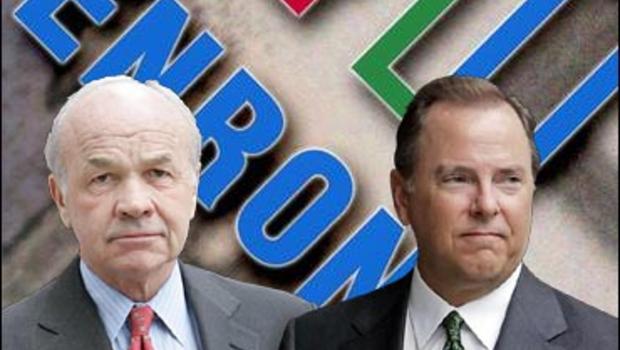
The schedule for the trial of the Enron legacy case

LaySkilling2B.jpg9 a.m. today: Jury selection, Ceremonial Courtroom, 11th floor, Bob Casey Federal Courthouse, 515 Rusk. The NY Times’ Alexei Barrionuevo and Simon Romero report on the all-important jury selection process, which U.S. District Judge Sim Lake will handle himself and will complete today.
9 a.m., Tuesday, January 31: Opening arguments, Courtroom 9B, ninth floor. Prosecution gets two hours and each defendant gets two hours.
Late Tuesday afternoon or 8:30 a.m. Wednesday, Feb. 1: The prosecution puts on its first witness, which I am betting is former Enron investor relations chief, Mark Koenig. Given Judge Lake’s desire to move things along, it would not surprise me if he requires the prosecution to put its first witness on the stand on Tuesday afternoon, even after six hours of opening arguments.
The trial will run four days a week with each Friday generally being an off day. The prosecution currently estimates that its case-in-chief will take 36 days of court-time to present. There are about 60-65 spaces available on a first come basis for the general public in courtroom 9B, but a closed circuit telecast of the proceedings is available for overflow spectators on the fourth floor of the courthouse in one of the old Bankruptcy Court courtrooms.
By the way, Chronicle Enron reporter Mary Flood and Chronicle business columnist Loren Steffy are live-blogging the trial, and my old friend Joel Androphy is blogging the trial as KTRK-13’s legal analyst.

The Fazio Course of the Club at Carlton Woods

The day before the beginning of the Enron Task Force’s legacy case, you probably figured that you would find an Enron-related post here today. But before turning to the long slog of that trial, a beautiful late-January Texas day has my thoughts turning to golf.

This previous post reviewed the Golf Club of Houston that opened for play last summer and will host the Shell Houston Open Golf Tournament beginning later this year. However, the Tournament Course at Redstone was only one of two outstanding new courses that opened in the Houston area in 2005. The other one is the Fazio Course of the Club at Carlton Woods in The Woodlands and it is every bit as impressive a new entry on the Houston and Texas golf scenes as the Golf Club of Houston course.

Interestingly, at one time, the construction of the Fazio Course would have meant that the Golf Club of Houston course would have not been built at all. As noted in this previous post, the Houston Open had a tremendously successful, 26-year run at the old Tournament Players Course in The Woodlands as both the tournament and the community literally grew up together. Former Houston Golf Association (which operates the tournament) executive director Eric Fredricksen — who oversaw much of the Houston Open’s growth during his tenure — wanted the HGA and The Woodlands to build the Fazio Course as a new Tournament Players Course and move the tournament from old TPC to the Fazio Course.

Alas, Fredricksen resigned as HGA executive director before such a deal could be cut, new HGA management took over, the HGA and The Woodlands had a falling out and, before you know it, the HGA had divorced The Woodlands and moved its operations and the Shell Houston Open across the far north side of the Houston metro area to Golf Club of Houston.

Nevertheless, the Woodlands Corporation — the fabulously successful developer of The Woodlands — proceeded with the Fazio Course, anyway, albeit on a slower timetable. The Fazio Course is now the second golf course in the ultra-exclusive Carlton Woods subdivision of The Woodlands, which opened about five years ago around the Jack Nicklaus Signature Course that was the first course of the Club at Carlton Woods.

As the sixth golf course built in The Woodlands, the Nicklaus-Carlton Woods course quickly took its place among the best golf courses in the Houston area, and — as The Woodlands’ seventh golf course — the Fazio Course may be better than the Nicklaus Course. With its opening, the members of the Club at Carlton Woods now enjoy two of the best golf courses at any one club in the Houston area and in all of Texas.

Constructed amid beautiful hardwoods on the bluffs of Spring Creek on the far southwest side of The Woodlands, the Fazio Course has something going for it that most Houston-area golf courses do not — significant elevation changes. Inasmuch as the Houston area lies in the flat Texas coastal plain between the Gulf of Mexico and the Hill Country of central Texas, the vast majority of Houston-area golf courses are flatland courses with minimal elevation changes similar to golf courses in Florida. However, the Fazio Course takes advantage of a wonderfully rolling piece of land on the bluffs of Spring Creek to provide golfers with up and down shot values that are rarely seen on Houston-area golf courses.

Moreover, as with the Nicklaus Course, the Woodlands Corporation used the increasingly-popular sandcapping process on the fairways of the Fazio Course, which expedites the return of the course to playability after heavy rains. As a result of the sandcapping process, both the Nicklaus and Fazio Courses are playable within an hour or two of even heavy rains when most Houston golf courses would still be too mushy to play.

As with most new courses these days, the Fazio Course is long — almost 7360 yards from the championship tees and includes a 506 yard par 4 (no. 15) and a 623 yard par 5 (no. 4). However, this is not just a flogger’s course — three of the course’s 10 par 4’s are well under 400 yards, including the creative 307 yard par 4 seventh hole. Similarly, two of the course’s four par 3’s are well under 200 yards. Moreover, most of the greens on the course slope dramatically from back to front with subtle undulations that are made more vexing because of the sloping of the greens. Consequently, the Fazio Course actually places more emphasis on the short game than being able to hit the long ball.

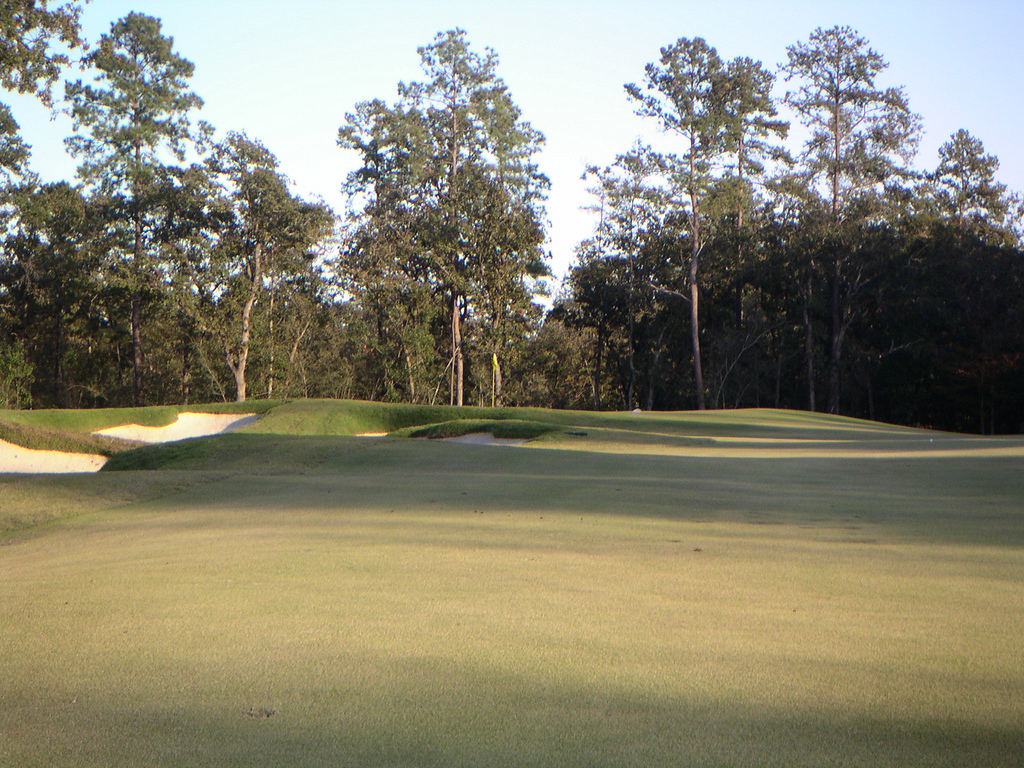
Having played the course just once, it’s a bit difficult to predict what hole will ultimately become the Fazio Course’s signature hole, but my sense is that the 445 yard par 4 eighteenth (pictured above) will definitely be in contention. The fairway narrows into a ribbon the further you hit your drive, but laying too far back gives you a devilish long-iron shot into a thin, severely undulating green that is protected in front by water and the Fazio Course’s signature deep bunkers. Just hit it straight and long on this hole, and you will have no problem. ;^)

Criticisms of the Fazio Course are hard to come by. The course is a subdivision course, so — unlike the Golf Club of Houston — it will eventually have homes built on a good part of the course. As a result, it is not quite as walkable a course as the old TPC Course in The Woodlands. However, that’s the only negative that I could think of in regard to this extraordinary new addition to the top Houston-area golf courses. Here is slideshow of photos from the course.

“You’re fired, but you better keep selling our products”

Greenberg21.jpgAIG21.jpgLet’s get this straight.
Last year, American International Group’s board effectively canned its chairman and CEO, Maurice “Hank” Greenberg — the man responsible for building the company into an insurance industry behemoth over the past generation — in order to make nice with New York AG Eliot Spitzer.
Meanwhile, Mr. Greenberg is only 80 years old, so he needed to find something to do after AIG unceremoniously dumped him. Accordingly, Greenberg began paying more attention to the affairs of C.V. Starr & Co., the company closely-owned by Greenberg and other former and current AIG executives that used to provide a compensation perk for AIG executives. C.V. Starr’s relationship with AIG dates from the late 1960s when AIG became a public company — in fact, among C.V. Starr’s major assets are its shares in AIG.
Several subsidiaries of C.V. Starr have long sold AIG insurance policies to big manufacturing companies, so Greenberg last year decided to expand C.V. Starr’s sales operations by selling insurance policies for other companies. Two of those companies are Ace Ltd. an insurer run by Mr. Greenberg’s son, Evan Greenberg, and a unit of billionaire businessman Warren Buffett’s Berkshire Hathaway Inc. By the way, Mr. Buffett may have ratted out Greenberg to Spitzer to save his own skin, but that’s another story.
With that backdrop, it’s with more than a touch of irony that AIG is now suing C.V. Starr to stop Starr’s subsidiaries from selling insurance policies for companies other than AIG. The lawsuit accuses the Starr subsidiaries of “flagrant misconduct and self-dealing contrary to the best interests of AIG” by diverting a third of a business portfolio otherwise intended for AIG to the Berkshire unit. C.V. Starr counters by pointing out the knotty little detail that the six-page contract governing the relationship between the Starr subsidiaries and AIG does not provide that the Starr agencies will exclusively sell AIG policies.
Thus, even though AIG may have hedged the risk of an Enronesque experience by dumping Mr. Greenberg, it remains far from clear that the AIG board’s sacrifice of Greenberg at the altar of the Lord of Regulation was in the best long-term interests of AIG’s shareholders. Not only did AIG lose the executive primarily responsible for the company’s value, but it also gained a formidable — and a particularly motivated — competitor.

We have seen the enemy, and it is us

medical insurance scam.jpgThe Washington Post’s Robert J. Samuelson has seen the problem with the American health care finance system — it’s us:

Americans generally want their health care system to do three things: (1) provide needed care to all people, regardless of income; (2) maintain our freedom to pick doctors and their freedom to recommend the best care for us; and (3) control costs. The trouble is that these laudable goals aren’t compatible. We can have any two of them, but not all three. Everyone can get care with complete choice — but costs will explode, because patients and doctors have no reason to control them. We can control costs but only by denying care or limiting choices.
Disliking the inconsistencies, we hide them — to individuals. We subsidize employer-paid health insurance by excluding it from income taxes (the 2006 cost to government: an estimated $126 billion). Most workers don’t see the full costs of their health care; a reported Bush proposal to add new tax subsidies would magnify the effect. A similar blindness applies to Medicare recipients, whose costs are paid mainly by other people’s payroll taxes. Despite complaints about rising co-payments and deductibles, out-of-pocket costs are still falling as a share of all health spending. In 2004, they were 12.5 percent; in 1993, they were 15.8 percent.
We’re living in a fantasy world.

Continue reading

The fountain pen con

fountain_open.jpgI swear, you can’t make this stuff up:

Richard B. Roper, United States Attorney for the Northern District of Texas, announced that . . . Mauricio Aguirre-Orcutt [had been sentenced to 57 months in prison] following his guilty plea in October to a one-count Information charging him with mail fraud. . . . Orcutt admitted that he ran an elaborate scheme, full of lies and deception, to defraud [Pen World International Magazine publisher] Glen Bowen out of thousands of dollars worth of expensive fountain pens. . .
Orcutt, while corresponding with Bowen, falsely represented that he had been a special assistant and advisor to former Presidents Ronald Reagan and George H.W. Bush and had been a State Department official who helped finalize the North American Free Trade Agreement. He also represented that he was an advisor to President George W. Bush and that heíd met with President Bush earlier in the day.
To bolster the misimpression, Orcutt falsely represented to Bowen that he was meeting with United Nations Secretary General Kofi Annan in New York on September 15, 2004 and was going to ìmarketî Pen World to the Secretary. Orcutt suggested giving Secretary Annan of Pen World a Delta 20th Anniversary fountain pen. Bowen acquired the Delta Pen and mailed it to Orcutt so that Orcutt could make the presentation to Secretary Annan as a gift from Pen World. Later, Orcutt advised Bowen that he had met with Secretary Annan and had given him the Delta Pen, which the Secretary used to sign a United Nations Resolution. A few days later, Orcutt sent Bowen an altered digital photograph of Secretary Annan that purportedly shows the Secretary signing some document with the Delta Pen. Orcutt, however, never met with Secretary Annan and kept the Delta Pen for himself.

Read the entire DOJ press release, which also relates Orcutt’s con of Bowen over a pen for President Bush.
My sense is that Mr. Bowen will be receiving quite a few emails of this nature over the next several months.

A Key Evidentiary Issue in the Lay-Skilling Case

The Chronicle’s Mary Flood leads today with this timely article on the key evidentiary issue in the upcoming criminal trial of top Enron executives, Ken Lay and Jeff Skilling — to what extent the prosecution will be able to get around the hearsay rule by using out-of-court statements made by alleged co-conspirators against Messrs. Lay and Skilling.

The issue is important because, according to the Enron Task Force, just about anybody who worked in Enron’s upper management ranks was a co-conspirator.

In an unprecedented move, the Task Force has named over 100 co-conspirators in the case. So, the potential definitely exists for substantial testimony about out-of-court statements going to the jury without the defense ever having an opportunity to cross-examine the persons who made the alleged statements.

Moreover, fingering unindicted co-conspirators is an equally effective technique for the Task Force to prevent testimony that is favorable to the defense because persons named as unindicted co-conspirators are likely to the assert their Fifth Amendment privilege against self-incrimination and thus, not be defense witnesses during the trial.

Thus, the Task Force’s liberal use of the co-conspirator tag has a double-whammy effect — not only does it allow the Task Force to use out-of-court statements against defendants without having the declarant of the statements subjected to cross-examination, it has also effectively prevented previous Enron-related defendants from obtaining crucial exculpatory testimony from alleged co-conspirators who have elected to take the Fifth and declined to testify.

The co-conspirator tactic has had a huge impact on two of the previous Enron-related trials.

During the Nigerian Barge trial, the Task Force used out-of-court statements of co-conspirators regarding the key factual issue in the case — that is, what was said during a conference call between several Merrill and Enron executives, including former Enron CFO Andrew Fastow — without ever having to put a witness on the stand who actually participated in the call.

Similarly, none of the dozens of unindicted co-conspirators testified on behalf of the defendants during that trial, so the Task Force’s use of the tactic effectively prevented the Merrill Lynch executives in that case from providing the jury with exculpatory testimony.

Not surprisingly, the Task Force’s liberal use of the co-conspirator tactic has become a key appellate point for the Merrill executives in the appeal of their convictions.

Similarly, the importance of the co-conspirator issue on freezing out exculpatory testimony was brought into full focus during the trial of the Enron Broadband case last year.

In a trial that, at the outset, appeared to be a sure-thing for the prosecution, the Task Force’s case unraveled quickly as witnesses Lawrence Ciscon and Beth Stier both testified to a riveted jury about how the Task Force’s threats of prosecution against them gave them second thoughts about providing the exculpatory testimony that they gave during the trial.

That trial ended in a disastrous mix of acquittals and jury deadlock on the prosecution’s charges.

Thus, Judge Lake’s handling of the issue could have an equally dramatic effect on the Lay-Skilling trial.

Although reasonable people can disagree about whether the charges against executives such as Lay and Skilling would be better sorted out in a civil case rather than a criminal one, there is no reasonable justification for allowing the government to prejudice Lay and Skilling’s right to a fair trial by manipulating the unindicted co-conspirator tactic to use otherwise inadmissible hearsay testimony and to chill witnesses from providing exculpatory testimony.

That the government feels compelled to use such dubious tactics to obtain convictions of Lay and Skilling is strong evidence that the government’s criminalization of agency costs in the post-Enron era is contrary to justice and the rule of law.

The difference between theory and reality in regard to SOX

soxgroup.jpgWhen I first saw this Washington Post article earlier today that assessing the overall effect of Sarbanes-Oxley on corporate governance in the post-Enron era, I thought about posting a piece on it, particularly given that SOX does not really deter what its supporters seem to suggest that it should. However, I got busy with other things and passed on it.
Now, I’m glad I passed on posting about the WaPo article because Larry Ribstein does a far better job than I ever could have. In this devastating post, Larry systematically eviscerates each point that the SOX advocates raise in support of the legislation, and then observes in closing:

What this article is really about, in my view, is the yawning gap between what the promoters of SOX and corporate crime prosecutions are saying about the results of their efforts, and the reality.

The Bagwell non-issue

JeffBagwell8.jpgThe silliness about the Stros-Jeff Bagwell situation continues over at Richard Justice’s blog:

And the Drayton McLane-Jeff Bagwell dispute is a story with legs. What if the insurance claim is rejected, and Bagwell ends up on the field in spring training?
That will make for some uncomfortable moments when Uncle Drayton does one of his handshake tours of the clubhouse.
He may be doing the right thing from a business standpoint even if his chances of collecting are slim. But players pay attention to how other players are treated.
Next winter’s Roy Oswalt discussions got a lot more interesting this week.

So, Roy O is less likely to re-up with the Stros because of the way Drayton McLane has treated Bags?
Let’s review the very simple landscape.
Everyone concedes that Bags is at least partially disabled from playing Major League Baseball — he can no longer throw a ball effectively. The only question is whether that partial disability allows the Stros to recover about $15.5 million under a disability insurance policy that the club purchased on Bags. The club still owes Bags $24 million for the final year of his contract.
Bags wants the Stros to waive the $15.5 million claim under the insurance policy and let him try to play this season, although Bags acknowledges that he doesn’t know whether he will be able to do so. Meanwhile, Bags has not offered (and probably cannot under the MLB-MLBPA Collective Bargaining Agreement) to restructure his contract to induce the Stros of taking the economic risk of not making a claim on the insurance policy.
In short, the greatest player in Stros history is suggesting that the Stros should walk away from a potential $15.5 million recovery without receiving anything more than a great ballplayer’s goodwill for giving him one last chance at playing ball, probably at the expense of his teammates, who would likely be better off having a non-disabled ballplayer playing instead of Bags.
Frankly, Bagwell is the one being unreasonable here, not Drayton McLane. What should really concern Roy O would be if McLane were to give in to Bagwell’s self-indulgent stance. That he is not reflects that McLane is willing to do the right thing for the rest of the Stros ballplayers, even when doing the right thing is not what the greatest player in club history wants.

Look out, General Counsel

siemens.jpgJohn over at the Wired GC provides this timely and informative post about the troubling implications of the criminal case against Ellen Roth, the 61-year-old former in-house lawyer at a U.S. subsidiary of German electronics-maker Siemens.
As Peter Lattman noted here, Ms. Roth was indicted last week in Chicago on charges that she helped set up a sham company to facilitate Siemens winning a $49 million radiology contract at a Chicago-area hospital. The indictment alleges that Ms. Roth was ìthe principal corporate decision-maker responsible for creating the legal entityî that established a sham partnership with a minority-owned business, which gave Siemens an advantage in obtaining the contract.
Not only does the case involve the now common problem that corporate officials can no longer rely on any attorney-client privilege of their employer, Larry Ribstein notes in this post that Sarbanes-Oxley could be used to expand the web of criminal liability much further than just the company’s general counsel:

The indictment says that ìSMS [the Siemens sub] relied on Roth to ensure legal compliance with the applicable ordinances.î Might this sort of thing trigger liability of the parent corporation or senior executives, either at the subsidiary or the head office, who certified adequacy of internal controls? Did they see the relevant business organization documents, including the email that the indictment says shows the absence of the requisite profit-sharing arrangement? If not, is the failure to examine or to insist on seeing those documents the absence of an internal control of which management had the requisite knowledge to trigger SEC sanctions under Section 302 and 906 of SOX (the latter includes criminal sanctions), or civil liability under 10(b) or 10b-5?