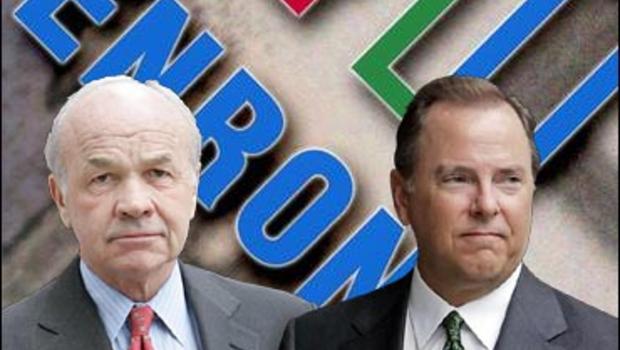
Shoe Drops on Former AIG and General Re Execs

Almost lost amidst the publicity over the first day of testimony in the Enron-related Lay-Skilling trial was the news that a Virginia federal grand jury had issued indictments against former General Re Chief Executive Ronald Ferguson, former General Re Chief Financial Officer Elizabeth Monrad, General Re’s former Assistant General Counsel Robert Graham, and the former AIG reinsurance executive Christian Milton on charges of conspiracy to commit fraud for their roles in a controversial five-year-old transaction that has been at the center of the governmental investigations into AIG and General Re over the past year.

Of course, AIG is Maurice “Hank” Greenberg’s old company and General Re is a division of Warren Buffett’s Berkshire Hathaway.

Ferguson and Ms. Monrad are now the two highest-level former General Re executives to be charged with crimes in the General Re-AIG accounting investigation, and Mr. Milton is the only former AIG executive to have been charged in the probe. Last summer, two former General Re employees — John Houldsworth and Richard Napier — copped pleas on fraud charges and presumably will testify against the newly-charged executives.

Lay-Skilling, Week One – The First Witness

Former Enron investor relations chief Mark Koenig led off the prosecution’s presentation of evidence yesterday in the criminal trial of his former bosses, Ken Lay and Jeff Skilling, and it quickly became clear that the Enron Task Force’s boring approach to putting on a case that almost caused a jury uprising in the earlier Enron Broadband trial may also be a problem for the prosecution in the Lay-Skilling trial.

As the Mary Flood/Chronicle, Carrie Johnson/WaPo, and Alexei Barrionuevo/NY Times articles all report, Koenig testified about several instances in which he allegedly prepared reports and presentations at the direction of Skilling and Lay that misled investors and analysts about the performance of Enron’s Broadband unit and Energy Services units.

However, to get to the nuggets of relatively exciting testimony, the jury had to endure hours of mind-numbing and largely irrelevant testimony regarding Enron’s structure, the company’s bankruptcy and related matters.

As a result, the prosecution could not finish its direct examination in an entire day of testimony and apparently is going to use a good part of today for further direct examination.

If that schedule holds, cross-examination of Koenig will almost certainly take a couple of days, which means that the second witness in the case — former Enron Broadband executive Ken Rice — may not begin until Tuesday afternoon or Wednesday of next week.

So much for the prosecution’s earlier prediction that it will take nine weeks to put on its case.

At any rate, one of the problems with Koenig’s testimony — which is being given under a plea deal with the government — is that it is not based on any meaningful involvement in the mechanics of how Enron’s executives evaluated its financial affairs and earnings.

Stated another way, Koenig was involved in how Enron’s financial matters were presented, but not in how they were determined.

As a result, his knowledge of the company’s financial affairs is a mile wide and an inch deep, a point that will almost certainly be hammered home by the defense on cross.

Meanwhile, the fact that the prosecution is relying so heavily on witnesses such as Koenig who have copped plea deals in return for favorable prosecution testimony will become an increasingly important issue as the the trial proceeds.

Houston criminal defense attorney Kent Schaffer — one of the half-dozen attorneys providing legal analysis for the Chronicle on the trial — noted in a blog post in the Chron on why people such as Koenig enter into plea bargains. The sad fact is that people often do plead guilty to crimes that they do not think that they really committed, particularly when the defendant sees the draconian sentence that can result from protesting one’s innocence. As Schaffer notes:

“Get ready to see grown men in Oxford suits and wingtip shoes rolling over, playing dead, and barking while on their hind legs; trying to earn a few extra biscuits.”

Are you sure that’s not for an apartment?

RentLogo.jpgThis article notes that the same amount of monthly rent that would get you a nice apartment in Houston would get you something nice in Manhattan, too — a parking space!:

Keeping a car at Time Warner Center across from Central Park runs about $550 to $600 a month. One- bedroom rentals are available for $500 to $600 in Greensboro, North Carolina; Austin, Texas; Cincinnati; and Oklahoma City, . . . Space is at a premium in Manhattan, home to about 1.56 million people, as outdoor lots and garages are converted into housing and new construction eats up what little land is available.
That opens a door for some building owners to tout their parking services. At 170 East End Avenue, architect Peter Marino designed parking spots as “couture homes for your car,” with each space planned and presented to the buyer in the building’s sales office, . . .
At One Beacon Court across East 59th Street from Bloomingdale’s, where available apartments sell for $5.9 million to $17 million, residents have access to valet parking at a nearby garage, with their cars delivered to the building’s entrance.
Rates are $600 a month, $700 for an oversized vehicle.

And I thought that $7 charge at the Civic Center Parking Garage for a couple of hours of parking last week was stiff! ;^) Hat tip to Craig Newmark for the link.

John Keegan on the Iraq policy

Face of Battle2.jpgJohn Keegan is England’s foremost military historian and, for many years, was the Senior Lecturer at the Royal Military Academy at Sandhurst. His book — The Second World War — is arguably the best single volume book on World War II and his book The Face of Battle is essential reading for anyone seeking an understanding of the history of warfare. In short, when John Keegan writes about war, it is wise to take note.
In this London Telegraph op-ed, Mr. Keegan provides an overview of what the U.S. and Britain have accomplished in Iraq, and then makes a persuasive case for following through with what is an increasingly unpopular role in that country:

Critics should remember that, in nine tenths of Iraq, peace reigns. Thousands of Iraqi towns and villages are untroubled by insurrection and continue to regard the British and Americans as liberators. They cannot be abandoned to terrorists, fanatics and friends of the defunct dictatorship. To urge that we should go on as we are is an unpopular line of argument. That it is unpopular does not, however, mean it is wrong.
There is a final consideration. The Middle East is exceedingly complex, and one of its complexities is formed by Iran’s determination to become a nuclear power. To withdraw the Western forces from Iraq now would in effect be to encourage Iran to persist in its nuclear challenge. Even if, as the Foreign Secretary insists, military action against Iran is unthinkable, it is at least prudent to retain the capacity for military action in the region.

Read the entire piece.

Lay-Skilling, Week One – Opening Arguments

Well, I wasn’t able to put other pressing matters aside to attend opening arguments yesterday in the criminal trial of former key Enron executives Ken Lay and Jeff Skilling, but I did score a transcript yesterday evening and was able to read it.

In doing so, I was reminded of a point that a wise, old trial attorney-mentor made to me early in my legal career — “Almost all opening statements are too long.”

Now, Lay-Skilling is a complicated business case, so there is a lot of explaining to do. And when the prosecution takes an hour and a half in opening, the defense often feels that it is necessary at least to match that length in opening or the jury might presume that the defense doesn’t really have an answer for everything that the prosecution alleged.

So, there are valid reasons for long opening arguments.

Nevertheless, my experience is that, even during the most spellbinding opening arguments, the attention of jurors tends to begin wandering after 30 minutes or so.

My wise old mentor also advised me: “Make all your important points in the first 20 minutes of your opening — sort of like a sermon at church — because those jurors tend to wander off after that — just like in church.”

As I read the transcript last night, it occurred to me that, if jurors were allowed to ask a question of the attorneys during opening arguments, one of them would have almost certainly raised their hand and asked: “Could you go over that whole ‘reserve account thing’ again?”

At any rate, the first round of the trial is done and it’s reasonably clear from the reading the transcript and the first hand accounts (Chronicle Enron team blog and Loren Steffy’s blog) and the reports (NY Times/Alexei Barronuevo and WaPo/Carrie Johnson) that neither side scored any early knockdowns.

Opening arguments are for helping jurors establish a framework within which they can evaluate the evidence to come, so it’s risky to try and land a haymaker that could put the other side on its back early. Neither side took that risk.

The Enron Task Force’s John Hueston continued to push a theme in the prosecution’s case that has become apparent since the Task Force’s earlier failures in both the Arthur Andersen case and the Enron Broadband case — i.e., that the case against Messrs. Lay and Skilling is really a simple case of non-disclosure about Enron’s true financial condition.

In a nutshell, Hueston contended that Enron was a formerly successful company that was having severe financial problems by 2001 that both Skilling and Lay covered up so that they could unload their company stock at higher prices than what they would have gotten had they disclosed the true financial condition of the company to the investing public.

From reading the transcript, Hueston’s argument appeared to be competent and reasonably well-organized. However, I was left wondering whether the Task Force may have overdone its goal of simplicity.

I mean, did Lay and Skilling really orchestrate this alleged massive fraud simply because they are greedy men?

Indeed, as the defense attorneys proceeded to point out, there is certainly much in Lay and Skilling’s life stories that indicates that they are not particularly greedy. After reading Hueston’s opening, I could almost imagine a juror thinking: “Well, fine. But with all this hubbub, don’t you have more of a story than that?”

Defense attorneys Dan Petrocelli (Skilling) and Mike Ramsey (Lay) clearly understood this dynamic, as both of them emphasized their respective client’s humble backgrounds and continually pointed out the conflict between the prosecution’s simple case theory and the wide-ranging and almost indecipherable allegations contained in the government’s indictment against two defendants.

In that connection, Mr. Ramsey pointed out what appeared to me to be the biggest oversight of the day — the government’s failure to mention the word “conspiracy” in its opening remarks even though the prosecution is banking a large part of its case on Lay and Skilling’s alleged orchestration of one of the largest criminal conspiracies in history.

Similarly, it also appeared that Hueston made a mistake in opening by failing to acknowledge that Lay’s stock sales were pursuant to margin calls.

How can the government accuse Lay of being greedy because of his stock sales when those sales were involuntary?, Ramsey reasoned.

By the way, as Mr. Steffy noted on his blog during the arguments yesterday, Ramsey’s courtroom style really appeared to resonate with the jury. Here are just a few of Ramsey’s gems:

“Now, there’s a lot of talk about Andy Fastow and and the various thefts that he committed at Enron. [The money that] Andy stole [was] peanuts. Andy stole crumbs. What Andy stole [of importance] from Enron was its good name.”

“[Fastow’s] thefts themselves spread out over a three-year period probably wouldn’t be coffee money and Coke money for Enron during that period of time. Nowhere near enough to sink a company the size of, and successful as, Enron. What happened was the odor of the wolf got into the flock and the flock stampeded.”

“Bankruptcy is not a crime. If it were, we would have to turn Oklahoma back into a penal colony because there would be so many people to lock up. It might help [University of Texas] football, but it won’t solve much else.”

“The point of the matter is people will not accept risk if failure means you go to prison. And bankruptcy is not a crime. In order to commit a crime you have to specifically intend to do something the law forbids. And failure in and of itself is not a crime.”

“This is the indictment . . .[It] is 66 pages long. Someday you may be called upon — God save you — to have to read it. If you do, you’ll find it is enormously complex. I don’t blame the [prosecutors] at the table here; I think their predecessors wrote it.

But with all the power and precision of the English language, it is a babbling kind of indictment [that makes it] very hard to pin down, very hard to determine what you are actually charged with. . .”

“When you don’t have a case, you talk about something else, and that’s what [the prosecution is] doing when they are trying to make Ken Lay look greedy and when they start talking about him selling stock based on inside information.”

Several months ago, I was attending a hearing in the Lay-Skilling case on a day in which Mr. Ramsey was not fairing particularly well with U.S. District Judge Lake.

On multiple occasions, Judge Lake refused to do what Mr. Ramsey requested and then finally told him to sit down and stop arguing.

A lawyer from the East Coast who was also attending the hearing leaned over and remarked to me: “Gee, it sure doesn’t appear as if Ramsey is particularly effective in presenting matters to Judge Lake, does it?” I replied:

“Mike Ramsey is not on the defense team for his ability to persuade Judge Lake. But wait until you see him talk to a jury.”

The trial cranks back up at 8:30 a.m. today with former Enron investor relations chief Mark Koenig expected to be the first prosecution witness.


The logistics of blogging the Lay-Skilling trial

enron sinking logo6.gifDwight Silverman is the technology columnist for the Houston Chronicle and is primarily responsible for ushering the local newspaper into the forefront of media and citizen blogging.
In this timely post, Dwight outlines the logistics involved in gearing up the Chronicle team of reporters for blogging on and reporting the developments in the criminal trial for former key Enron executives Ken Lay and Jeff Skilling.
Take note, mainstream media, what Dwight and the Chronicle are doing — and what the Wall Street Journal has done with Peter Lattman’s blog — is the wave of the future. Adapt or be left behind. Quickly.

Speaking of that key evidentiary issue . . .

Rules of evidence.jpgPeter Lattman posts this interesting piece on the oral argument in the Bernie Ebbers appeal that could well impact the key evidentiary issue in the ongoing trial of former Enron executives Ken Lay and Jeff Skilling.
In the Ebbers appeal, Ebbers counsel Reid Weingarten — who is also counsel for former Enron chief accountant Richard Causey — is arguing that the Ebbers prosecution team unfairly prevented the defense from calling key defense witnesses by fingering them as targets of the WorldCom criminal investigation. In so doing, Weingarten is arguing that the prosecution effectively prevented the defense from presenting exculpatory testimony to the jury because each of the targeted witnesses declined to testify on the basis of their privilege against self-incrimination under the Fifth Amendment of the U.S. Constitution. The Second Circuit panel appeared sympathetic to the argument during oral argument of the Ebbers appeal, which is potentially bad news for a prosecution team that has taken the tactic of chilling potential defense witnesses to an entirely new level in the Lay-Skilling case and other Enron-related prosecutions. Ellen Podgor comments here along the same lines.

Baylor’s cancer research and care initiative

dan duncan.jpgThe Chronicle’s Todd Ackerman — who does a fine job of reporting on matters relating to Houston’s Texas Medical Center — reports today that Dan Duncan, chairman of Houston-based Enterprise Products Partners, LP, has donated $100 million to Baylor College of Medicine to trigger funding of Baylor’s effort to become the second comprehensive cancer center in Houston’s Texas Medical Center (the other is the University of Texas M.D. Anderson Cancer Center). The gift follows Duncan’s earlier $35 million gift to Baylor last year.
This is a major development for the Medical Center, which — through M.D. Anderson — is already one of the primary cancer care and research venues in the United States. The collaborative effort of M.D. Anderson and Baylor’s new facility may propel the Texas Medical Center to the forefront of cancer research and care in the entire world.

Lay-Skilling, Week One – Jury Voir Dire

To the surprise of no one who has ever tried a case before U.S. District Judge Sim Lake, a jury was empaneled yesterday (NY Times article here) in the Enron Task Force’s legacy case against former key Enron executives Ken Lay and Jeff Skilling, which means that opening arguments will proceed in the trial this morning.

Judge Lake has a way of keeping matters on schedule.

Opening arguments are always anxiously anticipated in high-profile cases such as this, particularly in view of the fact that many of the preliminary matters — such as jury selection — are downright boring.

Contrary to popular belief, jurors do not often make up their minds during either opening or closing arguments, but it remains reasonably clear that jurors often form during opening arguments the framework within which they consider the evidence that is presented during the trial.

Thus, the goal of opening arguments is to establish broad themes that resonate with the jurors. Leave the details for later.

In this case, the prosecution clearly has the advantage in opening arguments because of “the presumption” in business cases. No, that’s not the presumption of innocence. Rather, it’s the presumption that most lay people have that at least some criminal conduct is involved in any business enterprise that collapses, particularly one that does so in such spectacular style as Enron.

The Enron Task Force has played up the presumption effectively in its public relations campaign and in its previous Enron-related prosecutions, so the Task Force prosecutors will hammer the jurors with that presumption throughout their opening argument.

Conversely, one of the primary goals of defense attorneys Dan Petrocelli (Skilling) and Mike Ramsey (Lay) during opening argument will be to challenge the validity of the presumption so that the jurors can form a framework that views the presumption with skepticism while evaluating the evidence that is presented during the trial.

Although the prosecution has the easier task during opening arguments, its job gets much tougher once it has to put on its case.

The Task Force has been much more successful in bludgeoning plea bargains out of former Enron executives than actually obtaining convictions in court.

The only “successful” Enron-related trial for the Task Force to date has been the trial of Nigerian Barge case, which was a narrow trial of a specific transaction. Even then, one of the two Enron executives who were prosecuted in that case was acquitted, and the conviction of the Merrill Lynch executives in that case was anything but a clear-cut victory for the Task Force.

In comparison, in the two other Enron-related trials — the Arthur Andersen case and the Enron Broadband case — the prosecution alleged broad conspiracies and amorphous charges, and both cases ended disastrously for the Task Force.

Inasmuch as the charges in the Lay-Skilling trial have much more in common with the Andersen and Broadband cases than the Nigerian Barge case, the prosecution has been attempting to shift its strategy and simplify its case against Lay and Skilling during the weeks preceding the trial.

Nevertheless, it remains unclear whether the Task Force will be successful in that approach, particularly when a good part of its case against Lay and Skilling will be based on testimony of impeachable witnesses who have copped pleas and other statements that may not even get into evidence based on how Judge Lake rules on the key evidentiary issue in the case.

Thus, expect a lot of talk today about the presumption of criminal conduct in business collapse cases from the prosecution and broad themes challenging that presumption from the defense.

Frameworks may be built today, but the tougher work of actually filling those frameworks with substance is what will, in the end, determine which side succeeds or fails during this trial.

More muddled thinking on the Bagwell situation

JeffBagwell10.jpgThe Chronicle’s Richard Justice — who ignited a remarkable amount of muddled thinking regarding the Stros’ claim under the club’s disability insurance policy on its star firstbaseman, Jeff Bagwell (related post here) — continues with the nonsense in his column today.
Justice proposes that the Stros waive making a claim for $15.6 million under the disability insurance policy and allow Bags to try and play this season in return for Bagwell’s promise that he would pay the club $7.8 million — i.e., half of the disability insurance claim — if it turns out that Bags really is disabled and can’t play effectively this coming season.
Uh, I don’t think Richard ran that proposed “solution” by Bags and his agent. Bags, the greatest player in Stros history, negotiated a five-year, $85 million contract from a position of strength six years ago under which the Stros agreed that he would receive a guaranteed amount (now down to $24 million) regardless of whether Bags is physically capable of playing major league baseball throughout the term of the contract. And now Justice proposes that Bags place $7.8 million of that $24 million at substantial risk for the opportunity to prove that he is physically capable of playing major league baseball?
Why on earth would Bags do that? Even if the Stros release Bags and collect the entire claim under the disability insurance contract, Bags could still attempt to play major league baseball with another club without risking a dime. Romantic considerations aside, does Justice really think for a moment that Bags would or should be willing to risk $7.8 million for the opportunity of trying to prove that he is capable of playing one final season with the Stros?
Richard Justice should stick to reporting on baseball, not contracts and risk evaluation.