Week Two Lay-Skilling trial schedule

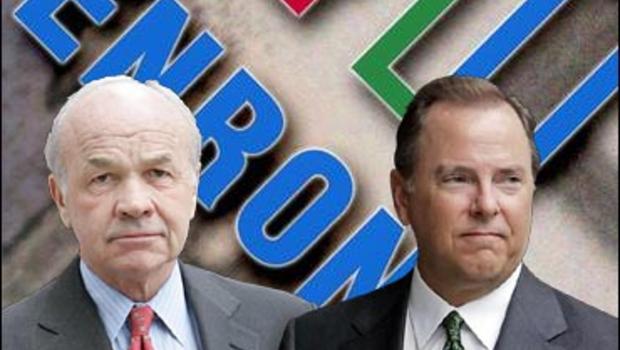
Koenig4.jpgken rice5.jpgAfter a slumbering close to Week One of the criminal trial of former key Enron executives Ken Lay and Jeff Skilling, the prosecution will almost certainly attempt to pick up the pace of the trial this week.
The prosecution will probably complete direct examination this morning of its first witness, former Enron investor relations chief Mark Koenig. Inasmuch as cross-examination of Koenig will likely take at least as long as direct (over two days), the prosecution’s second witness — former Enron Broadband co-CEO Ken Rice — will probably not take the stand until Wednesday afternoon, at the earliest.
If you have been following the Enron cases, then you will remember Rice. He was on the witness stand when the prosecution’s case began unraveling in the Enron Broadband trial last year. As noted at the time here, Rice testified falsely on direct examination during the Broadband trial about what he had seen at an analyst conference. After the Broadband defense team impeached Rice with his false testimony, the prosecution attempted to rehabilitate Rice’s false testimony by putting former Enron video consultant Beth Stier on the stand, a move that backfired when Stier testified to the prosecution’s intimidation tactics. Thus, in a case that looked like a layup for the prosecution at the outset, Rice and Stier’s testimony began a downward spiral in the prosecution’s case that ultimately resulted in a disastrous mix of acquittals and no verdicts on the charges in the Broadband case.
By the way, a little reported fact about Rice is that he entered into his plea deal with the Enron Task Force after the Task Force had discovered that he sold a substantial amount of Enron stock under rather suspicious circumstances. Shortly before Skilling announced his resignation as Enron CEO in August, 2001, Rice met with Skilling. After that meeting and before Skilling’s resignation announcement, Rice unloaded a boatload of his Enron stock. Thus, regardless of what other crimes that Rice contends on the stand that he and others committed at Enron, it’s pretty clear that he was guilty of illegal insider trading.

AIG deal near

AIG25.jpgAs discussed in more detail here earlier, the settlement between American International Group and regulators over business fraud charges may be consummated as early as later this week, according to this Wall Street Journal ($) article (NY Times article here).
The expected amount of the regulatory extortion, er, I mean, “settlement”: $1.6 billion.
9 Feb. 2006 Update: It’s a done deal. NY Times article on the settlement is here.

How times change

Super Bowl poster.jpgAs you ease into your favorite chair or couch to watch Super Bowl XL this evening (5:18 p.m., CST) and its featured entertainers, Aretha Franklin and the Rolling Stones, did you realize that it was only 13 years ago when Super Bowl XXVII in 1993 featured O.J. Simpson flipping the coin during the pre-game coin toss and Michael Jackson performing at halftime with “a choir of 3,500 local Los Angeles area children joining Jackson as he sang his single ‘Heal The World'”?
My, how times change!
But if you really want a refresher on how times change, check out this Anthony Lewis/NY Times review of Taylor Branch’s third segment of his fine trilogy about the social revolution that occurred in America during Martin Luther King’s voting rights and desegregation movement in the late 1950’s and 1960’s, At Canaan’s Edge: America in the King Years, 1965-68 (Simon & Schuster 2006). Lewis describes the simplicity of Dr. King’s purpose in pursuing the movement:

In Alabama, Mississippi and large parts of other states in the Deep South [at that time], the [Constitutional right to vote without discrimination] was a myth for blacks. They were threatened, abused, even murdered if they tried to register or vote; they often lost their homes or their jobs. Armed white mobs menaced them.
King believed that if Americans outside the South were aware of its brutal racism ó as few then were ó they would want to end it. The violent response to nonviolent protest made the brutality plain. What Americans read in newspapers and saw on television shocked them, and jump-started the political process. Meaningful civil rights legislation made it past Senate filibusters at last.

But Branch’s book also reminds us that King’s movement revealed that racial discrimination was not confined to the South:

Chicago dramatized the reality of antiblack feelings in the North. Marches organized by King to protest segregated housing and unequal government benefits [in Chicago] were met with mob taunts and rocks. “Burn them like Jews!” one white group shouted at the marchers. Branch concludes that “the violence against Northern demonstrations cracked a beguiling, cultivated conceit that bigotry was the province of backward Southerners.”
In 1965, he notes, Mary Travers of the trio Peter, Paul and Mary kissed Harry Belafonte on the cheek at a rally. CBS television, which was showing the rally, was besieged by protesting callers, and took the rally off the air for 90 minutes. In the border state of Kentucky, the famous basketball coach Adolph Rupp kept his University of Kentucky team all white. He complained of calls from the university president, “That son of a bitch wants me to get some niggers in here.” A little-noted team from Texas Western, with five black players starting, upset Kentucky in the 1966 championship game ó a story told just now in the movie “Glory Road.” Only slowly, after that, did the bar on black athletes break down in the South. Many people watching college sports on television today would not have dreamed that such a policy ever existed.

As noted in this earlier post about that Texas Western team, those were very different times. America has come a long ways in its race relations since then, but we still have a long ways to go, and much of the impetus for continued progress is the memory of those different times not so very long ago.

Short selling, Enron and Jamie Olis

Now that title got your attention, didn’t it? ;^)

Selling stocks short receives a bad rap generally because it generates profits from misfortune — i.e., when the stock price goes down — which is counter-intuitive to how most folks believe that one should make money in investments (i.e., holding stocks long-term as they appreciate in value).

The most common method of shorting a stock is to borrow stock, sell it, and then cover the loan of the stock in the market by purchasing the stock later at a lower price. Other approaches to shorting involve buying a put option that holds the right to sell the stock for the next 30 to 60 days at current market prices, writing a call option granting another the right to buy a stock from you for the next 30 to 60 days at current prices, selling a stock future promising to deliver a stock 30 to 60 days in the future, or taking the selling position in a stock swap.

The issues relating to short selling arose in the news again this week as the prosecution in the Lay-Skilling trial played the tape of Jeff Skilling’s infamous “asshole” comment in response to a short-seller’s questions during an April, 2001 analyst conference call. Chronicle business columnist Loren Steffy followed that up with this timely column (related blog post here) in which he correctly points out that — despite such negative aspersions — the practice of short selling provides a valuable market purpose. Indeed, I suspect that Skilling would actually agree with Steffy that short selling is an important part of well-structured securities markets and that his “asshole” comment was not a condemnation of short-selling per se, but rather, a reaction to the short-seller’s improper attempt to profit from creating a false impression about Enron.

Skilling’s comment and Steffy’s column were then followed by this interesting Wall Street Journal op-ed in which Moin A. Yahya condemns the common practice of short-sellers and class action securities fraud plaintiffs’ attorneys banding together to drive the price of a company’s stock down, and then — after profiting from the short sale of the company’s stock — cashing in again on a class action lawsuit against the company. I don’t agree entirely with Professor Yahya’s position in that regard (more on that later), but the professor does provide some highly interesting background into the genesis of the sad case of Jamie Olis:

A few years ago, a Houston-based energy company called Dynegy was experiencing financial difficulties and resorted to some questionable financing activities in what was known as “Project Alpha.” An employee named Ted Beatty learned about the project and informed a friend, who happened to work at a short-selling hedge fund. The fund subsequently took a short position against Dynegy’s stock. Later Mr. Beatty resigned and contributed to a Wall Street Journal article that highlighted the problems with Project Alpha. Much to the hedge fund’s surprise, however, the Dynegy stock price actually rose.

The hedge fund asked Mr. Beatty to help spread the bad news about Project Alpha, and hired a prominent plaintiff’s lawyer to assist him. The fund kept its role secret while Mr. Beatty and the lawyer kept working to lower Dynegy’s stock price. Mr. Beatty contacted various media outlets, government agencies, a credit rating agency and the local SEC office. The SEC announced an informal inquiry, which finally lowered the stock price. The lawyer’s firm launched a shareholder suit against Dynegy for its fraudulent practices. The hedge fund netted around $150 million from the fall in the price of Dynegy stock.

Project Alpha, of course, is the series of transactions upon which Olis’ conviction and over-the-top 24-year prison sentence are based.

As to Professor Yahya’s condemnation of the practice of “dumping and suing,” Larry Ribstein believes that he has missed the proper analytical framework for addressing the perceived abuses of the practice:

If a plaintiff or his lawyer (with the plaintiffís permission, so no misappropriation) is short-selling based on the true information that a suit is forthcoming I donít see how this is illegal under current law ñ itís not fraud without a duty to disclose, and itís probably not illegal insider trading or manipulation.

Yahyaís WSJ oped persists in his blanket claim of illegality despite this fairly elementary principle of securities law. As a result, he allows his polemic against the practice to obscure some real, and more important, issues.

To begin with, there is actually something to be said for using the markets to compensate people who bring in new information, such as the information underlying a lawsuit. Yahya calls this double-compensating class action lawyers. But the question is whether the fee the lawyer receives provides a socially optimal incentive to sue.

Now I can already hear the howls: how could I possibly be suggesting that securities class action lawyers are under-compensated? Well, Iím not saying that. Iím only positing the correct analytical approach. Assuming over-compensation is an incorrect way to analyze this issue. . . .

[C]onsider that a rule broadly characterizing undisclosed material information (in this case, about the intent to sue) as fraud could seriously extend the reach of the fraud laws. We have to remember that a rule intended to “catch” the people we don’t like could end up “catching” those we do.

I know that trial lawyers aren’t cool in some circles. But let’s make sure the weapons we fashion against them don’t circle back on the rest of us.

Read Professor Ribstein’s entire piece. Although Professor Yahya’s identification of the dumping and suing practice is interesting, Professor Ribstein is correct that more regulation is not the answer to controlling the perceived abuses that may arise from the practice.

Meanwhile, Jamie Olis remains in prison awaiting re-sentencing, a pawn of dynamic forces in the securities markets and the criminal justice system that are far stronger than any man could — or should ever have to — defend himself against.

Update on the Aggies’ 12th Man trademark litigation

A&M 12th-man.jpegEarlier posts here and here reported on developments in Texas A&M University’s lawsuit this week against the Super Bowl XL-bound Seattle Seahawks to enjoin the Seahawks from infringing on A&M’s 12th Man trademark. The latest development is that the Seahawks have removed the lawsuit from the Aggies’ homefield of Brazos County District Court to the reasonably neutral venue of federal court in Houston.
Not wanting to appear heavy-handed, A&M released the following statement to the media over the controversy:

“Texas A&M University certainly has no ill will towards the Seattle Seahawks; in fact we have Aggies on the team and coaching staff and we congratulate them on their splendid season leading up to Sunday’s Super Bowl. However, we have the responsibility and legal obligation to protect the university’s trademarks, which in this instance is the 12th Man. The 12th Man is one of our most treasured traditions, recognized by most as one of the most compelling in collegiate athletics. We have asked the Seahawks’ management to cease and desist promoting use of the 12th Man trademark. Such letters were submitted in 2004 and 2005 requesting their compliance, but our requests have not been honored. . . ”
“Texas A&M has done everything in its power over the last 2 years to bring quiet closure to this situation. Our hope is that the Seahawks’ organization will recognize our federal trademark.”
“Finally, just for the record, A&M sincerely hopes that the Steelers beat the hell out of the Seahawks in the Super Bowl on Sunday.”

O.K., I confess. I added that last paragraph. ;^)

Double whammy for the Great White Hunter

mcbirney.jpgAmidst the hubbub of the Lay-Skilling trial, it’s a bit 1980’s-esque to harken back to the days of the Savings & Loan debacle. Nevertheless, this interesting DOJ press release caught my eye earlier in the week because it deals with one of the more colorful characters of that bygone era, Edwin T. McBirney, III, the former chairman and CEO of Sunbelt Savings. Sunbelt bit the dust during the shakeout of the S&L’s during the late 1980’s and early 90’s, and the federal government pegged the cost of Sunbelt’s demise at about $1.2 billion.
At any rate, McBirney lived large during the go-go days of Sunbelt. Legend has it that, at one of McBirney’s numerous parties, hundreds of Sunbelt’s customers and friends feasted on lion, antelope and other exotic game while two obese disco singers “entertained” by serenading the guests with “Two Tons of Fun.” At another affair with an African safari theme, McBirney dressed up as the Great White Hunter while guests ate water buffalo ribs and watched a magician make a live elephant vanish.
However, by 1990, the fun had ceased as McBirney pleaded guilty to stealing $7.5 million from Sunbelt in the years before its liquidation and, as part of his 15-year plea deal, McBirney agreed to pay the money back to the federal government. After chirping like a prosecution canary against another savings and loan executive, McBirney’s sentence was eventually reduced to five years and, in 1996, he was released on five years’ probation.
Alas, it seems as if McBirney had a difficult time reconciling his taste for living with his $7.5 million restitution obligation. While in prison, McBirney set up a trust to mask his post-prison earnings, so — upon his release from prison — McBirney was able to get by on as little as $50,000 a year despite the fact that he continued to enjoy a chauffeur-driven limousine, a $600,000 home in North Dallas and expensive meals in trendy restaurants. In short, McBirney never met an expense that couldn’t be written off as a cost of doing trust business.
Well, unfortunately for McBirney, somebody with the federal government finally noticed and, this past Tuesday, the 53-year old McBirney was found guilty on 27 counts of fraud, money laundering and lying to federal authorities about his true income while on probation for his previous conviction. As a result, McBirney now faces another 20 years in the pokey and the forfeiture of $2 million in cash and assets from the trust.
I don’t know about you, but I’m going to miss that guy. ;^)

The market for class action business fraud lawsuits

Although the market for earnings restatements is robust (over 1,200 last year alone), the NY Times Steve Labaton reports that the market for lawsuits based on those restatements is not:

For all of the handwringing in some corners of Washington and in corporate America about vexatious litigation, it turns out that you can count last year’s number of investor class-action lawsuits against accounting firms on one hand.
A mere five cases were filed, according to the tally produced each year by Prof. Joseph A. Grundfest of Stanford Law School, a former commissioner at the Securities and Exchange Commission. The report found a sharp decline in the overall number of securities fraud class actions, as well as a marked reduction in the investor losses claimed by the suits. And it found that the Ninth Circuit, which includes California, a traditional haven for lawsuits because of the large number of technology start-ups, has been “losing its prominence.”
What’s going on?
Professor Grundfest, who has often been critical of what he sees as baseless shareholder litigation, has two explanations. The lawsuits related to the bursting of the market bubble beginning in 2000 are now largely over.
“The pig may have moved through the python,” he said.

The article goes on to note other chilling effects on the class action business fraud lawsuit, such as increasingly pro-business jurists, SOX (not sure about that one), the PSLRA, and the Supreme Court’s Dura decision.

Lay-Skilling, Week One

So, week one of the Lay-Skilling trial is in the books. Let’s review what we’ve learned.

U.S. District Judge Sim Lake handles matters faster than the prosecutors and the defense attorneys do.

Opening arguments are too long.

The key evidentiary issue in the trial has not yet been addressed, but another court expressed interest in the issue.

Former Enron investor relations chief Mark Koenig thinks that he and Messrs. Lay and Skilling misled investors about Enron’s financial condition, but — over five years after doing so — he still cannot explain why he did it.

Sheila Jackson Lee knows where the cameras are (don’t miss Slampo’s comments on SJL), and could one or more of the trial participants end up on What Not to Wear?

As is usually the case, it’s difficult, if not downright impossible, to predict what effect all of this is having on the jurors.

But the prosecution has to be concerned about the glacial pace of the trial. The prosecution lost a similar trial last year after putting the jury to sleep during long stretches of the Enron Broadband trial.

Anticipating such problems in Lay-Skilling, the prosecution promised the jurors during opening argument that the trial would be about lying and not about boring financial matters.

Then, with its first witness, the prosecution proceeded to take a good part of the first two days of testimony going over boring financial matters, resulting in the prosecution failing to finish its direct examination of that first witness before the week concluded.

That is not the way to win friends on a jury.

This is not meant as a criticism of the Task Force prosecutors. Indeed, I suspect that they are among the best in the Justice Department for handling such trials.

Rather, this type of chloroforming slog is the inevitable result of criminalizing what amount to business judgments over which people can reasonably differ.

Justice would be much better served with the prosecution taking a third of the time that it took with Koenig and, instead, bringing to the witness stand every top-level former Enron executive to testify about how Enron’s management actually evaluated Enron’s finances and reported them to the public.

But if that were to occur, then the prosecution might lose the trial.

So, the prosecution effectively prevents those potentially more truth-revealing witnesses from testifying and spends an inordinate amount of time with a witness such as Koenig, who wasn’t even involved in the mechanics of how Enron’s management evaluated its finances.

As a result, rather than being allowed to handle the messy process of sorting out the truth, the jury gets a prosecution script of what it thinks the truth should be.

As we saw in the Enron Broadband trial, sometimes juries have a way of figuring such things out.

An Aggie Original Complaint

A&M 12th manB.jpeg
Kyle Field, Texas A&M University, College Station, Texas.
Seattle 12th man.jpg
Qwest Field, Home of the Seattle Seahawks, Seattle, Washington.

The $138,000 oversight

TSU prez Slade.jpgSomething tells me that this is not going to turn out well:

Texas Southern University President Priscilla Slade has reimbursed the university more than $138,000 for the cost of landscaping her new home, according to records released Wednesday.
Slade, who wrote the check Monday, is hoping to get back into the good graces of the university’s board of regents before they meet Friday to discuss her future. She is also under scrutiny for charging roughly $87,000 to TSU for household furnishings, according to a source familiar with the inquiry.
Slade has declined to comment publicly. Instead, she has asked Bill Miller, an Austin-based political consultant, to help her address concerns raised by regents. None of the nine current regents, who are appointed by the governor, were on the TSU board when Slade was hired in 1999.
Slade has told regents that the university paid the landscaping bill for her 17,675-square-foot property by mistake.

My sense is that President Slade has hired the wrong professional.
By the way, the Chronicle article also notes that President Slade has an accounting degree from the University of Texas at Austin.