The drift of the Lay-Skilling case

LaySkilling.gifAs noted earlier here, the clear drift over the past several weeks of the Enron Task Force’s case against former key Enron executives Ken Lay and Jeff Skilling has been toward the charges relating to alleged misleading disclosure of material facts relating to Enron’s business and away from the more technical charges pertaining to alleged fraud in Enron’s accounting and structured finance transactions.
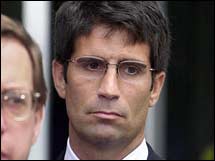
Well, this Mary Flood/Chronicle article provides even more confirmation that the Task Force has chosen to make the Lay-Skilling trial a material non-disclosure case. As Ms. Flood notes, the Task Force last week quietly arranged for Mark Koenig, the former head of Enron’s investor relations section, to alter the statement that he made in connection with an August 2004 cooperation agreement with the Task Force under which Koenig pled guilty to a single count of aiding and abetting securities fraud. Koenig faces a possible 10 year sentence on the charge, but he clearly expects to receive a lesser sentence through his cooperation with the Task Force. A copy of Koenig’s explanation of his revised statement is here, a copy of his revised statement is here and a copy of the transcript of the hearing in which Koenig agreed to his plea deal can be downloaded here.
The gist of Koenig’s revised plea bargain statement is that he misrepresented in his initial statement what occurred during a July 12 2001 conference call between Enron executives and securities analysts. In his initial statement, Koenig confessed to telling analysts during that call that Enron Energy Services was reorganized “to get some more efficiency” when the true purpose of the reorganization was simply to conceal losses. You may recall that EES also figured prominently in former Enron chief accountant Richard Causey’s statement in connection with his plea deal.
In his revised statement, Koenig now contends that — based on a recent review of an audiotape of the July 12 2001 conference call — it was Skilling who made the “get some more efficiency” representation to analysts and not Koenig, after all. Koenig’s revised plea statement clearly is intended to head off the type of impeachment that occurred with regard to the testimony of key prosecution witness Ken Rice during last year’s Enron Broadband trial.
Nevertheless, Koenig’s revised statement raises almost as many questions as it answers, not the least of which is why Koenig — who was under treatment and medication for depression at the time of his plea deal — agreed to a relatively harsh plea deal and admitted to making the key false statement in the charge against him in the first place when, in fact, he didn’t make the statement? Similarly, how did Koenig’s lawyer miss such a key error in the original plea deal?
Meanwhile, Ms. Flood also reports that the Lay-Skilling defense team filed a pleading yesterday that could certainly liven up the examination of witnesses during the upcoming trial. The pleading requests that U.S. District Judge Sim Lake allow the defense to attempt to impeach the credibility of certain government witnesses during the trial by allowing the defense to cross-exam those witnesses regarding such matters as their use of pornography, unlawful drug use, solicitation of prostitutes and/or extramarital affairs. This Carrie Johnson/Washington Post article reports that the defense motion is pointed particularly toward former Enron CFO, Andrew Fastow:

One unnamed witness, described by a source familiar with the case as former finance chief Andrew S. Fastow, had “pornography habits, which were so extensive that when his computer files were seized they were submitted to the FBI for criminal investigation,” defense lawyers claimed in court filings.

Looks as if at least the defense wants to avoid what occurred during a large portion of the trial of the Enron Broadband case last year.

Top ten lies of entreprenuers

guykawasaki3.jpgAuthor, Apple Mac evangelist, and Silicon Valley venture capitalist Guy Kawasaki has an interesting blog in which he follows up this clever post on the “Top Ten Lies of Venture Capitalists” with this hilarious post on the “Top Ten Lies of Entreprenuers,” which include the following (see Kawasaki’s post for his explanation of each lie):

1. ìOur projections are conservative.î
2. ìGartner says our market will be $50 billion in 2010.î
3. ìBoeing is going to sign our purchase order next week.î
4. ìKey employees are set to join us as soon as we get funded.î
5. ìNo one is doing what we’re doing.î
6. ìNo one can do what we’re doing.î
7. ìHurry because several other venture capital firms are interested.î
8. ìOracle is too big/dumb/slow to be a threat.î
9. ìWe have a proven management team.î
10. ìPatents make our product defensible.î
Bonus lie: ìAll we have to do is get 1% of the market.î

My contribution: “If you can help us solve this initial cash flow issue, we’ll be just fine.”

Peter Lattman on the Calpine chapter 11 case

Calpine Steam Guy Logo2.JPGAfter only a week, Peter Lattman’s new WSJ Law Blog is proving well worth reading, as reflected by his posts here and here on the politics involved in the initial meetings to select the creditors’ committee and its counsel in the Calpine Corp. chapter 11 case, which include the following observations:

Youíd think that a get-together of people owed money by Calpine would be a solemn affair, but it felt more Kiwanis Club than Creditors Club. Thatís because most of the people in the room werenít creditors; they were the lawyers, bankers, and consultants who make their livings off the carcasses of bankrupt companies like Calpine.
And this is one tight-knit group. After . . . 10 minutes of bland introductory remarks, they adjourned the meeting for two hours to select a committee. At that point a party broke out. The various advisors lingered, glad-handing and networking their way through the room. We even ran into a few hedge fund managers working the crowd, trying to handicap their investments.

National Championship redux

vinceyoung3.jpgFollowing a weekend in which University of Texas alums continue to bask in the glow of their university’s first National Championship football team in a generation, I pass along the following items of interest:

The flat-out cleverest piece on the UT-USC National Championship game is this hilarious Bill Simmons/ESPN Page 2 column entitled “Welcome Back, Coach Fredo.” Don’t worry, Longhorn fans. Simmons is talking about USC coach Pete Carroll with that “Coach Fredo” tag. Hat tip to Kevin Whited for the link.

As expected, the star of UT’s National Championship team — QB Vince Young of Houston’s Madison High School —
announced on Sunday that he is ending his UT career and declaring himself eligible for the NFL Draft later this year. A collective sigh of relief could be heard from the eleven Big 12 coaches other than Longhorn coach Mack Brown.

Speaking of the NFL Draft, corporate legal expert Stephen Bainbridge provides a forum for discussing who the Texans should select as the first pick in the upcoming draft. One commenter posted the following football/corporate law question regarding the recent Texans-49’ers “Reggie Bush Bowl“:

Just a thought on the football game between the 49ers and the Texans. If the team was a corporation, would the Texans have a duty to lose the game in order to secure the number one pick? Winning the game is really not a benefit to the organization itself. Curious about your thoughts.

Another favored former Longhorn QB — Major Applewhite — may be the last offensive coordinator of the Rice University football program before the university downgrades its football program from NCAA Division I-A. New Rice head coach Todd Graham is employing young assistant coaches to help him attempt to revive the program — the average age of the assistants who he has hired to date is just under 33 years old.

The star-crossed football career of former Texas Tech running back Bam Morris — fresh off a prolonged stint in Leavenworth Federal Prison — took another interesting turn as the Orlando Predators of the Arena Football League hired Morris to play running back for the team. Morris was the top running back in college football during the 1993 season.

Finally, although football is a dangerous activity, it’s nothing compared to this one.

The Talented Mr. Kopper

The NY Times’ Landon Thomas, Jr. — whose interesting article on former Merrill Lynch executive Nigerian Barge defendant Daniel Bayly was highlighted in this previous post — scores again today with this fascinating article on Michael J. Kopper, the former Enron executive who orchestrated along with with former Enron CFO Andrew Fastow the effective embezzlement of millions from Enron through the company’s transactions with special purpose entities (“SPE’s”) that the two controlled.

Despite Kopper’s role in orchestrating the embezzlement and the resulting breach of market trust that ultimately led to Enron’s demise into bankruptcy, Mr. Thomas notes that Kopper’s plea bargain with the Enron Task Force is likely to result in a relatively light prison sentence, perhaps even probation.

One has to wonder how former Enron chief accountant Richard Causey — who didn’t receive a penny from the tens of millions that Fastow and Kopper embezzled from Enron — feels about that turn of events. Larry Ribstein comments along those same lines here.

Given the societal bias against all things related to Enron, it’s easy to overlook the key role that Kopper had in Enron’s collapse. A good case can be made that the true criminal acts at Enron were limited to Fastow, Kopper and a relatively small group of their underlings who also profited from the transactions between Enron and the SPE’s that Fastow and Kopper controlled.

The original concept of the SPE’s — before Fastow and Kopper hijacked them — was actually sound and creative.

With equity owned primarily by investment banks and other financial institutions, the SPE’s were initially intended to be private equity funds with completely separate management from Enron. The main attraction of the SPE’s for investors was the funds’ preferred right to invest in Enron assets, which benefited Enron by allowing the company to preserve liquidity and hedge risk.

Former Enron treasurer Jeff McMahon — who often clashed with Fastow over Fastow’s machinations with the SPE’s and ultimately lost his treasurer’s position because of those clashes — recruited a bright investment banker from Bankers Trust in London named Michael Jakubik in 1998 to run the SPE’s.

However, after Jakubik had moved to Houston to take the position of running the equity funds, Fastow engineered a last-minute coup in which he installed Kopper in the position with the SPE’s intended for Jakubik and directed McMahon to put Jakubik in another position with Enron.

That set the stage for Fastow and Kopper’s embezzlement from Enron using the SPE’s, the public disclosure of which triggered the the breach of trust that caused the markets to turn on Enron.

Mr. Thomas’ colleague at the Times, Kurt Eichenwald does a good job of describing the foregoing events on pp. 194-219 of his book on the Enron scandal, Conspiracy of Fools (Broadway 2005).

Causey Not on Task Force’s Witness List for Lay-Skilling Trial

The Chronicle’s Mary Flood reports that former Enron chief accountant Richard Causey, who pled guilty to a single count of securities fraud last week under an plea deal in which he agreed to serve seven years in prison, is still not listed on the most recent witness list that the Enron Task Force was required to provide yesterday to the defense teams of Causey’s co-defendants, former key Enron executives Ken Lay and Jeff Skilling.

Ms. Flood reports that the Task Force also dropped several witnesses on three topics — Enron Broadband, the Coyote Springs deal and the valuation of an Enron asset dubbed “Mariner.”

The Task Force’s indecision on whether to use Causey as a witness is really not surprising despite much of the mainstream media’s expectation that he would transform into a key witness against his former co-defendants simply because he agreed to a plea deal.

Unlike discredited former Enron Broadband CEO Ken Rice, Mr. Causey’s plea deal with the Task Force is not a cooperation agreement, so he is under no obligation to assist the Task Force in its prosecution of Messrs. Lay and Skilling.

Moreover, as Ms. Flood notes, the Task Force may still elect to revise its witness list closer to trial to add Causey as a witness and may gain a small tactical advantage in doing so by delaying the delivery of his witness statements to the Lay-Skilling defense team.

However, the Task Force better not wait too long if they want to use Causey because U.S. District Judge Sim Lake probably would not look kindly upon such gamesmanship.

The lastest revelation is just more confirmation that the Task Force is dispensing with a substantial number of its allegations in its indictment against Lay and Skilling regarding alleged accounting fraud and focusing on developing a case that is based on alleged false or non-disclosure of material information to the investing public.

Given the Task Force’s experience in the Enron Broadband case, simplification of its case against Lay and Skilling is probably a prudent move, although it sure opens up legitimate questions that the defense can raise with the jury on why the Task Force alleged in the indictment dozens of other inflammatory allegations — particularly against Skilling — and then didn’t pursue them.

Finally, the Chronicle’s business columnist Loren Steffy wrote this interesting column in which he speculates that Causey’s plea deal was the result of a good man coming to terms with his wrongdoing.

Maybe so, but the circumstantial evidence indicates that my explanation is closer to the truth.

Remember those high prices for natural gas?

natural gas rainbow-well4.jpgWasn’t it just a few weeks ago that we were enduring demagogues’ calls for governmental intervention in regard to increasing oil and gas prices?
Well, continuing a trend noted in this post from a week ago, the natural-gas contract for February delivery on the New York Mercantile Exchange settled at $9.499 per million British thermal units during intraday trading on the New York Mercantile Exchange, the first time that such contacts have settled below $10 since Hurricane Katrina wreaked havoc on Gulf Coast production facilities last summer. This represents almost a 40% decline from the Dec. 13 record. The market was undercut yesterday by an Energy Information Agency report that natural-gas volumes in U.S. storage actually rose last week, which is unprecedented during the last week of December.
Meanwhile, Clear Thinkers favorite James Hamilton is wondering whether the U.S. economy has faded the 2005 oil price shock and notes that there are some reasons to worry about energy prices in 2006.

The High Price of Asserting Innocence

Last week, former Enron chief accountant Richard Causey pled guilty to a single count of securities fraud and agreed to a seven-year prison term after vigorously defending himself from multiple charges of business crimes for over two years. Had he elected to defend himself at trial against the charges and lost, he would have faced an effective life sentence.

A friend of Causey’s commented that, despite the plea, Causey does not think he committed crimes at Enron and that he pled guilty to spare his family the emotional trauma of the trial and a possibly longer prison sentence.

Earlier this year, former Enron Broadband CEO Ken Rice testified falsely in the Enron Broadband trial after cutting a plea bargain with prosecutors in the face of an almost certain conviction on insider-trading charges (Rice had sold Enron stock in August, 2001 immediately after a meeting with Jeff Skilling in which Skilling informed Rice that he was resigning as Enron’s CEO).

The Enron Broadband trial ended in a mess of acquittals and a mistrial, and all five defendants in that case face re-trials later this year. Rice remains free on bond and has not yet been sentenced.

Meanwhile, throughout the over four-year criminal investigation relating to the demise of Enron, the Enron Task Force has engaged in widespread intimidation of potential witnesses in Enron criminal cases by threatening those witnesses with indictment if they provide exculpatory testimony on behalf of any defendant in an Enron-related criminal trial.

Lawrence Ciscon and Beth Stier testified dramatically about those prosecution threats during the Enron Broadband trial, and dozens of key witnesses with exculpatory testimony declined to testify on behalf of four Merrill Lynch executives in the Nigerian Barge trial after the prosecution had fingered the witnesses as unindicted co-conspirators. The Merrill Lynch executives were all convicted in that trial and are now serving jail sentences.

Amidst that backdrop, U.S. District Judge Sim Lake yesterday sentenced the plea-bargaining defendants in the sad case of Jamie Olis (Chronicle article here) — former Dynegy executive and Olis boss Gene Foster, and Dynegy employee Helen Sharkey — to 15-month and one-month sentences respectively for their involvement in the Project Alpha transaction that ensnared Olis (Doug Berman comments on the sentences here as does Peter Henning here).

The government previously obtained a gruesome 24 year sentence against Olis for having the temerity of asserting his innocence in regard to the Project Alpha-related charges at trial. The Fifth Circuit later overturned that sentence and Olis is awaiting re-sentencing.

Yale Law Professor John Langbien, who has written extensively on prosecutorial abuse in the American criminal justice system, observes as follows:

Plea bargaining concentrates effective control of criminal procedure in the hands of a single officer. Our formal law of trial envisages a division of responsibility. We expect the prosecutor to make the charging decision, the judge and especially the jury to adjudicate, and the judge to set the sentence. Plea bargaining merges these accusatory, determinative, and sanctional phases of procedure in the hands of the prosecutor.

Students of the history of the law of torture are reminded that the great psychological fallacy of the European inquisitorial procedure of that time was that it concentrated in the investigating magistrate the powers of accusation, investigation, torture and condemnation. The single inquisitor who wielded those powers needed to have what one recent historian has called ‘superhuman capabilities [in order to] . . . keep himself in his decisional function free from the predisposing influences of his own instigating and investigating activity.'”

I cannot emphasize too strongly how dangerous this concentration of prosecutorial power can be. The modern prosecutor commands the vast resources of the state for gathering and generating accusing evidence. We allowed him this power in large part because the criminal trial interpose the safeguard of adjudication against the danger that he might bring those resources to bear against an innocent citizen — whether on account of honest error, arbitrariness, or worse.

So, what really is the bigger problem for American society and the rule of law? Criminal business executives or out-of-control prosecutors who bludgeon defendants into plea bargains and use the threat of indictment to prevent juries from hearing exculpatory testimony about defendants charged with crimes?

The disparity in sentences between Olis, on one hand, and Foster and Sharkey, on the other, is a stark reminder of the high price that a business executive must pay these days for asserting innocence in the American criminal justice system. Similarly, the difference between Causey’s seven year sentence and whatever Rice eventually gets is largely attributable to Causey’s assertion of his innocence until the eve of his trial. Ellen Podgor previously commented on the troubling implications of this trend in connection with the sentences emanating from the WorldCom prosecutions.

In a scene set just after World War II from the movie The Aviator (hat tip to Larry Ribstein), Howard Hughes asks Senator Brewster if he really wants to go to war with him. Brewster responds:

“It’s not me, Howard. It’s the United States government. We just beat Germany and Japan. Who the hell are you?”

What the government is doing in punishing Jamie Olis for asserting his innocence is wrong. Likewise, regardless of what one thinks about the propriety of the government’s Lay-Skilling and Nigerian Barge prosecutions, the government is wrong in preventing the defendants in those cases from presenting to their juries exculpatory testimony from dozens of relevent witnesses.

It’s easy to delude ourselves that the cost of doing nothing in response to such wrongs is “merely” the lives of a few unpopular businessmen. But in reality, erosion of justice and respect for the rule of law is the far higher price that we pay for turning our collective cheeks in the face of such abusive tactics. For, as Sir Thomas More reminds us, if that abusive state power is not controlled and is then turned on us, “do you really think you could stand upright in the winds [of abusive state power] that would blow then?”

Belly to Hip Ratio more important than BMI?

beerbelly.jpgThis Washington Post article reports on a new study published in The Lancet that indicates the relationship between belly size and hip size is more useful measure of health risk than the commonly-used body mass index (BMI):

According to a study published in The Lancet, a calculation comparing waist circumference to hip circumference is a better predictor of heart attack risk than . . . [b]ody mass index, [which] is often used to screen for obesity and to assess risk for a variety of diseases and conditions, including diabetes, metabolic syndrome and heart attack.
[T]he Lancet study, described by the authors as the largest and most conclusive to date, found that “BMI is a very weak predictor of the risk of a heart attack,” said Salim Yusuf, lead author and director of the Population Health Research Institute at McMaster University in Hamilton, Ontario. “Measuring the girth of the waist and [the] girth of the hip is far more powerful.”
The authors suggested people forgo calculating BMI. “I’d say just do the waist-to-hip ratio,” Yusuf said. “There really is no additional value [in] doing the BMI.”

The study indicates that even relatively lean people with a BMI that is quite low still have increased risk for heart attack based on the presence of abdominal fat. It remains unclear why location of fat in the abdominal area poses a greater health risk than fat carried around the hips, but recent studies have also linked waist-to-hip ratio to increased risk of diabetes and hypertension. The findings reported in Lancet study indicate that men with waist-to-hip ratios greater than 0.95 are at heightened risk for a heart attack and that females with ratios above 0.8 are at increased risk, and that the the risk “rose progressively with increasing values for waist-to-hip ratio, with no evidence of a threshold.”
Speaking of health-related matters, the Chronicle has added a health-related blog by medical reporter Leigh Hopper to its growing list of weblogs. Chronicle technology reporter Dwight Silverman spearheaded the Chronicle’s blog initiative last year, and now other prominent newspapers are emulating the Chronicle’s blog idea. Kudos to Dwight and the Chronicle for contributing greatly to this productive trend of enhancing communication between media and its customers.

Just an expense of doing business at KPMG

kpmg logo38.jpgAs KPMG’s settlement of the class action lawsuit against the firm over its promotion of tax shelters lurches toward final approval, this NY Times article reports that the number of class members opting-out of the proposed settlement is unusually high (almost 30% of all class members) and speculates that KPMG may elect to exercise its right under the settlement agreement to opt-out of the settlement itself if too many class members opt-out.
Although it was nice of the Times to deliver that message by KPMG to class members, there is little chance that the firm will terminate the settlement. Even if 30% of the class members opt out, that means that KPMG has still liquidated its liability to over 190 former tax shelter clients at an aggregate amount of the $180 million or so that KPMG will contribute to the $225 million settlement. That’s under a million per individual claim, which is the equivalent of a payout on a “slip and fall ” case for KPMG these days. No way KPMG rolls the dice that it can do better than that by defending the class action and even more opt-out individual claims at trial.