
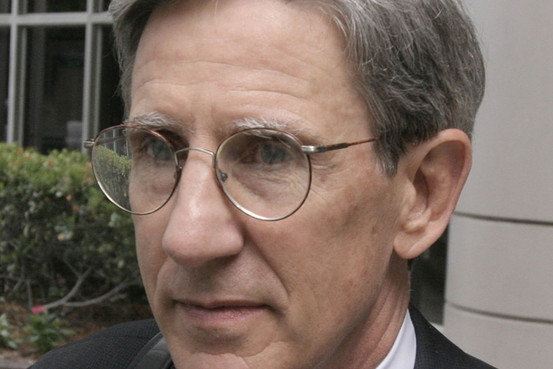
NY Times on the sad case of Dan Bayly

Landon Thomas, Jr. of the New York Times has written this major Sunday Times article about the sad case of Daniel Bayly, the former head of Merrill Lynch’s global investment banking division who is presently serving a two and a half year prison sentence as a result of his conviction on corporate fraud charges in connection with the controversial Enron-related Nigerian Barge case.

Mr. Thomas’ article is an excellent portrayal of the extraordinary personal damage that is resulting from the Justice Department’s dubious criminalization of business in the post-Enron era. Mr. Thomas points out how that the implementation of that policy has moved beyond catching big fish such as Ivan Boesky or Bernard Ebbers and is now ensnaring relatively unknown business executives such as Mr. Bayly, who really had limited involvement in the underlying transaction involved in the Nigerian Barge case.

Moreover, Mr. Thomas delves extensively into the troubling conduct of Merrill Lynch’s management, which offered up Mr. Bayly and his three Merrill colleagues to the Justice Department as sacrifical lambs in an effort to avoid an indictment of the firm that might have prompted an Arthur Andersen-type meltdown. The disturbing nature of such corporate sacrificial lamb offerings has been a frequent topic on this blog.

Mr. Thomas’ article is a refreshing change from the more common demonization of business executives that usually takes place in the mainstream media. However, beyond the scope of Mr. Thomas’ piece is the distressing conduct of the Enron Task Force prosecutors in the Nigerian Barge case and the other Enron-related criminal cases. Regardless of what one thinks about the issue of whether the Nigerian Barge case should have been made into a criminal case in the first place, no reasonable analysis of the case can justify the Task Force’s suppression of the truth during the trial of case.

In short, the Task Force took a reasonably complex finance transaction between Enron and Merrill Lynch and criminalized it through a brazen web of distortion, suppression of key testimony, inadmissible hearsay, opposition to the defense’s jury instruction on the key issue in the case and prosecutorial misconduct. Rather than charging Mr. Bayly and his colleagues and then allowing the jury to sort through all relevant testimony and evidence in determining the truth, the Task Force presented to the jury a fictional screenplay of the underlying transaction and then effectively prevented Mr. Bayly and the other defendants from presenting the mountains of testimony and evidence that contradicted the Task Force’s fictional account. To make matters worse, the Task Force is deploying precisely the same deplorable tactics in its legacy case against former key Enron executives Ken Lay, Jeff Skilling and Richard Causey.

Thus, despite the enormous personal tragedies that each of the families of the four Merrill Lynch executives involved in Nigerian Barge case are enduring, the even greater tragedy of this case is the damage done to our system of justice and the Rule of Law. For as Sir Thomas More reminds us, if we do not require the state to adhere to justice and the Rule of Law in even cases against the unpopular business executives of the moment, then “do you really think you could stand upright in the winds [of abusive state power] that would blow then?”

The Enron Task Force’s suppression of the truth in the Nigerian case is showing us precisely what happens when such ill winds blow, and the resulting emotional trauma that the Merrill Lynch executives and their families are experiencing cannot reasonably be dismissed as merely a trade-off of an imperfect system.

Is the Lord of Regulation also the Lord of Compensation?

spitzernew10.jpgFollowing on the theme from this earlier post, this Kimberly Strassel/Wall Street Journal ($) op-ed examines the deposition testimony that is emanating from New York Attorney General Eliot Spitzer‘s lawsuit to recover alleged overcompensation paid by the New York Stock Exchange to former NYSE CEO Richard Grasso in connection with Mr. Grasso’s $140 million pay and retirement package. Ms. Strassel reports that the deposition testimony from the NYSE directors is contradicting Spitzer’s theory of the case, which is that the directors were given incomplete information regarding Grasso’s pay package and that they shirked their duty to evaluate the compensation arrangement fully. Noting Ms. Strassel’s piece, Larry Ribstein points out the transparent nature of the legal issue and the political purpose of the Grasso lawsuit, and provides the following “money” observation:

Spitzer is attempting to collect the rent on this litigation for his gubernatorial campaign. . . .
An imponderable here is where Spitzer gets off second-guessing a compensation decision. ShouldnĂ­t this be subject to the business judgment rule which, after all, gave the Disney board considerable coverage in the Ovitz affair? Well, the NYSE is a non-profit, and so gets SpitzerĂ­s solicitous stewardship under an arguably stricter rule. But one wonders why the business judgment rule wouldn’t apply here, since non-profits have to operate under the same conditions in hiring executives that the for-profits do, and courts aren’t any better able to review compensation in a non-profit.

Fifth Circuit schedules return to New Orleans

5th Cir logo11.gifThe Fifth Circuit Court of Appeals, which relocated temporarily to Houston in the aftermath of Hurricane Katrina (earlier posts here and here), issued this press release yesterday in which it made public its plans for returning to New Orleans next month. The court will begin moving back Dec. 16 and will be closed until Jan. 8, during which time only emergency matters will be handled. The court originally had planned to move to Baton Rouge as an intermediate step before returning to its longtime home in New Orleans’ John Minor Wisdom Court of Appeals Building. However, conditions in New Orleans are stable enough to allow the 135 employees of the Court to return home. The Court has been using makeshift work spaces in the Bob Casey U.S. Courthouse in downtown Houston over the past couple of months.

Lay-Skilling-Causey witness intimidation allegations scheduled for hearing

LaySkillingCausey.gifThis Mary Flood/Chronicle article reports that U.S. District Judge Sim Lake has scheduled a hearing in the Enron Task Force’s legacy case against former key Enron executives Ken Lay, Jeff Skilling and Richard Causey over the defendants’ allegations that the Task Force has engaged in wide-ranging witness intimidation in an effort to suppress exculpatory testimony in favor of the defendants, whose criminal trial is scheduled to commence in less than two months.
Ms. Flood reports that Judge Lake has ordered two Houston criminal defense attorneys and four of their clients to testify in the hearing. The two attorneys are Bob Sussman and Wendell Odom, and one of the client that will be called is Larry Lawyer, a former mid-level Enron executive who previously pled guilty under a cooperation agreement to a tax-related charge arising from a payment that he received in connection with one of former Enron CFO Andy Fastow’s infamous deals in which Fastow and several of his Enron associates enriched themselves.
The witness intimidation issue has been festering throughout both of the prior Enron-related criminal trials. It first arose in connection with the trial of the Nigerian Barge case in which the Task Force effectively suppressed exculpatory testimony for the defendants in that case by fingering as unindicted co-conspirators dozens of former Enron and Merrill Lynch executives who were involved in the transaction that was the basis of the prosecution. Every one of the unindicted co-conspirators declined to testify in the Nigerian Barge trial on the basis of their Fifth Amendment privilege against self-incrimination. Consequently, four Merrill Lynch executives are serving prison sentences without having had the opportunity to present substantial amounts of exculpatory testimony and related evidence to the jury.

Continue reading

The judge said what?

Beatty.gifNew York Bankruptcy Judge Prudence Carter Beatty — who is overseeing the Delta Airlines chapter 11 case — is apparently somewhat of a live-wire on the bench. The airline pilots union has already asked her to recuse herself over remarks she made from the bench regarding the pilots’ compensation, and this Wall Street Journal ($) article reports on several barbs that the judge has tossed from the bench during hearings in the Delta chapter 11 case, including the following:

Yesterday, when Delta’s labor attorney asked the company’s chief financial officer, on the witness stand, what Delta did when it found itself falling behind in meeting financial targets, the judge interjected, “They did what everyone else did: engage in creative accounting.” Amid laughter, the judge continued, “It’s what Enron did, what WorldCom did.” The executive replied, “That’s absolutely not the case.”

Take this auditing job and shove it

pcaob2.gifSo, how would you like being an auditor?
First, Arthur Andersen was prosecuted out of business by the Justice Department in an ill-advised prosecution.
Next, KPMG almost melted down in the face of a criminal investigation into its promotion of tax shelters, and still might not be out of the woods, yet.
Meanwhile, the other largest US accounting firms — PriceWaterhouseCoopers, Deloitte Touche, Ernst & Young and Grant Thornton — all have had problems of their own.
In such an intensely adverse environment, one can only speculate on how many of these firms have been propped up with the infusion of revenue that has been generated over the past couple of years from the gravy train of the Sarbones-Oxley legislation.
But even the benefits of Sarbones-Oxley are not without another swift kick in the rear. The Public Company Accounting Oversight Board — created under Sarbones-Oxley “to oversee the auditors of public companies in order to protect the interests of investors” — has been issuing inspection reports this year in which it has been evaluating the Big Four and other auditing firms’ audits of several undisclosed publicly-traded companies.

Continue reading

The Lords of Regulation go after Lord Black

conrad_black.jpgFraud trials have come a long ways in Chicago since the days of Al Capone as federal prosecutors in the Windy City announced the indictment on Thursday of newspaper entrepreneur Conrad Black and three of his former associates in connection with an alleged fraud scheme that took place while Mr. Black controlled the giant newspaper company, Hollinger International Inc. Charged along with Mr. Black were Jack Boultbee and Peter Atkinson, who were both former vice presidents of Hollinger, Mark Kipnis, the company’s former corporate counsel, and Ravelston Corp., a Canadian company that Mr. Black used to gain control of Hollinger. Mr. Kipnis was charged with fraud in August along with former Hollinger chief operating officer David Radler, who has already copped a plea under which he will serve 2.5 years in the pokey in return for cooperating with prosecutors. The Justice Department’s unusually long press release on the indictment is here.
The indictment contends that the fruits of the fraud were a couple of Park Avenue apartments, a corporate jet, a trip to the South Pacific and over $50 million in allegedly unauthorized payments to executives. Mr. Black and the others are accused of diverting more than $32 million from Hollinger through a byzantine series of transactions that the indictment frankly does not describe well. The indictment also alleges that Mr. Black was involved in the fraudulent diversion of an additional $51.8 million in 2000 from Hollinger’s sale of assets to CanWestGlobal Communications Corp.

Continue reading

SEC shoe drops on former Patterson-UTI CFO

pattersonutilogo2.jpgFollowing on the revelations of late last week, the Securities and Exchange Commission commenced a civil action yesterday to freeze the assets of former Patterson-UTI Energy, Inc. chief financial officer, Jonathan Dwane “Jody” Nelson, who the SEC accuses of masterminding the embezzlement of $70 million from the Snyder, Texas-based contract drilling company (a copy of the complaint is here. In addition to the freeze order, the SEC obtained the appointment of a temporary receiver over Mr. Nelson’s assets. The SEC’s press release on the lawsuit provides more information regarding the alleged scheme than has been made public to date:

Continue reading

Cleveland businessman who bribed Brown Administration officials gets 15 years

City_of_Houston_Logo.gifThe Chronicle’s Dan Feldstein has been doing a good job over the past couple of years of keeping track of the federal corruption investigation that has been going on in Houston and Cleveland, Ohio. In this article from today’s Chronicle, Mr. Feldstein reports that Nate Gray, the Cleveland businessman who was convicted earlier this year of bribing two former City of Houston officials from the administration of former Houston Mayor Lee Brown, was sentenced yesterday to 15 years in prison and ordered to pay $1.5 million to the Internal Revenue Service. Mr. Feldstein also notes that testimony of an FBI agent during the Gray trial indicates that the corruption probe involving former Brown Administration officials is continuing in Houston.
The two former Brown Administration officials who took the bribes from Gray — chief of staff Oliver Spellman and building services director Monique McGilbra — previously copped pleas in agreeing to testify against Gray and were sentenced to far lesser sentences earlier this year. The Justice Department news release on the Gray sentencing and the corruption probe is here, and the previous posts on this bribery scandal are here.

“Coach, did you see that guy’s tattoo?’

adam_sandler6.jpgDo you recall me telling you that some folks in Texas take high school football very seriously? In the “you can’t make this stuff up” category, the following is from this article in today’s Chronicle:

Bigger. Faster. Better beards.
Looking back now, it should have been obvious that something was amiss about the adult football team that Texas Christian School fielded three weeks ago in Austin.
Not to mention the tattoos.
“Some of the guys had tattoos and full beards and looked like they were like 25,” Not Your Ordinary School senior running back David Johnson said of his opponents that Oct. 28 afternoon. “At the time, we thought they were just sort of big.
“Now we see why they looked so old.”
It turns out Johnson and his team unwittingly played a six-man team made up of college-age players, coached by Texas Christian [High School]’s Herc Palmquist. The Texas Christian varsity team was told the game had been canceled and they had the night off.
Instead, Palmquist brought eight college-age players to play what he called a “pickup game,” which NYOS won 28-18.
Now, Palmquist is serving a five-game suspension leveled by the Texas Association of Private and Parochial Schools, which governs Texas Christian athletics.

Read the entire article. If Coach Palmquist gets canned over this, perhaps he could scout for the Texans? On the other hand, given that Texas Christian lost the game even while using college-age players, maybe not.