Five questions about the Stros

stros logo8.jpgAs Spring Training winds down, freelance writer and longtime Stros follower Bob Hulsey addresses five questions about the Stros upcoming season. Check it out.
By the way, word from Florida is that Jeff Bagwell will either begin the season on the disabled list or retire because of his inability at this point to throw a ball adequately to play slow pitch softball, much less Major League Baseball. From the looks of it this spring, Bags’ damaged right shoulder has also sapped him of any remaining power that he once had as one of the most feared sluggers of the past decade and a half. Thus, my bet is that Bags hangs ’em up rather than linger on the Stros’ bench for the season as the highest-paid singles hitter in the game.
With his retirement, Bags will immediately become the greatest former player in Stros history and will likely become the first Stros player to be named to Baseball’s Hall of Fame. This post explains why.

The ongoing Hamilton-Carey feud

milo.jpgThe long-time feud between Stros’ announcer Milo Hamilton and the late Cubs’ announcer Harry Caray boiled over recently with the publication of Hamilton’s autobiography, which includes a chapter lambasting Caray.
The Chronicle’s sports television columnist David Barron reports that Caray’s son, Atlanta Braves announcer Skip, recently passed along his congratulations to former Stros announcer Gene Elston, who was recently named to the broadcaster section of Baseball’s Hall of Fame. In so doing, Caray couldn’t pass up the opportunity to land a jab on Hamilton, who is also a member of the Hall of Fame:

Finally, an Atlanta Braves spokesman called recently to offer congratulations from Skip Caray regarding Gene Elston’s selection for the Ford Frick Award from the Baseball Hall of Fame. The message comes with a twist for Caray’s least favorite Houston broadcaster, Milo Hamilton.

“I’m so happy for Gene. He’s such a nice man,” Caray said. “It’s good to see a Houston broadcaster who deserves to get in the Hall of Fame get there and one who didn’t have to brown-nose in order to do it.”

The always entertaining Bill James

Bill James.jpgMajor League Baseball Spring Training is well underway in Florida and Arizona, so it’s time to check in on Clear Thinkers favorite, Bill James (previous posts here, here, here, and here), the father of the statistical analysis of baseball called sabermetrics.
In this paper, the always insightful James addresses his increasing recognition of the limitations of sabermetrics:

I have come to realize, over the last three years, that a wide range of conclusions in sabermetrics may be unfounded, due to the reliance on a commonly accepted method which seems, intuitively, that it ought to work, but which in practice may not actually work at all. The problem has to do with distinguishing between transient and persistent phenomena, . . .

James then goes on to explore eight commonly-held sabermetric beliefs about baseball and explains why a majority of them may not be as well-understood as sabermetricians think. The primary reason? Essentially luck.
Then, to get you in the mood for listening to the radio broadcast of your favorite team, listen to this hilarious NPR spoof of what many radio broadcasts of baseball games — including those of the Stros — have become in the age of ubiquitous commercial endorsements.

Breakfast of Champions?

bbonds5.jpgThis SI.com article contains the excerpts from the new book about Barry Bonds’ alleged steroid use that has received a fair amount of media play this week.
However, as noted in this earlier post, the issue of whether use of steroids allowed Bonds to hit more home runs than he otherwise would have hit is an entirely different issue and not as clear-cut as most folks assume. Art DeVany has written this paper on the subject and here is the abstract:

There has been no change in MLB home run hitting for 45 years, in spite of the new records. Players hit with no more power now than before. Records are the result of chance variations in at bats, home runs per hit, and other factors. The clustering of records is implied by the intermittency of the law of home runs. Home runs follow a stable Paretian distribution with infinite variance. The shape and scale of the distribution have not changed over the years. The stable Paretian law of home runs generalizes the laws of extreme human performance developed by Pareto, Lotka, Price, and Murray. The greatest home run hitters are as rare as great scientists, artists, or composers.

By the way, don’t miss this hilarious DeVany post on taking a meal in a sports bar.

Baseball Prospectus 2006

Baseball Prospectus 2006.jpgAny brief perusal of the Stros/Baseball category of this blog will reflect that I am a big supporter of the folks at Baseball Prospectus, who produce the flat-out best research and analysis of baseball on the planet. A couple of days ago I received my copy of Baseball Propectus 2006 and, as usual, it’s combination of witty writing and first-rate statistical research and analysis makes it essential reading for anyone who wants to keep up with the current status of MLB teams and players. I actually take my copy of Baseball Prospectus with me to each of the many Stros games that I attend each season.
The lastest edition of Baseball Prospectus — as with the past two annual editions — is bearish on the Stros, primarily because of the club’s reliance on high-priced aging stars Bagwell and Biggio and an overall lack of talent in the farm system. My more optimistic appaisal of the Stros allowed me to one-up Baseball Prospectus in predicting that the Stros would be a playoff club last season (pre-season post here), although I must admit that — during both of the past two seasons — there were times that I was ready to throw in the towel on the Stros, too.

Continue reading

The San Antonio Marlins?

marlins.jpgFollowing on this earlier post, this Miami Herald article reports that the Florida Marlins, beset by lease and attendance problems, are seriously focusing on San Antonio as its most likely relocation target:

[Marlins President] Samson said the Marlins are ”very encouraged” about how aggressively San Antonio is pursuing the Marlins and that the city is ”under very serious consideration.” Samson always has said the Marlins prefer to remain in South Florida, but stadium talks remain stalled.
San Antonio was the first city the Marlins visited after receiving permission to explore relocation. ”I imagine there will be another visit there,” Samson said.

San Antonio is presently preparing a stadium financing plan, which will be submitted soon to the Marlins and Major League Baseball. With a stadium located with good access from both the San Antonio and Austin metro areas, my sense is that the Marlins could do quite well in San Antonio, which — along with Austin — is a hotbed of baseball interest.
However, San Antonio’s leaders may want to get the Chamber of Commerce in line with their effort to attract the Marlins.

More on the Bagwell muddle

JeffBagwell12.jpgChronicle sportswriter Richard Justice continues in this column with his illogical broadsides on Stros owner Drayton McLane over whether the best player in Stros history — Jeff Bagwell — is disabled from playing Major League Baseball (previous posts here, here and here).
Giving much credence to Bagwell’s rather childish behavior toward McLane and McLane’s quite reasonble assertion of a claim under a disability insurance contract that partially secures a portion of Bagwell’s substantial contract, Justice reasons that McLane is a greedy capitalist who does not want to allow the best player in Stros history to play out his contract on his own terms. Such dubious reasoning with regard to McLane is quite common of Justice.
The reality of the situation is this. The Stros and Bagwell entered into a long-term contract that the Stros prudently secured partially with a disability insurance policy. Bagwell’s arthritic shoulder may have disabled him from playing Major League Baseball and the Stros were under a January 31 deadline to make a claim under the disability policy, which they did. The Stros are giving Bagwell an opportunity to prove during Spring Training that he is not disabled and would gladly waive their disability insurance claim if Bags can throw a baseball effectively and generate numbers this season anywhere near the level that he has over his career. But it’s far from clear that he can.
So, what exactly is the basis of Justice’s animus toward McLane? Could it be this?

Gene Elston — the best Stros announcer, ever

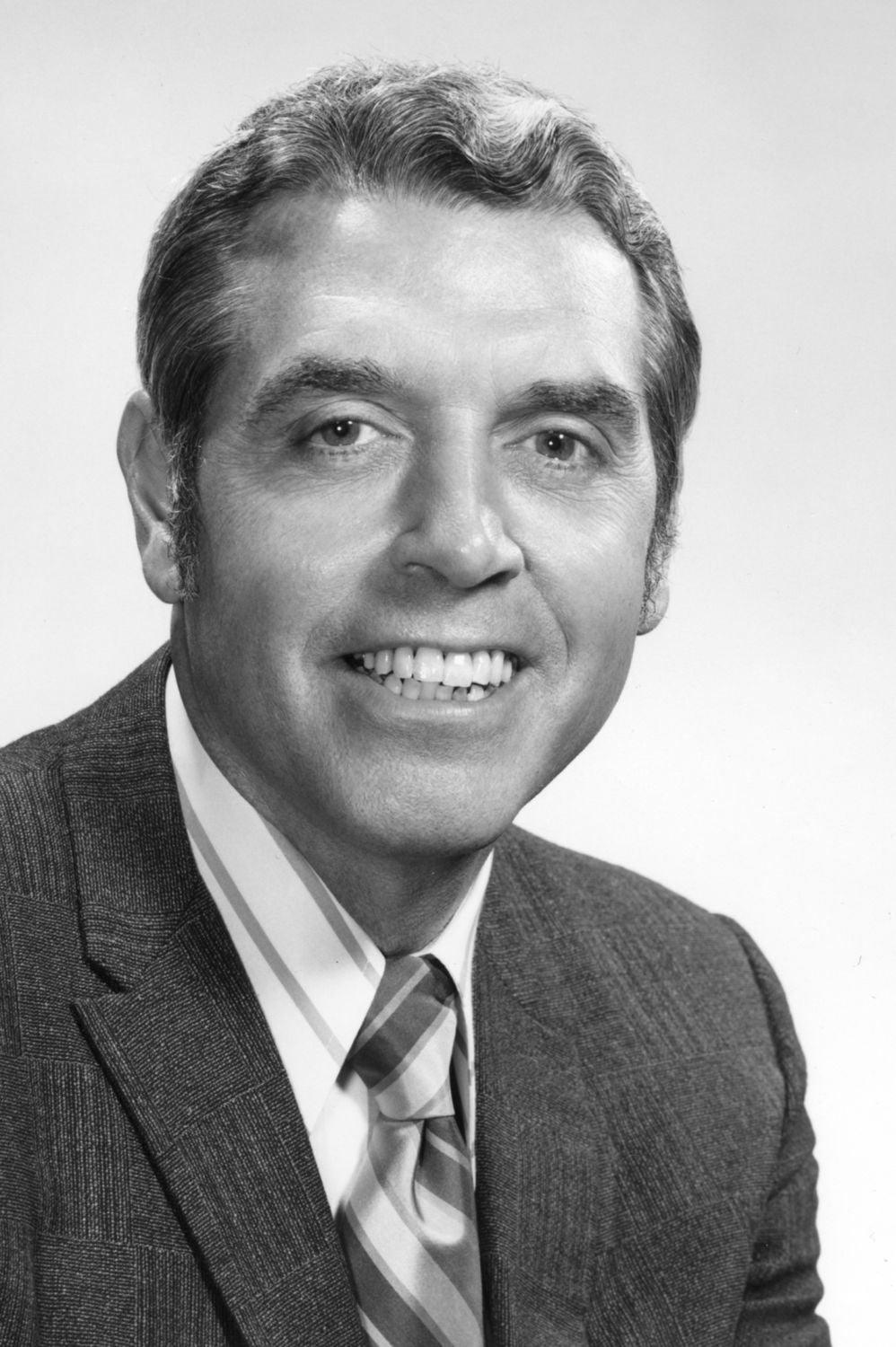
One of the biggest public relations blunders in Stros history was then-owner John McMullen’s decision in 1986 to fire Gene Elston, the first radio play-by-play announcer hired when the Stros club began as a Major League Baseball franchise in 1962.

Elston was the epitome of what a baseball announcer should be. His low-key, analytical, articulate and well-prepared approach resonated with Stros baseball fans, and McMullen’s ill-advised decision to fire the hugely popular Elston helped to cement McMullen’s fate as the second-most hated owner of a professional sports team in Houston (second only to the Oilers’ Bud Adams).

Elston was the antithesis of what is common among play-by-play announcers nowadays, who often substitute cheerleading for their employer over substance.

Inasmuch as Elston’s style was to go unnoticed, he is not well-known outside of Houston. But thankfully, that’s about to change as the 83 year-old Elston has been selected to receive the 2006 Ford C. Frick Award for broadcasting excellence from the National Baseball Hall of Fame (MLB.com article here). Elston will be honored during Hall of Fame induction weekend in late July in Cooperstown, N.Y.

Chronicle sportswriter John McClain — who has never even met Elston — contributes this fine column on how just listening to Elston strongly influenced his career, and provides the following insight into what made Elston’s style so compelling:

For those of you who weren’t fortunate enough to grow up with Gene Elston, here’s what you missed: He was the consummate professional who was admired and respected by just about everyone.

He wasn’t a homer. He could be critical without being mean. We knew we were getting an accurate and honest account of the game.

Elston wasn’t a screamer. He didn’t have a trademark phrase.

His style didn’t intrude on the action on the field. Truthfully, you hardly knew he was there, and yet he described the action in a way that made you feel as if you were sitting right next to him.

And he did it night after night for 25 years. From 1962 through 1986, there was nobody better than Elston.

And no matter how many more years the Astros do business, he’ll always be the best.

More muddled thinking on the Bagwell situation

JeffBagwell10.jpgThe Chronicle’s Richard Justice — who ignited a remarkable amount of muddled thinking regarding the Stros’ claim under the club’s disability insurance policy on its star firstbaseman, Jeff Bagwell (related post here) — continues with the nonsense in his column today.
Justice proposes that the Stros waive making a claim for $15.6 million under the disability insurance policy and allow Bags to try and play this season in return for Bagwell’s promise that he would pay the club $7.8 million — i.e., half of the disability insurance claim — if it turns out that Bags really is disabled and can’t play effectively this coming season.
Uh, I don’t think Richard ran that proposed “solution” by Bags and his agent. Bags, the greatest player in Stros history, negotiated a five-year, $85 million contract from a position of strength six years ago under which the Stros agreed that he would receive a guaranteed amount (now down to $24 million) regardless of whether Bags is physically capable of playing major league baseball throughout the term of the contract. And now Justice proposes that Bags place $7.8 million of that $24 million at substantial risk for the opportunity to prove that he is physically capable of playing major league baseball?
Why on earth would Bags do that? Even if the Stros release Bags and collect the entire claim under the disability insurance contract, Bags could still attempt to play major league baseball with another club without risking a dime. Romantic considerations aside, does Justice really think for a moment that Bags would or should be willing to risk $7.8 million for the opportunity of trying to prove that he is capable of playing one final season with the Stros?
Richard Justice should stick to reporting on baseball, not contracts and risk evaluation.

The Bagwell non-issue

JeffBagwell8.jpgThe silliness about the Stros-Jeff Bagwell situation continues over at Richard Justice’s blog:

And the Drayton McLane-Jeff Bagwell dispute is a story with legs. What if the insurance claim is rejected, and Bagwell ends up on the field in spring training?
That will make for some uncomfortable moments when Uncle Drayton does one of his handshake tours of the clubhouse.
He may be doing the right thing from a business standpoint even if his chances of collecting are slim. But players pay attention to how other players are treated.
Next winter’s Roy Oswalt discussions got a lot more interesting this week.

So, Roy O is less likely to re-up with the Stros because of the way Drayton McLane has treated Bags?
Let’s review the very simple landscape.
Everyone concedes that Bags is at least partially disabled from playing Major League Baseball — he can no longer throw a ball effectively. The only question is whether that partial disability allows the Stros to recover about $15.5 million under a disability insurance policy that the club purchased on Bags. The club still owes Bags $24 million for the final year of his contract.
Bags wants the Stros to waive the $15.5 million claim under the insurance policy and let him try to play this season, although Bags acknowledges that he doesn’t know whether he will be able to do so. Meanwhile, Bags has not offered (and probably cannot under the MLB-MLBPA Collective Bargaining Agreement) to restructure his contract to induce the Stros of taking the economic risk of not making a claim on the insurance policy.
In short, the greatest player in Stros history is suggesting that the Stros should walk away from a potential $15.5 million recovery without receiving anything more than a great ballplayer’s goodwill for giving him one last chance at playing ball, probably at the expense of his teammates, who would likely be better off having a non-disabled ballplayer playing instead of Bags.
Frankly, Bagwell is the one being unreasonable here, not Drayton McLane. What should really concern Roy O would be if McLane were to give in to Bagwell’s self-indulgent stance. That he is not reflects that McLane is willing to do the right thing for the rest of the Stros ballplayers, even when doing the right thing is not what the greatest player in club history wants.