Bashing this year’s Super Bowl city

super bowl xl.jpgYesterday’s league championship games decided that the Steelers and the Seahawks will tangle in Super Bowl XL, but it remains decidedly unclear whether this year’s big game in Detroit will be the hot ticket of Super Bowls past.
As noted in previous posts here and here, last year’s Super Bowl host city Jacksonville was ill-equipped to handle the logistical demands of handling the Super Bowl. Now, as Phil Miller notes in this post, Detroit is getting even a worse reaction from from prospective Super Bowl attendees than Jacksonville:

With the NFL’s first cold-weather Super Bowl in 14 years, and only the third one in the event’s 40-year run, just three weeks away, many of the firms that arrange Super Bowl hospitality trips report that clients are not as eager to go this year.
The tepid response is largely due to the expected cold weather, with the average high termperature in February in Detroit at 36 degrees. That combined with the city’s lackluster reputation, have led some clients to depart for other locales such as Vegas and the Caribbean for viewing parties, or simply taking a pass and booking early for the 2007 game in south Florida.

Well, so much for building a stadium to get a Super Bowl to promote the city!
That’s from the latest issue of the Sports Business Journal. The article starts out by mentioning that Dan Marino and John Elway will be raising money for their charities during Super Bowl week – in Las Vegas. Ouch!

Speaking of football, here is a nice story about a couple of football fans who have a special interest in the upcoming Super Bowl.

Flying the friendly chapter 11 skies of United

UAL-logo12.gifAfter wallowing over three years in chapter 11, United Airlines parent UAL Corp. finally emerged from bankruptcy this past Friday (previous posts here) amidst the usual wave of optimism that greets such achievements. Recent trading in bankruptcy claims and UAL’s unsecured bonds indicates that the reorganized UAL’s stock might perform better than anticipated, which would generate more for unsecured creditors than the estimated four to eight cents on the dollar dividend that UAL estimated during the disclosure and confirmation hearings in regard to its chapter 11 plan.
Count me as not so bullish on the reorganized UAL’s prospects.

Continue reading

Reflection of a Mickey Mouse league

referee_bop_bag200.jpgOne of the perceptions that the University of Houston athletic teams have fought since the demise of the Southwest Conference a decade ago is that they compete in a “Mickey Mouse” conference — that is, Conference USA.
A conference in D-I athletics these days is defined as a “major” conference by whether the conference has a tie-in to the Bowl Championship Football Series that sponsors the richest bowl games and the annual National Championship game, which Texas won this past season. Thus, institutions in conferences such as the Big 10, the Big 12, the Pac-10, the Atlantic Coast and the Big East all reap more money and prestige because of their conference’s automatic berth in the BCS bowl games. On the other hand, conferences such as CUSA that have no tie-in to the BCS struggle financially and with membership, as institutions in such conferences continually seek to migrate into a more lucrative membership in a BCS conference.
So, with that backdrop, it’s not as if CUSA needs any further reinforcement that it’s not among the “major leagues” of major college athletics. Therefore, CUSA officials were in full-blown, public relations-crisis mode earlier this month when a CUSA football officiating crew was ridiculed by the announcers on national television during the Outback Bowl game in Orlando between the Florida Gators and the Iowa Hawkeyes. The officiating crew made at least half-a-dozen clearly wrong calls in the game, mostly against Iowa, including a game-deciding offsides call that nullified a Hawkeye recovery of an onside kick during a furious comeback in the closing minutes of the game.
After that call allowed Florida to hang on to a 31-24 victory, CUSA’s official in charge of officiating attempted to stem the public relations debacle by publicly apologizing and announcing that he was launching an investigation into the officiating crew’s performance. Nonetheless, the CUSA crew’s performance in the Outback Bowl will probably prompt BCS conference schools to decide not to use non-BCS conference referees in future bowl games between teams from BCS conferences. In short, yet another slap in the face for CUSA.
But it turns out that the CUSA referees’ performance in the Outback Bowl was hardly an aberration. As this Michael Murphy/Houston Chronicle article reports (SportsPageMagazine.com report here), a CUSA officiating crew was generally horrible during the UH-University of Alabama-Birmingham basketball game last night in Birmingham. However, one bad call topped all others — the officiating crew called a technical foul against University of Houston basketball coach Tom Penders just before halftime for collapsing on the sideline!:

With 52.6 seconds to play in the first half, Penders rose to his feet, staggered and then crumpled to his hands and knees on the sideline. After a few moments, Penders went flat as medical personnel rushed to attend to him.
[CUSA referee John] Hampton strolled by, paused and called a technical foul on Penders, apparently thinking the coach was reacting to a questionable intentional foul call on Smith.
Even when Penders was taken off the court on a stretcher, Hampton refused to rescind the technical. UAB’s Carldell Johnson made both free throws for a 48-44 lead.

UAB won by three points. Kevin Whited has more here.
Inasmuch as the only real justification for UH to subsidize the not insubstantial operating deficit each year for its athletic program is the public relations benefit that the university reaps from its athletic teams, are those millions being wisely-spent when the UH teams are effectively forced to compete in a Mickey-Mouse conference such as CUSA?

Profiting from criminalizing business

weissman12.jpgAndrew Weissmann, the former head of the Enron Task Force who stepped down last year at the conclusion of the Task Force’s disastrous Enron Broadband trial, is joining the New York office of law firm Jenner & Block where he will specialize on internal corporate compliance and investigations, including representation before the Justice Department, the Securities and Exchange Commission, and state and local authorities. Peter Lattman — whose WSJ Law Blog has quickly become one of my daily reads –comments on Weissmann’s hiring in the context of the New York legal scene here.
Meanwhile, as a result of Weissmann’s dubious prosecutions while leading the Task Force, four Merrill Lynch executives have unjustly had their careers destroyed and their personal freedom lost, and thousands of employees around the country lost their jobs as an American accounting icon was improperly prosecuted out of business.
That’s not the typical resumÈ that one would think would land a partnership at a prestigious law firm.

Checking in on oil prices

oil and gas well at sunset8.jpgWhile the price for natural gas has receded quickly from the post-hurricane highs of last summer, oil prices have been a different story.
Crude-oil future contracts on the New York Mercantile Exchange climbed about a dollar yesterday, settling at a four-month high of almost $67 a barrel. Benchmark light, sweet crude-oil futures for February rose $1.10 to settle at $66.83 a barrel, which was the highest closing price since mid-September. Although inventory data indicates that U.S. crude and product stocks are at above-average levels, market jitters remain over the possibility that international oil supplies could be disrupted further as a result of political problems in both Iran and Nigeria.
Clear Thinkers favorite James Hamilton is thinking about what the rise in oil prices indicates, and he continues to believe that the current oil price rise is demand-driven, unlike the speculative bubbles of past spikes.

Emshwiller’s Enron surprise

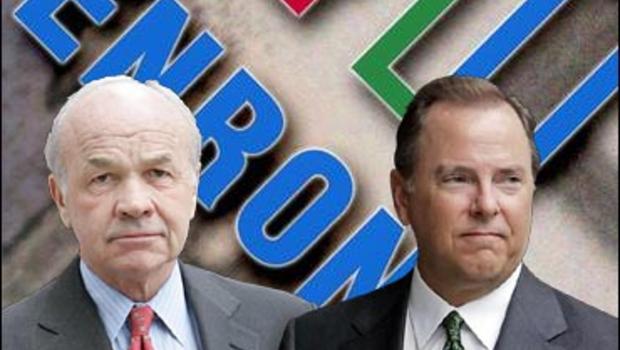
John Emshwiller of the Wall Street Journal ($) weighs in today on the defense strategy of former Enron key executives Ken Lay and Jeff Skilling for their upcoming criminal trial, and he is surprised to find that Lay and Skilling are not conceding the government’s theory that the former executives covered up a financial house of cards at Enron:

Four years of investigations and intense news coverage have made Enron a synonym for fraud and sleaze. But when the trial of former top executives Jeffrey Skilling and Kenneth Lay begins Jan. 30, defense lawyers will make a bold argument: Everything their company did was legal.

That approach stands in stark contrast to some other big-name corporate defendants in recent history. Lawyers for former WorldCom Inc. Chief Executive Bernard Ebbers and former HealthSouth Corp. chief Richard Scrushy didn’t dispute that large-scale financial shenanigans had occurred at the companies. They simply argued that their clients didn’t know about the wrongdoing. . .

The government wants to persuade jurors that the case is simply about two rich and powerful men lying to protect their troubled business empire. [Skilling lawyer Daniel] Petrocelli’s task is to show that it wasn’t so simple. The matters at the heart of the government’s indictment involve sophisticated accounting and financial decisions that were fully vetted by Enron’s outside lawyers and auditors, says Mr. Petrocelli.

Read the entire article, which is really one of the best articles about the defense strategy in the case that has appeared in a major newspaper to date. But it’s an interesting dynamic that Mr. Emshwiller — who has covered the Enron scandal from the beginning — thinks that Lay and Skilling’s defense is “audacious.” In point of fact, there is nothing in his article about the Lay-Skilling defense strategy that has not already appeared in the many previous posts about the Enron case on this blog, although I must concede that the WSJ’s readership is a tad larger than that of this modest forum. ;^)

Nevertheless, Emshwiller’s surprise over the defense strategy reinforces just how the conventional Enron story — i.e., that the company was merely a house of cards and that the company’s intrinsic instability was hidden from the investing public by a greedy and deceitful management team — has become engrained in the psyche of American society.

Indeed, as reflected by this discussion over the injustice of what happened to the Merrill Lynch executives in the Nigerian Barge case, many otherwise thoughtful and intelligent people believe that they understand the Enron morality play so thoroughly that they seemingly lose the capacity for independent thought regarding Enron and reject any notion of ambiguity or fair-minded analysis in ferreting out the truth of what really happened at Enron.

It’s better late than never that Emshwiller is providing a fair piece on Lay and Skilling’s story about what happened at Enron. But the shattered lives and companies that result from the witch-hunt mentality of cases such as Enron and Michael Milken is a stark reminder of the enormous societal cost of criminalizing corporate agency costs rather than allowing responsibility for alleged wrongdoing in such cases to be sorted out in a civil context.

Update: Don’t miss Larry Ribstein’s typically insightful comment on the Emshwiller article, which includes the following foreboding observation for the next executives who are subjected to prosecution in the criminalization-of-agency-cost lottery:

But it’s worth noting that future Skillings may not even have the opportunity to mount a defense like this. The CEO of the next Enron that goes down will be criminally prosecuted under SOX section 906 for signing off on financials when they knew, at least in hindsight, there were defective internal controls, whatever that means. I guess after the next $40 million defense (and God knows how much taxpayer money for the prosecution) we’ll find out.

Jeff Skilling, interior designer

Jeff Skilling_si.jpgFresh off this informative article on the energy trading industry from over the weekend, the NY Times’ Alexei Barrionuevo scores again with this entertaining article on how former Enron chief executive officer Jeff Skilling designed and outfitted his defense team’s offices across the street from Houston’s federal courthouse.
One of the most interesting nuggets of information in the article is that Skilling’s younger brother — who is an attorney — moved to Houston from Istanbul over the past two years to help his older brother in his time of need. That type of brotherly devotion and sacrifice is unusual and impressive, and is another indication that Skilling’s true human nature is far different and more nuanced than the overwhelmingly negative portrayals of Skilling’s character that are common in the mainstream media.

Edith Jones takes the helm of the Fifth Circuit

EdithJones_tn.jpgClear Thinkers favorite and longtime Houstonian Edith H. Jones has been appointed the Chief Judge of the Fifth Circuit Court of Appeals in New Orleans.
Here is a series of blog posts over the past couple of years on some of Judge Jones’ opinions and the frequent speculation that she will eventually be nominated for the U.S. Supreme Court. Judge Jones is one of the best appellate judges in the U.S. on business-related issues and would make a valuable contribution in that area if nominated and confirmed as a Supreme Court Justice. Persuading a majority of the Supreme Court Justices to adopt questionable business-related decisions such as this one would be much more difficult in a Supreme Court that includes Edith Jones.

The twilight zone of the Houston Rockets

lopez2.gifFor some time now, Chronicle sportswriter John Lopez has been writing the most insightful pieces on the local newspaper’s sportspage. In his column today, Lopez continues that trend by expanding on the theme of this post from over a year ago — the bad management decisions of the Houston Rockets:

The reason [the 12-25 Rockets’ season] all has come apart, you might believe, is all the injuries suffered by this team, beginning the day after the opener when Tracy McGrady first strained his back.
But don’t get so caught up in the pain that you neglect what really caused it. If Rockets owner Leslie Alexander, general manager Carroll Dawson and coach Jeff Van Gundy miss the real source of the trouble, the affliction will be lingering.
While injuries might have hastened the fall and brought on overwhelmingly bad nights like Wednesday, the Rockets should face the realization that the biggest problem has been bad decisions. . . .
It’s not just Yao’s toe and McGrady’s back that needs to get better. It’s decision-making from the top of the organization on down.

As with this earlier article on the Texans’ personnel decisions, Lopez goes on to expose the Rockets’ dubious strategy of attempting to plug holes on the roster with aging players.
Thus, after being the toast of Houston a decade ago, the Rockets are now an afterthought on the local sports scene. Even though the Houston Texans football team just completed an even worse season than the Rockets are enduring, the Texans at least remain a common topic of conversation around town as they decide whether to select Reggie Bush or Vince Young in the upcoming NFL draft. Not so with the Rockets. Even on local sportstalk radio call-in shows, the Rockets are rarely a topic of conversation. In short, the Rockets have entered the twilight zone that all professional sports franchises fear most — i.e., the zone where local sports fans respond to a question about the team with a curt “Who cares?”
By the way, speaking of Vince Young, Lopez also explains in this blog post why Young is a far riskier choice for the Texans than Reggie Bush.

The pawn in the Milberg, Weiss game

Milberg Weiss10.jpgThis fascinating Rhonda Rundle W$J article profiles Southern California attorney Seymour Lazar, who was indicted last year for supposedly taking illegal kickbacks from Milberg Weiss Bershad & Schulman, the former law firm of securities fraud plaintiffs lawyers, William Lerach and Melvin I. Weiss. Earlier posts on the investigation into Milberg Weiss are here.
The 78 year-old Lazar — who Peter Lattman characterizes as “one classic dude” — is in poor health and may not even make it through his criminal trial that is slated to begin later this year, but he is well enough to make the clearest statement to date of the government’s theory of the case against Milberg, Weiss:

During the recent discussion at his home, Mr. Lazar denied he had conflicts of interest or that the payments were illegal. He said he had taken litigation “ideas” to Milberg Weiss, which paid referral fees to his lawyers, including Mr. Selzer’s firm. Those lawyers in turn allocated some of the fees to pay Mr. Lazar’s personal bills from real-estate lawyers, appraisers and other professionals, he said. It’s not unusual for lawyers to pay referral fees and Mr. Lazar said he had no reason to think the arrangement was improper. Milberg Weiss “gave me part of their fees after the court set the fees and after they got paid,” he said. The fees amounted to 5% to 10% of Milberg Weiss’s compensation on some, but not all cases, he said. The payments, he maintained, didn’t reduce recoveries for other members of the class.
Lawyers for Milberg Weiss say Mr. Lazar wasn’t paid to be a plaintiff. Referral fees, they say, are lawful.

If this is all the government has, then my sense is that the government has a very difficult case against the Milberg Weiss lawyers. Not only are many of the alleged overt acts far beyond the applicable statute of limitations (prosecutors will probably try to bootstrap those acts through a conspiracy charge), proving that referral fees paid to law firms were really disguised kickbacks for Mr. Lazar will be problematic, to say the least. Prosecutors will have to establish that presumably legal referral fees were used to pay Mr. Lazar undisclosed and illegal payments for serving as a class representative. In short, the government’s theory of criminal liability against the Milberg Weiss lawyers is based on an undisclosed oral side deal. Sound familiar?
By the way, it’s with more than a touch of irony that Mr. Lerach is now the target of an investigation that is strikingly similar to the prosecution of agency costs that Mr. Lerach and his new firm are wildly profiting from in connection with the Enron class action securities fraud case. So it goes in the wacky world of criminalizing agency costs.