
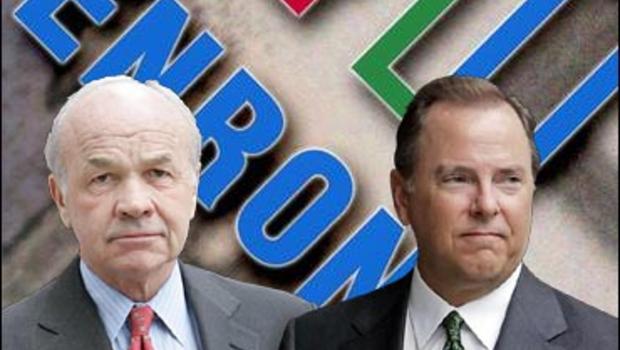
Lay-Skilling, Week Three

The glacial pace of the criminal trial of former key Enron executives Ken Lay and Jeff Skilling quickened this week, as former Enron Broadband CEO Ken Rice finished his testimony after not quite three days on the stand.

Although the mainstream media accounts of the trial continue to be generally favorable for the prosecution and, as such, the trial remains an extremely difficult one for the defense, my sense is that the biggest news after three weeks is that this trial is settling in to being a very difficult one for the prosecution.

The holes in the prosecution’s case are apparent after just two witnesses. The Task Force inexplicably spent almost three times longer with its first witness — Mark Koenig — than it did with Rice, which put the trial on its initial glacial pace.

Then, in an apparent reaction to that miscue, the prosecution seemingly hurried through Rice’s testimony, who is arguably the more important witness of the first two.

Moreover, much of the substance of the testimony of both witnesses was rather odd. Koenig claimed that he believed that Skilling and Lay misled the investment community in various ways, but he didn’t know the mechanics of how that was supposedly accomplished.

On the other hand, Rice asserted that Skilling misled the investment community on the prospects of Enron’s broadband unit, but he didn’t implicate Lay in any alleged wrongdoing at all.

Then, on cross-examination, Rice conceded that he believed Enron Broadband had great long-term potential, but that Skilling and he were involved in improperly hiding some of the unit’s short-term problems.

To make matters worse for the Task Force, the testimony of both men barely touched on a key element of the prosecution’s case — the alleged huge conspiracy within Enron to cover up the wrongdoing at the company.

Indeed, when the prosecution asked Rice on re-direct about whether he was involved in such a conspiracy, Rice replied unenthusiastically that “Mr. Skilling and I had misled investors on a number of occasions about the prospects of our business” at the broadband unit.

So much for the biggest conspiracy of all time.

But perhaps most importantly, both Koenig and Rice admitted during cross-examination that, despite testifying now that they were involved in lying about Enron to the investment community years ago, neither of them made any statement to Skilling, Lay or anyone else at the time of the supposed lies about the wrongdoing.

Similarly, neither of these key prosecution witnesses testified that either defendant ever once acknowledged telling a lie. That lack of evidence of fraudulent intent dovetails with the defense’s theory that Koenig and Rice are only now claiming that they were involved in wrongdoing to hedge their risk of long prison sentences under their plea deals with the prosecution.

That the prosecution had Rice dead to rights on illegal insider trading charges at the time he cut his plea deal also didn’t help his credibility, either.

So, after filing and publicizing a lengthy indictment against Lay and Skilling that asserts a wide array of alleged corporate crimes, the Task Force doesn’t want the jury to see that indictment (although the Lay-Skilling team does) and the Task Force’s case appears to have come down to a plain “pump and dump” case — Skilling and, to a lesser extent, Lay touted the failing company’s shares while selling their own (that Lay’s sales were forced under margin calls is a knawing problem with that theory that the Task Force has not even addressed, yet).

That theory of the case plays on “the presumption” in such cases — i.e., that Lay and Skilling are rich and Enron collapsed, so they must be guilty of something for failing to announce to the investing public that Enron was really just a highly-volatile trading company rather than the more stable logistics company that they contended Enron had become.

After three weeks of trial, it would not be surprising if some of the jurors are saying to themselves about that theory: “Is that all you’ve got?”

Finally, sometimes small things in big trials are the best indicators of problems.

Throughout the trial, Judge Lake has ordered the prosecution to advise the defense of its next five witnesses.

As late as yesterday evening, the prosecution still hadn’t even decided on its next five witnesses, and at least one of those witnesses — Koenig’s former aide, Paula Rieker — will likely be largely duplicative of Koenig’s earlier testimony.

That the prosecution is fumbling over the order of its witnesses at this early stage of the trial is a pretty darn good indication that this is not a prosecution team that is confident in its case.

The Money Lawyers

Money Lawyers.jpgBruce Carton over at the Securities Litigation Watch blog is excerpting portions of Joseph C. Goulden’s new book called The Money Lawyers (Truman Talley 1995), and the first excerpt is a portion of the chapter in the book about controversial class action plaintiffs’ lawyer, William Lerach. Goulden notes that Lerach disarmed him about Lerach’s legendary reputation for combative behavior in their first meeting:

Stories of the [Lerach] temper are legion. An unfriendly adversary told me he once heard Lerach tell corporate executives during negotiations, “I don’t give a f**k if I put your company into bankruptcy. I’m going to take away your beach house and your condo in Aspen by the time I’m finished with you.” When he talks about high tech executives, he tosses around vitriol such as “scumbags” and “crime in the suites.” He can be combative when dealing with other lawyers. One remembers hearing Lerach storm, “Your professional life is at an end. I am going to destroy you.”
But he chose to open our talk with a grin. “So,” he said, “some of those guys are saying nasty things about me, eh?”

UT football’s newest recruiting tool

vinceyoung11.jpg
“Recruits, click on the picture. You could have one of these if you come to UT.”

The power-law theory of homelessness

homeless2.jpgMalcolm Gladwell, he of Tipping Point fame, has authored this fascinating New Yorker article on homelessness, which includes a particularly interesting discussion of the health care costs for the chronically homeless. One example that Gladwell uses is the story of a Reno, Nevada homeless man nicknamed “Million Dollar Murray,” who — when all his health care and substance-abuse treatment costs were calculated for the ten years that he had been on the streets — probably ran up a medical bill as large as anyone in the state of Nevada. As one sage Reno cop observed: ìIt cost us one million dollars not to do something about Murray.î
The entire article is a must read, and here is a snippet to give you a flavor for it:

Continue reading

Have you noticed what’s happening with oil prices?

oreillyconfused.jpgHave you noticed that crude oil prices have declined by 12% this month?
Crude-oil futures dropped $2 on the New York Mercantile Exchange yesterday, falling to the lowest level in two months. Benchmark light, sweet crude-oil futures for March fell $1.92 to settle at $57.65 a barrel, which is the lowest front-month settlement since Dec. 19th. That makes four straight days of losses amounting to almost $5 a barrel. Meanwhile, government data reflects that U.S. petroleum inventories are above the higher end of the average range for this time of year, and oil stockpiles are now at their highest level since late June, 2005.
No word yet from Bill O’Reilly on how the big oil companies, with all their market power, could not prevent this large decline in crude oil prices.

Radio Shack CEO’s resumÈ fluffing?

radio_shack_logo2.gifA rather bizarre story is unfolding in Ft. Worth with regard to Radio Shack chief executive officer, Dave Edmondson.
It appears that Star-Telegram reporter Helen Landy has caught some, ahem, inaccuracies on Edmondson’s resumÈ and corporate biography. But Edmondsonís explanations for the errors are better than the best school child’s explanation of missing homework. His diploma was lost in a fire? He didnít monitor his Web site profile that claimed a psychology degree that his college — Pacific Coast Baptist College in San Dimas, CA. a/k/a Heartland Baptist in Oklahoma City — has never offered? The inaccuracy regarding the type of degree that he received doesn’t make any difference because no one knows the difference between a “Thg” degree and a “BS” degree, anyway?
And then there is the little detail about the multiple DWI incidents.
The Radio Shack board’s “no comment” reaction to all of this indicates that something may be brewing. Stay tuned.

IES finally tanks

IES.jpgAs expected, Houston-based Integrated Electrical Services filed a chapter 11 case in Dallas yesterday and immediately submitted a debt-for-equity reorganization plan that is the culmination of months of pre-bankruptcy negotiations with the institutional debt holders of the highly-leveraged electrical contractor.
This is initial docket of the case, and the Houston Chronicle article on the filing is here. Dan Stewart of Vinson & Elkins’ Dallas office is taking the lead as debtor-in-possession counsel, and Sanford R. Edlein of Glass & Associates, Inc. is the company’s chief restructuring officer. The Creditors Committee has already been appointed and is comprised of institutional debt holders Tontine Capital Partners, L.P., Southpoint Capital Advisors, L.P., and Fidelity Management & Research Co., which were represented in pre-bankruptcy negotations by Marcia Goldstein of Weil, Gotshal & Manges’ New York office. The IES case has been assigned to the Bankruptcy Judge who has the best nickname of any judge in the United States Judiciary, Judge Harlin “Cooter” Hale.
IES is a roll-up that was incorporated in 1997 and, since that time, has used debt to finance an expansion of its operations through the acquisition of other electrical contracting companies. As of the most recent fiscal year, the company had revenues of a little over a billion and employed around 8,900 employees in 140 locations around the world. IES had a net loss of about $129.5 million for last year ($3.31 per share), which followed a net loss of almost $125 million for the previous fiscal year. The bankruptcy filing has been widely-anticipated since mid-December when the company announced that it was contemplating a chapter 11 case with a prepackaged reorganization plan. The NYSE suspended trading of IES stock at that time.
The IES plan is essentially to clean up its balance sheet by swapping around $175 million of its approximate $225 million in senior subordinated debt for an 82% equity stake in the reorganized company. Holders of existing stock in the company will be diluted to 15% of the reorganized company and management and employees will receive 3%. Meanwhile, Bank of America is stepping up to provide about $80 million in debtor-in-possession financing during the chapter 11 case, which IES hopes to conclude on a fast track by mid-to-late April of this year.

Bainbridge on the SOX lawsuit

Sarbanes_Oxley_Harm2.jpgIn this TCS Daily op-ed, the inimitable Professor Bainbridge takes up the lawsuit filed in Washington last week in which an activist think tank asserts that that the Sarbones-Oxley Act’s Public Company Accounting Oversight Board (nicknamed the “Peekaboo board”) is unconstitutional. The think tank’s lawsuit is based on this John Berlau/Hans Bader white paper for the Competitive Enterprise Institute that analyzes the consititutional issues arising from the Peekaboo board’s creation.
The core assertion in the lawsuit is that the Peekaboo board is vested with extensive governmental functions and powers, including the quasi-law enforcement investigatory power and a quasi-judicial power to impose substantial fines for violations of its rules. Inasmuch as the members of the Peekaboo board are appointed by the SEC rather than the President, the lawsuit contends that SOX’s provision providing for creation of the Peekaboo board violates, inter alia, the appointments clause of the U.S. Constitution. Moreover, since SOX lacks a severability clause, the potential defect in a part of the Act may mean that the entire Act must be declared unconstitutional.
Professor Bainbridge thinks that the lawsuit has legs:

There is also little oversight [of the Peekaboo board]. The only way the SEC can undo any of the [Peekaboo board’s] regulations is by proving that the rules are obviously inconsistent with the Sarbanes-Oxley statute — a nearly impossible task given its vague wording. The [Peekaboo board] is even largely independent of Congressional oversight because its budget is financed from the fees it levies on the companies it regulates. The Justice Department may well argue in response that the Board simply doesn’t rise to the level of a “real” agency. But that will surprise corporate America, given that the Peekaboo can fine accounting firms up to $2 million and individual accountants up to $100,000 for violations.
And, of course, familiar principles of agency capture by the industries it regulates suggest that interest group pressures and favoritism are potentially serious problems.

Read the entire piece, along with this analysis of the lawsuit by Constitutional scholar and Bainbridge colleague, Eugene Volokh.
As Professor Ribstein has long maintained, SOX is more than just a bad law:

SOX wasn’t just a bad law, but a uniquely bad law, passed under uniquely bad conditions without any of the safeguards that normally accompany major legislation.
And even if repeal or drastic shrinkage is impossible, it’s still necessary to make the case as a warning against future SOX’s. One way to do that is to establish SOX as a paradigm of bad law. In other words, to make Sarbanes and Oxley the Edsel Fords of corporate governance regulation.

Give me a break

Koenig8.jpgThe Chronicle’s Mary Flood reports that, upon completion of Mark Koenig‘s testimony earlier today in the Lay-Skilling trial, Koenig’s lawyer released the following statement:

“Mark Koenig has completed his testimony, and he will have nothing more to say until this case is concluded. However, I would like to offer an observation.”
“When a person makes wrongful choices and violates the law, that person confronts another choice. Mark Koenig chose to confront and admit his wrongdoing, and to undertake the most meaningful effort available to him to begin making up for his offense. Over the past year and a half, and especially over the past two weeks, that’s exactly what he has done. He embraced responsibility for what he knew to be wrong, and spoke truth about what happened. And in doing that, he displayed a great deal of courage and strength of character.”

H’mm, “displayed a great deal of courage and strength of character?”
While working for Enron, Koenig was operating under one of two circumstances. Either he was lying to the investment community about Enron or he did not intend to mislead anyone and was simply doing the best he could in the financial storm that ultimately cratered the company.
If it was the former, then Koenig continued to lie to investigators for years until he copped a plea in 2004 in which he bargained for a reduced prison term and a substantial net worth in return for testifying against Lay and Skilling. Moreover, Koenig didn’t even cut that deal with prosecutors until after his assistant — former Enron managing director of investor relations Paula Rieker — had cut her plea deal with prosecutors and agreed to testify against Koenig, among others.
On the other hand, if it was the latter, then Koenig has sold his soul to prosecutors and lied on the witness stand in return for a lighter prison sentence and retention of a substantial net worth.
In short, Koenig is either a liar or a perjurer who cut a deal to hedge his risk of a long jail term and to save some money. Either way, Koenig is not trustworthy and certainly did not display “a great deal of courage and strength of character.”

The talented Mr. Munitz’s gal from Jammin’ Salmon

munitz10.jpgAs is often the case with tales of intrigue from California, this LA Times article reports that the final straw in the Getty Trust board’s decision last week to require embattled Barry J. Munitz‘s resignation as Getty Trust president was the unauthorized $350,000 “severance payment” to his former chief of staff, Jill Murphy. As the LA Times story notes, Murphy became Munitz’s protege’ after Munitz hired her out of a Sacramento restaurant called Jammin’ Salmon in the early 1990’s when he was chancellor of the California State University system:

Munitz met Murphy while eating at the Jammin’ Salmon, a Sacramento restaurant where she worked in the mid-1990s. Soon after, he hired her to work for him when he served as chancellor of the California State University system.
He brought her to the Getty shortly after he arrived, creating the position of chief of staff, a title more common in political circles. As the gatekeeper for Munitz, Murphy quickly became a powerful and feared figure among staff.
In her early 30s and with no background in the arts, she was perceived to have the power to make or break people’s careers at the Getty. That power increased as Munitz spent more time away from Los Angeles on trust business.
Munitz has acknowledged Murphy has “sharp elbows” but defended her as brilliant and effective.
Three years ago on a board retreat in London, Getty trustees confronted Munitz about Murphy’s increasingly divisive presence, [Getty trustee Ramon] Cortines said. Munitz promised to do something about it, but little changed, the trustee added.
Murphy announced in August she would leave the trust by the end of the year, saying she had been inspired by a book she had read about ending world poverty by 2025. “It is an inspiring goal, and I hope to find some way to contribute toward making it a reality,” she said in a statement.

During far less glamorous times, Munitz was the president of the University of Houston.