While the Price of Asserting Innocence is High, Pleading Guilty is Lucrative

Alexei Barrionuevo, who has been doing a fine job covering the day-to-day developments in the Lay-Skilling trial for the New York Times, and his Times colleague Kurt Eichenwald — who has written the best overall book on the Enron scandal, Conspiracy of Fools (Broadway 2005) — collaborated on this article in today’s Sunday Times that addresses one of the more troubling aspects of the government policy of criminalizing corporate agency costs — the exorbitant cost of a defense to charges in such a case.

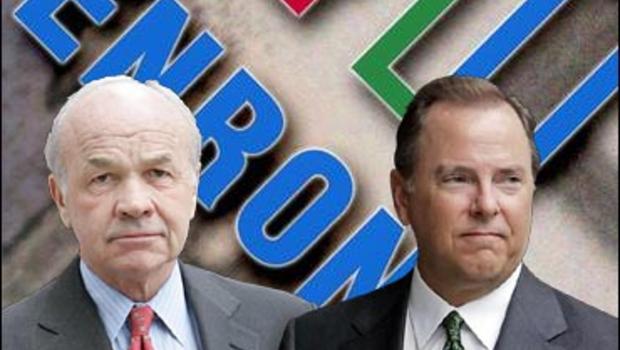
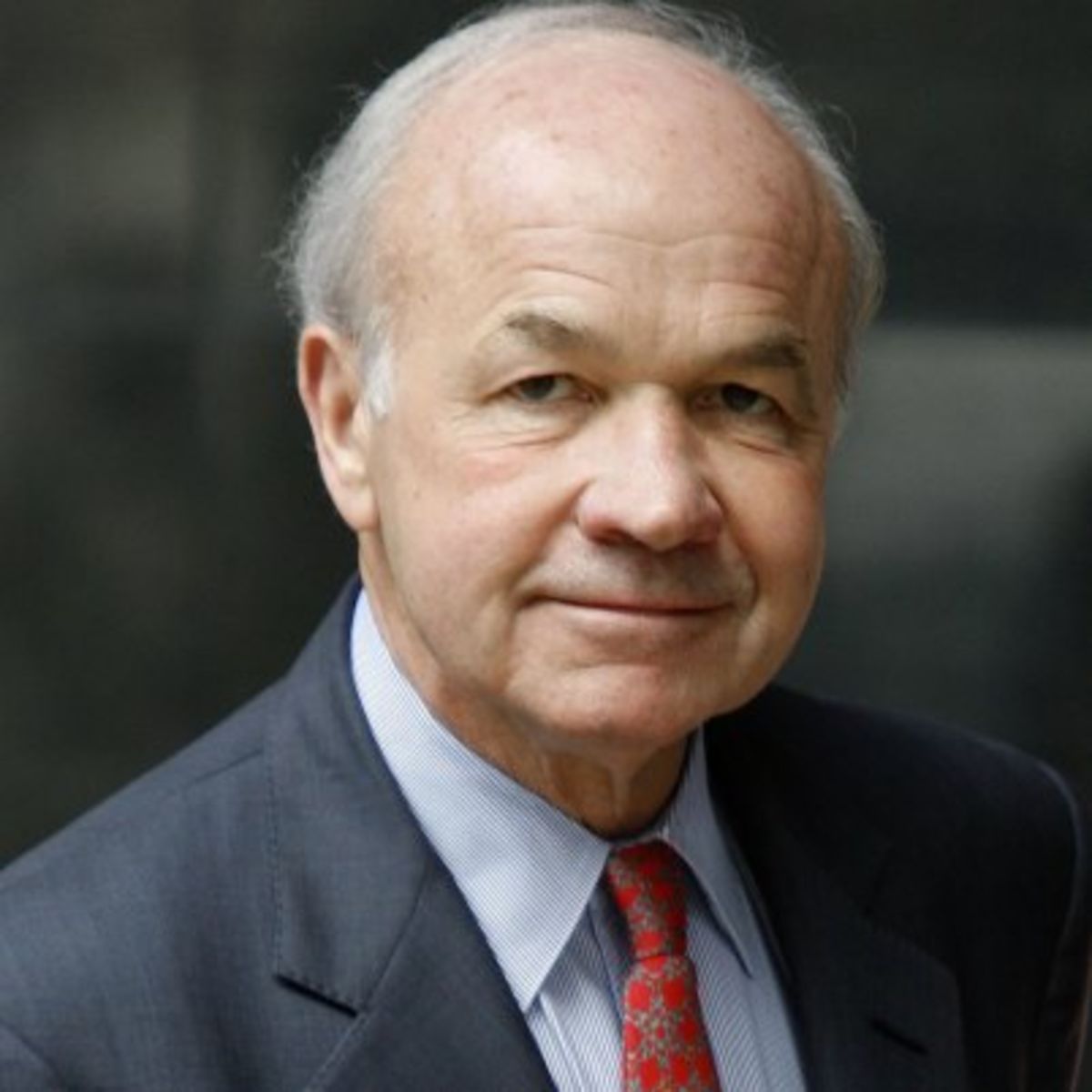
The article lucidly points out that Ken Lay — who at one time was worth about half-a-billion dollars and now is almost broke — has paid or dedicated about $10 million to his defense team, which is on top of another $20 million that his lawyers were paid from Enron’s D&O insurance policies before the proceeds of those policies were locked up in connection with the Enron independent directors’ settlement in the Enron class action securities litigation last year.

Inasmuch as Lay’s co-defendant, Jeff Skilling, has reportedly paid over twice as much out of his pocket than Lay to his defense team and presumably received about as much of the insurance proceeds as Lay, an estimate of $70 million in defense costs for the case is certainly well within the ballpark of accuracy.

And as enormous as the defense expenditures have been, you can bet that the cost of the prosecution is much higher.

So, what are we to make of this extraordinary expenditure of resources?

My sense is that it is a stark reflection of the folly of engaging in the the type of criminalization of corporate agency costs — which is legalese for the prosecution of merely questionable business decisions — that has been a large part of the Enron Task Force’s largely ineffective trials to date in the Enron-related cases.

While the Task Force has properly obtained plea bargains from former Enron CFO Andrew Fastow and the relative few of his cohorts who effectively embezzled money from Enron, the Task Force prosecutors have not limited themselves to such clear cases of theft and fraud.

Rather, the Task Force has spent an enormous amount of time and resources criminalizing business decisions that simply do not involve the black-and-white circumstances of theft.

Indeed, these types of business decisions involve judgments over various possible alternatives, a number of which — given the nature of business risk — will turn out badly and result in a loss for the company.

As Stephen Bainbridge points out in this insightful TCS Daily column, hindsight bias of juries with regard to such bad outcomes results in penalizing beneficial risk-taking rather than punishing true criminal conduct.

Many judges and most lay juries usually have only a minimal understanding of the nature of business risk-taking and, therefore, improperly conclude that a bad result from a business decision had a high probability of occurring (and, thus, should have been prevented by the decision-maker) simply because the bad result occurred.

Consequently, juries are generally biased in favor of finding criminal liability against a business executive under such circumstances even if, at the time the business judgment was made, the probability of the bad result was reasonably low and hedging the risk of the bad result was too expensive. Professor Bainbridge explains the counterproductive effects of this syndrome:

[T]here is a substantial risk that juries will be unable to distinguish between competent and negligent management because bad outcomes often will be regarded, [viewed with 20-20 hindsight], as having been foreseeable and, therefore, preventable. . . . If liability results from bad outcomes, without regard to the [looking forward] quality of the decision and/or the decisionmaking process, however, managers will be discouraged from taking risks.

If it is true that lack of gumption is the single largest source of agency costs, as somebody once said, rational shareholders will disfavor liability rules discouraging risk-taking, as Judge Ralph Winter opined in Joy v. North:

[B]ecause potential profit often corresponds to the potential risk, it is very much in the interest of shareholders that the law not create incentives for overly cautious corporate decisions. . . . Shareholders can reduce the volatility of risk by diversifying their holdings. In the case of the diversified shareholder, the seemingly more risky alternatives may well be the best choice since great losses in some stocks will over time be offset by even greater gains in others. . . . A rule which penalizes the choice of seemingly riskier alternatives thus may not be in the interest of shareholders generally.Hence, when juries review the merits of even bad corporate governance, they run the risk of effectively penalizing “the choice of seemingly riskier alternatives.”

In sum, shareholders deserve protection from theft, but not from risk taking, . . . Unfortunately, it’s not clear that prosecutors know the difference — or even care.

Meanwhile, the flipside of the high-cost of asserting innocence is the financial pressure to plead guilty, which is underscored by the motion that former Lay-Skilling co-defendant Richard Causey filed late last week.

As a result of his plea deal, Causey in his motion requests (with the Enron Task Force’s approval) that U.S. District Judge Sim Lake release several million dollars of property to Causey that the government had previously frozen and not allowed Causey to use (except to pay some living expenses) while he was defending himself from the government’s charges.

Thus, the first three substantive prosecution witnesses in the Lay-Skilling trial were each able to preserve a significant net worth by copping a plea deal with the Task Force.

While some speculate that Causey’s decision to plead guilty was the result of a personal revelation of wrongdoing, Causey’s motion and other circumstantial evidence reflects that the true reasons for that decision are far more nuanced and troubling.
Andrew Weissman and the Criminalization of Business Mindset

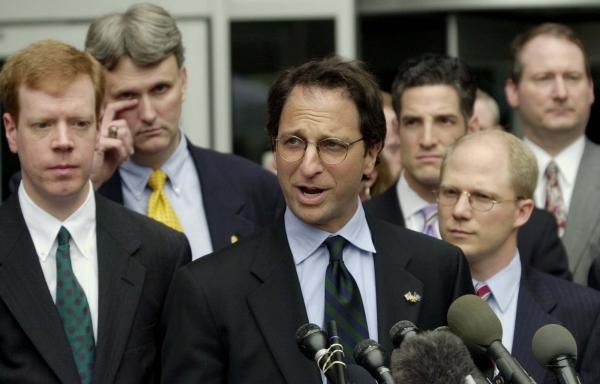
Peter Lattman — whose WSJ Law Blog has quickly become essential daily reading on business law matters — points us to this Corporate Crime Reporter article on former Enron Task Force director Andrew Weissmann, who is leaving the Justice Department for a position in the white collar criminal defense section of Jenner & Block.

As this Mary Morrison article explains in detail, Weissmann’s dubious decision to prosecute American accounting icon Arthur Andersen out of business over the firm’s work for Enron was an egregious breach of prosecutorial discretion. In the Corporate Crime Reporter article, Weissman is asked about his decision to prosecute Andersen:

Weissmann defends the prosecution of Andersen against a growing consensus in the defense bar that the firm should not have been prosecuted.

“The company through its choices had given the Department of Justice an ‘all or nothing’ ultimatum,” Weissmann said. “People need to remember that Andersen had been offered a deferred prosecution agreement and rejected it.”

He believes that as a result of the Andersen prosecution, more and more corporations are jumping at deferred and non-prosecution agreements when offered.

“One of the fallouts from Andersen is that corporations are much more willing to say yes to deferred prosecution agreements, because they can see what happened to Andersen,” Weissmann said. “What major corporation is now going to gamble that the Justice Department is going to go away and issue a declination? That’s one of the reasons you are seeing a dramatic rise in deferred prosecution agreements and non-prosecution agreements.”

H’mm, let’s break this reasoning down.

An improper prosecution that cost people and communities in the U.S. over 30,000 jobs was really Andersen’s fault because the firm didn’t agree to a deferred prosecution agreement in regard to crimes that the firm did not commit.

Besides, despite the cost of thousands of jobs and millions of dollars in retirement benefits, the improper prosecution was still justified because it achieved the better good of scaring other companies into selling out their employees and copping deferred prosecution agreements.

That such appalling reasoning goes unchallenged in the article is a daunting sign of our times.

Prosecution of business crimes has become a game of roulette for prosecutors such as Weissmann, who play on an ugly cauldron of public cynicism, resentment, and tolerance for abusive use of governmental power to prosecute the unpopular business executive of the moment.

When the frightening loss of thousands of jobs and the destruction of careers and families is glibly rationalized by a former high governmental official as merely a tolerable cost of the use of the state’s awesome prosecutorial power for the better good of society, we are well on our way to a time when, as Sir Thomas warns us, we will not be able to “stand upright in the winds” of abusive state power that will blow then.

And what about the criminalization of business mindset that Weissmann reflects?

Ayn Rand summed it up well with regard to her observation about socialism (courtesy of Bryan Caplan):

[T]he truth about their souls is worse than the obscene excuse you have allowed them, the excuse that the end justifies the means and that the horrors they practice are means to nobler ends. The truth is that those horrors are their ends.

More on the Bagwell muddle

JeffBagwell12.jpgChronicle sportswriter Richard Justice continues in this column with his illogical broadsides on Stros owner Drayton McLane over whether the best player in Stros history — Jeff Bagwell — is disabled from playing Major League Baseball (previous posts here, here and here).
Giving much credence to Bagwell’s rather childish behavior toward McLane and McLane’s quite reasonble assertion of a claim under a disability insurance contract that partially secures a portion of Bagwell’s substantial contract, Justice reasons that McLane is a greedy capitalist who does not want to allow the best player in Stros history to play out his contract on his own terms. Such dubious reasoning with regard to McLane is quite common of Justice.
The reality of the situation is this. The Stros and Bagwell entered into a long-term contract that the Stros prudently secured partially with a disability insurance policy. Bagwell’s arthritic shoulder may have disabled him from playing Major League Baseball and the Stros were under a January 31 deadline to make a claim under the disability policy, which they did. The Stros are giving Bagwell an opportunity to prove during Spring Training that he is not disabled and would gladly waive their disability insurance claim if Bags can throw a baseball effectively and generate numbers this season anywhere near the level that he has over his career. But it’s far from clear that he can.
So, what exactly is the basis of Justice’s animus toward McLane? Could it be this?

Lay-Skilling, Week Four

Long trials tend to settle into a rhythm, and the criminal trial against former key Enron executives Ken Lay and Jeff Skilling is no exception.

After four weeks of trial, the prosecution has put on three substantive witnesses. Each one has gone through a heavily-scripted direct examination in which they confidently accuse Lay and Skilling of making various misleading statements to the investing public and employees.

Then, defense attorneys on cross-examination chip away at the prosecution witnesses’ testimony on direct, and the witnesses gradually become far less decisive in their accusations than they were during their testimony on direct examination. Much of the testimony is quite boring, but — as with a baseball game — short bursts of really interesting activity breaks up the tedium. And U.S. District Judge Sim Lake provides a steady hand and a dry wit to the proceedings.

The testimony this week of former Enron investor relations executive Paula Rieker was a case in point.

The prosecution rolled through direct examination of the business-like Ms. Rieker in a little less than a day, and the prosecution appeared to score some jury points when she testified on Tuesday afternoon that an Enron director characterized (how was this not excluded as inadmissible hearsay?) Lay’s use of the line of credit component of his compensation package “as an ATM machine.”

Then, Bruce Collins, the member of the Lay defense team who handled cross-examination of Ms. Rieker, opened his cross-examination on a questionable note, suggesting in a question to Rieker that Lay’s draw of about a million dollars on his company line of credit days before the company filed its chapter 11 case was just “a drop in the bucket” given the magnitude of the company’s other matured liabilities at the time.

Inasmuch as Rieker’s “no, sir” response to that question was probably the same as every juror would have answered if asked the same question, Tuesday concluded as a good day for the prosecution, particularly in its case against Lay, who had barely been mentioned by the first two witnesses, Mark Koenig and Ken Rice.

Collins steadied himself over the next day and a half of cross-examination and methodically took Rieker through each one of her accusations against Lay, and she conceded that Lay had never asked her to make any misleading statements or to do anything wrong, for that matter.

However, Rieker was composed responding to questions from Collins and she often extrapolated on her answers despite Collins’ attempts to cut off her off. Thus, a day and a half of initial cross-examination was rather dull in comparison to the relative excitement of Rieker’s Tuesday afternoon testimony.

But that all changed quickly when Skilling lawyer Daniel Petrocelli began his cross-examination late yesterday morning.

In as effective cross-examination of a difficult prosecution witness that I have seen in awhile, Petrocelli immediately disassembled Rieker, catching her right off the bat in a lie about her duties at Enron (“I overstretched,” conceded Rieker).

He then took her through the extraordinary compensation that she had earned ($5 million combined in 2000 and 2001 alone) and the confidential $300,000 bonus that she had accepted from the company just three days before Enron declared bankruptcy (how on earth did the prosecution not attempt to diffuse that fact by bringing it out on direct?).

You were being paid all this money and you never told Skilling or Lay that they were making misleading statements?, Petrocelli effectively asked Rieker repeatedly.

Almost instantaneously, the previously poised Rieker became tense and agitated, and her answers to Petrocelli’s questions increasingly were evasive and often simply non-responsive.

The prosecution’s frequent objections (most of which were overruled) to Petrocelli’s questioning only underscored how effective Petrocelli’s cross-examination was in bringing the best prosecution witness in the trial to date back down to earth.

By the time Petrocelli had Rieker admitting that neither Skilling nor Lay had ever asked her to do anything wrong and that she had not been involved in any criminal activity in her position at Enron other than the insider trade on which her plea deal is based, the Enron Task Force lawyers had to be asking themselves “what happened to that advantage we had after Tuesday?”

Consequently, despite the enormous public relations advantage that the Enron Task Force enjoys in this case, my sense is that the Task Force continues to have big problems in making its case in court.

Almost a month into the trial, each of the Task Force’s substantive witnesses have initially lied to investigators for years until copping a plea in which they bargained for a reduced prison term and a substantial net worth in return for testifying against Lay and Skilling.

Virtually none of the testimony has supported a key element of the prosecution’s case — the alleged huge conspiracy within Enron to cover up the wrongdoing at the company — and Rieker admitted under questioning from Petrocelli that she had engaged in nothing of the sort while at Enron.

Despite alleging now that Lay and Skilling were involved in lying about Enron to the investment community years ago, none of the witnesses have produced any corroborating documentary evidence that they had any reservations at the time about the statements that Lay and Skilling were making. Similarly, none of the witnesses have testified that Lay or Skilling at the time ever admitted that they thought they were making misleading statements.

Doesn’t sound like much of a conspiracy, does it?

Meanwhile, a couple of behind-the-scenes developments also reflect disarray in the Task Force camp. Mirroring Rice’s infamous false testimony in the Enron Broadband Trial and the Task Force’s abysmal handling of that false testimony, it now appears that the prosecution had Rice testify, during the late stages of his testimony last week, regarding a dubious presentation document that the prosecution had failed to produce to the defense.

That prosecution oversight prompted the Lay-Skilling defense to consider bringing Rice back to testify regarding that suspicious document during the defense’s case-in-chief.

It’s usually not a good sign for the prosecution when a key prosecution witness performs so badly that the defense wants to use the witness in the defense’s case-in-chief.

But even more telling of the problems in the prosecution’s case is how little it has to do with the indictment against Lay and Skilling.

The prosecution does not want the jury to see the indictment and does not even want the Lay-Skilling defense team to be able to question witnesses about it.

Based on the prosecution’s presentation of its case to date, it’s easy to see why — a substantial amount of the testimony that the prosecution has elicited from its witnesses is simply not in either the indictment or the statements in compliance against Lay and Skilling.

While reading the transcripts from the trial, I keep a copy of the indictment and the statements in compliance handy so that I can refer to them when I read about something in the transcripts that I had not previously read about in those documents.

I have counted at least three substantive areas that the prosecution has raised extensively during direct examination of its witnesses that are not in either the indictment or the statements in compliance — disclosure issues relating to sales of the “Peaker plants” in 2001, the alleged “newfound” penny of earnings in the fourth quarter of 1999, and issues relating to warrants and monetizations on something called ResCo.

Apart from the Constitutional issue that defendants must be given fair notice of what the government intends to prove at trial — particularly in regard to an indictment that paints as broad a brush as this one does — the raising of new issues during trial is yet another indication that the Task Force is not confident in its case and is willing to take substantial trial risks in an attempt to make a case against Lay and Skilling.

Such tactics are at least consistent with the Task Force’s fingering of dozens of unindicted co-conspirators under its increasingly hollow conspiracy theory, which is a transparent tactic to induce former Enron executives who have exculpatory testimony for Lay and Skilling to assert their Fifth Amendment privilege and not testify out of fear of being indicted themselves.

After the typical three day weekend break, the trial cranks back up Monday as the prosecution calls former Enron trading unit accountant Wes Colwell, who cut a deal with SEC and who apparently has been cooperating with the Task Force under some sort of non-prosecution agreement. After Colwell, the order of witnesses is currently expected to be accountant Wanda Curry, former trader Timothy Belden and former trading executive David Delainey.

The wit and wisdom of Sim Lake

sim lake4.jpgU.S. District Judge Sim Lake is widely-considered to be one of the best jurists in Houston, and his no-nonsense handling so far of the criminal trial of former Enron executives Ken Lay and Jeff Skilling reflects why he is so well-thought of in local bar circles.
Time limitations have prevented me from sitting in on the Lay-Skilling trial as much as I would have liked to date, but I have access to the transcripts from the trial, so I’m able to keep up with what goes on in court each day. From reading the transcripts, I have found that Judge Lake’s most interesting and witty observations often occur before and after the jury is in the courtroom, such as the following exchange that occurred yesterday afternoon after testimony had concluded for the day and the jurors had been excused:

COURT: Be seated, please. (To Bruce Collins, one of Lay’s attorneys) How much more do you have left in your cross-examination?
MR. COLLINS: It’s hard to estimate. I think I’ll be done by lunch tomorrow.
THE COURT (to Skilling lawyer, Daniel Petrocelli): How much do you have, Mr. Petrocelli?
MR. PETROCELLI: I have less than a day.
THE COURT: So it’s doubtful that we will finish (on Thursday)?
MR. PETROCELLI: I don’t think so.
THE COURT: Okay. Is there anything else we need to go into this afternoon?
MR. (Prosecutor John) HUESTON: Your Honor, I’d like to suggest something, and just maybe hear that. I worked hard to keep my direct to less than a day. And I’d like to introduce the thought of some rule of reasonableness when we work to get directs confined and moving quickly, and cross just goes on for days. I think two times the amount, over two times the amount of the direct time for cross, should have been more than sufficient, and I was hoping we would be done with all of this by tomorrow.
THE COURT: Well, probably you’re not the only one who hoped that, but the government covered a lot of discrete information in a very general way that opens the — creates the need by defendants to explore in greater detail. And if you think cross-examination is beyond the scope or it’s not relevant, you can make an objection and I’ll sustain it. But it’s not appropriate, I don’t believe, to impose a timing order in a criminal case where there are liberty issues at stake and there’s a Sixth Amendment right. I will say, in response to a lot of your objections today that I overruled, that cross-examination entitles the questioner to some leeway and to ask leading questions. So fewer objections by you might move things along a little bit.
MR. HUESTON: Yes, sir.
THE COURT: Do you need to respond?
MR. PETROCELLI and MR. COLLINS: No, sir.
THE COURT: Anything else we need to take up?
MR. PETROCELLI: No, Your Honor.
THE COURT (to Mr. Hueston): And I’m perfectly willing to cut off unreasonable and irrelevant questioning, but there hasn’t been much today.
MR. PETROCELLI: Thank you, Judge.
THE COURT (to Mr. Petrocelli, I’m sure with a wry grin): But don’t take that as an encouragement. We’ll see you-all tomorrow morning.

The V.A. as a reform model for the health care finance system?

VA_Pho59.jpgMy late father had extensive experience in providing and administering medical care in the Veterans Administration system, which he used to characterize as a good example of an unnecessary governmental program that perpetuated itself because of the vested interests of those who administer and profit from the system. “It’s a reasonably competent system for dispensing penicillen,” he once observed to me. “But you wouldn’t want to have gall bladder surgery over there.”
Thus, imagine my surprise a few weeks ago when NY Times columnist Paul Krugman, in his generally informative series on America’s broken health care finance system, authored this Times Select ($) column in which he touts the VA system as a model for a single-payor, government-administered health care finance system in the US:

American health care is desperately in need of reform. But what form should change take? Are there any useful examples we can turn to for guidance?
Well, I know about a health care system that has been highly successful in containing costs, yet provides excellent care. And the story of this system’s success provides a helpful corrective to anti-government ideology. For the government doesn’t just pay the bills in this system — it runs the hospitals and clinics.
No, I’m not talking about some faraway country. The system in question is our very own Veterans Health Administration, whose success story is one of the best-kept secrets in the American policy debate.

Krugman goes on to extol the virtues of the VA’s integrated system, which includes the government’s superior ability to “bargain hard with medical suppliers, and pay far less for drugs than most private insurers.”
Clear Thinkers favorite Peter Gordon sums up what my father’s opinion of Krugman’s analysis almost certainly would be:

This is very cool. I imagine that nearly everything could be obtained cheaply if only the federal government were put in charge to “bargain hard.”
Silly me. I fear that the government is an expensive middleman. I fear that it is a highly politicized middleman. And I fear that with enough hard bargaining, suppliers will leave the industry — as many have ever since Medicare and Medicaid began to “bargain hard.”
Think of the many readers of the NY Times op-ed page, many predisposed to this silliness, who get their public policy economics from Krugman.

A challenge to the NCAA’s regulation of collegiate athletics

ncaa.jpgThis post from about a year ago addressed the National Collegiate Athletic Association’s longstanding and dubious regulation of intercollegiate athletics, and now a class action antitrust lawsuit is asserting a pretty hefty damage claim against the NCAA that directly challenges the organization’s regulatory system.
This ESPN.com article reports on the antitrust suit that was filed last week in Los Angeles on the theory that the NCAA has illegally conspired to prohibit member institutions from offering athletic scholarships that cover the ìfull costî of attending a college. The NCAA dictates a standard scholarship package in the form of a ìgrant-in-aid,î which covers tuition, room and board, books and a few other related expenses. However, it does not cover expenses such as phone bills and travel expenses, which many student-athletes from families with low incomes have a difficult time financing. As the ESPN.com article notes:

[A]thletes are the only students subject to aid restrictions imposed by an agreement among universities. Talented students in music, chemistry or any other area can be bid upon by individual colleges, without limits on the total value of their scholarship packages.

Continue reading

“Nine and eight”

Tiger-Woods.jpgThe PGA Tour is in La Jolla, California for the Accenture Match Play Championship this week, and the special format of that tournament has already produced some sparks between the competitors.
For you non-golfers, match play is different from the usual PGA tournament medal play format where the golfers simply play four rounds and the winner is the player with the lowest aggregate score. Match play, on the other hand, is similar to the normal game that golfers play in which they take on one opponent over 18 holes and the player who wins the most holes — regardless of the respective players’ aggregate score — wins the match. Inasmuch as match play involves two players playing against each other rather than against the entire field, the format often gets the competitive juices of the participants flowing more than a regular Tour event, particularly in matches between two players who do not care for one another.
Well, one of those matches occurred yesterday, and it happened to involve the world’s no. 1-rated player, Tiger Woods. Stephen Ames, a journeyman Tour player who holds the distinction of being the only Tour pro ever to emerge from Trinidad and Tobago, was pitted against Woods in a first round match, and Woods and Ames — as they say on the Tour — have “some issues” with each other.

Continue reading

Gene Elston — the best Stros announcer, ever

One of the biggest public relations blunders in Stros history was then-owner John McMullen’s decision in 1986 to fire Gene Elston, the first radio play-by-play announcer hired when the Stros club began as a Major League Baseball franchise in 1962.

Elston was the epitome of what a baseball announcer should be. His low-key, analytical, articulate and well-prepared approach resonated with Stros baseball fans, and McMullen’s ill-advised decision to fire the hugely popular Elston helped to cement McMullen’s fate as the second-most hated owner of a professional sports team in Houston (second only to the Oilers’ Bud Adams).

Elston was the antithesis of what is common among play-by-play announcers nowadays, who often substitute cheerleading for their employer over substance.

Inasmuch as Elston’s style was to go unnoticed, he is not well-known outside of Houston. But thankfully, that’s about to change as the 83 year-old Elston has been selected to receive the 2006 Ford C. Frick Award for broadcasting excellence from the National Baseball Hall of Fame (MLB.com article here). Elston will be honored during Hall of Fame induction weekend in late July in Cooperstown, N.Y.

Chronicle sportswriter John McClain — who has never even met Elston — contributes this fine column on how just listening to Elston strongly influenced his career, and provides the following insight into what made Elston’s style so compelling:

For those of you who weren’t fortunate enough to grow up with Gene Elston, here’s what you missed: He was the consummate professional who was admired and respected by just about everyone.

He wasn’t a homer. He could be critical without being mean. We knew we were getting an accurate and honest account of the game.

Elston wasn’t a screamer. He didn’t have a trademark phrase.

His style didn’t intrude on the action on the field. Truthfully, you hardly knew he was there, and yet he described the action in a way that made you feel as if you were sitting right next to him.

And he did it night after night for 25 years. From 1962 through 1986, there was nobody better than Elston.

And no matter how many more years the Astros do business, he’ll always be the best.

Baylor — the Notre Dame of Protestants?

notredame2.jpgBayloy Bear.gifAccording to this Baptist Standard op-ed, Baylor University in Waco has a model for what type of university it should aspire to be, but I don’t think the model is the one that Martin Luther had in mind — the University of Notre Dame:

Since former university President Robert Sloan led the school to adopt its Baylor 2012 long-range plan and open its Institute for Faith & Learning, supporters have pointed to Notre Dame as an example of a religiously affiliated school that successfully integrates faith and learning.
They maintain Notre Dame generally has accomplished what Baylor wants to achieveórecognized status as a top-tier university without surrendering to secularism. . . .
Baylor could come become the kind of national university that the best and brightest Protestant students will dream of attending, said Doug Henry, director of Baylorís Institute for Faith & Learning.
ìBaylor can have the same sort of image for Protestants that Notre Dame has for Catholics” . . . Henry said. ìIt can become the most intellectually interesting place to be, and a place where serious, smart Protestant and Baptist students will want to come. . . . Iíd say weíre about 30 years behind Notre Dame in terms of endowment, facilities, faculty and national prestige.î

Make that more like 75 years behind in terms of the football team, though.