The Odd Couple — Ali and Cosell

cosell and Ali.jpgIn this NY Times article, Boxing author Budd Schulberg reviews Dave Kindred’s new book about the fascinating relationship between Muhammad Ali and Howard Cosell, Sound and Fury : Two Powerful Lives, One Fateful Friendship (Free Press 2006). Schulberg gives the book a hearty thumbs up, and notes that Kindred opens by describing the Ali-Cosell relationship in the context of Edith Wharton’s famous quotation about light:

“There are two sources of light, / The candle, / And the mirror that reflects it.” The homely kid from Brooklyn and the black Adonis from Louisville alter-egoed each other so perfectly that each seems both candle and mirror to the other.

Schulberg also notes in his review two of best lines about Cosell:

[T]the gifted columnist Jimmy Cannon skewered Cosell as the only guy who ever “changed his name and put on a toupee to ‘tell it like it is,’ ” and the boxing historian Bert Randolph Sugar said, “He demonstrated again and again that he knows very little about the game but is not afraid to describe it” . . .

More on the risk of going for the cheap score

hannon4.jpgRemember Kevin Hannon? He is the former Enron Broadband executive whose testimony was the subject of this earlier post on the risk for the Enron Task Force of attempting to score points with the jury by eliciting seemingly helpful testimony about a statement that Skilling allegedly made (“they’re on to us”) that, upon reflection, actually turns out to be contrary to the Task Force’s case.
Well, based on this Lay-Skilling motion filed this past Friday, the Task Force’s attempt at a cheap score may have an even more negative effect on the Enron Task Force’s case against Lay and Skilling than first thought. According to the motion, the Task Force apparently has not turned over to the Lay-Skilling team other witness statements team regarding the “they’re on to us” statement that Hannon contends that Skilling made.
Prior to Hannon’s testimony, at least a couple of other prosecution witnesses previously testified that they were at the same meeting in which Hannon alleges that Skilling made the statement. However, no other prosecution witness has testified that Skilling made any such statement. Accordingly, the Lay-Skilling team points out that the prosecution witnesses’ pre-trial statements that they did not remember such a statement from Skilling would be potentially exculpatory to Skilling and Lay, thus, should have been turned over by the prosecution to the defense. Moreover, given that the Task Force placed such emphasis on Hannon’s allegation regarding the alleged Skilling statement, the Lay-Skilling team observes that it’s highly unlikely that the Task Force didn’t at least ask its other witnesses who attended the meeting about the alleged statement.
Meanwhile, as the Task Force’s case winds down, the NY Times’ Alexei Barrionuevo previews the upcoming week’s testimony, which includes a couple of former Arthur Andersen accountants and former Enron treasurer and Andy Fastow protege, Ben Glisan.

“Taco Meat”

Ags sarge-stamp.gifbevocow.jpgAnyone who has lived in Texas will appreciate the truth of this very clever commercial. Particularly after this past college football season.
You gotta love those Texas college rivalries!
By the way, LSU closed out the Aggies’ most successful basketball season in a couple of decades on Saturday by beating the Ags with a buzzer-beater in their second-round NCAA Tournament game.

GM’s Enronesque Experience

This Floyd Norris/NY Times article reports that General Motors’ descent toward what is increasingly looking like an inevitable reorganization is looking absolutely Enronesque:

There was a time when General Motors was seen as the paragon of financial quality. Its bonds were rated triple A, and it was known for the most conservative accounting. Let other companies use liberal accounting rules to make results look better; G.M. did not need such things.

The announcement late Thursday that General Motors would revise profit figures for every year of this decade, and would have to restate the 2005 earnings it had already reported, shows how far the icon has fallen. Less than a year after it lost its investment-grade bond rating, its bonds are viewed as middling even among junk bonds.

“You have to question what controls are in place,” said Charles W. Mulford, an accounting professor at Georgia Tech. “When companies like G.M. are profitable, there is not a need to engage in aggressive accounting. What we are seeing now is a pattern of very aggressive accounting that took them well beyond the limits of generally accepted accounting principles.”

The restatements indicate that G.M. used some highly questionable accounting techniques in 2000, when it seemed to be flying high, and a year later when profits fell sharply.

Funny how those “questionable accounting techniques” occurred both before and after Sarbanes-Oxley, isn’t it?

Thinking about SOX

Sarbanes_Oxley_Harm4.jpgThe Free Enterprise Fund’s Mallory Factor observes in this WSJ ($) op-ed today that even notorious anti-business politicians such as House Democrat Nancy Pelosi and the Lord of Regulation are starting to question the over-reaction that is the Sarbanes-Oxley legislation.
Factor’s piece is a good summary of the core defects of SOX, but Larry Ribstein has provided the more thorough and thought-provoking commentary as he has been traveling the country this week talking about SOX. In preparing for a talk at Berkeley, Professor Ribstein sums up the superficial nature of the only line of defense that he has heard defending SOX:

I’ll be particularly interested to hear whether anybody has a cogent defense of SOX. All I’ve heard so far along these lines is this: “There was fraud; fraud is bad; SOX is against fraud; therefore SOX is good.” This seems to assume that we should favor legislation that purports to restrict fraud regardless of cost, and regardless of effectiveness. And even this has been mainly from journalists, accountants, regulators and legislators — i.e., those with a stake in the regulation. I’d really like to hear something more from disinterested parties.

Then, in regard to Peter Lattman’s post regarding revelations of more alleged fraud at Refco, Professor Ribstein notes that SOX did not prevent the Refco frauds from occurring:

Significantly, all this is after SOX, and occurred after Refco had gone through the intensive scrutiny involved in an IPO.
Some might say that the lesson from all this is the need for still more regulation. I’d be interested in hearing about the regulation that could have prevented the problems indicated above. Requiring certification of internal controls isn’t very effective when the fraud is by the certifying CEO, as may be the case here.
I would say, and have said, here and here, that the more realistic lesson is that no amount of regulation can prevent fraud by the most determined fraudsters. It can, though, catch law-abiding firms in a spiral of regulatory costs.

The ongoing Hamilton-Carey feud

milo.jpgThe long-time feud between Stros’ announcer Milo Hamilton and the late Cubs’ announcer Harry Caray boiled over recently with the publication of Hamilton’s autobiography, which includes a chapter lambasting Caray.
The Chronicle’s sports television columnist David Barron reports that Caray’s son, Atlanta Braves announcer Skip, recently passed along his congratulations to former Stros announcer Gene Elston, who was recently named to the broadcaster section of Baseball’s Hall of Fame. In so doing, Caray couldn’t pass up the opportunity to land a jab on Hamilton, who is also a member of the Hall of Fame:

Finally, an Atlanta Braves spokesman called recently to offer congratulations from Skip Caray regarding Gene Elston’s selection for the Ford Frick Award from the Baseball Hall of Fame. The message comes with a twist for Caray’s least favorite Houston broadcaster, Milo Hamilton.

“I’m so happy for Gene. He’s such a nice man,” Caray said. “It’s good to see a Houston broadcaster who deserves to get in the Hall of Fame get there and one who didn’t have to brown-nose in order to do it.”

Lay-Skilling, Week Seven

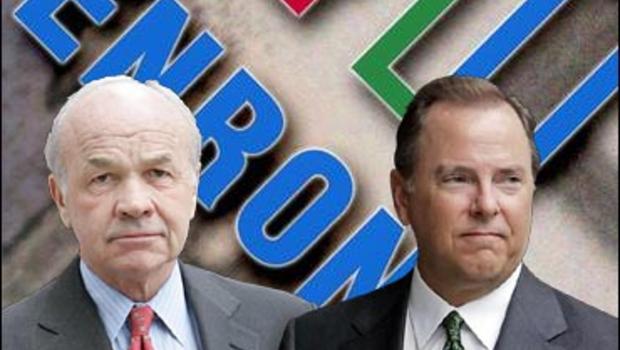
As the seventh week of the epic corporate criminal trial of former key Enron executives Ken Lay and Jeff Skilling drew to a close, U.S. District Judge Sim Lake gave the lawyers and the jurors an extra day off to prepare for the closing witnesses of a slimmed-down prosecution case and the beginning of what will almost certainly be one of the most interesting defense presentations in a white collar criminal case in recent memory.

In some ways, Week Seven of Lay-Skilling reflected the Enron Task Force’s case to date — long on hype, but short on substance.

The week began with the Task Force’s star witness, Andy Fastow, and closed with the self-promoted Enron media star, Sherron Watkins. However, my sense is that there is a method to the prosecution’s approach to presenting its case.

After the disastrous result in the Enron Broadband trial last year in which the jury was put to sleep during long stretches and a glacial opening pace to the Lay-Skilling trial, the Task Force prosecutors have quickened the pace of their presentation and are now on course to finish their case-in-chief in about another week or so.

If that schedule holds, then not only will the Task Force have presented their case in substantially less time than prosecutors initially predicted, they will have avoided the trap of forcing jurors to endure long stretches of mind-numbingly boring testimony.

In fact, the trial has settled into a fairly standard routine with most witnesses.

Each prosecution witness has gone through a heavily-scripted direct examination in which they confidently accuse Skilling, and to a lesser extent Lay, of making various misleading statements to the investing public and employees.

Then, defense attorneys on cross-examination chip away at the prosecution witnesses’ testimony and the witnesses generally become far less decisive in, or defensive about, their accusations.

Much of the testimony is quite boring and technical, but there are usually enough short bursts of interesting exchanges to keep the jury engaged and Judge Lake moves things along with a steady hand and a dry wit.

So, after filing and publicizing a 66-page indictment (which the Task Force doesn’t want the jury to see (and the Lay-Skilling team does) that asserts a wide array of alleged corporate crimes, the Task Force has slimmed down its case to a plain “pump and dump” case — i.e., Skilling and Lay touted the failing company’s shares while selling their own.

As noted in this earlier post, that theory of the case plays heavily on “the presumption” in corporate criminal cases — Lay and Skilling are rich and Enron collapsed, so they must be guilty of something for failing to announce to the investing public that Enron might collapse if something such as Fastow’s effective embezzlement of funds using Enron’s special purpose entities ever was revealed to the markets.

Although clearly a smart move from an appeal-to-jury standpoint, the Task Force’s slimmed-down case is not without risks.

To a large extent, the case still relies on a complex jumble of innuendo and opinion that requires the jury to connect the dots of amorphous points in finding a crime.

For example, one Task Force theme has been that Enron was so successful in making money in its trading operations that it allowed Lay and Skilling to soft-pedal to the markets the losses that Enron was incurring in a couple of less successful parts of its business.

The Task Force does not contend that either Lay or Skilling was involved in approving fraudulent accounting, but rather that mainly Skilling engineered a reorganization of a poorly-performing Enron business unit in a manner that hid losses of that unit underneath the blanket of high profits of Enron’s trading unit.

According to the Task Force, the hiding of these losses, along with over-reserving to hide excess profits of the trading unit, allowed Skilling and Lay to misrepresent Enron to the investing public as a stable logistics company rather than the more volatile trading company that prosecutors allege that it had become.

Another risk to the Task Force is whether the jury really even recalls much of that after the highly-publicized and sometimes bizarre testimony of Fastow.

Although Fastow implicated Skilling in “secret side deals” and undisclosed “bear hug” guaranties, Fastow is such a despicable character that it remains decidedly unclear whether the prosecution gained much of anything with the jury from his testimony.

Moreover, the prosecution’s emphasis with Fastow on the Global Galactic memo certainly raises the question of why the Task Force is not corroborating Fastow’s testimony on that key issue with the testimony of former Enron chief accountant, Richard Causey, who the Task Force has announced will not be called in its case-in-chief.

Perhaps the Task Force is planning on saving Causey to testify as a rebuttal witness after the defense presents its case, but the Task Force’s emphasis on Global Galactic during Fastow’s testimony creates a huge hole in its case unless the more credible Causey corroborates Fastow’s testimony at some point on that key issue.

Meanwhile, almost forgotten in the mainstream media reports on the trial to date is that virtually none of the testimony from prosecution witnesses and even less documentary evidence over seven weeks of trial has supported the prosecution’s allegation of an alleged huge conspiracy within Enron to cover up wrongdoing at the company.

As a result of the paucity of evidence on that key issue, the Lay-Skilling defense would seem to have a reasonably strong basis for seeking immunity grants from either the prosecution or Judge Lake in regard to the testimony of dozens of former Enron executives who are currently invoking the Fifth Amendment privilege in the face of the Task Force’s designation of them as unindicted co-conspirators. Those executives could provide exculpatory testimony for Lay and Skilling during presentation of the defense’s case-in-chief. Stay tuned on that issue.

As the prosecution’s case winds down, the Task Force will call two former Arthur Andersen accountants as witnesses early next week, and then likely end the week with its final major witness, former Enron treasurer and Fastow confidant, Ben Glisan.

Glisan was arguably the Task Force’s most-effective witness in the 2004 trial of the Nigerian Barge case, which appears to be unraveling somewhat for the Task Force. As a result, Glisan’s testimony in Lay-Skilling could turn out to be very interesting, indeed.

“Victoria, Victoria”

stunned coach.jpgI count as friends a number of major college coaches, and so I have a special appreciation of the demands involved in being a big-time college football or basketball coach. Not only do such coaches have to deal with sometimes overbearing media, fans, and college administrations, they also have to oversee their athletes’ off-the-field conduct, such as keeping the usually cash-deprived athletes away from the various sources of financial inducements that violate various NCAA rules that could lead to disastrous sanctions for the coach’s program. Believe me, it’s a full-time job.
Well, as difficult as their job already is, it now looks as if those college coaches are going to have to include review of their athletes’ instant messenger habits in their oversight duties.

Inhibiting the production of vaccines

vaccines.jpgThe ever-observant Walter Olson points us to this interesting Theodore Dalrymple review of the new book The Cutter Incident: How Americaís First Polio Vaccine Led to the Growing Vaccine Crisis (Yale University Press 2005) by Paul Offit, a professor of pediatrics at the University of Pennsylvania.
Dr. Offit’s book tells the story of how a heartbreaking disaster caused by mass immunization during research ó a disaster that helped lead to the major medical and scientific breakthrough of virtually eliminating polio from much of the world — led to a legal ruling that has subsequently inhibited pharmaceutical companies from developing and manufacturing vaccines. During the early stages of polio immunization, the Cutter Company followed the then-imperfect instructions regarding production of the vaccine to the letter, but those instructions — together with the then-imperfect scientific knowledge regarding the vaccine — proved inadequate to guarantee the vaccineís safety. As a result, the live polio virus survived in some of the company’s vaccine, which was distributed to a large number of people. Seventy thousand of those immunized by the faulty vaccine experienced the transient flu-like symptoms of mild polio, 200 wound up being paralyzed by polio, and 10 died from the disease.

Continue reading

The Insufferable Sherron Watkins

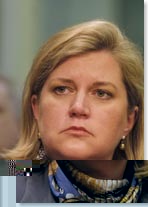
Sherron Watkins_3.jpgYesterday was Sherron Watkins day at the criminal trial of former key Enron executives Ken Lay and Jeff Skilling, and despite her self-portrayal as a paragon of virtue amidst a cauldron of corruption at Enron, Watkins came off in person as an insufferable know-it-all. Even when it’s not particularly in her interest to do so.

Everyone who follows the Enron saga knows Ms. Watkins. She is the former mid-level Enron executive who parleyed this mid-August 2001 warning memo to Mr. Lay into a lucrative talk show-pundit career of waxing eloquent on all things Enron.

She testified to fawning Congressional subcommittees, co-authored an Enron book, was one of the primary Enron employees interviewed during the Enron movie, and has made a tidy living over the past several years on the rubber-chicken circuit portraying herself as a whistleblower with special expertise on the subject of leadership. Wherever there is a light and a camera, Ms. Watkins is ready to pontificate about Enron.

The fact that Ms. Watkins was not a whistleblower (she never alerted anyone outside of Enron or Arthur Andersen about alleged accounting improprieties) and that her memo to Lay characterized Enron’s problems as primarily a public relations issue has gotten lost in the Enron milieu.

In fact, the specific LJM transactions that she criticized in her memo had been approved by accountants and attorneys inside and outside of Enron. At the time of her memo, Lay listened courteously to her concerns, ordered an investigation, protected her from Mr. Fastow’s threats to fire her for going around him to Lay, and ultimately ordered the unwinding of the Raptor financial vehicles that resulted in more than a $500 million charge to Enron’s earnings in the third quarter of 2001.

Nevertheless, Watkins insisted self-righteously yesterday that Lay committed fraud in connection with his handling of the matter, primarily because he did not follow each and every one of her recommendations to him.

Meanwhile, Watkins’ testimony was downright bizarre regarding her $47,000 in insider trades of Enron stock that she made after delivering her memo to Lay and prior to the company’s announcement of the charge to earnings. Despite having certified in a 2002 Enron employment agreement and sworn in Congressional testimony that she had not engaged in any illegal insider trading while at Enron, Watkins yesterday conceded on direct examination that the trades were not “proper” because “I had more information than the marketplace did.”

But then, on cross-examination, Lay lawyer Chip Lewis courteously attempted to defend Watkins from a charge of insider trading by pointing out that, at the time of the trades, it was still unclear whether there was anything wrong about the accounting for the Raptor financial vehicles and, thus, she was not trading on material, non-public information.

In the ensuing exchange, Watkins proceeded to dispute Lewis’ attempt to portray her trades as not illegal. Tip to Watkins — keep that defense attorney on your payroll.

Also, Watkins is not going to be getting any holiday greeting cards from Houston-based Vinson & Elkins, which was Enron’s primary outside counsel. After accusing V&E of engaging in criminal acts with regard to its handling of the Lay-ordered investigation of the matters raised in her memo, Watkins engaged in the following exchange with Lewis:

Q: Now, in talking about V&E, you would acknowledge with me that they’re one of our country’s most prominent legal institutions, wouldn’t you?

A: Not anymore.

Finally, U.S. District Judge Sim Lake — who has the patience of Job and administers the trial proceedings with a delightful combination of firmness and grace — probably had the best observation about Watkins’ testimony. After enduring Watkins’ continual refusal to respond directly to the question asked on cross-examination, Judge Lake finally turned in exasperation to her and observed:

“You’ve got to respond to [Mr. Lewis’] questions. We’ll be here through the weekend if this keeps up.”