The State of Securities Class Actions

classaction2.gifBruce Carton over at the Securities LItigation Watch has posted his annual State of the (Securities Litigation) Union analysis, which provides an excellent overview of the status of class action securities lawsuit sector. Interestingly, it does not appear that the Milberg Weiss troubles or attempts to constrain such lawsuits are having any meaningful effect on the growth of the sector:

Again, viewed in context, neither the number of cases in 2005 nor the NERA dismissal statistics support the argument that securities class actions have recently ìdried upî in any meaningful wayóthe number of cases is roughly what it has been since 1997 and the dismissal rate is, according to NERA, the same as it has been since 1998. [. . .]
With respect to Milberg Weiss, it seems clearer by the day that even if the firmís practice is diminished or destroyed altogether by the indictment, there will not be a significant impact on securities class actions generally. There are far too many competent plaintiffsí law firms out there that will gladly fill any void that may be created. It also appears that to the extent Milberg Weiss is losing any lawyers, it is because these lawyers are being recruited away by competitors, where they will promptly resume their securities class action practices.

Read the entire post.

Mack Brown’s dream role

Mack Brown 070706.jpgWhen your team wins a national football championship in Texas, a vast array of interesting opportunities emerge. This Ed Bark/Dallas Morning News preview gives a hearty thumbs up to Friday Night Lights, a new television show that debuts this fall and includes a cameo role for University of Texas football coach Mack Brown. My sense is that Coach Brown is especially well-prepared to play this particular role:

Friday Night Lights” (drama): A terrific continuation of the best-selling book and feature film, with Kyle Chandler the perfect choice to play under-the-gun new football coach Eric Taylor. Filmed in Austin, the pilot superbly sets a small-town West Texas stage in fictional Dillon, Texas. Football action is brilliantly choreographed, and the key players come off as far more than tackling dummies.
University of Texas coach Mack Brown has an effective cameo as a demanding booster who expects the Panthers to triumph at all costs.

Ken Lay and the Enron Myth

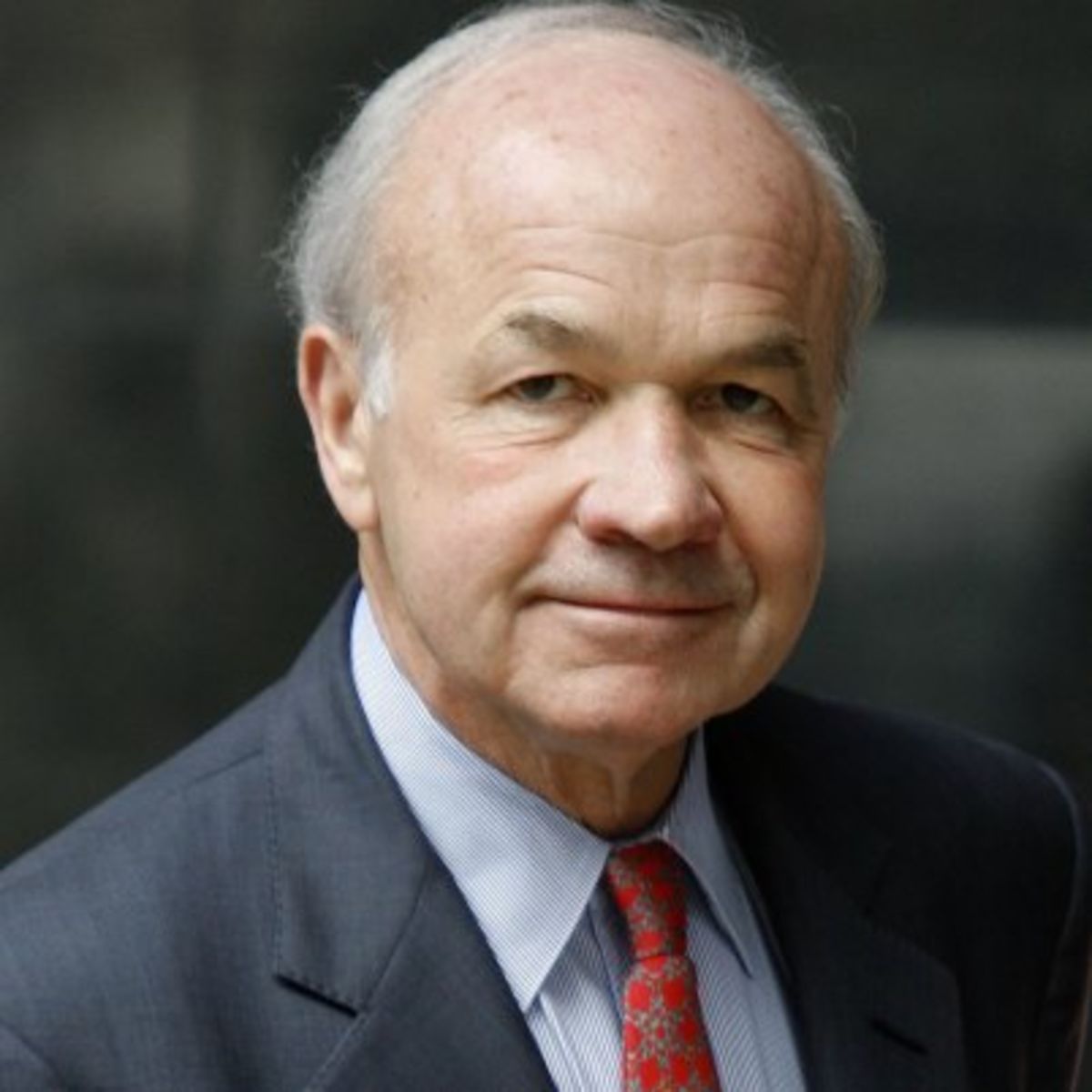
KenLayFormer Enron chairman and CEO Ken Lay died yesterday of a heart attack. Given the stress that Mr. Lay had endured over the past five years, such a fate is certainly not surprising.

However, my sense is that the heart attack was merely the physical manifestation of what really killed this proud, talented, and flawed man — his inability to overcome the Enron Myth and the societal implications of it.

By now, we all know the myth — Enron was merely an elaborate financial house of cards hidden from innocent and unsuspecting investors and employees by a deceitful management team led by the greedy and lying Mr. Lay.

The Enron Myth is so thoroughly accepted that otherwise intelligent people reject any notion of ambiguity or fair-minded analysis in addressing facts and issues that call the morality play into question. The primary dynamics by which the myth is perpetuated are scapegoating and resentment, which are exhibited everywhere:

The Houston Chronicle’s business columnist ridiculing Mr. Lay and calling for his conviction on almost a daily basis throughout the trial;

The community outpouring of celebration over the guilty verdict against Mr. Lay and the self-righteous indignation over his continued claim that he committed no crimes;

A Houstonian interviewed on radio yesterday contending that she was unsatisfied because Mr. Lay’s death had allowed him to escape appropriate punishment;

A prominent Houston-based blogger mocking Mr. Lay’s death (here and here);

Without a smidgen of evidence, a Houston criminal defense attorney suggesting during an interview on MSNBC yesterday that Mr. Lay may have committed suicide to void his conviction.

These are but a few examples of the frequent eruptions from the cauldron of societal bitterness over Enron that are palpable reminders of the fragile nature of civil society.

The Enron Myth conveniently serves to obscure that which most people do not want to confront. Loss, fear, and anger expose our essential human insecurity — Christians sometimes refer to it as our “brokenness.” The vulnerability that underlies such insecurity is scary to behold, so we use myths and the related dynamics of scapegoating and resentment to distract us.

Therefore, a wealthy and powerful businessman who is easy to resent becomes a handy scapegoat. We rationalize that he did bad things that we would never do if placed in the same position and thus, he is deserving of our punishment. That the scapegoat is portrayed as greedy and arrogant — just as we are — makes the lynch mob even more bloodthirsty as it attempts to purge collectively that which is too sordid for its members to face individually.

As noted in this prior post, even the Task Force prosecutors have admitted that the legal case against Lay was extraordinarily weak. But the power of the Enron Myth and the real presumption in the criminal case against Mr. Lay are such that even presumably fair-minded jurors dispense with critical thinking skills when confronted with supposedly the biggest business conspiracy in the history of federal prosecutions.

Rather than seeking the truth regarding that alleged mass conspiracy, the jurors were content with a prosecution that cast Mr. Lay as a liar about Photofete and his company line of credit, and ignored the paucity of evidence of any alleged massive conspiracy or even the true reasons why Enron collapsed. The myth is so pervasive and accepted — why bother with the truth?

The carnage of the Enron Myth and similar myths is now stacked high — the destruction of Arthur Andersen, the vapid Enron-related Congressional hearings, the shallow Enron documentary, Martha Stewart, Jamie Olis, Daniel Bayly, William Fuhs, Frank Quattrone, Hank Greenberg, Mr. Lay’s co-defendant Jeff Skilling (see also here), the NatWest Three — the list goes on and on.

In the wake of such destruction of wealth and lives, the public is even less willing to confront the vacuity of the myth and the destructive dynamics by which it is perpetrated. In fact, any challenge to the myth is now commonly met with derision and appeals to even more resentment over the Enron failure.

Such syndromes are not only an abuse of our justice system. They are also a serious affront to civil society. Ken Lay was no criminal. Did he fudge the truth? Maybe. But even if so, did his lies justify public humiliation, a physically-draining criminal trial, and a life prison sentence?

Not in a truly civil society.

Ken Lay’s sudden death is a terrible tragedy for his family and friends. My family’s thoughts and prayers are with them.

But the larger tragedy is that a myth has again played out as “justice” in our criminal justice system while distracting us from examining what really happened at Enron, understanding the benefits and risks of such a company, and educating ourselves on how to take advantage of such benefits while hedging those risks prudently.

Such a sober undertaking is not as easy as rationalizing a financial failure by calling a rich man a crook and reveling in his demise. But it’s far more likely to result in a better — and far more honest — understanding of investment and markets.

As well as ourselves.

The death of Ken Lay

ken lay30.jpgFormer Enron chairman and CEO Ken Lay died early this morning in Colorado, reportedly of a heart attack. He was 64 at the time of his death.
I have a day’s worth of meetings that prevent me from collecting and conveying my thoughts immediately on Mr. Lay’s death, but I wanted to pass along a couple of recent posts (here and here) about Mr. Lay and the weakness of the criminal case against him, one of which includes this excerpt about the man that Mr. Lay was:

Lay is clearly a proud man who desperately wants to tell his side of the story, and it is quite a story. Born and raised in a family with little money, Lay worked his way through college and graduate school, landed his first job with Houston-based Humble Oil (the predecessor to ExxonMobil), and then served his country admirably as a Naval officer and Deputy Undersecretary of Interior for Energy for six years during the Vietnam War. After his governmental service, Lay rose quickly through the executive ranks of a couple of gas pipeline companies before assuming the chairman and CEO position of the company that eventually became Enron in 1985. From that perch, Lay accumulated a personal net worth of about $350 million as of 2000 as he oversaw the growth of Enron into one of the largest publicly-owned companies in the U.S., and then saw that net worth evaporate over the past four-plus years since Enron’s collapse into bankruptcy.
But as difficult as that fall must have been, Lay does not appear to be the type of man who is bothered all that much by the loss of wealth, and certainly not nearly as much as he is aggravated by the Task Force and mediaís ravaging of his reputation over the past five years. According to media reports, Lay and [defense counsel Mac] Secrest struggled somewhat during the early stages of Layís direct examination, and my sense is that their struggles were attributable largely to Layís frustration with not being able to explain to the jurors directly ó without the limiting framework of a trial ó the utter contradiction between his life story and the nature of the criminal charges against him.

And, as usual, Larry Ribstein has these insightful observations on Mr. Lay’s death and Peter Henning passes along an interesting implication of Mr. Lay’s death on the criminal case against him.

The big problem with Mexico

mexican flag at port.jpgThe presidential election in Mexico garners more interest in Texas than many places because of the increasing problems that the state faces in regard to the influx of immigrants and violence on the border. Calderon’s apparent victory is almost certainly better economically for Mexico, and Opinion Journal’s Mary Anastasia O’Grady observes that the handling of the election is a hopeful sign for Mexico’s emerging multi-party political system. However, the Washington Post’s Robert Samuelson identifies in this column the problem that continues to vex Mexico’s economic development — inefficient big businesses that are protected by the government and vibrant small businesses that are threatened by it:

[Mexico’s] economy consists of two vast sectors, each slow to adopt better technology and business practices.
One sector involves large, modern firms in semi-protected markets that limit the pressure to improve efficiency or lower prices. “Mexico’s business sector is risk-averse. It’s never had to operate in a true competitive environment,” says Pamela Starr, an analyst for the Eurasia Group, a consulting firm. “It’s operated with monopolies and oligopolies encouraged by the government.”…
The other part of the economy is usually called the “informal sector.” It consists of thousands of small firms — street vendors, stores, repair shops, tiny manufacturers — that theoretically aren’t legal, because they haven’t registered with the government and often don’t pay taxes or comply with regulations on wages and hiring and firing. Almost two-thirds of Mexico’s workers may be employed in the informal sector, according to one rough estimate by the International Monetary Fund.
The sector’s size might suggest great entrepreneurial vitality. The trouble is that these firms are virtually compelled to remain small and inefficient. Because they’re technically illegal, they can’t easily get bank loans and can’t grow too large without being forced to pay taxes or comply with government regulations.

Read the entire column.

Kerkorian’s deal for GM

gm15.gifKirk Kerkorian’s proposed deal to save General Motors came up just before the holiday weekend, so analysis of the proposal has been sparse to date (previous posts on GM’s Enronesque experience are here). Last Friday, Kerkorian’s Tracinda Corp. — the largest individual shareholder in GM — publicly proposed that GM become the third wheel in an automotive alliance with Nissan and Renault, both of which would buy substantial minority stakes in GM. Nissan and Renault are led by Carlos Ghosn, whose revival of Nissan six years ago has made him the most influential automotive CEO in the world. Interestingly, Kerkorian’s salvo was deftly timed to coincide with the Big Three automaker’s June sales reports, which were dismal.
As GM’s stock rose nearly 10% after Kerkorian’s announcement, GM’s directors convened an emergency meeting while grumbling that they didn’t appreciate negotiating in public, although they announced after the meeting that they would consider the proposal (imagine the lawsuits if they didn’t?). Nissan and Renault’s boards kept up the heat on Monday by announcing that they would entertain an alliance if GM agrees. Such an alliance would leave the weak and struggling Ford Motor Co. as the only independent American automaker.
The WSJ’s Holman Jenkins ($) sizes up Kerkorian’s strategy and suggests “the possibility that Mr. Kerkorian is simply lining up a lifesaver in the event of a sudden auto recession that some see looming. GM likely would not survive a sharp drop in SUV and pickup sales right now.” Regardless of whether that’s the underlying reason for Kerkorian’s proposal, Jenkins observes that Kervokian’s message is clearly “there’s not enough change going on around here. Give me more change.”
Kerkorian’s concerns about GM’s management have merit. Although GM posted a small profit in the first quarter of 2006 on the heels of its gargantuan $10.6 billion loss last year, the profit was primarily the result of an accounting change. Cash flow remains negative and the company’s debt remains in the deep junk category. This lackluster performance comes amidst a larger backdrop of GM’s poor performance over the past six years. Since earning a record $5.7 billion in 1999 and having its stock top out at $70 a share in June 2000, GM’s stock has declined by over 70% since then to below $19 per share at the end of last year, although it has recovered to $29 per share on the early success of current GM CEO Rick Wagoner’s reorganization plan and now Kerkorian’s proposal. Perhaps most importantly, however, GM’s U.S. market share has plummeted to 24.4% from almost 30% in 1999. Twenty years ago, GM’s share was 41%.
Looking at all this, Jeff Matthews has the most entertaining analysis of Kerkorian’s strategy to date, analogizing GM’s choice to the one faced by Sonny Corleone in The Godfather if it turned out that Don Corleone did not survive after being severely injured in Sollozo’s assassination attempt. As Matthews notes, brother Michael’s plan ended up being a better alternative for Sonny than making a deal with Sollozo, there is no Michael Corleone for GM.

Golf 101

HCC logo.jpgLet’s see now. Suppose you are a trustee of the Houston Community College system.
You are confronted with a chronically underfunded system that is operating in a region where golf courses are overbuilt and will do most anything to attract customers.
What would you do?
Well, I don’t know about you, but I wouldn’t be approving the construction of a three-hole, par 3 golf facility to provide “a new and unique opportunity for residents of northeast Houston to learn or improve skills in the age-old sport of golf.”
The Houston Press’ Richard Connelly has the story.

Is this a new A&M recruiting video?

I recognize that football recruiting at Texas A&M has not kept up with Big 12 competitors such as Texas and Oklahoma. The Coach Fran era has not gone as expected, and even the sacred 12th Man tradition is under attack. So, drastic measures are required to turn things around.
But a rap music video extolling the virtues of Bryan-College Station? Let’s just say I’m still partial to the Aggie War Hymn.
Former A&M football coach Bear Bryant is turning over in his grave. Old Army will never be the same. Hat tip to the Burnt Orange Nation for the link.
Have a safe and happy 4th!

The random nature of movie success

moviedirectorclapper.jpgThis fascinating Leonard Mlodinow/LA Times special (registration req.) explains why I am utterly incapable of predicting which movies will be successful. In reality, nobody can:

The magic of Hollywood successóhow can one account for it? Were the executives at Fox and Sony who gambled more than $300 million to create the hits “X-Men: The Last Stand” and “The Da Vinci Code” visionaries? Were their peers at Warner Bros. who green-lighted the flop “Poseidon,” which cost $160 million to produce, just boneheads?
The 2006 summer blockbuster season is upon us, one of the two times each year (the other is Christmas) when a film studio’s hopes for black ink are decided by the gods of movie fortuneónamely, you and me. Americans may not scurry with enthusiasm to vote for our presidents, but come summer, we do vote early and often for the films we love, to the tune of about $200 million each weekend. For the people who make the movies, it’s either champagne or Prozac as a river of green flows through Tinseltown, dragging careers with it, sometimes for a happy, wild ride, sometimes directly into a rock.
But are the rewards (and punishments) of the Hollywood game deserved, or does luck play a far more important role in box-office success (and failure) than people imagine?
We all understand that genius doesn’t guarantee success, but it’s seductive to assume that success must come from genius. As a former Hollywood scriptwriter, I understand the comfort in hiring by track record. Yet as a scientist who has taught the mathematics of randomness at Caltech, I also am aware that track records can deceive.
That no one can know whether a film will hit or miss has been an uncomfortable suspicion in Hollywood at least since novelist and screenwriter William Goldman enunciated it in his classic 1983 book “Adventures in the Screen Trade.” If Goldman is right and a future film’s performance is unpredictable, then there is no way studio executives or producers, despite all their swagger, can have a better track record at choosing projects than an ape throwing darts at a dartboard.
That’s a bold statement, but these days it is hardly conjecture: With each passing year the unpredictability of film revenue is supported by more and more academic research.

Read the entire highly entertaining article. The money quote comes from Art DeVany, who really should have been an expert witness for the plaintiffs in Disney-Ovitz:

“Today’s Hollywood executives all act like wimps,” [DeVany] says. “They don’t control their budgets. They give the actors anything they want. They rely on the easy answers, so they try to mimic past successes and cave in to the preposterous demands of stars. My research shows you don’t have to do that. It’s just an easy way out, an illusion.”
“[A] careful study reveals that no strategy the studios devise is going to give them any kind of advantage at all. So any studio executive getting paid more than the salary of a comparable executive at your local dairy is getting paid too much.”

Larry Ribstein, who knows a thing or two about the movie business and the way in which it portrays business, comments on the article here.

Playing high stakes poker at Refco’s Bermuda unit

Refco Logo10.jpgWall Street Journal reporters Carrick Mollenkamp, Ian McDonald and Peter A. McKay have authored this article of the day ($) in updating the fascinating story on the bankrupt, New York-based brokerage firm. Refco, Inc. (prior posts here). This WSJ report focuses on Refco’s unregulated Bermuda unit, which Refco allegedly used as sort of a piggy bank to make loans to customers on high-risk bets and to cover up losses on those bets. When Refco went into the tank after an Enronesque experience, the Bermuda unit — called Refco Capital Markets — was supposed to have at least $3.7 billion in customer account assets, but had only $1.9 billion in such assets. Now the customers who played such high-stakes poker with Refco are scrambling to pick up some scraps on their gambling losses in Refco’s bankruptcy case.
As an “exempt” Bermuda company, Refco Capital Markets wasn’t required to keep customers’ money seperate from Refco’s company funds, so customer and company money was routinely commingled in the Bermuda unit’s accounts and commonly used by various Refco entities to pay bills, make loans and finance investments. Apparently, even other Refco units routinely sent funds to the Bermuda unit to invest. According to the article, some investors are contending in the bankruptcy court that they were surprised by the Bermuda unit’s practices:

“That is not a business model of which I am familiar with,” Mr. [Richard] Deitz, the Moscow-based hedge-fund manager, said at a bankruptcy-court hearing. “It’s something that I think is more in common with three-card monte.”

I would suggest that Mr. Dietz was playing the equivalent of three card monte with Refco and that he knew it.

Continue reading