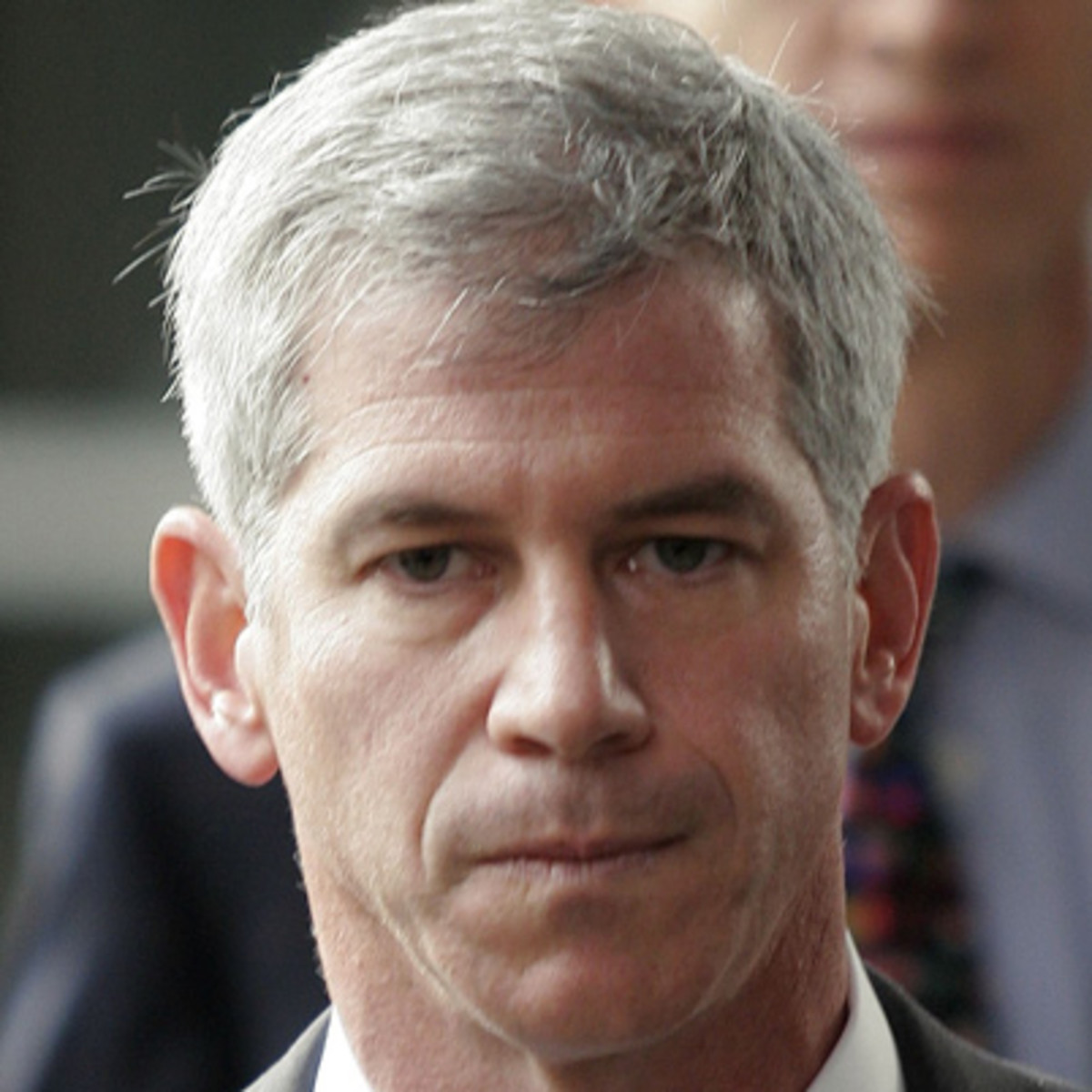
Mayor Bloomberg, save your money

bad_cop.jpgThis short WSJ ($) article left me shaking my head:

New York City Mayor Michael Bloomberg appointed consulting firm McKinsey & Co. yesterday to examine why more international companies are choosing to raise money outside of New York.
The two-month, $600,000 study comes as many of the largest initial stock offerings bypass a listing with NYSE Group Inc. and Nasdaq Stock Market Inc. for listings in London or in their home markets. Mr. Bloomberg and Sen. Charles Schumer (D., N.Y.) will review the results in an effort to improve New York’s position as a financial center.
Many big international IPOs no longer want to have their shares listed on a Western stock market, in part because they want local investors or because big international investment firms can often buy the stock even if its not listed in New York. Out of the top 25 global IPOs in each of the last two years, London snagged 11 listings, Hong Kong picked up six and New York received four, according to recent data.
Regulation costs, legal risks and increased white-collar-crime enforcement also get a lot of attention. The four-year-old U.S. Sarbanes-Oxley accounting-and-governance law has made it more expensive for companies, especially smaller ones, to list.
Investment-bank underwriting fees are also substantially lower in London — 3% to 4% of IPO receipts, compared with 6.5% to 7% in the U.S., according to a June report commissioned by the City of London.
Yesterday, at a private-equity conference in New York sponsored by Dow Jones & Co., Nasdaq Chief Executive Bob Greifeld said he couldn’t think of a reason for the difference in the IPO fees and predicted that there would be more pricing pressure on U.S. underwriting fees in coming years.

Mayor Bloomberg should save his city’s money. For the answer to the question posed, all the Mayor needs to do is talk to his state’s future governor and examine this mindset, which the future governor embraces. That mindset leads to abominations such as this and this, which business owners tend to notice after awhile. Indeed, the proponents of such dubious policies are widely-publicizing them to the international business community.
All of this has already contributed greatly to U.S. public companies and executive talent fleeing in droves to private equity. Why on earth would any international company choose to raise public money in such an environment?

Byron Nelson, R.I.P.

BYRON-NELSON-GOLF.jpgGolf’s quintessential gentleman — Byron Nelson — died yesterday in his home near Dallas at the age of 94. Here are the Dallas Morning News, the NY Times, and the LA Times obituaries, along with a PGATour.com timeline of Nelson’s life, a list of his records, and a handy summary of his career.
Nelson — who was affectionately known as “Lord Byron” — was a contemporary of his fellow Texan Ben Hogan, and was more successful on the PGA Tour than Hogan during the time that Nelson played (Hogan struggled on the Tour until he perfected his swing in his mid-30’s, by which time Nelson had retired). Nelson established one of the most remarkable records in sports history when he won 11 consecutive pro golf tournaments in 1945 (Dan Jenkins contends that it was actually 13 straight), a record — similar to Joe DiMaggio’s 56-game hitting streak in baseball — that will likely never be broken. Nelson won an incredible 18 tournaments that year and 52 (including five major tournaments) over his relatively short 16 year career on the Tour. He retired in 1946 from full-time competitive golf at the age of 34 after achieving his goal of earning enough money to buy a ranch in his beloved Texas.
Nelson was a kind and gentle man who remained active until his death. He set a wonderful example for all of us and represented much of what makes golf such an endearing pastime. He will be sorely missed (particularly by Dallas’ PGA Tour event) for many reasons, not the least of which was his perspective on how fortunate the modern PGA Tour players are:

“I only won $182,000 in my whole life,” said Nelson in a 1997 interview. “In 1937, I got fifth-place money at the British Open — $187 — and it cost me $3,000 to play because I had to take a one-month leave of absence from my club job to go.”

This is getting very interesting

larussa disgusted.jpgThe Stros beat the Pirates last night while the Cardinals behind their ace Carpenter lost again to the Padres. The Stros’ (79-78) winning streak is now seven, the Cardinals’ (80-76) losing streak is seven, and the Stros have pulled to within 1.5 games of the NL Central lead with five games to go.
If the Stros win three of those five games (two more against the Pirates and three against the Braves), then the Cardinals can still pull it out by winning just 3 of their final six games (one more against the Pads, four against the Brewers, and a make-up game against the Giants, if necessary). So, the Stros are still a longshot to win the division (the Stros are out of the race for the NL Wildcard playoff spot). But it’s sure refreshing to watch the Cardinals sweating this one out. The ghost of the 1964 Phillies — who blew a 6.5 game lead for the National League title by losing 10 of their final 12 games — is looming large over the Redbirds right now.
If the Stros and Cards end up tied for the NL Central title, then there will be a one-game playoff at Minute Maid Park next Tuesday.

More on the Fastow Sentence

It’s a good thing that Andy Fastow’s counsel did not mention Fastow’s following testimony on March 8 in the Lay-Skilling trial during Fastow’s sentencing hearing today in front of U.S. District Judge Kenneth Hoyt:

Q. Does the government decide your sentence?

A. My Judge decides the sentence.

Q. And who is your Judge?

A. Judge Hoyt.

Q. Is that right here in Houston, in this courthouse?

A. Yes.

Q. Do you recall the maximum sentence that you could be sentenced to for these crimes?

A. For the crimes I’ve pled guilty to?

Q. Yes.

A. Yes. Ten years.

Q. And was there a minimum sentence that you pleaded guilty to?

A. My plea agreement states that I agree to a sentence of 10 years. [. . .]

Q. And in agreeing — in addition to agreeing to serving 10 years in prison, did you also have to forfeit moneys?

A. Yes.

The foregoing testimony was elicted on direct examination of Fastow by Enron Task Force prosecutor John Hueston for the purpose of representing to the Lay-Skilling jury that Fastow’s testimony was credible because he had agreed to a floor of ten years of prison time. On March 8th, Skilling counsel Daniel Petrocelli followed up by asking Fastow during cross-examination about the sentence that he had agreed to under his plea deal:

Q. Okay. And you said you have to go to jail for 10 years; right?

A. Well, my sentence is for 10 years. I could potentially have time off for good behavior. [. . .]

Q. Okay. And the reason why you just answered my question in the way you did is because you want to communicate to the jury that Mr. Skilling is a criminal along with you, correct?

A. No, Mr. Petrocelli. I’m just trying to answer the questions honestly. My outcome is already determined.

Q. Well, not —

A. I’ll be sentenced to ten years as far as I understand. It doesn’t matter — my sentence isn’t affected by whether Mr. Skilling is convicted or not.

Then, on re-direct examination by Hueston on March 13th, Fastow testified as follows:

Q. And as a result of your pledge to cooperate, did you agree to plead guilty to a 10-year minimum sentence of imprisonment?

A. A 10-year maximum imprisonment.

Q. And what is the minimum amount of time that that plea agreement calls for?

A. It calls for a 10-year sentence.

Q. So after January 14th, can your cooperation lower that 10 years?

A. My understanding is that I will be sentenced to 10 years. The Judge ultimately has a discretion; but in my plea agreement, I agreed to the 10-year sentence.

Later that same day, Hueston asked Fastow about the suggestion made during cross-examination that Fastow had forged the key Global Galactic agreement between Fastow and former Enron chief accountant, Richard Causey:

Q. And after all this time, you found and turned over the document to the FBI, you remembered, late May or June; is that right?

A. I believe that’s correct, yes.

Q. And you turned it over because you were cooperating?

A. Yes, sir.

Q. And this is months after, six months after, you enter your plea of guilty; is that right?

A. Approximately, yes, sir.

Q. And can this document lower your sentence now, under your understanding?

A. My understanding is, no.

Q. And if, as the defense was suggesting, you were just falsely creating this document, wouldn’t it have been better to do so before you entered a plea of guilty, when you were bargaining with the government?

A. Well, one could argue that. [. . .]

Q. Mr. Fastow, if as the defense suggests, you’re on some sort of mission to say or do anything to convict Jeff Skilling, might you have been tempted to just add a couple more initials to that Global Galactic document?

A. Sir, I have no incentive to add any initials. My incentive is to be truthful. If I’m not truthful, I could go to prison for life. By making a document more compelling, I can’t lower my sentence.

Q. By trying to do that, there’s only one thing you’re sentence would do; right?

A. I’m sorry?

Q. If you tried to alter a document or tell a lie, there’s only one direction that sentence can go?

A. That’s correct. That would be a lie. That means my sentence would go up, potentially, to a life sentence.

Want to make a bet that the Task Force prosecutors did not inform Judge Hoyt today during Fastow’s sentencing hearing that Fastow and the Task Force had previously represented to the Lay-Skilling jury that Fastow’s testimony was more credible because he had agreed to a minimum ten-year sentence?

Try to make sense of this

Fastow20.jpgJamie Olis3.jpgLet’s see if I get this straight.
On one hand, Andrew Fastow — who served up his wife as a sacrifical lamb for his embezzlement of millions from Enron that triggered one of the largest bankruptcy cases in U.S. history, who used the NatWest Three to hide his embezzlement of millions more and then turned on the U.K. bankers to save his skin, who very well may have forged Richard Causey’s initials on the Global Galatic “agreement,” whose bizarre testimony during the Lay-Skilling trial was largely discounted by jurors and who had a large hand in ruining the careers of four innocent Merrill Lynch executives in order to lessen his prison sentence — is sentenced to six years in prison.
On the other hand, Jamie Olis — who worked on a transaction to improve his company’s earnings, did as he was told by his superiors, did not profit from the transaction, defended his company and himself against allegations of wrongdoing with regard to the transaction and did not trigger any type of insolvency case by his company — is sentenced to six years in prison.
These results are not the product of a rational application of our criminal justice system. Ellen Podgor has additional thoughts, particularly how the Fastow sentence may bear on the anticipated life sentence that former Enron CEO Jeff Skilling faces.

An interesting letter to Judge Lake

Heartland logo.gifThe day before one of the relatively few real Enron criminals is scheduled to be sentenced, an interesting letter to U.S. District Judge Sim Lake became public in regard to the sentencing of former Enron CEO Jeff Skilling.
During and after the Lay-Skilling trial, Heartland Institute economists Paul Fisher and Jim Johnston authored several articles (previous posts here) that challenged the myth that Enron was merely a house of cards propped up through the fraud of its leaders (that myth has been a recurring theme on this blog, see here, here, here, here, here, and here, to cite just a few posts).
Now, in this letter to U.S. District Judge Sim Lake, Fisher and Johnston urge Judge Lake — in connection with the sentencing of Skilling — to take into consideration the huge beneficial impact that Enron had on various important markets. In so doing, Fisher and Johnston remind us once again of the vacuous nature of the real presumption in the Lay-Skilling trial — that is, that Skilling and Lay were rich and Enron collapsed, so they must be guilty of something in connection with Enron’s descent into bankruptcy:

From an economic perspective, the harm [that Skilling and Lay caused] is difficult to calculate. For sure, the collapse caused a huge notional loss to investors and employees in the form of pension and savings plans. However, Ken Lay and Jeff Skilling were not convicted of causing the collapse. They were convicted of lying about Enron’s financial condition (and one count of insider trading [against Skilling]). If the misrepresentation of Enron’s financial condition in 2001 as alleged in the indictment had not occurred, presumably the bad news would have been known earlier. That in turn would have caused the Enron share price to collapse sooner and even less time would have been available for investors and employees to liquidate their holdings.
The implication of this reality is that there was no additional harm done to the investors and employees from the alleged hiding of Enron’s profits and losses. While it may have changed the identity of the losers it did not increase the totality of the losses.
On balance, the benefits created by Ken Lay and Jeffrey Skilling in building Enron seem to us to far outweigh any incremental harm done to investors from the alleged fraud. The economists we know who have carefully studied the risk management practices and techniques developed by Enron agree that they were beneficial and will continue to be so. Not giving this reasonable weight will send a potentially harmful message. That is not to excuse any fraud, but rather to recognize the context of the decision.

Meanwhile, this Carrie Johnson-Brooke Masters/WaPo article explores the dubious reasoning behind prison sentences for businesspersons convicted of fraud that are harsher than those handed down for first-degree murder or treason.

Visiting the Longhorns

Mac.jpgThis past Saturday, I traveled to Austin for the day with my buddy Jerry Sagehorn to meet my brothers Bud and Mike, and my brother-in-law Gene Acuna to watch the 7th-ranked Texas Longhorns play their Big 12 Conference opener against the Iowa State Cyclones, who are coached by my longtime friend, Dan McCarney.
McCarney — or “Coach Mac” as most everyone calls him — and I grew up together in Iowa City, Iowa, where we were teammates on a championship high school football team at City High in 1970. We have remained close friends over the years, and so I have tried to attend each game that Iowa State plays in Texas since Coach Mac became head coach at ISU in 1994. Coach Mac graciously comes through with a few sideline passes for me to use, and it’s always a great experience attending a game in Austin and College Station.
The Longhorns really have it going these days. After winning their first National Championship last season since 1970, the Horns are re-loading this season with a talented and deep group of players who are not only fast and strong, but also well-motivated. Mac’s Cyclones battled hard and, had a couple of plays turned out differently, could have been in a position to pull an upset over the 24 point-favored Horns at the end. However, the Horns dominated both lines of scrimmage over the final two-thirds of the game and methodically pulled away for a 37-14 victory.
The FilmLoop below contains some of the photographs that I took from the sideline during the game along with my comments about attending a game on the sidelines at D.K. Royal-Texas Memorial Stadium. As with College Station, Austin is one of the great college football venues in the country. I am blessed to have the opportunity to experience it up close and personal, and I am grateful to be able to pass along the experience to you.

They couldn’t pull this off, could they?

Roger Clemens staring.jpgAfter I wrote off the Stros in my two previous periodic reviews of the club’s season (here and here), the hometown team is making things interesting.
First, the Stros swept the Cardinals in a four-game series over this past weekend (including three straight games in which they won in their last at bat). Then, last night, the club used 25 players — including a franchise record-tying nine pitchers and seven pinch hitters — to nip the Phillies 5-4 in Philadelphia and reach the .500 mark (78-78) for the first time since July 6. The Stros have now won six straight, the Cards have lost six straight and the Stros find themselves only 2.5 games behind the Cards in the National League Central with six games to play (three at Pittsburgh and three at Atlanta). The Cards have seven games remaining at home (two against the Padres, four against the Brewers and a makeup game against the Giants, if necessary). Even if the Stros go 4-2 over the final six games, the Cards only have to win three of their remaining games to win the title outright, so the Stros are still a longshot. However, it’s fun to watch the Cardinals gripping — that’s usually the position that the Stros are in.
By the way, Tory Gattis passes along this hilarious Onion article that places Roger Clemens’ seemingly endless string of final games in the perspective of many opposing baseball fans, particularly those in Boston who thought that Clemens’ last game was going to occur over a decade ago.
Meanwhile, my friend Jim Bob Baker, a University of Oklahoma diehard, passes along the following observation about the lingering effects on the OU fan base of the Oklahoma Sooners’ controversial loss last week at Oregon:

The only phrase that makes people in Oklahoma more nervous these days than “tornado warning” is when they hear “the play is under review . . .”

Demagoging Amaranth

natural gas terminal.jpgFollowing on this earlier cue, NY Times business columnist Gretchen Morgenson contends in this column (Times Select, registration required) that Amaranth Advisors, LLP’s loss of $6 billion or so last week on the natural gas trading market is conclusive proof that energy markets are in need of more government regulation:

Many of Amaranthís monster trades in the natural gas markets were conducted on over-the-counter markets or with so-called voice brokers and so were not on regulatorsí radar screens.
It is too soon to tell what role Amaranthís gamble had on natural gas prices. But speculators played a significant role in the astonishing rise in energy prices in recent years.
Such is the conclusion of a compelling Congressional report produced in June by the Senateís Permanent Subcommittee on Investigations of the Committee on Homeland Security and Governmental Affairs. The 49-page report detailed the explosion in energy speculation on unregulated trading markets and recommended eliminating the so-called Enron loophole that put electronic energy trading off the regulatory reservation.

See how easy that was? Just associate “Enron” with a company that suddenly lost about 2/3rd’s of its assets and, presto! — you have the need for more government regulation of trading markets without any analysis whatsoever of whether such regulation would ultimately be more expensive than the cost of the allowing markets to allocate loss. Indeed, how one earth would it have helped had Amaranth made filings with the CFTC? Does anyone really think that such a requirement would have prompted Amaranth to modify its trading practices?
As noted earlier here and here, allowing investors to make bets in energy trading markets — although not widely understood by the general public — is tremendously beneficial in forecasting energy prices. Not only will greater regulation of those markets likely undermine those benefits, Morgenson’s dubious assertion that speculation in energy markets has caused an increase in natural gas prices is based upon a Senate report that, as noted earlier here, is a sham that was essentially produced by the regulators to feather their nest.

Continue reading

Well, at least we were good sports

Rydercup06logo7.jpgAfter losing the Ryder Cup over the weekend for the fifth time in the last six competitions, the United States team is certainly an easy target for criticism and the golf writers are taking dead aim:
The Houston Chronicle’s golf columnist Steve Campbell channels Dan Jenkins and Jack Burke in this tongue-in-cheek column that preceded the final day’s matches. Campbell follows that column with this fine article on the emotional performance of Euro team member, Darren Clarke.
Lawrence Donegan of the Guardian pretty well summed up the U.S. squad’s effort:

[S]o one-sided was the contest that at times during yesterday’s session of 12 singles matches it seemed the impossible was on the cards – a Ryder Cup without drama.

Continue reading