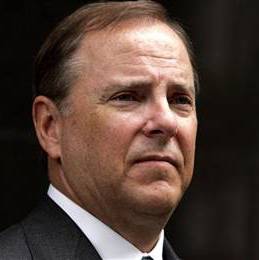
 In a few days, unless the Fifth Circuit grants his motion to remain free on bond pending appeal of his conviction, Jeff Skilling will report to prison to begin serving a 24-year prison sentence.
The image of Skilling entering that Minnesota prison will be a powerful reminder of the collossal failure of the American criminal justice system in the case against him and others caught up in the Enron maelstrom.
Given the societal bias against Skilling and nearly everything else related to Enron, it’s not all that surprising how little most people know about the case against Skilling. “Wasn’t he prosecuted for Enron’s fraudulent accounting?” I am often asked. Well no, he was not. The government dropped those charges.
“Well then,” they ask. “Wasn’t he prosecuted for causing Enron to go bankrupt?” Again, no, I reply patiently, Enron Task Force prosecutors repeatedly declared throughout Skilling’s case that they were not prosecuting him because Enron failed.
Of course, those same prosecutors quickly dispensed with that myth during Skilling’s sentencing hearing when they blamed him for Enron’s failure so that they could heap a huge prison sentence on him. But that’s another issue.
“But wait,” they invariably say. “Didn’t they go after him because of those shady partnerships that he did with that guy Fastow?” No, I point out, the prosecutors didn’t even attempt to prove that any of those special purpose entities (“SPE’s”) were illegal.
“Well, shoot” most folks finally throw up their arms in exasperation. “He’s rich and a bunch of people lost money when Enron went down the tubes. He must have done something criminal.”
I have had literally hundreds of conversations similar to the foregoing. The ugly reality is the same one that we didn’t want to confront when Ken Lay died and one that we resist confronting now — Jeff Skilling was lynched by an angry mob.
The primary justification that the mob gives for the absurdly-long sentence for Skilling almost always is the plight of the innocent employees and investors who lost their nest eggs when Enron went bankrupt.
But the main reason that those nest eggs ever had value in the first place was because Skilling had transformed Enron into the world’s leading energy risk management company through the creative use of futures and options contracts to hedge price risk for natural gas producers and industrial consumers.
Although there is nothing wrong with having compassion for folks who lose money on an investment, rarely is it mentioned in the Enron morality play that many of those investors who lost their nest egg when Enron melted down were imprudent in their investment strategy. They should have diversified their Enron holdings or bought a put on their Enron shares that would have allowed them to enjoy the rise in Enron’s stock price while being protected by a floor in that share price if things did not go as planned.
Even though virtually all of those innocent Enron investors carry insurance on their homes and cars, one can only speculate why they didn’t attempt to hedge the risk of their investment in Enron stock. Probably, most of them simply did not understand how Enron’s risk management services created their wealth in the first place. Thus, when that wealth evaporated during Enron’s meltdown, they didn’t even try to understand what had occurred. They simply joined the unruly mob calling for Skilling’s scalp.
The mainstream media — always quick to embrace a simple morality play with innocent victims and dastardly villains, regardless of its validity — was not about to complicate the story by pointing out that the investors could have hedged their risk of loss by buying insurance quite similar to that which Skilling developed in creating their wealth in the first place.
Thus, instead of attempting to tell the entire story, much of the mainstream media simply became a part of the mob. Ambitious prosecutors, given wide latitude to obtain convictions of key Enron executives regardless of the evidence, gladly took advantage of the firestorm of anti-Enron public opinion to lead the mob to Skilling and others.
Although the Enron Task Force has succeeded in securing a few convictions for the anti-Enron mob, the mob’s work has not withstood scrutiny on appeal. After the mob had caused enormous wealth destruction and job loss by indicting and convicting Arthur Andersen, the Supreme Court unanimously reversed the conviction, concluding that the Task Force had obtained an improper mens rea instruction that allowed the jury to convict the firm for merely negligent or innocent conduct.
Then, in the Nigerian Barge case, the Fifth Circuit reversed the Merrill Lynch defendants’ convictions (but only after each of them had been forced to endure a year in prison) because the Task Force had pressed for an improper “honest services” theory of liability that stretched the wire fraud statute beyond any reasonable interpretation.
Finally, after the spurious conviction of former Enron Broadband Services executive Kevin Howard, the Task Force recently conceded that the Fifth Circuit’s decision in the Nigerian Barge appeal requires that all but one of the counts of conviction be vacated.
In fact, you won’t read about it much in the mainstream media, but Skilling’s appeal presents the same issues as Andersen and the Nigerian Barge case.
As in Andersen, the Task Force in Skilling’s case successfully argued at trial for an improper mens rea instruction on “deliberate ignorance” that invited the jury to convict Skilling based on a civil, “should have known” standard of liability.
Similarly, the Task Force rested its core conspiracy count and the ensuing substantive charges against Skilling on the same “honest services” theory of criminal liability that the Fifth Circuit rejected in the Nigerian Barge case,
So, just what was it again that Skilling did that could possibly justify a 24-year prison sentence for a man who was not even accused of stealing a dime from his company?
As our criminal justice system places this man in a prison cell for perhaps the rest of his life, take a few minutes to review the following summary analysis of what Skilling was accused of doing and the evidence that was presented at trial relating to those charges. It’s a foreboding tale for those who understand the fragile nature of justice and the rule of law in even a civil society.
In February 2004, after three years highly-publicized investigation, the Enron Task Force filed a sweeping 35-count indictment against Skilling, alleging conspiracy to commit securities fraud, securities fraud, wire fraud, making false statements to Enron’s external auditors, and 10 counts of insider trading.
The same indictment contained 11 counts against former Enron chairman and CEO Ken Lay and another 34 counts against former Enron chief accounting officer Richard Causey. Just days before the trial was scheduled to commence, Causey pled guilty to one count of securities fraud in exchange for a maximum seven-year sentence with the possibility of less time should he cooperate with the Task Force (he was eventually sentenced to a 5.5 year prison term).
At the outset, it should be noted that it is impossible to determine what specific fraudulent conduct the jury concluded that Skilling committed because the jury returned only a general verdict (Skilling’s lawyers requested that a special verdict to the jury, but U.S. District Judge Sim Lake denied that request). As noted above, Skilling was not charged with causing Enron’s bankruptcy and, unlike Enron’s chief financial officer, Andrew Fastow, Skilling was not charged with self-dealing, stealing or other acts by which he directly profited from the company. Indeed, Fastow later conceded during his testimony that he had successfully concealed his fraud from Skilling and others at the company.
At trial, the Task Force’s case against Skilling was based almost entirely on the testimony of cooperating witnesses, all of whom agreed to testify in exchange for leniency and favorable sentencing recommendations from the Task Force. Dozens of other witnesses who would have provided exculpatory testimony for Skilling were “iced” by the Task Force from testifying out of fear that they would be indicted if they did so.
The Task Force’s case relied on virtually no documentary proof — in fact, there were no documents or other pieces of tangible evidence directly implicating Skilling in any crime.
Skilling’s defense was simple and straightforward. He essentially contended the following:
Enron was a sound company that was enduring the transient post-bubble pressures that many public companies were facing during much of 2001; There was no wide-ranging conspiracy to cook Enron’s books or lie about the company; The challenged statements made to the public were true and that the challenged financial transactions were proper; and most of the cooperating witnesses pled guilty because of fear and pressure, not because they had committed crimes.
The theory of Skilling’s defense is particularly important because it did not rely on an “I didn’t know” or “ostrich” defense. Nevertheless, the Task Force convinced the Judge Lake to give the jury a “deliberate ignorance” jury instruction and other instructions permitting the jury to convict Skilling for depriving Enron of his “honest services.” As is now clear Fifth Circuit law, such a theory of liability applies only where the defendant looted from the company or engaged in self-dealing. Those faulty jury instructions are now at the core of Skilling’s appeal of his conviction.
Despite the myriad of claims that the Task Force initially asserted in its indictment against the Skilling, the Task Force’s case against Skilling at trial ultimately boiled down to only seven discrete areas:
1. Use of SPEs/LJM Partnership to misrepresent Enron’s financial condition;
2. Use of Enron Wholesale reserve accounts to misrepresent Enron’s financial condition;
3. Misrepresentation of Enron Energy Services’ financial condition;
4. Misrepresentation of Enron Broadband Services financial condition;
5. Misrepresentation of Enron’s third quarter 2001 earnings;
6. Involvement in filing false SEC Annual and Quarterly Reports; and
7. Skilling’s September 17, 2001 Enron stock sale.
The following summarizes the evidence on each of the foregoing areas:
1. Use of SPEs/LJM Partnership. As with the Nigerian Barge case and the Kevin Howard case, the Task Force argued at trial that Enron’s off-balance sheet accounting treatment for several transactions entered into with the LJM Partnership — one of Fastow’s infamous SPE’s — was rendered fraudulent by virtue of “secret side deals” between Skilling and Fastow. To prove the side deals, the government relied on the testimony of Fastow, former Enron treasurer Ben Glisan, and a former junior Enron finance division executive, Christopher Loehr.
With the exception of Fastow, no witness directly implicated Skilling in the alleged oral side deals. Loehr never mentioned Skilling in his direct testimony, stating only that he had heard from Fastow about an understanding with Enron.
Glisan testified that he had no knowledge of Skilling giving an oral guarantee or verbal assurance on any deal. Indeed, with respect to the Nigerian Barge transaction, Glisan testified that he heard that an “oral assurance” came from Causey, not Skilling. Likewise, Glisan’s notes indicated no improper dealings involving Skilling.
The Task Force elected not to call Causey as a witness.
Even Fastow conceded that Skilling never used the word “guarantee” in their conversations and that Skilling’s alleged “bear hug” in regard to the Cuiaba transaction was not legally enforceable. The Task Force produced no documents, emails, memos, or notes that corroborated Fastow’s testimony regarding the alleged side deals.
Skilling denied having made any oral side agreements or secret guarantees, or being aware of anyone else at Enron making them. He explained that Enron’s internal and external accountants and lawyers reviewed each of the transactions and signed off on the accounting treatment. Moreover, although accountants such as Glisan and former Arthur Andersen partner Tom Bauer testified that an oral guarantee would invalidate Enron’s accounting of the LJM transactions, the Task Force did not ask either one whether the words that Fastow alleged Skilling said to him — “you won’t get hurt; you won’t lose any money” — constituted such a guarantee or would invalidate the accounting treatment.
2. Use of Wholesale Reserve Accounts. The Task Force attempted to prove that Enron improperly manipulated its earnings by adjusting reserve accounts in the company’s Wholesale business unit. Former Enron accountant Wesley Colwell and former Enron Wholesale executive David Delainey testified that they personally used reserve accounts to meet quarterly estimates, and Andersen accountant Bauer opined that such use of reserves violated accounting rules.
However, the Task Force introduced no evidence that Mr. Skilling authorized, directed or even knew about any improper use of reserves. Colwell’s interactions were solely with Causey. Colwell testified that Causey had told him that Skilling would “like an additional two pennies of earnings” in the second quarter of 2000 and later, in the fourth quarter of 2000, that Mr. Skilling would like to “land the quarter” on a specific number. But the Task Force introduced no direct evidence that Skilling’s alleged statements — or even the statements of Causey, for that matter — directed or even suggested to Colwell that he should improperly use reserves to meet earnings or revenue targets.
As with his testimony regarding the SPE’s, Skilling testified that Enron’s experts on establishing reserves advised him that the reserve amounts were appropriate. Accounting expert Walter Rush, who appeared as an defense expert (the Task Force did not call an independent expert on this issue), testified about the accounting rules applicable to reserve accounts and concluded that the reserve amounts for both second and fourth quarters of 2000 were proper and lawful.
Likewise, Andersen accountant Bauer confirmed that Arthur Andersen had independently reviewed the reserve amounts each quarter and determined them to be the appropriate number.
Finally, the evidence at trial reflected that the second quarter reserve ended up being almost precisely equal to the value of the contingency for which it was originally established, and that the fourth quarter volatility reserve tracked almost exactly the volatility in the marketplace.
3. Enron Energy Services. The Task Force attempted to prove that Enron and Skilling lied about EES’s growth while simultaneously hiding mounting EES debts. Relying on the testimony of Delainey, Timothy Belden, and Wanda Curry, the Task Force asserted that EES first moved an uncollectable receivable to the Wholesale division in the fourth quarter of 2000 and then transferred the entire EES risk management book to Wholesale in the first quarter of 2001 (“the resegmentation issue”). According to the Task Force’s theory, these events occurred solely to make EES look more profitable than it really was.
The various witnesses expressed different opinions as to the reasons for the moves with regard to EES, but not one of them stated that someone had told them that the reason for the moves was to bolster EES’s profitability.
Likewise, not one of the witnesses attributed knowledge of that alleged motive to Skilling. With respect to the transfer of the fourth quarter 2000 receivable, the Task Force did not dispute that Arthur Andersen had analyzed the transfer and approved the accounting treatment. Defense witness Diann Huddleson testified that Enron management believed it could collect on the receivable and ultimately did collect the majority of the outstanding amount.
As for the resegmentation issue, Skilling testified that moving the risk book made sense from a business standpoint, and former Wholesale division executive Rogers Herndon confirmed Skilling’s version by testifying that the Wholesale unit improved the efficiency and value of that risk book. Even Delainey, the government’s primary witness on this issue, conceded that he ultimately recommended to Skilling that the risk book be moved and accounting expert Rush testified that the transfer complied with applicable accounting rules.
4. Enron Broadband Services. The government attempted to prove that Enron lied about the health of EBS through the testimony of former Broadband executives Ken Rice and Kevin Hannon, and former Enron investor relations executives Mark Koenig and Paula Rieker. They testified that the floundering unit had no customer base and propped up its revenue numbers through the sale of dark fiber, investment returns, and monetizations, all of which constituted non-core activities. They also testified that Skilling told analysts that EBS was a strong division with sustainable high earnings power when, at the same time, the unit was starting to lay off employees.
The Skilling defense refuted all of that testimony. Documentary evidence showed that EBS experienced substantial growth during 2000 in volumes traded and number of counterparties, and that Enron repeatedly had disclosed sales of fiber through monetizations as part of EBS’s business.
As to the allegations regarding layoffs, both government and defense witnesses refuted the Task Force’s allegations. Marla Barnard, former head of human resources for EBS, testified that she developed the redeployment plan and it was a bona fide redeployment. Task Force witness Hannon also confirmed that the EBS employee reassignments were the result of a redeployment, not a layoff.
5. Third Quarter 2001. Skilling announced his resignation to Enron’s Board early in the third quarter of 2001 and resigned on August 14, 2001. As a result, he could not have participated in the alleged third quarter frauds and misrepresentations. Nevertheless, the Task Force attempted to connect him to information discussed during an August 13, 2001 joint meeting of the Board, which the Task Force claimed should have been disclosed to the public.
Rieker, Koenig, Glisan, and Fastow testified about two parts of that meeting. The first was a liquidity presentation that previewed a series of events that could result in a bankruptcy of Enron and also showed that Enron had recorded several assets at a combined $5 billion dollars above their present value. The second was a discussion about several challenges facing the company, including EES and EBS income issues, Wholesale trading and the Raptor transactions, all of which had increased the company’s financial risks.
Skilling explained in his testimony that there was nothing fraudulent or even particularly unusual about the liquidity presentation. It had been prepared at his direction by the company’s Risk Assessment and Control Department as part of established procedures to manage Enron’s risks. The presentation analyzed several extreme risk scenarios, including nuclear disaster, credit downgrade, recession and hurricane. Notably, the presentation concluded that, even under these highly unlikely worst-case scenarios, Enron would be able to survive.
Similarly, Skilling refuted the allegation that Enron’s asset portfolio was inflated. The asset valuation question had been referred to the accountants, who opined that an impairment was not necessary.
In addition, documentary evidence indicated that the valuation was preliminary in nature and based on dated models. The lower estimate of value that Skilling provided was his best estimate as to what Enron could generate for the assets in a “fire sale” given unfavorable foreign currency markets.
Finally, with respect to the business challenges that Enron faced, these were all issues that management and the board knew needed special attention, but they were not particularly unusual for a company of the size and complexity of Enron and did not present revenue concerns. On the contrary, the Skilling defense presented evidence that corroborated Skilling’s view that Enron was in great shape when he resigned.
6. SEC Annual and Quarterly Reports. The Task Force argued that Skilling, along with Causey, was responsible for the preparation, drafting, and accuracy of Enron’s financial statements. In the Task Force’s view, any proven misrepresentation not disclosed in the financial statements was unlawful.
Although Skilling was responsible for the accuracy of those statements, he did not prepare or draft them. Rather, he reviewed them at the very end of a lengthy preparation and review process, which involved scores of business unit personnel, accountants, and lawyers. Defense witness and former Enron general counsel Jim Derrick testified about this process and stated that Skilling had never once overruled a recommendation concerning preparation of Enron’s financial statements. Derrick’s testimony was uncontroverted at trial.
7. September 17, 2001 Sale of Stock. Skilling was acquitted on all counts of insider trading except for his sale of 500,000 shares of Enron stock for approximately $31 dollars per share on September 17, 2001.
The Task Force contended that Skilling knew about the alleged criminal conspiracy at Enron and chose to unload his stock before the fraud was disclosed. The Task Force further alleged that Skilling met with Lay and others at Enron after his resignation, and intimated that Skilling must have known about the Sherron Watkins memo and related investigation. That allegation was unsubstantiated by any testimony or evidence during the trial.
The actual evidence at trial showed that Mr. Skilling’s historical trading patterns were inconsistent with a scheme to pump and dump Enron stock. From January 1999 until he left Enron in August 2001, Skilling increased his stock holdings by 255%. Moreover, as Skilling explained, and contemporaneous tape recordings and the testimony of witness Glenn Ray corroborated, he received no inside information after his departure from Enron, did not trade on any inside information and did not have a plan to sell his Enron stock prior to the attacks on New York and Washington, D.C. on September 11, 2001.
Shortly after resigning, Skilling shorted the stock of one of Enron’s competitors, AES Corp. As a result, Skilling was considering selling shares of Enron on September 6, 2001 to create what is known as a bull hedge to spread risk throughout his portfolio.
However, Skilling’s broker advised him that he could not execute the sale at that time because he had not yet received a letter from Enron confirming Skilling’s resignation. After additional discussion with the broker, Skilling elected not to sell any Enron shares at that time.
After September 11, Mr. Skilling (along with most investors) became concerned about the effect that the event would have on the market and sold a large portion of his Enron shares on the day the markets reopened. By then, Skilling and his broker had been advised by Enron general counsel Derrick and SEC lawyer Rex Rogers that he was free to sell Enron stock.
After Enron melted down, the SEC, toward the end of a lengthy examination of Skilling, asked him why he sold the 500,000 shares of Enron stock on September 17, 2001. Skilling replied that he feared the market reaction to the tragic events of September 11. The SEC then asked if there was any other reason why he sold the stock, and Skilling replied, “[t]here was no other reason other than September 11th that I sold the stock.” The SEC followed up, asking if Skilling had a plan to sell his Enron stock before September 11, and he replied “no.”
At trial, the Task Force argued that Skilling’s tape-recorded conversation with his broker on September 6 proves that he lied to the SEC and that his trial testimony that he had forgotten about the September 6 call was not credible. However, Skilling’s September 6 broker call was hardly a part of any plan to liquidate his Enron position — he was simply exploring whether to sell some stock as a part of a bull hedge. When he discovered that he could not do so at that time, he moved on to other matters with the broker and soon thereafter terminated the call.
Inasmuch as Skilling sold 2.5 more shares of Enron stock on September 17 than he was contemplating selling on September 6, it is certainly reasonable that Skilling could have simply forgotten about his September 6 conversation with the broker, particularly given that he was asked about it during the SEC examination at the end of a long day.
So, there you have it. Is that a record that even comes close to being enough to throw a talented and tortured man behind bars for most of the rest of his life?
Not in a truly civil society.
The truth is that Enron was simply a highly-leveraged, trust-based business with a relatively low credit rating and a booming trading operation that got caught in a liquidity crunch when the markets became spooked by revelations about Fastow embezzling millions in the volatile months after September 11, 2001.
Fastow’s embezzlement is a crime, but Enron’s unfortunate demise is not, nor should it be. Beyond the shattered lives and families, the real tragedy here is that the angry anti-Enron mob convicted Jeff Skilling, trumping the rule of law and the dispassionate administration of justice along the way.
The truth is that none of us would be able to survive “in the winds that blow” from the exercise of the government’s overwhelming prosecutorial power in response to the demands of the mob.
Here’s hoping that Skilling’s unjust conviction and sentence are reversed on appeal. Not only for his benefit, but for ours.

 I swear, you can’t make this stuff up.


 As noted earlier here, former Enron CEO

